
What if the world’s most celebrated noodle soup contains no coconut milk at all? For many, the first thought when asking what is penang laksa is a mental image of a creamy, orange curry. However, this iconic dish from the Pearl of the Orient is a different beast entirely. It is a vibrant, punchy explosion of flavour that celebrates the sea and the garden in equal measure. You might feel a bit hesitant about the idea of a fishy broth, but once you taste the complex balance of tamarind and flaked mackerel, those worries simply melt away.
We promise to guide you through this bold, zingy, and aromatic world, showing you why it earned a spot in the Michelin Guide and was ranked number seven on CNN’s list of the World’s 50 Best Foods. You will learn to distinguish the sour depth of asam from standard curry varieties and understand the craftsmanship behind the perfect garnish. From the pungent kick of shrimp paste to the fresh fragrance of torch ginger flower, we will explore the ingredients that make this dish a cultural treasure. By the end, you will know exactly how to eat it like a local and where to find an authentic version that feels just like home.
Key Takeaways
- Understand exactly what is penang laksa by exploring its unique tamarind-based broth, which sets it apart from the creamy curry laksa varieties you might know.
- Discover the essential anatomy of a perfect bowl, from the depth of poached mackerel to the specific souring agents that give the soup its soul.
- Learn how fresh toppings like pineapple and torch ginger flower are not just for show, but are vital for balancing the bold, spicy flavours.
- Master the local ritual of eating laksa, including how to properly integrate the pungent, sweet shrimp paste for the ultimate umami kick.
- Find out why time-honoured family recipes are the secret to capturing the true, nostalgic heart of Penang street food culture.
What exactly is Penang Asam Laksa?
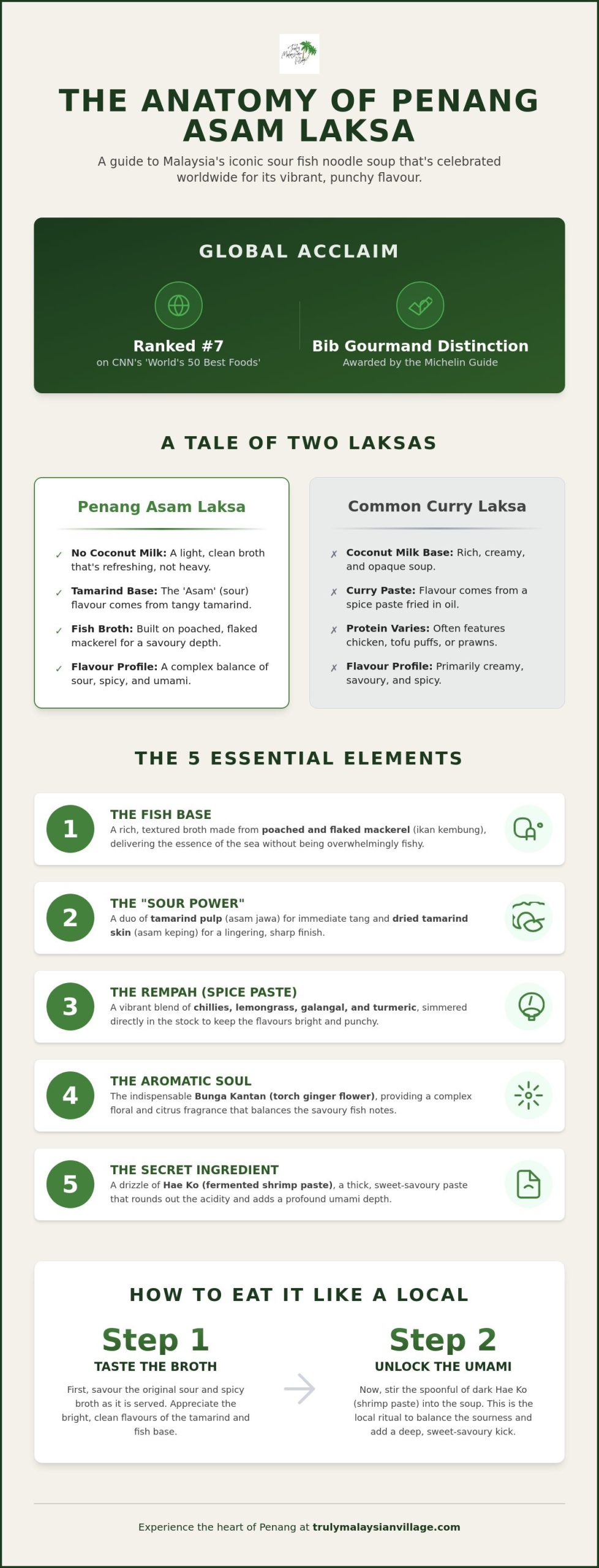
Imagine a bowl that dances on your tongue with the electric buzz of a tropical afternoon. It isn’t the heavy, creamy comfort of a winter stew; it’s a bright and spirited experience that defines the culinary soul of an island. When people ask what is penang laksa, they are often seeking a definition for Malaysia’s most famous “sour” noodle soup. At its heart, Penang Asam Laksa is a masterclass in balance, featuring a poached mackerel broth infused with the sharp, revitalising tang of tamarind. This dish is so beloved that it has achieved the status of a national icon. CNN Travel famously ranked it number seven on their list of the World’s 50 Best Foods, and legendary stalls like Penang Road Famous Laksa continue to hold Bib Gourmand distinctions in the 2026 Michelin Guide.
The word “Asam” literally translates to “sour” in Malay, and this acidity is the backbone of the entire dish. This isn’t a subtle hint of tartness. It’s a deep, multi-layered sourness achieved by using both tamarind pulp and dried tamarind skin. The texture of the dish is just as vital as its flavour. You’ll find thick, translucent rice noodles, known as lai fun, which have a wonderful chewiness. These noodles sit in a broth that is hearty and thick with flaked mackerel, creating a meal that feels both substantial and incredibly fresh.
A Tale of Two Laksas: Asam vs. Curry
Most Aussies are familiar with the creamy, coconut-rich Curry Laksa found in local shopping centre food courts. Penang Laksa is a different world altogether. It contains absolutely no coconut milk, which results in a broth that is light and translucent rather than rich and heavy. This makes it feel much “cleaner” on the palate. On a scorching hot day, the tamarind-based broth is far more refreshing than its creamy counterparts, offering a sharp zing that wakes up the senses without weighing you down.
The Peranakan Heritage
This dish is a heritage bowl that tells the story of the Straits Settlements through the lens of Nyonya influence. It represents a beautiful fusion of Chinese and Malay culinary traditions. Generations ago, local cooks began integrating indigenous ingredients like wild ginger torch and tamarind into traditional soup bases. This created a flavour profile that didn’t exist anywhere else in the world. Every spoonful is a reminder of this history, blending the aromatic herbs of the Malay garden with the soulful seafood traditions of the Chinese community.
The Anatomy of a Perfect Bowl: 5 Essential Elements
To truly appreciate what is penang laksa, one must look closely at the craftsmanship hidden within the broth. It isn’t just a simple soup; it’s a careful orchestration of 5 Essential Elements that create its signature profile. Each ingredient plays a specific role in balancing sharp acidity with deep, earthy undertones. The foundation of any authentic bowl is the fish base. Poached and flaked mackerel, known locally as ikan kembung, is the gold standard. The fish is boiled until tender and then painstakingly deboned by hand. This creates a thick, textured broth that carries the essence of the sea without being overwhelming.
Next comes the “sour power” that gives the dish its name. We use a duo of tamarind: the pulpy asam jawa for an immediate tang and the dried tamarind skin, or asam keping, for a lingering, sharp finish. The rempah, or spice paste, provides the aromatic heat. It is a vibrant blend of fresh chillies, lemongrass, galangal, and turmeric. Unlike many other Malaysian dishes where the paste is fried in oil, here it is simmered directly in the fish stock. This technique keeps the flavours bright and punchy, allowing the herbs to shine through the mackerel base rather than being masked by heavy fats.
The Importance of Bunga Kantan
The pink ginger torch bud, or bunga kantan, is the aromatic soul of the dish. Its scent is a complex mix of floral and citrus notes that you simply won’t find in any other ingredient. You can’t have a fair dinkum Penang Laksa without this specific bud. It provides a necessary fragrance that balances the savoury notes of the mackerel, turning a hearty soup into a sophisticated culinary experience. If you’re eager to experience these aromatics firsthand, you can reserve a table at our village to taste the difference fresh herbs make.
Hae Ko: The Secret Ingredient
The final touch is a drizzle of Hae Ko, a thick, fermented shrimp paste with a molasses-like consistency. While its aroma is potent, its flavour is a revelation of sweet-savoury depth. It rounds out the sharp sourness of the tamarind, acting as the bridge that brings all the elements together. Usually served on a ceramic spoon or drizzled in a dark swirl over the top, it is the secret to that addictive umami kick that keeps you coming back for another spoonful.
A Roundup of Essential Penang Laksa Garnishes
A bowl of Penang Asam Laksa is a vibrant canvas of colours and textures. To truly grasp what is penang laksa, you must appreciate how the raw toppings interact with the cooked elements. These garnishes are not mere afterthoughts; they are essential for achieving the five-flavour balance of sweet, sour, spicy, salty, and umami. Unlike many other soups where the spice base is heavily caramelised in oil, this broth is simmered to maintain a light and clean profile. This meticulous layering is why international critics consistently rank it as one of the world’s best foods.
The following garnishes are non-negotiable for an authentic experience:
- Fresh Pineapple: Sweet, golden chunks are essential to cut through the sharp acidity of the tamarind broth.
- Cucumber and Onion: Fine julienne strips provide a refreshing, watery crunch that cleanses the palate between spoonfuls.
- Red Chillies: These scattered slices add a bright, immediate heat for those who want an extra bit of “bite” in their broth.
- Mint and Vietnamese Mint: These herbs, including Daun Kesum, offer a cooling finish and a complex, peppery aroma that lingers beautifully.
The Texture Game
The interplay of textures is a hallmark of Malaysian street food. Slippery rice noodles provide a smooth base that carries the thick, fish-laden broth, while the crisp, raw vegetables offer a necessary break from the richness of the mackerel. In the heat of a tropical day, this freshness factor is what makes the soup feel light and revitalising rather than heavy. Daun Kesum, often called Laksa Leaf, serves as the primary herbal note that defines the dish’s unique and soulful aroma.
Customising Your Heat Level
Everyone has their own preference for spice. We suggest trying the broth first to appreciate the natural balance of the rempah before you reach for the extra chillies. Because the soup is so sour, the heat often feels more manageable on the tongue than a standard creamy curry. If you are feeling adventurous, you can stir in more sambal to suit your own palate. You can explore these customisable flavours on our weekday menu, where we serve our heritage recipes with pride.
The Ritual: How to Eat Penang Laksa Like a Local
Sitting down to a steaming bowl of this iconic dish is more than just a meal; it is a sensory journey that requires a specific approach. To truly understand what is penang laksa, you must move beyond the list of ingredients and master the local ritual of how to enjoy it. This process ensures that every note of the complex broth is experienced exactly as the street food masters intended. Before you dive in, take a moment to appreciate the bowl as an invited guest at a family table.
The ritual begins with the senses. Follow these steps for an authentic experience:
- Step 1: Inhale the aroma. Lean in and let the steam carry the fragrance of floral ginger torch and fresh mint. It should hit you with a bright, herbaceous lift before you even take a sip.
- Step 2: Stir in the Hae Ko. That dark, molasses-like swirl of shrimp paste sitting on your spoon is vital. Stir it thoroughly into the broth to marry the sweet and salty notes with the tamarind tang.
- Step 3: Balance your spoonful. Ensure every bite contains a bit of garnish. A chunk of sweet pineapple or a strip of crunchy cucumber provides the necessary contrast to the savoury mackerel.
- Step 4: Slurp the noodles. Don’t be shy. The thick rice noodles are designed to be slippery and smooth. Slurping isn’t just allowed; it’s a sign that you’re enjoying the craftsmanship of the broth.
The Perfect Pairing
While the laksa is the star, the supporting cast makes the performance complete. A cold, frothy Teh Tarik is the ultimate companion to a spicy bowl. The condensed milk in the tea provides a creamy coating that helps soothe the palate after the sharp acidity of the tamarind. If you’re sharing a meal with friends, consider adding sidekicks like our charcoal-grilled Satay or a plate of smoky Mee Goreng to round out the feast. These classic pairings create a sense of home-cooked familiarity that defines our village experience.
When to Enjoy It
In the bustling markets of Malaysia, this dish is a quintessential afternoon snack, often enjoyed as a “tea time” treat to bridge the gap between lunch and dinner. However, its light and revitalising nature makes it the perfect lunch for the Australian climate. The zingy broth is incredibly refreshing under the Aussie sun, providing energy without the heaviness of a creamy soup. We often see our guests seeking it out as a weekend comfort, so keep an eye on our weekend specials for those truly nostalgic bowls. If you’re ready to join the ritual yourself, book your spot at our table today.
Experience the Heart of Penang at Truly Malaysian Village
At Truly Malaysian Village, we believe that food is the most powerful bridge between cultures and memories. When you ask what is penang laksa at our table, you aren’t just getting a culinary definition; you’re receiving a bowl of our family’s heritage. Our roots are deeply planted in the vibrant streets of Penang, where the air is thick with the scent of simmering tamarind and torch ginger. We’ve brought those time-honoured recipes across the ocean, ensuring that the legacy of our ancestors remains alive in every spicy, sour spoonful we serve.
To recreate the soul of the island, we meticulously pair fresh, local Australian ingredients with traditional spices imported from Malaysia. We use the finest mackerel available in local markets to create that signature thick broth, ensuring the fish base is as authentic as any found in a Georgetown hawker stall. This dedication to craftsmanship is why our regulars keep coming back. You can find this labour of love featured on our rotating Weekend Specials, where we dedicate ourselves to the art of the perfect Asam Laksa.
From Our Village to Yours
Our founders established this space with a singular passion: to preserve the authentic flavours of their childhood and share them with our local community. We want every visitor to feel like an invited guest in our own home, experiencing a meal that truly feels like a taste of home. It’s about more than just a menu; it’s about a sense of belonging and cultural pride. Whether you are dining in or looking to bring a Malaysian feast to your next event through our catering services, our commitment to quality and nostalgic flavour never wavers.
Join Us for a Real Malaysian Feast
While the laksa is a standout, no visit to our village is complete without trying our signature Nasi Lemak Ayam Rempah. The fragrant coconut rice and spiced fried chicken provide a wonderful, rich contrast to the sharp, revitalising tang of the tamarind soup. Our restaurant is a place where tradition meets taste, offering a warm and welcoming atmosphere for families and friends to gather. We invite you to visit us soon, pull up a chair, and discover the heartfelt soul of Malaysia right here in our village.
Taste the Soul of the Island at Our Village
By now, you’ve discovered that the magic of this dish lies in its vibrant contrast. It isn’t just about the sharp tang of tamarind or the depth of poached mackerel; it’s about a centuries-old heritage that celebrates the garden and the sea in every bite. Now that you understand what is penang laksa, you’re ready to move from reading about the ritual to experiencing it yourself. You’ve learned how the crunch of fresh pineapple and the fragrance of ginger torch bud create a balance that no other noodle soup can match.
At Truly Malaysian Village, we take immense pride in being a family-run business with authentic Penang roots. Our kitchen is dedicated to preserving traditional recipes passed down through generations, bringing you highly-rated Malaysian street food right here in Australia. We invite you to join us and feel the warmth of our hospitality. Every bowl we serve is a piece of our history, crafted with the same love and care we put into our own family meals. Book your table at Truly Malaysian Village to try our authentic Penang Laksa today! We can’t wait to welcome you to the family table for a truly nostalgic feast.
Frequently Asked Questions
Is Penang Laksa very spicy for someone who doesn’t eat much chilli?
It definitely has a punchy heat, but the sour tamarind base makes it feel much lighter on the palate than a heavy curry. Most people find the spice level manageable because the fresh pineapple and cucumber garnishes act as a natural coolant. If you are a bit worried about the heat, you can always ask for fewer fresh chillies on top to suit your preference.
Can I make Penang Laksa vegetarian or vegan?
Creating a truly authentic version without fish is quite a challenge because the poached mackerel is the heart of the broth. The deep umami flavour also relies heavily on fermented shrimp paste. While some modern twists exist, a traditional bowl is firmly rooted in seafood. We recommend checking our other vegetable-based dishes if you are looking for a meat-free feast that still captures our village spirit.
What is the difference between Asam Laksa and Sarawak Laksa?
The primary difference lies in the base and the creaminess of the soup. While asking what is penang laksa, you’ll find it’s a sour, tamarind-driven fish broth with no coconut milk. In contrast, Sarawak Laksa uses a complex spice paste and coconut milk, creating an earthy, slightly creamy profile. Sarawak’s version typically features vermicelli noodles and prawns, whereas Penang’s icon uses thick rice noodles and mackerel.
Is Penang Laksa healthy compared to other noodle soups?
It is generally considered one of the healthier laksa varieties because it completely lacks the saturated fats found in coconut milk. The broth is packed with lean protein from the flaked mackerel and a wealth of antioxidants from fresh herbs like mint and ginger torch. It’s a fantastic choice for a light, nutrient-dense lunch that won’t leave you feeling sluggish in the afternoon heat.
Why is it sometimes called “fish soup” instead of laksa?
It’s often referred to as a fish soup because the broth is literally made by simmering and breaking down whole mackerel. Unlike other laksas where the broth is a thin liquid, an authentic Penang version is thick and textured with fine pieces of fish. This gives it a hearty, rustic feel that distinguishes it from the more filtered or creamy soups found elsewhere in Malaysia.
What kind of noodles are traditionally used in a Penang Laksa?
Traditionally, we use thick, translucent rice noodles known as lai fun. These noodles have a unique, slippery texture and a satisfying chew that holds up perfectly against the bold flavours of the tamarind broth. They are quite different from the thin vermicelli or yellow egg noodles you might see in other Malaysian dishes, and they are essential for a fair dinkum experience.
Can I find Penang Laksa on the regular weekday menu?
You can enjoy our authentic penang laksa as part of our regular offerings, though we often highlight it during our special weekend celebrations. We recommend checking our current menu online to see our latest rotation of heritage dishes. It’s a popular choice for those wanting a quick, revitalising lunch during the week or a nostalgic treat to share with the family on a Saturday.
How long does it take to prepare the authentic fish broth?
Preparing an authentic broth is a labour of love that takes several hours from start to finish. We begin by poaching fresh fish, followed by the meticulous task of deboning every mackerel by hand to ensure the perfect texture. The broth then simmers with our house-made rempah and tamarind for hours to develop that signature depth of flavour you won’t find in a quick recipe.

Article by
Amzar Hariz
Director of Truly Malaysian Village
Disclaimer
The content published on this website may include articles generated or assisted by AI writing tools. While we aim to provide helpful, accurate, and up-to-date information, we do not guarantee that all content is complete, error-free, or suitable for every individual situation.

