
Imagine sitting in a sun-drenched corner, the air thick with the scent of toasted spices, while you stare at a menu filled with confusing terms like “Ais”, “O”, and “C”. It’s a common hurdle for many, yet these popular Malaysian drinks non-alcoholic are the true soul of the dining experience. You’re likely looking for something that goes beyond a basic soft drink, especially when you need to balance the fiery heat of a Sambal Belacan or a rich Beef Rendang. We believe that a cold glass should be more than just hydration; it should be a nostalgic bridge to the heritage of the village.
In this guide, we’ll help you discover the vibrant, aromatic world of traditional Malaysian beverages, from the frothy heights of Teh Tarik to the nostalgic comfort of Milo Ais. We’ll break down the local ordering lingo so you can order with confidence and find the perfect refreshment to cool you down in 2026. You’ll learn the cultural significance of this unique drinking culture and finally know the difference between various coffee and tea orders. Let’s explore the best ways to stay cool and hydrated while enjoying the authentic flavours of Malaysia.
Key Takeaways
- Understand the heartbeat of Malaysian social life by exploring how Mamak stalls and Kopitiams act as welcoming community hubs for friends to gather.
- Master the local lingo to confidently decode menu shorthand like “Ais”, “O”, and “C”, ensuring your brew is served exactly to your liking every time.
- Explore a diverse range of popular Malaysian drinks non-alcoholic, from the creamy nostalgia of sweet corn treats to refreshing floral syrups that cut through the tropical heat.
- Discover the heritage behind iconic classics like “pulled” Teh Tarik and find out why the local Milo Ais is such a beloved, creamy staple for all ages.
- Gain expert insight into pairing these aromatic beverages with traditional favourites, such as why a frothy tea is the ultimate soulmate for a spicy Nasi Lemak Ayam Rempah.
The Heart of the Village: Why Malaysian Drink Culture is Unique
Stepping into a traditional Malaysian eatery isn’t like visiting a standard cafe; it’s more like being welcomed into a bustling family kitchen where the air is thick with the scent of toasted spices and sweet pandan. These spaces, known as Mamak stalls or Kopitiams, serve as the community’s heartbeat. They’re where stories are shared over steaming mugs and icy glasses, creating a nostalgic “Kampung” or village feel that stays with you long after the meal is over. It’s an environment where the love behind the craft is just as important as the ingredients themselves.
The beverages here aren’t just afterthoughts. They’re carefully designed to act as the perfect foil to Malaysia’s intense tropical humidity and its notoriously fiery cuisine. If you look at any comprehensive list of Malaysian drinks, you’ll see a tapestry of influences that prioritise aromatic local plants like lemongrass and pandan. These popular Malaysian drinks non-alcoholic are essential for balancing the bold flavours of a rich Beef Rendang or the sharp tang of a Penang Laksa.
The Ritual of the Mamak Stall
In Malaysia, the social scene doesn’t revolve around pubs or bars. Instead, the Mamak stall is the ultimate late-night destination. These open-air spots are where friends gather until the early hours, and non-alcoholic options are always the primary choice for socialising. The “drink maker” at these stalls is a local artisan, often performing a rhythmic dance of pouring and mixing that has been perfected over decades. It’s a heritage of craftsmanship that turns a simple order into a meaningful experience for every guest.
Balancing the Heat and Spice
There’s a functional beauty to how these drinks are put together. When you’re tucking into a plate of Sambal Belacan, the creamy texture of condensed milk in many traditional brews provides instant relief for a scorched palate. Ice, or “Ais”, isn’t just a luxury; it’s a refreshing necessity in the heat. While the classics are known for their sweet, comforting profiles, many modern diners now opt for “kurang manis” (less sweet) to enjoy the deep, earthy notes of the tea or coffee. You can find many of these customisable favourites on our weekday menu, designed to keep you cool and satisfied.
The Iconic Classics: Teh Tarik and Milo Ais
When you look at the true heavyweights of the Malaysian table, two names stand taller than the rest. These aren’t just beverages; they are cultural institutions that define the morning rush and the late-night catch-up. Among the most popular Malaysian drinks non-alcoholic, Teh Tarik and Milo Ais hold a special place in the heart of every local, offering a sweet, creamy embrace that feels like home. They represent the perfect marriage of simple ingredients and time-honoured technique.
Teh Tarik is a frothy, aerated milk tea created by pouring the liquid between two vessels. This “pulled tea” is the undisputed king of Malaysian breakfasts. Unlike the refined tea leaves you might find in a high-tea setting, authentic Teh Tarik relies on a robust, strong black tea dust. This gives it a deep, tannic backbone that stands up to the rich sweetness of condensed milk, creating a flavour profile that is both bold and comforting.
Teh Tarik: The Art of the Pull
The magic happens during the “tarik” process. By pouring the tea from a height, the artisan introduces air into the mixture, which creates a silky, thick froth and cools the drink to the perfect sipping temperature. It isn’t just for show; the aeration makes the tea significantly smoother on the tongue. Watching the “Teh Tarik man” perform this ritual in a village stall is a visual spectacle that honours generations of tradition. It’s the ultimate soulmate for a hot, flaky Roti Canai or a spicy plate of Mee Goreng.
Milo Ais: A Nostalgic Favourite
Then there is Milo Ais. While Aussies are certainly fond of their Milo, Malaysians have turned it into a national obsession. It’s prepared much richer than the typical glass you’d mix at home in Australia, often using condensed milk to achieve a velvety texture that is served over a mountain of ice. This chocolate malt drink is a staple on any list of popular Malaysian drinks.
For those seeking the ultimate indulgence, there is the “Milo Dinosaur.” This version takes a standard Milo Ais and heaps a massive spoonful of dry Milo powder on top. As you drink, you get little bursts of crunchy, malty goodness that haven’t yet dissolved into the liquid. It’s a nostalgic treat that brings out the child in everyone, serving as the ultimate comfort drink. If you’re craving that authentic froth and malted warmth, why not book a table with us and experience these heritage classics for yourself?
Floral and Fruity Refreshments: From Bandung to Fresh Coconut
While the robust, creamy classics like Teh Tarik are perfect for a morning boost, the afternoon humidity in Malaysia often demands a different kind of relief. This is where the world of botanical and fruit-based refreshments shines brightest. These popular Malaysian drinks non-alcoholic are as visually stunning as they are delicious, often featuring vibrant pinks and deep greens that reflect the lush landscapes of the village. They offer a delicate balance of sweetness and aromatics that can turn a humid day into a refreshing experience.
The beauty of these drinks lies in their simplicity and the use of fresh, local ingredients. Whether it’s the floral scent of rose syrup or the earthy sweetness of corn, these beverages are designed to hydrate the body while pleasing the senses. They are the perfect accompaniment to a light lunch or a mid-afternoon snack, providing a cooling counterpoint to the tropical sun. Adding these to your repertoire of popular Malaysian drinks non-alcoholic will ensure you’re always prepared for the heat.
Sirap Bandung: The Famous Pink Drink
Sirap Bandung is perhaps the most eye-catching beverage on any Malaysian table. By combining the delicate, floral notes of rose syrup with the rich creaminess of evaporated milk, Bandung creates a flavour profile that is both nostalgic and deeply satisfying. It is a celebration in a glass, which is why it remains a staple at Malaysian weddings and festive gatherings. For those who prefer something a little lighter, “Sirap Limau” is a fantastic dairy-free alternative that swaps the milk for a zesty squeeze of fresh lime.
Tropical Fruit Infusions
Malaysian drink culture also embraces the unique flavours of the land in ways that might surprise the uninitiated. Take Air Jagung, for example. This sweet corn drink is a creamy, golden delight that captures the essence of a village summer. While corn in a drink might seem unusual to some, its natural sweetness and velvety texture make it an incredibly popular choice. Other fruit-based favourites include:
- Air Kelapa (Fresh Coconut): The ultimate natural hydrator, served straight from the shell to provide a cool, electrolyte-rich experience.
- Limau Ais: A simple yet effective combination of fresh lime juice, sugar, and heaps of ice for a palate-cleansing finish.
- Air Sirap Selasih: Rose water infused with basil seeds, which add a playful, gelatinous texture to every sip.
- Pandan Infusions: Water subtly scented with bruised pandan leaves, offering a vanilla-like aroma that is incredibly soothing.
If you’re planning a special event and want to share these vibrant flavours with your guests, our catering services can bring the authentic taste of the village to your next gathering. These floral and fruity refreshments are always a hit, offering a unique and colourful way to keep everyone cool and hydrated.
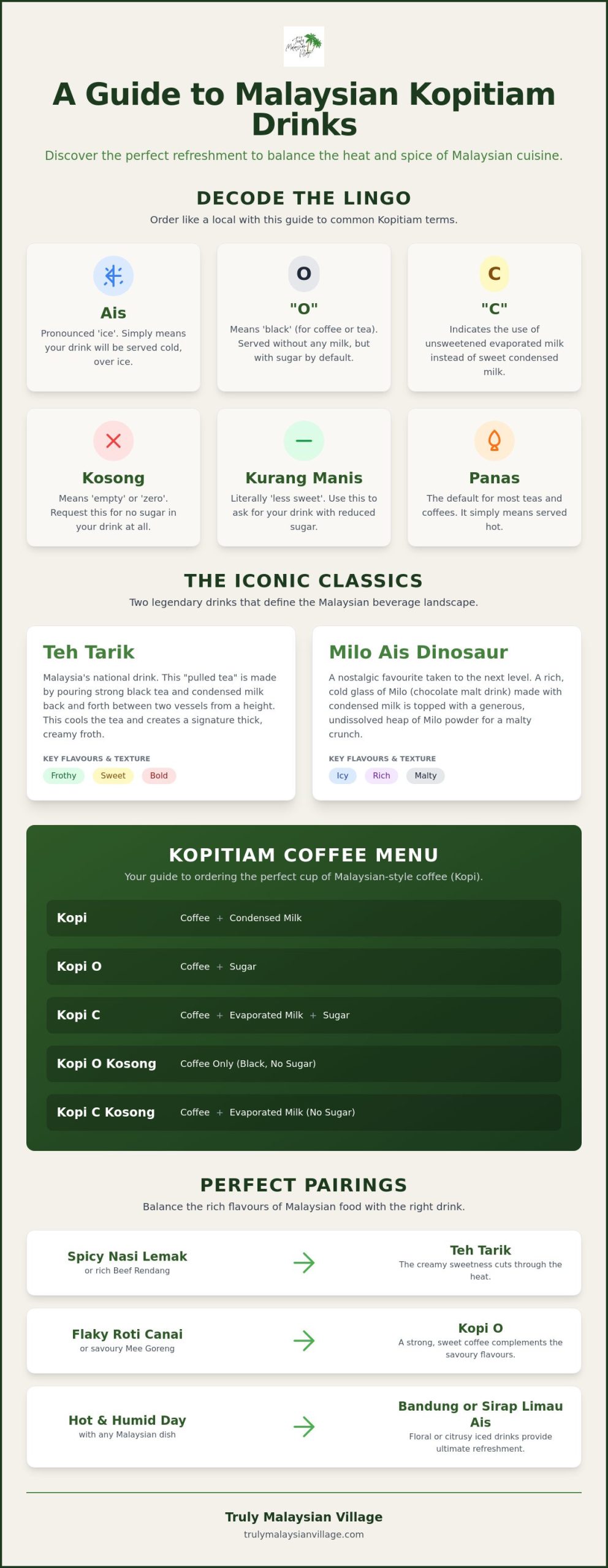
Kopitiam Culture: Decoding the Coffee and Herbal Teas
Walking into a traditional Kopitiam feels like stepping back into a simpler time. The clatter of ceramic cups and the rich, dark aroma of roasting beans create an atmosphere of home-cooked familiarity. Unlike the bright, modern cafes that dot Australian cities, these traditional coffee shops are the guardians of a unique brewing heritage. At the centre of this experience is “Kopi”, a beverage that sits high on the list of popular Malaysian drinks non-alcoholic. It’s a drink that bridges the gap between historical roots and the modern dining experience, offering a depth of flavour that you won’t find in a standard espresso.
The secret to its distinct taste lies in the traditional roasting process. Malaysian coffee beans are often roasted with margarine and sugar, which creates a dark, caramelised finish. This technique results in a brew that is incredibly robust and earthy, with a slightly oily sheen that carries the flavour beautifully. For those who prefer something a bit smoother, Ipoh White Coffee is a regional masterpiece. It’s roasted with only margarine, resulting in a lighter, creamier profile that has become a favourite for guests seeking a more delicate morning pick-me-up.
The Kopi Cheat Sheet
Ordering coffee in a Kopitiam can feel a bit like learning a new language. To help you navigate the menu like a local, here is a quick guide to the most common terms you’ll encounter:
- Kopi: Coffee served with sweet, velvety condensed milk.
- Kopi O: Black coffee with sugar, perfect for those who want to taste the roast.
- Kopi C: Coffee with evaporated milk and sugar, offering a lighter, more floral creaminess.
- Peng: Simply add this to any order if you want it served with heaps of ice.
- Kosong: This means “empty”, so use it if you want your drink without any sugar.
Herbal Cooling Drinks
Malaysian culture places a high value on maintaining balance within the body. When the tropical heat becomes too much, locals often turn to herbal “cooling” teas. Barley water is a home-style remedy that many grew up with, offering a light, nutty flavour that is incredibly soothing. Chrysanthemum tea is another essential infusion, known for its delicate floral notes and its ability to cleanse the palate after a rich meal. These drinks aren’t just refreshments; they are traditional ways to stay healthy and hydrated. If you’re ready to experience these authentic flavours for yourself, book your table today and let us be your guide through the wonderful world of Malaysian beverage culture.
The Perfect Match: Pairing Drinks with Malaysian Favourites
Choosing the right beverage is the final touch in creating a truly authentic dining experience. In the village, we don’t just pick a drink at random; we look for a partner that respects the soul of the dish. Whether you’re enjoying the fiery depths of a sambal or the rich, coconut-heavy layers of a curry, these popular Malaysian drinks non-alcoholic are designed to provide balance. It’s a thoughtful framework that ensures every bite and sip feels like a warm embrace from a seasoned host, bridging the gap between historical roots and the modern table.
Take, for instance, the legendary pairing of Teh Tarik and Nasi Lemak Ayam Rempah. This is arguably the ultimate soulmate combination in Malaysian cuisine. The robust tannins of the pulled tea and the velvety sweetness of the condensed milk act as a soothing balm against the spicy kick of the sambal. It cleanses the palate while complementing the aromatic coconut rice, making it a staple for any heartfelt breakfast or lunch. It’s a pairing that honours the dedication and authenticity of traditional village cooking.
Creamy Drinks for Spicy Sambals
If you’re tucking into a dish with a significant chilli hit, milk-based drinks are your best friend. A vibrant Sirap Bandung acts as a protective shield for the tongue, with the evaporated milk naturally neutralising the capsaicin in the spice. For a kid-friendly feast that feels like a nostalgic treat, try pairing a cold Milo Ais with our Chicken Satay. The malty sweetness of the Milo perfectly balances the savoury, peanut-rich satay sauce. If you’ve had a particularly heavy meal, a glass of Cendol serves as both a drink and a dessert, providing a cooling, palm-sugar-sweetened finish that settles the stomach beautifully.
Zesty Cleansers for Rich Curries
When the meal is heavy on coconut milk and traditional fats, such as a hearty Beef Rendang or a plate of Nasi Kandar, you need something with a bit of “zing” to cut through the richness. The sharp acidity in a Limau Ais is the perfect tool for this, slicing through the fat and refreshing your taste buds for the next mouthful. Similarly, a glass of home-style Barley water offers a light, nutty finish that refreshes the palate between bites of a savoury Mee Goreng. These pairings are essential for maintaining that sense of balance and well-being that is so central to our culture.
For those planning large gatherings or professional catering events, offering a diverse selection of popular Malaysian drinks non-alcoholic ensures every guest finds their perfect match. Providing both zesty and creamy options allows everyone to customise their experience to suit their meal. Ready for a real taste of the village? Book your table or order takeaway today and let us share the love and care behind every cup and plate we serve.
Experience the Authentic Taste of the Village Today
From the frothy heights of a perfectly pulled tea to the herbal comfort of a cooling barley water, we’ve journeyed through the soul of the Malaysian table. You now have the tools to order with confidence, whether you’re craving the malty nostalgia of Milo Ais or a zesty Limau Ais to balance a rich Beef Rendang. These popular Malaysian drinks non-alcoholic are more than just refreshments; they are a legacy of craftsmanship and cultural pride that we are honoured to share with you.
At our family-run eatery, we serve authentic recipes passed down through generations, with deep roots in the vibrant food cultures of Penang and Kelantan. We invite you to step into our warm, welcoming atmosphere that truly feels like home. Explore our authentic Malaysian drinks and dishes on our menu and discover your new favourite pairing today. We look forward to welcoming you to the family table and sharing a piece of our heritage with every glass we pour.
Frequently Asked Questions
What is the most popular non-alcoholic drink in Malaysia?
Teh Tarik is undoubtedly the most popular non-alcoholic drink in Malaysia. This iconic “pulled tea” is a national treasure that you’ll find at every corner, from humble street stalls to bustling city cafes. It’s more than just a beverage; it’s a symbol of Malaysian hospitality and community. Its frothy texture and deep, malty flavour make it a daily staple for millions of people across the country.
Is Teh Tarik very sweet?
Traditionally, Teh Tarik is quite sweet because it’s made with rich condensed milk to achieve its signature creaminess. However, the beauty of Malaysian drink culture is its flexibility. If you’re watching your sugar intake, you can simply ask for “kurang manis”, which means less sweet. This allows the robust, earthy notes of the strong black tea dust to shine through even more clearly while still enjoying that silky texture.
What does “Kopi O” mean on a Malaysian menu?
When you see “Kopi O” on a menu, it refers to traditional black coffee served with sugar but without any milk. The “O” comes from the Hokkien word for “black” or “original”. It’s a fantastic choice if you want to experience the deep, smoky profile of beans roasted with margarine and sugar. It’s a bold, wake-up call that pairs perfectly with a simple piece of kaya toast or a savoury snack.
Why is Milo so popular in Malaysia compared to Australia?
While Aussies love their Milo, Malaysians have turned it into a cultural phenomenon and a primary comfort drink. It’s often prepared much richer than the Australian version, using condensed milk to create a velvety, chocolatey treat served over heaps of ice. Whether it’s a standard Milo Ais or a decadent Milo Dinosaur, it’s a nostalgic favourite that bridges the gap between childhood memories and adult cravings in the tropical heat.
Can I find these Malaysian drinks at Truly Malaysian Village?
You can certainly enjoy these heritage favourites at Truly Malaysian Village. We take great pride in serving popular Malaysian drinks non-alcoholic like our frothy Teh Tarik and icy Milo Ais. Every cup is prepared using authentic methods that honour our family’s roots in Penang and Kelantan. We invite you to sit back and enjoy a taste of the village in our welcoming dining room, where every guest is treated like family.
What is Sirap Bandung made of?
Sirap Bandung is a beautiful, eye-catching beverage made from a simple blend of rose syrup and milk. Typically, evaporated or condensed milk is used to give it a creamy texture and a lovely pastel pink hue. It’s a floral, aromatic refreshment that’s traditionally served at weddings and festive gatherings. The drink offers a sweet sense of celebration in every single sip, making it a favourite for guests of all ages.
Are there healthy or low-sugar Malaysian drink options?
There are plenty of healthy and refreshing popular Malaysian drinks non-alcoholic for those seeking low-sugar choices. Barley water and Chrysanthemum tea are classic herbal infusions known for their “cooling” properties and light, nutty or floral notes. If you want something completely natural, nothing beats fresh coconut water straight from the shell. These options provide a clean finish that keeps you hydrated without the heavy sweetness of traditional milk-based brews.
Which drink is best to have with spicy Nasi Lemak?
A frothy Teh Tarik is the absolute best companion for a spicy plate of Nasi Lemak. The creamy milk content in the tea helps to coat your tongue and neutralise the fiery heat from the sambal. If you prefer something lighter, a zesty Limau Ais is another excellent choice. Its sharp acidity cuts through the richness of the coconut rice and provides a refreshing palate cleanser between every delicious, spicy mouthful.

Article by
Amzar Hariz
Director of Truly Malaysian Village
Disclaimer
The content published on this website may include articles generated or assisted by AI writing tools. While we aim to provide helpful, accurate, and up-to-date information, we do not guarantee that all content is complete, error-free, or suitable for every individual situation.

