
What if the secret to the world’s most celebrated curry isn’t actually the liquid, but the moment it finally disappears? Many home cooks in search of the perfect slow cooked beef rendang adelaide find themselves disheartened when, after hours of simmering, the meat remains stubbornly chewy or the flavours feel thin and superficial. It’s a common frustration that can make the most dedicated host feel like they’ve missed the mark. We understand this feeling because we believe every meal should evoke the warm, nostalgic comfort of a traditional Malaysian village home.
In this guide, we’ll show you how to master our “Village” approach to slow cooking, transforming tough cuts into a melt-in-your-mouth masterpiece. You’ll learn the vital difference between a standard stew and the authentic “dry curry” process, where the oil separates to caramelise the beef in its own aromatic spices. We’ll explore the essential steps to achieving restaurant-quality tenderness and a depth of flavour that impresses every guest. Whether you’re cooking at home or considering catering to skip the four-hour wait, you’re about to discover the secrets that carry the soul of Malaysian craftsmanship to your table.
Key Takeaways
- Learn why selecting secondary cuts with plenty of connective tissue is the only way to achieve a truly silky, fall-apart texture.
- Master the three stages of the cooking process to ensure your slow cooked beef rendang adelaide reaches its authentic, oil-separated finish.
- Discover how fresh coconut milk and traditional aromatics work together as a natural tenderiser for the meat.
- Avoid the common mistake of adding too much water, which can boil away the depth of your carefully crafted spices.
- Understand the patience required to transform a simple stew into a heritage-quality meal that honours the soul of Malaysian village cooking.
Choosing the Right Cut for Melt-in-Your-Mouth Beef Rendang
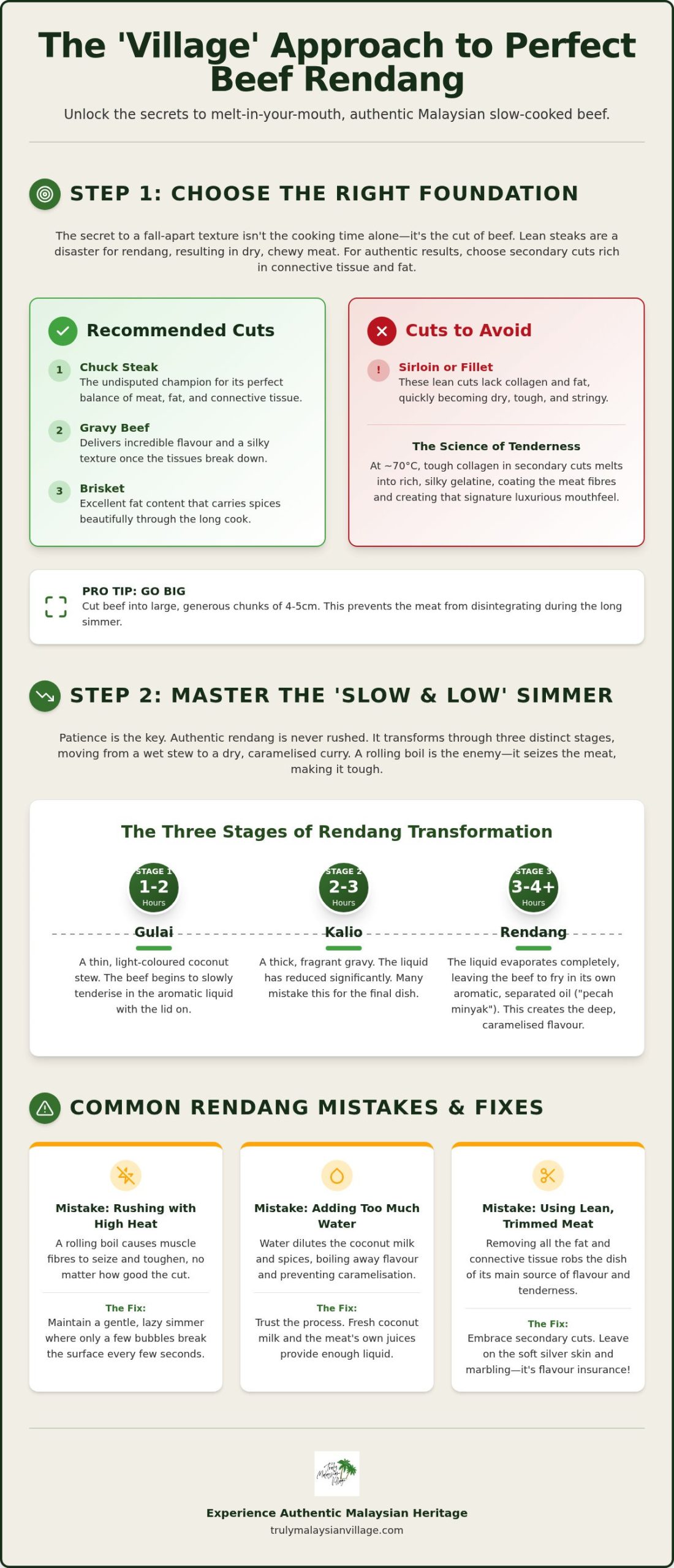
Creating a masterpiece starts long before the stovetop is lit. If you’ve ever spent hours in the kitchen only to end up with meat that feels like chewing on wood chips, the culprit is likely the cut of beef. Selecting the right foundation is the most critical step in achieving a truly authentic slow cooked beef rendang adelaide. While it’s tempting to reach for premium steaks like sirloin or fillet, these lean cuts are a disaster for rendang. They lack the internal structure needed to survive a long simmer, quickly becoming dry and stringy once the moisture evaporates.
In our village tradition, we celebrate the beauty of secondary cuts. These are the hard-working muscles of the animal that require time, patience, and love to reveal their true character. To get that signature fall-apart texture, you need cuts rich in connective tissue. We recommend these top Australian choices for your next pot:
- Chuck Steak: The undisputed champion of slow cooking.
- Gravy Beef: Full of flavour and incredibly silky once the tissues break down.
- Brisket: Offers a wonderful fat content that carries spices beautifully.
When you prep the meat, avoid the temptation to cut it into tiny, bite-sized dice. Village-style rendang uses large, generous chunks of roughly four to five centimetres. This ensures the beef retains its integrity and doesn’t vanish into the sauce as it reduces over several hours.
The Role of Collagen and Fat
The magic of a tender rendang lies in a biological transformation. As the temperature of the pot reaches approximately 70°C, the tough collagen within the beef begins to melt, transforming into rich, silky gelatine. This process doesn’t just soften the meat; it coats every fibre in a luxurious mouthfeel that lean cuts simply can’t provide. Intramuscular fat, or marbling, acts as a natural insurance policy, basting the beef from the inside to prevent it from drying out during the intense reduction phase. Before you start, perform a quick “chew test” on the raw trim. Leave the soft, pearly silver skin on, as this will melt away, but remove any hard, waxy gristle that feels like plastic.
Sourcing Quality Beef in Australia
We’re lucky to have access to some of the finest produce in the world. For a rendang with a deep, soulful profile, look for grass-fed Australian beef. It possesses a robust, earthy flavour that stands up perfectly against the punchy heat of ginger and galangal. When you visit your local butcher, ask for their best “secondary cuts” for braising. Chuck steak is the gold standard for Malaysian rendang because its unique distribution of connective tissue allows it to soften into a buttery texture without losing its shape during the long reduction. By choosing these more affordable cuts, you aren’t just saving money; you’re choosing the only path to a truly heritage-quality meal.
The Art of the ‘Slow and Low’ Simmer: Mastering Temperature
Patience is the most vital ingredient in any Malaysian kitchen. Once you’ve selected your secondary cuts, the magic of a slow cooked beef rendang adelaide depends entirely on how you manage the flame. A heavy-based pot or a cast-iron Dutch oven is a ripper choice for this journey. These vessels provide the consistent, even heat distribution required to prevent the sauce from scorching at the bottom while the beef undergoes its long transformation. A thin pot often leads to hot spots, which can ruin the delicate balance of spices before the meat has even begun to soften.
Authentic rendang is never rushed. It moves through three distinct stages, each marked by a change in colour and consistency. First, you have the Gulai stage, where the beef swims in a thin, light-coloured coconut stew. As the liquid reduces, it becomes Kalio, a thick and fragrant gravy that many Western versions mistake for the finished product. The final, most crucial stage is the true Rendang. This is when the liquid has completely evaporated, leaving the beef to fry in the separated oils. This “pecah minyak” or oil separation phase is where the deep, complex flavours are born.
A rolling boil is the absolute enemy of tender beef fibres. High heat causes the proteins to seize and toughen, effectively undoing the careful work of choosing the right cut. You want a gentle, lazy simmer; just a few bubbles breaking the surface every few seconds. This controlled environment allows the collagen to melt into gelatine without stressing the meat.
Managing the Heat Stages
During the initial simmer, keep the lid on. This creates a gentle steam chamber that helps break down those tough fibres we discussed earlier. Once the meat is starting to yield, remove the lid. This allows the moisture to escape and the aromatics to intensify. The final fry requires your full attention. As the sauce darkens and the oil separates, you must stir constantly to ensure the beef caramelises in its own fat, achieving that signature dark, mahogany colour without burning the spices.
How to Tell When It is Spot On
The ultimate test of success is the fork-tender check. The beef should pull apart with almost zero resistance, yet still hold its shape on the plate. Visually, the sauce should no longer be a liquid; it should be a dark, oily paste that clings lovingly to every chunk of meat. Don’t forget the resting period. Allowing the rendang to sit for at least thirty minutes before serving lets the fibres relax and reabsorb those rich, spiced oils. If the thought of managing these delicate stages feels a bit daunting for your next family gathering, you can always secure a table with us and let our seasoned hosts handle the slow-cooking for you.
Essential Malaysian Ingredients that Soften and Flavour the Meat
While the beef provides the substance, the aromatic profile gives this dish its heritage. To create an authentic slow cooked beef rendang adelaide, you must embrace the “Holy Trinity” of Malaysian aromatics: lemongrass, galangal, and ginger. These aren’t merely seasonings; they are the foundation of the dish’s complex character. Fresh coconut milk plays an equally vital role. Beyond its rich, velvety flavour, it acts as a natural tenderiser, gently bathing the beef fibres in fats that encourage a softer finish over several hours of simmering.
Balance is everything in our village kitchen. We use tamarind, known as asam jawa, to introduce a subtle acidity. This brightness is essential to cut through the heavy richness of the coconut and beef fat, ensuring every bite feels vibrant rather than cloying. When these elements harmonise, the result is a meal that feels like a warm embrace from a family host.
The Science of the Rempah (Spice Paste)
The rempah is the concentrated essence of the dish. Frying this paste until “the oil rises” is a non-negotiable step for anyone seeking true depth. This process, where the oil separates from the solids, signals that the raw moisture has evaporated and the spices are beginning to fry and release their deepest notes. Fresh ginger and galangal are more than just flavourings; they contain enzymes that actively help to break down tough meat proteins as the pot warms. The inclusion of finely shredded turmeric leaf is essential for achieving an authentic village aroma that provides a nostalgic bridge to the traditional kitchens of Malaysia.
Kerisik: The Texture Game-Changer
Many home cooks skip kerisik, but it is the secret to that signature rendang mouthfeel. To make it at home, you must toast fresh grated coconut in a dry pan until it reaches a deep, mahogany brown. It is then pounded in a mortar and pestle until it turns into a thick, oily paste. This ingredient provides the unique “gritty” yet creamy texture that distinguishes a true rendang from a standard beef curry. It acts as a powerful thickener that binds the aromatics to the meat. You can see this traditional craftsmanship in action on the Truly Malaysian Village menu, where we honour these time-honoured steps in every batch we prepare. This dedication to the craft ensures that every guest experiences the soul of our service.
Common Rendang Mistakes: How to Fix Tough or Dry Beef
Even the most passionate home cook can hit a snag when attempting a slow cooked beef rendang adelaide. It is a dish that demands respect for time, and rushing the process usually leads to heartbreak on the plate. One of the most frequent traps is adding too much water. Many people treat rendang like a standard Western stew, but by drowning the meat, you end up “boiling” the flavour away rather than concentrating it. The beef should simmer primarily in the richness of coconut milk and the aromatics of the rempah, not a watery bath that dilutes the soul of the dish.
Impatience during the final drying phase is another common hurdle. This is where the sauce transforms into that intense, oily paste we all crave. If you stop while the mixture is still a wet gravy, you’ve made a Kalio, not a true Rendang. Using a pot that is too small can also lead to uneven cooking. If the beef is crowded, the steam cannot escape efficiently to allow for the necessary reduction, leaving some chunks tough while others are overdone. A bit of space in the pot ensures that every piece of beef has the room it needs to soften properly.
The “Tough Meat” Rescue Mission
If your beef is still stubbornly chewy after three hours, don’t panic. You can often save the dish by adding a splash more coconut milk to reintroduce fat and continuing the low simmer for another thirty to forty-five minutes. It’s also worth checking your pH balance. Adding acidic elements like tamarind (asam jawa) too early in the cook can sometimes toughen the meat fibres before they’ve had a chance to soften. If the fibres simply won’t yield despite your best efforts, you can pivot by shredding the meat into the sauce for a delicious “pulled beef” style rendang that still carries all those heritage flavours.
Preventing Dryness
Succulence begins with your initial prep. As we discussed when choosing your cut, the fat-to-lean ratio is paramount. You should never trim all the fat or silver skin off your chuck steak; that internal marbling is what keeps the meat from drying out during the long haul. Remember that rendang is a dish that loves a rest. It tastes heaps better the next day because the flavours have time to settle and penetrate deep into the heart of the beef. If you would rather skip the troubleshooting and enjoy a guaranteed masterpiece without the stress, book a table with our family and let us serve you a plate perfected over generations.
Experience Authentic Malaysian Heritage with Truly Malaysian Village
Behind every pot of our slow cooked beef rendang adelaide lies a story that spans oceans and generations. Truly Malaysian Village was born from a desire to share the soul of our heritage with our neighbours here in Australia. Founded in 2020 by triplets with deep roots in Penang and Kelantan, our kitchen is more than a business; it is a living tribute to the flavours of our childhood. We understand that in a fast-paced world, the slow, methodical rhythm of a village kitchen is a rare gift. That’s why we dedicate ourselves to the patient simmering process, ensuring every guest who sits at our table feels like an invited member of the family.
Our Beef Rendang is the beating heart of our catering services, designed for those who want to host a meaningful event without the stress of the stovetop. We bring the “Village” feel to your next gathering, providing a communal dining experience that prioritises connection and cultural pride. Whether you’re organising a small family reunion or a large community feast, our team handles every detail with the same love and care we put into our own Sunday dinners. It is our way of ensuring that the authentic depth of Malaysian cuisine is accessible to everyone, regardless of the occasion.
A Legacy of Flavour
The triplets brought more than just recipes when they established Truly Malaysian Village; they brought a commitment to preserving the craftsmanship of their elders. Every batch of rempah is ground with a deep respect for the time-honoured methods passed down through our family. We believe that food is the ultimate bridge between cultures, a way to share a piece of our history through a single, aromatic bite. By maintaining these traditions, we offer more than just a meal. We offer a sense of belonging and a taste of home-cooked familiarity that resonates with everyone who walks through our doors.
Taste the Difference
We invite you to experience this dedication firsthand by trying the signature Beef Rendang from our weekend specials. Our kitchen strikes a delicate balance, sourcing the finest fresh Australian beef and produce while using bold, aromatic spices imported directly from Malaysia to maintain authenticity. This marriage of local quality and traditional depth creates a profile that is truly unique. Don’t settle for surface-level curries when you can enjoy a masterpiece crafted with heart and history. Book your Malaysian feast today or explore our menu!
Bring the Soul of the Village to Your Table
Mastering the perfect rendang is a journey of patience that rewards every sense. By selecting collagen-rich secondary cuts and respecting the three stages of reduction, you move beyond simple cooking to achieve a level of true cultural craftsmanship. You now understand that the secret to a world-class slow cooked beef rendang adelaide lies in the final oil-separation phase, where the beef caramelises in its own aromatic fats. This methodical process honours the traditions of our ancestors and the soul of the village kitchen.
If you’d rather skip the long simmer and dive straight into the nostalgia, we’re here to host you. Truly Malaysian Village is a family-run business founded by triplets with authentic Penang and Kelantan roots, specialising in signature slow-cooked Beef Rendang. We also offer professional catering for corporate and private events across Australia. We invite you to Discover the Heart of Malaysian Cuisine at Truly Malaysian Village and experience a meal built on love and heritage. We look forward to sharing our village with you soon.
Frequently Asked Questions
Is it possible to cook beef rendang in a slow cooker or pressure cooker?
You can certainly use a slow cooker or pressure cooker to achieve tenderness, but you must finish the dish on the stove. While these appliances excel at breaking down tough fibres, they cannot facilitate the evaporation needed for a true dry curry. For an authentic result, transfer the mixture to a heavy-based pan once the meat is soft. This allows the coconut milk to reduce and the oils to separate, caramelising the beef in its own rich juices.
What is the best cut of beef for rendang if I cannot find chuck steak?
If chuck steak is unavailable, gravy beef or brisket are your best choices. These secondary cuts are packed with the connective tissue and intramuscular fat required for a long, slow simmer. Avoid premium lean cuts like sirloin, as they will dry out and become stringy. When sourcing your beef, look for pieces with visible marbling. This ensures that as the collagen melts, it creates the silky, melt-in-your-mouth texture that defines a heritage-quality meal.
Why does my rendang look like a stew instead of a dry curry?
Your rendang likely looks like a stew because the reduction phase hasn’t been completed. Traditional rendang is a “dry curry” where the liquid must evaporate entirely. This process leads to the “pecah minyak” stage, where the beef begins to fry in the separated coconut oil. If your dish is too wet, simply remove the lid and continue simmering on low heat. Stir frequently to prevent catching until the sauce becomes a thick, dark paste clinging to the meat.
Can I make beef rendang ahead of time and freeze it?
Beef rendang is an ideal dish to prepare ahead of time because the flavours deepen as they rest. You can store it in the fridge for up to three days or freeze it for up to three months without losing any quality. When you’re ready to enjoy it, thaw the rendang in the fridge overnight and reheat it gently in a pan with a splash of water or coconut milk to loosen the oils and restore its creamy texture.
How long does it take for beef to become tender in a traditional rendang?
Achieving the perfect slow cooked beef rendang adelaide typically takes between three and four hours on a low, gentle simmer. This duration is necessary for the collagen in secondary cuts to transform into gelatine, providing that signature fall-apart texture. Rushing the process on high heat will only cause the meat fibres to seize and toughen. Patience is the key to unlocking the deep, aromatic legacy of the dish, ensuring the spices have time to fully penetrate the heart of the beef.
What should I serve with beef rendang for an authentic experience?
For an authentic experience, serve your rendang with fragrant Nasi Lemak or Nasi Kerabu Kelantan. The herb-infused rice provides a wonderful contrast to the rich, spicy beef. Adding a side of Sambal belacan and some fresh cucumber slices helps to brighten the palate and balance the heavy coconut flavours. If you are looking for a simpler option, plain jasmine rice or even some buttery roti canai are excellent for mopping up every bit of the concentrated sauce.
Is beef rendang supposed to be very spicy?
Traditional rendang should be aromatic and warm rather than overwhelmingly spicy. While we use a variety of chillies in our rempah, the long cooking process and the addition of rich coconut milk tend to mellow the heat. The focus is on the complex layers of galangal, lemongrass, and toasted coconut rather than pure fire. If you prefer a milder version, you can easily deseed the chillies or increase the amount of coconut milk to suit your personal taste.
Can I use store-bought rendang paste and still get tender beef?
You can use a store-bought paste, but the quality of the beef and the cooking method remain the most important factors. Even with a pre-made base, you must still use a secondary cut like chuck and allow it to simmer for several hours to achieve tenderness. To elevate the flavour, we recommend adding fresh lemongrass and a handful of kerisik. This helps bridge the gap between a convenient meal and the soulful, hand-crafted depth of a traditional village kitchen.

Article by
Amzar Hariz
Director of Truly Malaysian Village
Disclaimer
The content published on this website may include articles generated or assisted by AI writing tools. While we aim to provide helpful, accurate, and up-to-date information, we do not guarantee that all content is complete, error-free, or suitable for every individual situation.

