
You have spent hours at the stove, patiently stirring the pot until the coconut milk caramelises into that deep, dark richness we all crave, only to realise you have cooked enough to feed the entire neighbourhood. It is a common dilemma for anyone who loves the soul-warming comfort of a proper Malaysian meal. You want to save that liquid gold for a busy Tuesday night, but you are likely worried about the coconut milk splitting or the meat turning into something more like rubber than tender beef.
So, can you freeze beef rendang without losing that signature aromatic depth? The answer is a resounding yes; in fact, the flavours often develop a more profound character with a little time. This guide will show you exactly how to portion, store, and reheat your rendang so it tastes just as fresh as the moment it left the wok. We will share our professional catering secrets for maintaining that melt-in-the-mouth texture and ensuring your meal remains safe and delicious for the recommended two to three months of freezer storage. From proper thawing techniques to the art of re-caramelisation, you will soon be stocking your freezer with confidence.
Key Takeaways
- Discover why the natural oils in coconut milk make Beef Rendang uniquely suited for the freezer, often allowing the aromatic spices to deepen over time.
- If you have ever wondered can you freeze beef rendang, the secret lies in proper cooling and portioning to preserve the dish’s tender, slow-cooked soul.
- Master the art of the “slow thaw” and stovetop reheating to restore that authentic, “fresh-off-the-stove” quality to your meal.
- Understand the three-month “sweet spot” for storage to ensure your frozen portions maintain their peak flavour and signature Malaysian zing.
- Learn professional tips from the Truly Malaysian Village kitchen on managing bulk batches for effortless, high-quality weeknight dining at home.
The Verdict: Can You Freeze Beef Rendang Successfully?
The short answer is a resounding yes. Beef Rendang is exceptionally freezer-friendly, perhaps more so than almost any other slow-cooked dish in the Malaysian repertoire. Unlike a watery stew that might separate or become diluted, the unique “dry” nature of a traditional rendang means it holds its integrity beautifully under cold temperatures. If you have ever wondered can you freeze beef rendang without ruining that hours-long labour of love, you can breathe a sigh of relief. It is one of those rare, magical dishes that often tastes even better after a stint in storage.
The secret to this success lies in the coconut milk. As the rendang simmers for hours on the stove, the water evaporates and the coconut milk breaks down into a rich, aromatic oil. This high fat content acts as a natural preservative and a protective barrier for the beef. While vegetables in a typical curry might turn to mush after thawing, the sturdy fibres of slow-cooked beef remain stable and succulent. You aren’t just preserving a meal; you are allowing the complex layers of spice to further mature.
The Science of Spices and Cold Storage
The “dry curry” method used in authentic rendang is a masterclass in food stability. Because the sauce is reduced until the oils render out, there is very little free-standing water left to form large ice crystals. These crystals are usually what tear the cell walls of food and cause that “rubbery” texture we all fear. By minimising moisture, you maximise quality. Furthermore, the traditional preservation methods of rendang rely on a potent blend of antimicrobial ingredients like galangal, garlic, and lemongrass. These aromatics don’t just sit idle in the freezer. They continue to infuse the meat with deep, earthy notes, ensuring the “zing” of the spices is just as vibrant when you finally sit down to eat.
At Truly Malaysian Village, we always include kerisik (toasted coconut) in our recipes. This vital ingredient does more than add a nutty depth; it provides a structural grit that helps the sauce cling to the beef even after it has been frozen and thawed. It ensures the “lemak” or richness remains emulsified rather than separating into a greasy mess.
Freezing vs. Chilling: What’s Best for Your Batch?
Choosing between the fridge and the freezer depends entirely on your timeline. If you plan to enjoy your leftovers within two to three days, the refrigerator is actually the superior choice. Most Malaysians will tell you that rendang reaches its “flavour peak” the day after it is cooked. This resting period allows the spices to settle and the beef to fully absorb the coconut oils. However, if you are looking to stock up for the month, the freezer is the only way to go. Freezing locks in the freshness of the rempah (spice paste) for up to three months before the quality begins to dip. Whether you are saving a portion of our takeaway Beef Rendang for a rainy day or prepping for a big family event, the freezer is your most reliable tool for preserving that authentic taste of home.
How to Freeze Beef Rendang: A Step-by-Step Guide
Preparing a culinary masterpiece is only half the battle. To ensure your hard work stays as vibrant as the day it was made, you must approach the freezing process with the same care you gave the slow-cooking. If you have been asking can you freeze beef rendang, the answer depends entirely on your technique. Rushing the process can lead to ice crystals that ruin the meat’s texture, but following a few simple steps will lock in those precious flavours for your future enjoyment.
Preparing Your Rendang for the Deep Freeze
Cooling is the most critical stage for both safety and quality. You must never place hot rendang directly into the freezer, as this creates steam that turns into ice and can partially thaw surrounding items. Aim to reach the room temperature threshold within two hours of cooking. To speed this up, transfer the meat and sauce into shallow containers rather than leaving it in one large, heavy pot. Adhering to these safe freezing guidelines ensures your beef remains safe to eat while locked away at sub-zero temperatures. The flash chill method involves placing your shallow containers into an ice bath before transferring them to the fridge to drop the temperature rapidly.
Portion control is your next priority. Think of your future self on a busy Tuesday night and freeze the rendang in meal-sized quantities. This prevents the need for repeated thawing and refreezing, which is the quickest way to turn tender beef into something tough and rubbery. Once portioned, ensure every container is airtight. Oxygen is the enemy of aromatic spices like galangal and lemongrass; it causes them to dull and lose their zing over time. Don’t forget to label each pack with the date and the spice level. A mild rendang can look remarkably similar to a spicy version once it is frozen solid.
Choosing the Right Containers
When deciding how to store your meal, consider the materials you are using. Glass containers are excellent for preserving the aromatic oils without absorbing any stains or smells, though BPA-free plastic is a lighter, more durable alternative. In many Aussie kitchens where freezer space is at a premium, heavy-duty freezer bags are a brilliant hack. You can lay them flat to freeze, creating bricks of rendang that stack neatly. If you are wondering can you freeze beef rendang for longer than a few months, use the double-wrap technique. Place your portioned bag inside a second freezer bag or wrap the container in foil to provide an extra layer of protection against freezer burn. If you would rather skip the prep and enjoy a fresh batch made by our family, feel free to reserve a table with us.
Thawing and Reheating: Restoring the ‘Fresh Off the Stove’ Quality
After weeks or months of waiting in the cold, the moment of truth finally arrives. You have already discovered that yes, you can you freeze beef rendang with great success, but the real magic happens during the revival. To treat your meal with the respect it deserves, you should avoid the temptation of a quick defrost on the kitchen bench. Instead, move your portion to the refrigerator 24 hours before you plan to serve it. This “Slow Thaw” is the gold standard for preserving the integrity of the beef fibres. By allowing the ice crystals to melt gradually, you prevent the meat from losing its precious juices, which ensures every bite remains as succulent as the day it was slow-cooked.
Following UNL Food safety guidelines is essential during this stage to keep your food at a consistent, safe temperature. Once thawed, you might notice the coconut oil has separated into a distinct orange layer. This is completely normal and is a sign of a well-reduced, authentic rendang. The trick to restoring that silky, glossy finish is re-emulsification. As you heat the dish, you must stir it gently but consistently to coax the oils back into the spice paste. If the sauce looks a little too thick or “tight,” a small splash of fresh coconut milk or a tablespoon of water will help loosen the aromatics and bring the lemak back to life.
The Stovetop Method (Highly Recommended)
For those who want to recreate the experience of a Malaysian village kitchen, the stovetop is your best friend. A heavy-based pan or wok allows for even heat distribution, which is vital for warming the beef through without toughening the exterior. Keep your flame on a low setting and let the aromas slowly fill your home. If you notice the sauce sticking to the bottom, add a tiny splash of liquid immediately. The final touch is the “Sizzle Test”: turn the heat up slightly for the last sixty seconds to lightly re-caramelise the edges of the beef. This creates that slightly charred, deep flavour profile that defines a truly great rendang.
Microwave Hacks for Busy Weeknights
We know that life in Australia can be a whirlwind, and sometimes you need comfort food in a hurry. If you are using a microwave, the “Power Level” secret is your most important tool. Never reheat on full power; instead, drop your microwave to 50% power. This prevents the coconut fats from “popping” and ensures the beef heats evenly rather than becoming rubbery in the centre. Covering your bowl with a damp paper towel is another brilliant hack to trap steam and maintain moisture. If you find yourself short on time and craving that authentic depth, you can always check our weekday menu for a fresh batch that is ready to serve without the wait.
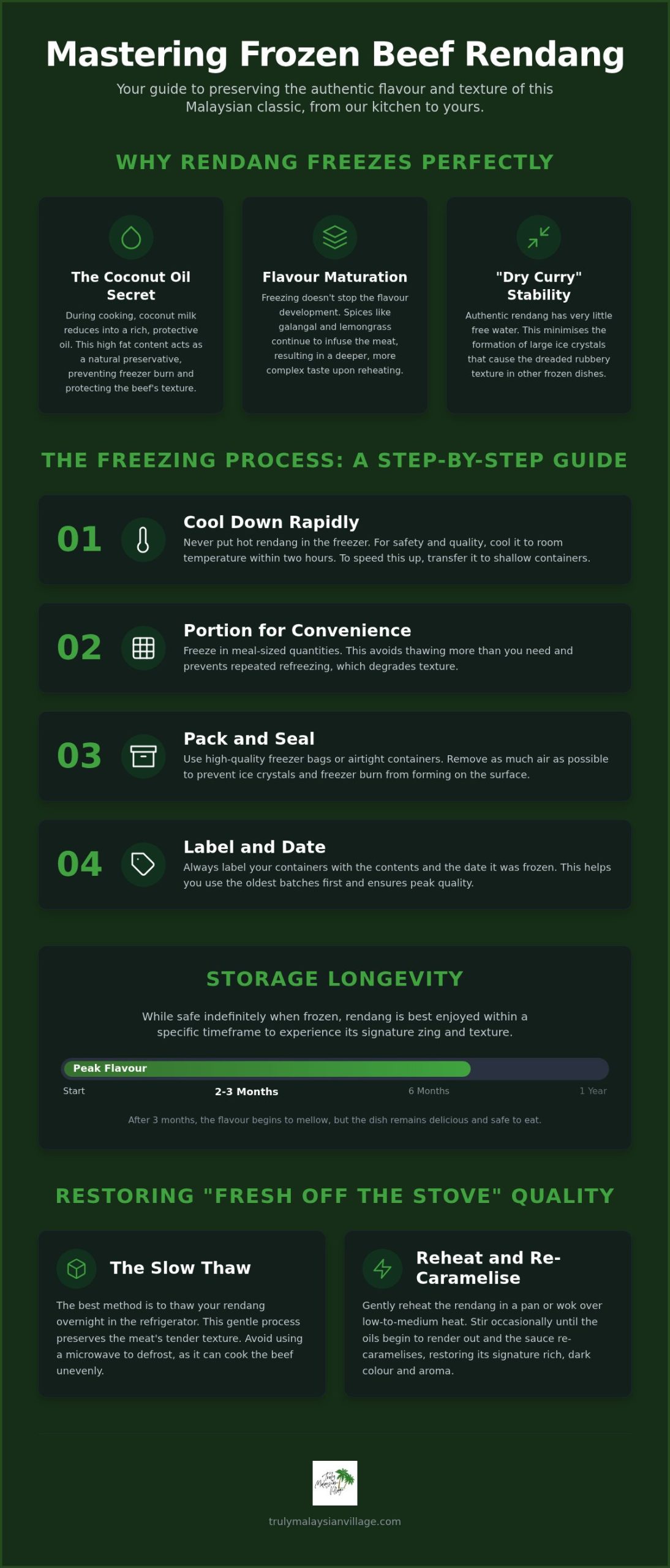
Storage Longevity: How Long Does Frozen Rendang Last?
While the freezer acts like a culinary time capsule, even the most robust dishes have their limits. When people ask can you freeze beef rendang, they are usually looking for a specific date to mark on their calendar to ensure they don’t lose that home-cooked magic. According to standard food safety guidelines, cooked meat stored at -18°C or below remains safe to eat indefinitely because the extreme cold inactivates microbes like bacteria and yeast. However, safety and quality are two very different stories. For a dish as complex as ours, the three-month mark is the ultimate sweet spot for maintaining the perfect balance of spice and texture.
Between three and six months, the rendang is still perfectly safe to enjoy, but you might notice the “zing” of the fresh ginger and lemongrass begins to fade. The coconut milk, while stable, can gradually lose its creamy sweetness, leaving the dish feeling slightly flat. Beyond the six-month point, the risk of freezer burn increases significantly, which can turn your tender beef into something dry and unappealing. Trusting your senses is vital during the thawing process. If the coconut oils have a sharp or “off” smell once they reach room temperature, it is a clear sign the fats have turned rancid and the dish should be discarded.
Signs Your Rendang Has Been Frozen Too Long
You can often tell the state of your meal before you even start the stove. Look for a greyish tint on the surface of the beef; this discolouration is a classic sign of oxygen exposure and freezer burn. If you see large ice crystals buried deep within the sauce, it usually means the emulsion of the spice paste has “broken,” which can lead to a grainy texture upon reheating. You will also notice a distinct lack of those bright, citrusy top notes that define a fresh batch. If your freezer stash is starting to look a bit sad, it might be time to head out and enjoy some Authentic Nasi Lemak Ayam Rempah in Adelaide: A Taste of Home instead.
Maximising Shelf Life with Professional Tips
In our kitchen, we often rely on the “Oil Cap” trick to extend the life of our slow-cooked meats. Before sealing your container, ensure a thin layer of the rendered coconut oil covers the beef completely. This natural fat barrier acts as a seal, preventing air from reaching the meat and providing your best defence against the drying effects of the freezer. To keep your freezer organised, always place the newest containers at the back and the oldest at the front. This simple rotation ensures you never discover a “mystery” container from a year ago. Ready to experience the real thing without the wait? Book your table today and let us serve you a fresh batch made with love.
Bulk Prep and Catering: The Village Secret to Perfect Leftovers
Malaysian hospitality is built on the beautiful idea that there is always room for one more at the table. When you are planning a significant celebration or a community gathering, the logistical puzzle of can you freeze beef rendang becomes a secret weapon for the host. Unlike many delicate seafood dishes or lighter stews that can be temperamental, rendang is a robust traveller. It handles the transition from large-scale preparation to the freezer and back to the serving dish with remarkable grace. This resilience is why it has become a cornerstone of our heritage and a favourite for those looking to share a piece of our village life with their own friends and family across Australia.
Catering for a Crowd with Freezer-Ready Dishes
Rendang is fundamentally more stable for events than “wet” curries that rely on a thin, coconut-milk-heavy gravy. Because the sauce has already been reduced to a concentrated paste during the slow-cooking process, it won’t separate or become watery when kept warm in a bain-marie for long periods. If you are exploring our professional catering services, you will see how we use this stability to ensure every guest receives a meal of consistent, high-quality depth. For those managing their own events, we recommend a “Cook-Freeze-Reheat” schedule. Cooking the batch several days early and freezing it allows the complex spices to settle and mature, leaving you free to enjoy the company of your guests rather than being tethered to the stove.
Should you find yourself with leftovers after the party, don’t let those precious morsels go to waste. Beyond the traditional bowl of steamed rice, frozen rendang can be transformed into incredible modern Australian fusion meals. Try shredding the thawed beef and using it as a rich filling for gourmet toasties with a slice of sharp cheddar, or serve it in brioche sliders with a quick pickled cucumber and a dollop of sambal. These creative twists breathe new life into your frozen batch and ensure not a single drop of that aromatic sauce is ever lost.
The TMV Heritage: Tradition Meets Convenience
At Truly Malaysian Village, our kitchen is led by a dedicated team of triplets who carry the culinary legacy of Penang and Kelantan in every pot they stir. We don’t just cook for a crowd; we cook with the same slow-cooked devotion our grandmothers used in the village. This commitment to tradition is why our Beef Rendang is a beloved staple on our weekend specials menu. By following the storage and reheating tips we have shared, you are doing more than just saving leftovers. You are inviting the soul of Malaysian craftsmanship into your home freezer, ensuring that even on your busiest nights, a warm and authentic meal is only a few minutes away. Whether you are stocking up for yourself or feeding a hundred guests, the heart of the village is always within reach.
Bring the Authentic Taste of the Village into Your Home
Mastering the art of preservation means you never have to choose between a busy schedule and a meaningful, home-cooked meal. We have explored how the rich, coconut-infused layers of this dish actually thrive in cold storage, provided you follow the right cooling and reheating steps. Now that you know the answer to can you freeze beef rendang is a confident yes, you can stock your freezer with the three-month sweet spot in mind. By respecting the slow-cooked fibres of the beef and the aromatic “rempah” paste, you ensure that every future Tuesday night feels like a special occasion.
Our family triplets take immense pride in hand-crafting every batch using heritage recipes from Penang and Kelantan. We combine the finest fresh Australian beef with traditional Malaysian spices to create a local favourite that has been voted a top choice for authentic Southeast Asian flavours. If you aren’t in the mood to cook but still want that melt-in-the-mouth experience, let us do the heavy lifting for you. Craving the real deal? Order our authentic Beef Rendang today! We look forward to sharing a taste of our village with you soon.
Frequently Asked Questions
Can I freeze Beef Rendang with steamed rice in the same container?
You can certainly freeze them together for convenience, but the quality of the rice often suffers compared to the meat. Rice tends to lose its moisture and become crumbly or hard in the freezer, while the rendang remains succulent and rich. For the most authentic experience, we suggest freezing the meat on its own and steaming a fresh batch of jasmine rice when you are ready to eat.
Does the coconut milk split when you freeze Rendang?
Authentic rendang is a dry curry, which means the coconut milk has already been reduced until the oils separate during the long cooking process. You might notice a layer of orange oil when you thaw the dish, but this is a sign of quality rather than a mistake. Simply stir the dish gently as you reheat it on the stove to bring the aromatic emulsion back together perfectly.
Can I freeze Chicken Rendang using the same method as beef?
Yes, the freezing and reheating process for Chicken Rendang is identical to the method used for beef. The high fat content in the coconut sauce protects the chicken meat from drying out or developing freezer burn. Just be mindful that chicken is slightly more delicate; use a gentle heat when warming it up to ensure the pieces stay tender and moist rather than becoming stringy.
Is it safe to freeze Rendang that was previously frozen and reheated?
It is generally not recommended to refreeze any meat dish that has already been thawed and reheated. Each cycle of freezing and thawing breaks down the cell walls of the beef, which can lead to a mushy texture and a loss of that signature spice profile. To avoid waste, always freeze your rendang in smaller, meal-sized portions so you only ever defrost exactly what you need for dinner.
How do I prevent the beef from getting tough when I reheat it?
The best way to keep the beef tender is to reheat it slowly over a low flame on your stovetop. If you use a high heat or a microwave on full power, the proteins in the meat will tighten and become rubbery. Adding a tiny splash of water or fresh coconut milk creates a little steam, which helps to gently penetrate the meat fibres and keep them soft.
What is the best way to thaw Rendang quickly if I’m in a rush?
If you are short on time, the safest quick method is to place the airtight container or freezer bag in a bowl of cold tap water. Change the water every thirty minutes to ensure it stays at a consistent temperature. While you can use a microwave defrost setting, this can sometimes start cooking the edges of the meat while the centre is still frozen, so the water bath is superior.
Can I freeze Rendang that has been sitting out at a party?
You should only freeze leftovers if they have been sitting at room temperature for less than two hours. If the dish has been on a buffet table for longer than that, bacteria can begin to grow, and freezing will not make the food safe to eat again. When you wonder can you freeze beef rendang from a catered event, always check the time it was first served.
Do the spices get hotter or milder after freezing?
Most people find that the spices become more intense and well-rounded after a stint in the freezer. As the dish sits, the chillies and aromatics like galangal have more time to infuse deep into the beef. While the immediate sharp burn of the chilli might soften slightly, the overall depth of flavour often feels more powerful and complex when you finally can you freeze beef rendang for a future meal.

Article by
Amzar Hariz
Director of Truly Malaysian Village
Disclaimer
The content published on this website may include articles generated or assisted by AI writing tools. While we aim to provide helpful, accurate, and up-to-date information, we do not guarantee that all content is complete, error-free, or suitable for every individual situation.

