
Imagine the scene: the table is cleared, the nostalgic scent of Beef Rendang still lingers, and you are left with a small bowl of that vibrant, aromatic sambal. You know the love and craftsmanship that went into balancing those chillies and belacan; the last thing you want is to bin it. Learning how to store leftover sambal properly is the secret to preserving that soul-warming heat and complex aroma for your next meal. We understand the heartbreak of watching your “liquid gold” lose its brilliant red colour or the fear of getting it wrong and risking food poisoning.
It’s a common worry for anyone who treasures authentic Malaysian heritage in their kitchen. We’re here to share the professional secrets that keep our sambals fresh, spicy, and safe for weeks or even months. In this guide, you’ll find a clear timeline for fridge and freezer storage, along with the tell-tale signs that your paste has finally spoiled. We’ll also show you how to breathe new life into those leftovers with creative Aussie-style cooking tips, ensuring not a single drop of that precious flavour goes to waste.
Key Takeaways
- Understand why maintaining the soul of your sambal requires a delicate balance of moisture control and impeccable hygiene.
- Learn the traditional oil seal technique to keep your sambal vibrant and fresh in the fridge for up to seven days.
- Master how to store leftover sambal in the freezer for up to six months using the convenient ice cube tray method for easy portioning.
- Identify the clear visual and aromatic cues that tell you when your sambal has moved from pungent perfection to spoilage.
- Discover creative ways to repurpose your leftovers, from a quick weekday Nasi Goreng to a spicy marinade for your next Aussie BBQ.
The Basics of Sambal Storage: Why Hygiene Matters Most
When you sit down to a plate of Nasi Lemak, the sambal is the heart of the experience. It is the fiery soul that ties the coconut rice and crispy anchovies together. To truly understand The Basics of Sambal, one must realise it’s often a “living” condiment. Ingredients like shrimp paste (belacan) and fresh chillies continue to evolve even after they hit the jar. Storing it isn’t just about shoving it in the fridge; it’s a delicate dance of temperature control, moisture management, and strict hygiene. If you get the balance wrong, that complex, hand-crafted flavour can turn sour or, worse, become a health risk.
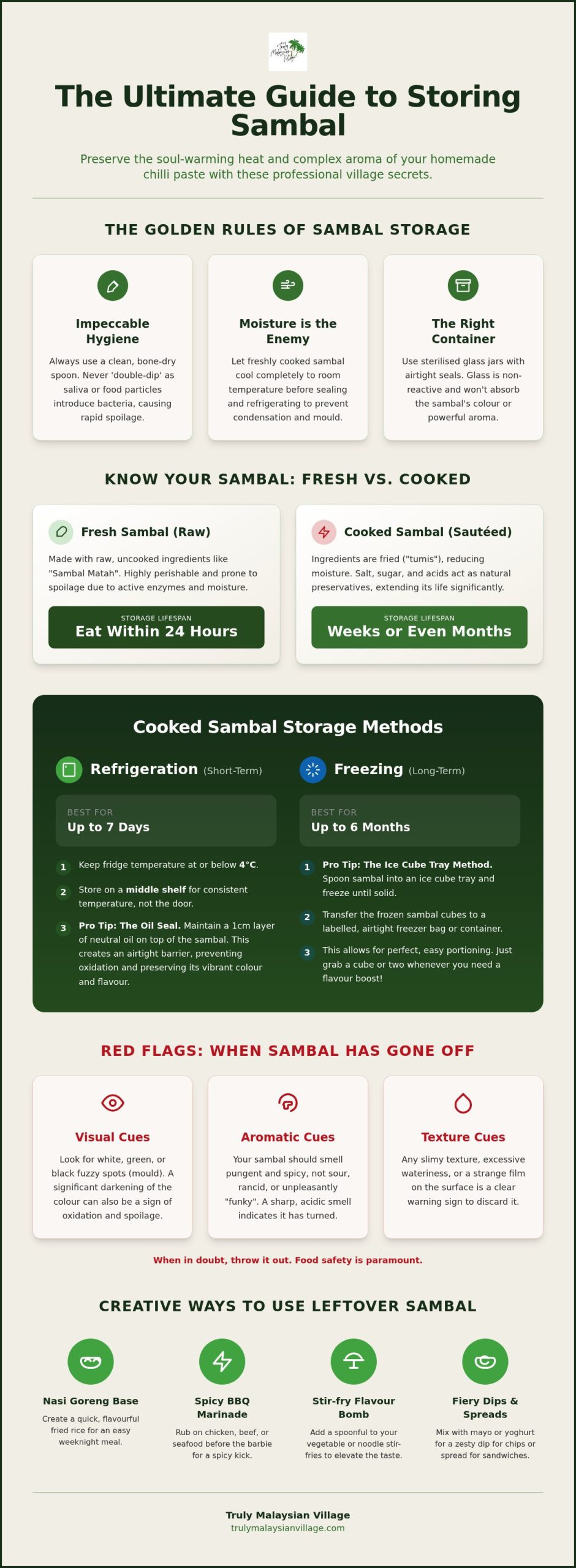
The golden rule of the village kitchen is simple: never use a licked or “double-dipped” spoon. Even a tiny trace of saliva or other food particles can introduce bacteria that will turn your beautiful sambal into a science project in days. Always use a clean, bone-dry stainless steel spoon every single time you reach for a dollop. It’s a small habit that makes a massive difference in how long your batch stays fresh.
Moisture is the ultimate enemy of preservation. If you’ve ever seen white, fuzzy spots appearing on the surface, it’s usually because water droplets have found their way in. This often happens when a warm jar is sealed and put straight into the fridge, causing condensation to form under the lid. Always let your sambal reach room temperature before you organise its storage. This patience ensures the environment inside the jar stays stable and mould-free.
Choosing the Right Container for Your Chilli
Glass jars are the only way to go for serious spice lovers. Plastic containers are porous; they’ll soak up the vibrant red oil and the pungent aroma of the chillies, making them nearly impossible to clean afterwards. Glass is non-reactive and keeps the flavours pure. Before you start thinking about how to store leftover sambal, ensure your jars are properly sterilised. You can do this by washing them in hot, soapy water and then placing them in a 120°C oven for 15 minutes. A solid, airtight seal is vital. Without it, your sambal will start absorbing the smells of everything else in your fridge.
Fresh vs Cooked Sambal: Two Different Worlds
There’s a massive difference between “Sambal Matah” (the raw, sliced variety) and “Sambal Tumis” (the fried, deeply aromatic version). Fresh sambal is a fleeting beauty. Because the ingredients haven’t been cooked through, they’re highly prone to spoilage. For safety and the best flavour, raw varieties should be eaten within 24 hours. Cooked sambal, however, has had its moisture reduced through frying. The salt and acid from lime or vinegar in your recipe act as natural preservatives, helping your leftovers stay delicious for much longer. When considering how to store leftover sambal, always identify which type you’ve made first, as the rules for safety change significantly between the two.
Refrigerating Leftover Sambal: The Short-Term Solution
For many of us, a meal without a side of sambal feels incomplete. When you’ve spent hours over a hot stove pounding chillies and sautéing aromatics, you want every spoonful to count. If you’re wondering how to store leftover sambal for use throughout the week, the refrigerator is your most reliable ally. Most home-cooked batches will remain in peak condition for about 5 to 7 days, provided they are kept under the right conditions and treated with the respect they deserve.
Temperature is everything. To ensure your condiment stays safe and delicious, your fridge should be set at or below 4°C. Keeping it at this level aligns with professional food safety guidelines for perishable items. Where you place the jar also matters. Avoid the fridge door, as constant opening and closing causes temperature fluctuations that can shorten the shelf life. Instead, tuck your sambal onto the middle shelf. This area offers the most consistent chill, protecting the delicate oils and spices from premature spoilage.
The Science of the Oil Barrier
One of the most effective village secrets for preservation is the “Oil Layer” trick. By ensuring there’s about a centimetre of oil sitting on top of the paste, you create a natural, airtight seal. This barrier prevents oxygen from reaching the chilli, which stops oxidation and keeps the colour vibrant. If you’ve used a few spoonfuls and the surface is exposed, simply top it up with a fresh layer of neutral oil like vegetable or canola. This oil doesn’t just preserve; it carries the fat-soluble flavours of the chillies, keeping the heat and aroma locked in for your next meal.
Maintaining Flavour Integrity Over Time
You might notice that your sambal actually tastes better on the second or third day. This is the “marinating effect,” where the garlic, shallots, and belacan have more time to mingle and mellow. To keep this flavour profile sharp, always use the smallest container possible. Minimising the air space in the jar prevents “fridge burn” and keeps the aromas from dissipating into the rest of the fridge. You can experience this perfectly aged depth of flavour in our Nasi Lemak Ayam Rempah, where the sambal is prepared with the same patience and care we recommend for your own kitchen.
If you’d rather leave the slow-cooking to our family while you relax, you can always book a table at Truly Malaysian Village to enjoy a fresh batch made with love and tradition.
Freezing Sambal for Long-Term Preservation
Sometimes, the spirit of the village takes over and you find yourself making a massive batch of sambal that simply won’t be finished in a week. When you have more of this liquid gold than you can reasonably consume, the freezer becomes your best friend. Freezing is the ultimate way to lock in that hand-crafted heat and aromatic depth for the long haul. Most well-made varieties will keep their punchy character for 3 to 6 months without losing significant heat. It’s the perfect solution for busy families who want a taste of home available at a moment’s notice.
Before you tuck your jars away, remember that safety is just as important as flavour. A common mistake in many Aussie kitchens is the “mystery jar” phenomenon. We’ve all been there: staring at a frosty container six months later, wondering if it’s sambal belacan or a spicy pasta sauce. Always use a permanent marker to label your containers with the date and the specific type of sambal. Following professional advice on storing and reheating leftovers ensures you aren’t taking risks with your family’s health. One vital rule to live by: never refreeze sambal once it has been thawed. The process of thawing and refreezing breaks down the cell walls of the chillies and aromatics, leading to a mushy texture and a significant loss of that vibrant, soul-warming flavour.
Step-by-Step: The Ice Cube Tray Method
This is the most efficient secret for anyone learning how to store leftover sambal for individual meals. Instead of freezing one large block, spoon your sambal into silicone ice cube trays. Silicone is superior because it’s flexible, making it easy to pop out a single portion when you’re craving a bit of heat. Flash-freeze the trays for about 4 hours until the cubes are rock solid. Once they’re firm, transfer the cubes into a heavy-duty freezer bag. Be sure to squeeze out every bit of excess air before sealing. This prevents ice crystals from forming and protects your precious paste from the dreaded freezer burn.
How to Properly Thaw and Reheat
Patience is a virtue when it’s time to bring your sambal back to life. The safest way to thaw a portion is to move a cube to the fridge the night before you need it. If you’re in a rush, you can place the frozen cube directly into a small pan over very low heat with a tiny splash of water. Avoid the microwave at all costs. The intense, uneven heat can cause the oils to separate and the chillies to become bitter. Once your sambal is warmed through, you can refresh the flavour with a tiny squeeze of fresh lime or a pinch of sugar. This little trick wakes up the aromatics and makes it taste like it was pounded in the mortar just moments ago. Knowing how to store leftover sambal this way ensures you always have a piece of Malaysian heritage ready for your next feast.
How to Tell if Your Sambal Has Gone Off
Even when you follow every rule on how to store leftover sambal, there comes a time when you must trust your senses over your calendar. Because sambal is a rich, complex blend of fresh aromatics and oils, it doesn’t always spoil in a way that’s immediately obvious. Being able to spot the early signs of decay is essential for keeping your family safe and ensuring your meals remain a source of comfort rather than a trip to the doctor. It’s better to bin a small jar of paste than to risk the heartbreak of a ruined dinner party.
Visual cues are your first line of defence. While we all look for that tell-tale white, fuzzy mould on the surface, you should also scan for dark, slimy patches that look out of place against the vibrant red of the chillies. Another clear red flag is any sign of bubbling or fizzing when you open the lid. If your sambal looks like it’s “breathing” or has developed a frothy texture, unwanted fermentation is occurring. This is a sign that bacteria have taken hold, and the jar is no longer safe to consume. You might also notice the oil and paste separating in an unappealing, watery way that differs from the natural oil barrier we discussed earlier.
The Belacan Confusion: Pungent vs Spoiled
For those new to the soul-stirring world of Malaysian cuisine, the natural scent of fermented shrimp paste (belacan) can be quite a shock. It has an “authentic funk” that is punchy and deep, which is perfectly normal. However, you must learn to distinguish this traditional aroma from the sharp, ammonia-like scent that indicates spoilage. If the smell has shifted from a salty, earthy pungency to something that reminds you of rotten eggs or a harsh cleaning chemical, the proteins have broken down. Trust your instincts; if the aroma makes you recoil rather than making your mouth water, it’s time to let it go.
When in Doubt, Throw it Out
It can be tempting to simply scrape a tiny bit of mould off the top and use the rest, but this is a dangerous game. Mould produces mycelium roots that can reach deep into the jar, invisible to the naked eye. There is also a specific risk of botulism with garlic-heavy condiments stored in oil if they haven’t been kept at the correct temperature. This rare but serious form of food poisoning thrives in low-oxygen environments. If you have any doubts about the safety of your jar, don’t take the chance. You can always find a fresh, expertly prepared batch on the Truly Malaysian Village menu whenever the craving strikes.
Don’t risk a kitchen mishap when you can enjoy the real deal made by our family. Book your table now and let us serve you a sambal that is as safe as it is sensational.
Village Secrets: Creative Ways to Use Leftover Sambal
Once you have mastered how to store leftover sambal, a whole new world of culinary possibilities opens up in your kitchen. That small jar in the fridge is no longer just a leftover; it’s a concentrated blast of heritage ready to transform the mundane into the extraordinary. In the village, we never waste a single drop of this precious paste. Whether it’s a busy Tuesday or a relaxed Sunday arvo, your stored sambal is the secret weapon for a meal that feels like home. It carries the love and patience of the original cook into every new dish you create.
One of the simplest joys is turning last night’s rice and a few spoonfuls of sambal into a quick Nasi Goreng. Sauté the paste in a hot wok until the oils start to shimmer, toss in your rice, and watch as each grain is coated in that spicy, aromatic gold. It’s a weekday lunch that carries the soul of Penang and Kelantan right to your dining table. For a true cultural bridge, try using your leftover sambal as a marinade for Aussie BBQ prawns or chicken skewers. The heat of the grill caramelises the sugars in the chillies, creating a smoky, charred depth that is simply irresistible.
If you’re feeling adventurous, stir a teaspoon into your next bolognese or a hearty pumpkin soup. It adds an unexpected layer of warmth that lingers beautifully on the palate. And for the ultimate modern breakfast? A dollop of sambal on avocado toast provides a fiery kick that perfectly cuts through the creamy richness of the fruit. It’s a simple way to bring a touch of Malaysian sunshine to your morning routine.
The Quick Stir-Fry Base
In Malaysian cooking, we often refer to the spice base as “rempah.” Since you’ve already learned how to store leftover sambal to keep it fresh, you have a pre-made flavour bomb ready for a quick stir-fry. Toss it into a pan with some fresh greens or crunchy capsicum for an instant boost. If you’re craving something richer, whisk a spoonful of sambal into a tin of coconut milk. This creates a velvety, laksa-style gravy that is perfect for poaching fish or chicken. For more ideas on how these flavours define our culture, take a look at TMV’s street food guide.
Sambal as a Condiment ‘Level-Up’
Sometimes, the best way to enjoy your preserved paste is by making it the star of a dipping sauce. Mix a teaspoon of sambal with some thick Greek yoghurt or whole-egg mayo for a spicy condiment that pairs perfectly with hot chips or grilled fish. You can also fold a dollop into whisked eggs before frying to create a Malaysian-inspired “Telur Dadar.” This fluffy, spicy omelette is a staple of home-cooked comfort. Don’t want to cook? Let us handle the complex flavours for your next gathering with our authentic catering services, where every dish is made with the same dedication to tradition.
Keeping the Spirit of the Village Alive in Your Kitchen
Mastering the art of how to store leftover sambal is more than just a practical kitchen habit; it’s a way to honour the time and tradition poured into every batch. By maintaining strict hygiene with bone-dry spoons and using the clever oil-seal technique, you ensure that the soul of the chilli remains vibrant for your next meal. Whether you are freezing individual portions in trays for a quick weekday fix or repurposing leftovers into a fiery Nasi Goreng, these simple steps keep the authentic flavours of Malaysia within arm’s reach.
At Truly Malaysian Village, our family has been sharing recipes passed down through generations since 2020. We bring the distinct tastes of Penang and Kelantan to every plate, whether you are dining in with us or choosing our professional catering for your next big event. If you would rather skip the prep and dive straight into the heat, we’d love to host you. Experience the heart of Malaysian cuisine and book your table at TMV today. We look forward to welcoming you into our village home soon.
Frequently Asked Questions
How long does homemade sambal last in the fridge?
Homemade cooked sambal typically stays fresh and vibrant for 5 to 7 days when kept in a fridge set at 4°C or lower. Raw varieties, such as Sambal Matah, are far more delicate and should be enjoyed within 24 hours for the best flavour and safety. If you are looking for how to store leftover sambal for a longer duration, the freezer is a much better option for preserving that hand-crafted soul.
Can I store sambal at room temperature if it has a lot of oil?
No, you should never store homemade sambal at room temperature, regardless of the amount of oil used. While some commercial brands contain preservatives to make them shelf-stable, home-cooked versions are “living” condiments prone to bacterial growth and the risk of botulism. Always keep your jars tucked away in the cool environment of the fridge to protect the integrity of the ingredients and your family’s health.
Is it safe to freeze sambal that contains shrimp paste (belacan)?
It is completely safe to freeze sambal that contains belacan or shrimp paste. The freezing process doesn’t alter the pungent, earthy profile of the shrimp paste; it simply pauses the fermentation and spoilage process. This allows you to keep that authentic Malaysian depth in your freezer for up to six months without any loss of safety or that signature aromatic punch.
Why did my sambal turn dark brown in the fridge?
Your sambal has likely turned dark brown due to oxidation, which occurs when the paste is exposed to oxygen in the air. While the change in colour might make it look less vibrant, it is usually still safe to eat if there’s no mould or off-smell present. To prevent this darkening in the future, ensure your oil seal is intact and the lid is tightened properly to keep the air out.
Can I use leftover sambal from a takeaway container?
You can certainly save leftover sambal from a takeaway container, but you should transfer it to a clean glass jar as soon as you get home. The plastic tubs used for takeaway are often porous and don’t provide a true airtight seal, which can lead to the sambal drying out or absorbing other fridge odours. Moving it to glass helps maintain that spicy kick for a few extra days.
What is the best way to reheat frozen sambal without it becoming oily?
The best way to reheat frozen sambal is in a small frying pan over low heat with a tiny splash of water. This gentle method allows the oils to emulsify back into the paste rather than separating into a greasy layer. Avoid using a microwave at all costs, as the intense heat can cause the oil to splatter and may result in a bitter, unappealing texture.
How do I prevent mould from growing on my sambal jar?
Preventing mould starts with using a clean, dry spoon every single time and ensuring no condensation forms inside the jar. Always let your cooked sambal cool completely to room temperature before you seal the lid and put it away. This prevents water droplets from forming on the underside of the lid, which is the most common breeding ground for fuzzy white mould.
Can I add more chilli to leftover sambal to make it spicier?
You can add more heat, but it’s best to sauté the extra chillies in a little oil before stirring them into your leftovers. Simply adding raw chillies to a cooked sambal can introduce excess moisture and spoil the texture. Frying them first ensures the new spice integrates seamlessly with the existing layers of flavour, making it easy to learn how to store leftover sambal while keeping the heat levels exactly where you like them.

Article by
Amzar Hariz
Director of Truly Malaysian Village
Disclaimer
The content published on this website may include articles generated or assisted by AI writing tools. While we aim to provide helpful, accurate, and up-to-date information, we do not guarantee that all content is complete, error-free, or suitable for every individual situation.

