
If you have ever wondered why your home-cooked curry lacks the punch of a bustling Malaysian hawker stall, the answer isn’t in the powder; it’s in the paste. So, what is rempah spice paste? At Truly Malaysian Village, we see it as the vibrant, wet heart of our kitchen. It’s a complex blend of fresh aromatics like galangal, ginger, and chillies that creates layers of flavour you simply can’t find in a dry spice jar. This aromatic soul is what gives our signature Nasi Lemak Ayam Rempah its legendary depth and character.
We understand the frustration of following a recipe only to end up with a dish that feels thin or lacks that authentic restaurant taste. It’s easy to feel uncertain about how to cook the paste properly or how it differs from standard curry powders. This guide will help you master the secrets of rempah, from the patient art of “breaking the oil” to the unique regional styles of Penang and Kelantan. You’ll learn exactly how to identify a well-cooked paste so you can bring the true taste of home-cooked heritage into your own kitchen.
Key Takeaways
- Discover exactly what is rempah spice paste and why this “wet” aromatic foundation is far more critical to Malaysian cooking than any dry curry powder.
- Learn to identify the “Holy Trinity” of aromatics and how to balance fresh and dried chillies for that signature rich colour and bite.
- Uncover the secret of “pecah minyak,” the essential cooking stage that signals your spice paste has reached its full, fragrant potential.
- Explore how regional nuances from Penang and Kelantan define the heritage-rich recipes passed down through generations at Truly Malaysian Village.
- See how this versatile base transforms simple ingredients into legendary dishes like Beef Rendang and our signature Nasi Lemak Ayam Rempah.
Defining Rempah: More Than Just a Spice Paste
To understand the heart of Malaysian cooking, you must first understand its foundation. If you’ve ever asked, what is rempah spice paste, think of it as the vibrant, wet soul that breathes life into every pot. While the word “rempah” literally translates to “spices” in Malay, it represents something far more profound than a simple jar of dry powder. It’s a carefully ground mixture of fresh aromatics, roots, and chillies that provides the essential base for almost every iconic dish on our menu.
In Western kitchens, chefs rely on a mirepoix or a soffritto to build flavour. Rempah serves the same purpose but with a level of heat and aromatic complexity that defines the Southeast Asian palate. It’s closely related to the Indonesian Bumbu (seasoning), acting as a concentrated flavour bomb that dictates the final character of a curry, stir-fry, or marinade. Without this paste, Malaysian food would lose its legendary depth; it’s the element that connects our history to the modern dining table.
The Texture and Consistency of Authentic Rempah
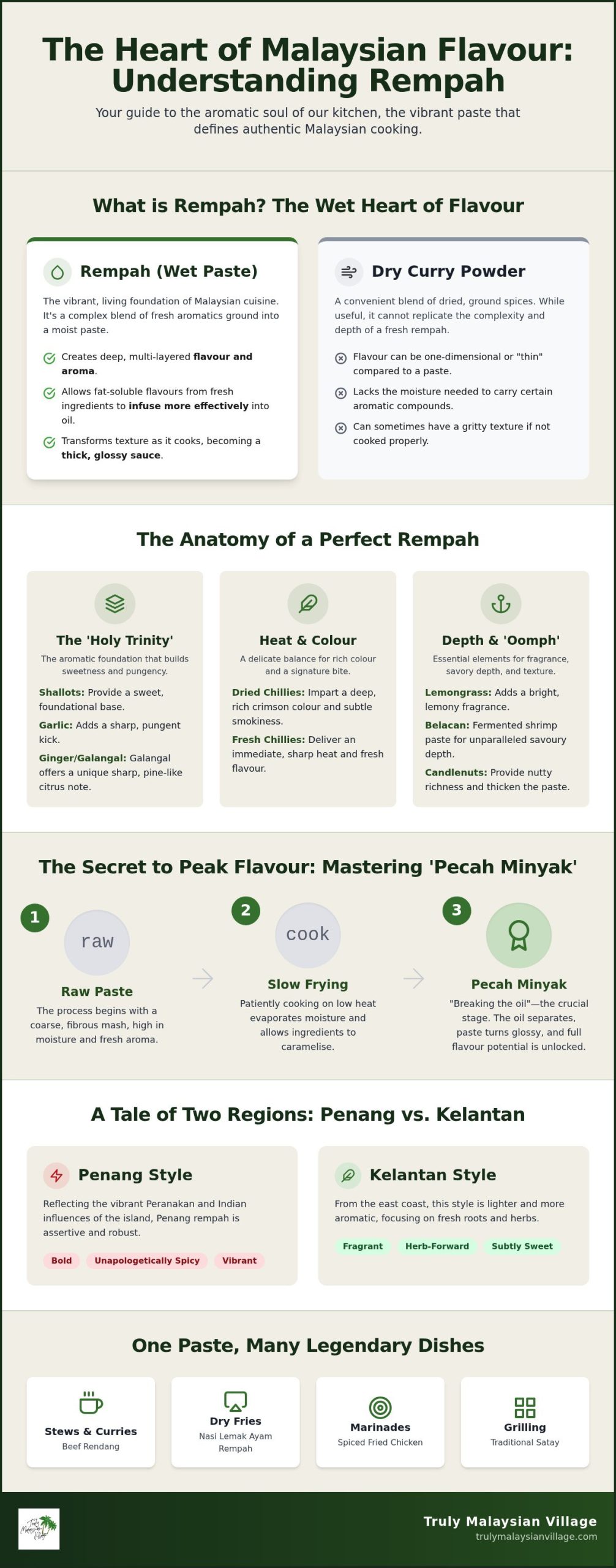
The magic of a true rempah lies in its moisture. Unlike dry rubs, a wet paste allows fat-soluble flavours from ingredients like lemongrass and galangal to infuse more effectively into the cooking oil. When you first start frying, the paste looks like a coarse, fibrous mash. As you cook it slowly, the moisture evaporates and the ingredients begin to caramelise. You’ll know it’s ready when the texture transforms into a thick, glossy, and beautifully integrated sauce. It smells absolutely divine.
Rempah vs. Curry Paste: What’s the Difference?
People often confuse Malaysian rempah with Thai curry pastes, but there are distinct differences in both preparation and use. While Thai pastes often lean heavily on fresh herbs and citrus notes, a Malaysian rempah frequently incorporates toasted dry spices and fermented elements like belacan (shrimp paste). This provides a heavier, more grounded flavour profile that lingers on the tongue.
This unique composition makes rempah incredibly versatile. We don’t just use it for stews. It’s the secret behind many applications:
- Dry Fries: Creating a thick, intense coating for meats.
- Marinades: Infusing deep flavour into our signature spiced fried chicken.
- Grilling: Forming a smoky, spicy crust on traditional satay.
It isn’t just a shortcut to a meal; it’s a living culinary technique that requires patience, intuition, and a respect for tradition. At Truly Malaysian Village, we treat every batch of rempah as a tribute to the recipes passed down through our family.
The Anatomy of a Rempah: Core Ingredients and Regional Styles
When you peel back the layers of what is rempah spice paste, you find a meticulously balanced ecosystem of aromatics. It’s the secret behind the complex flavour profiles that define our kitchen at Truly Malaysian Village. Every batch begins with the “Holy Trinity” of Malaysian cooking: shallots, garlic, and a choice of ginger or galangal. While shallots provide a sweet, foundational base, galangal offers a sharp, pine-like citrus note that ginger simply cannot replicate. These roots are the pillars upon which every other flavour is built.
The heat is another delicate dance. We often balance dried chillies, which provide that deep, rich crimson colour and a subtle smokiness, with fresh chillies for their immediate, sharp bite. To elevate the profile, we add lemongrass for its lemony fragrance and the essential “oomph” of belacan. This fermented shrimp paste might smell pungent on its own, but once fried, it provides an unparalleled savoury depth. For texture, we rely on “buah keras” (candlenuts) to add a nutty richness and help thicken the paste into a luscious coating. As noted in Rempah: The spice paste that’s the backbone of Malaysian cuisine, these ingredients work in harmony to create a “mother sauce” that is uniquely Southeast Asian.
Penang vs. Kelantan: A Tale of Two Regions
Malaysia’s geography dictates its flavours, and the rempah is no exception. In Penang, the paste is often bold and unapologetically spicy, reflecting the vibrant Peranakan and Indian influences of the island. Move east to Kelantan, and you’ll find a more fragrant, herb-forward approach. Kelantanese rempah often features fresh roots and a subtle sweetness that feels light yet complex. At Truly Malaysian Village, our triplet founders draw from their family roots in both regions to create our signature menu items. It’s a blend of heritage that captures the best of both worlds, right here in Adelaide.
Sourcing Traditional Ingredients in Australia
Living in Australia doesn’t mean you have to sacrifice authenticity. Most local markets now stock fresh galangal and lemongrass; look for firm, heavy stalks that feel full of moisture. If you can’t find candlenuts, raw macadamias are a brilliant Aussie substitution that provides a similar creamy texture. However, don’t be tempted to swap fresh turmeric for the powdered variety if you can help it. Fresh turmeric provides a vivid, earthy glow that defines the look of a proper paste. If you’d rather skip the prep and taste the real deal prepared with love, you can always book a table with us to experience these flavours firsthand.
The Art of Making Rempah: From “Batu Lesung” to “Pecah Minyak”
Crafting the perfect base requires more than just the right ingredients; it demands patience and a bit of elbow grease. To truly grasp what is rempah spice paste, you have to look at the method of preparation, which is as much a ritual as it is a recipe in our family kitchen. Traditionally, this starts with the batu lesung, a heavy stone mortar and pestle that has been the heartbeat of Malaysian homes for generations. The rhythmic “tok tok” sound of stone hitting stone is a nostalgic melody for many of us, signalling that something delicious is on the way.
The process of tumis, or slow-frying the paste in oil, is where the magic happens. It isn’t a task you can rush with high heat. You’re waiting for that specific moment of transformation known as pecah minyak, or “breaking the oil.” This is the gold standard of Malaysian cooking, a sign that the raw ingredients have been fully tamed and their flavours unleashed. It’s a technique our triplet founders watched their elders perfect, and it remains central to everything we serve today.
Why Pounding Beats Blending
Science actually backs the traditionalists on this one. When you use a batu lesung, you are rupturing the plant cells of the shallots and lemongrass, literally crushing the essential oils out of them. A blender, by contrast, uses sharp blades to shear and cut the ingredients. While a blender is a handy modern shortcut for busy Aussie kitchens, it often introduces too much air and water, which can dilute the intensity. If you are using a blender, try adding a little oil instead of water to help the blades turn; it helps keep the soul of the paste intact and makes the frying process much smoother.
Mastering the “Pecah Minyak” Technique
Mastering the pecah minyak technique is what separates a good curry from a legendary one. You need to keep a close eye on the pan as the paste bubbles away over a medium-low flame. There are three key signs that your rempah is ready:
- Colour change: The paste should darken significantly, taking on a rich, concentrated, and moody hue.
- Oil separation: You’ll see the oil ‘breaking’ away from the solids and pooling in shimmering bubbles at the edges.
- Aroma: The pungent, watery scent of raw chillies and onions should vanish, replaced by a deep, nutty, and mellow fragrance.
Undercooking the paste is a common mistake that leads to a thin, slightly acidic flavour that lacks body. Conversely, if the heat is too high, the natural sugars in the shallots will burn and turn bitter. It’s all about the agak agak, that intuitive feeling we’ve honed over years of service at Truly Malaysian Village to ensure every dish is spot on.
Versatility: How Rempah Powers the Malaysian Menu
Once you understand what is rempah spice paste, you begin to see its influence everywhere on a Malaysian menu. It is far from a one-note ingredient; it is a culinary chameleon that adapts to different cooking methods. In our kitchen, it serves as the essential foundation for our Authentic Nasi Lemak, specifically providing the soul for the spiced fried chicken. Without that concentrated base, the dish would lose the aromatic punch that our guests have come to love.
The versatility of a well-made paste extends to every corner of Malaysian cuisine. It gives “attitude” to the broths in a Penang Laksa and provides the smoky, savoury backbone for a plate of Mee Goreng Daging. Whether it’s being used as a base for a soup or a dry rub for a stir-fry, the rempah is what carries the flavour. It’s the difference between a meal that’s simply “spicy” and one that has the legendary depth of a traditional Malaysian home.
Marinades and Dry Frying
In Australia, we love a good barbie, and a leftover scoop of rempah makes for an incredible meat rub. When we prepare our signature Ayam Rempah, the paste acts as a powerful marinade that clings to the chicken. During the frying process, the fibrous bits of lemongrass and galangal in the paste crisp up, creating those highly addictive “crunchy bits” that locals often fight over. If you have leftover paste at home, you can store it in the fridge for up to a week or freeze it in ice cube trays for a quick flavour boost on a busy weeknight.
Stews and Slow-Cooked Masterpieces
When it comes to stews like Beef or Chicken Rendang, the rempah plays a different role. Here, it interacts with rich coconut milk over several hours of slow simmering. As the liquid evaporates, the oils from the paste and the coconut milk merge, allowing the spices to toast and caramelise directly onto the meat. This is how we achieve that famous “dry curry” consistency. We often find that our stews taste even better the next day. Allowing the dish to “rest” gives the aromatics time to fully develop and settle into the fibres of the meat. If you’re ready to experience this depth of flavour without the hours of prep, book your table today and let us share our heritage with you.
Experience Authentic Rempah with Truly Malaysian Village
At Truly Malaysian Village, we don’t just cook food; we preserve memories. Our story began with three brothers, triplets, who shared a vision to honour their family’s deep roots in Penang and Kelantan. When guests ask us what is rempah spice paste, we show them through the fragrant steam rising from our woks. For us, it is the thread that connects our childhood in Malaysia to our community here in Adelaide. We refuse to take shortcuts with commercial powders because we know the soul of our kitchen lies in the patient, traditional “tumis” methods we learned from the generations before us.
This dedication to craftsmanship is why our dishes resonate so deeply with the Malaysian diaspora. It provides a genuine “taste of home” that is hard to find outside a family kitchen. Every batch of paste we prepare is a labour of love, ensuring we bring an authentic Malaysian street food experience to your table every single time you visit. We believe that the best food is made with time, respect, and a little bit of fire.
Our Signature Nasi Lemak Ayam Rempah
The star of our menu, the Nasi Lemak Ayam Rempah, is the ultimate expression of our spice-making philosophy. The chicken is marinated in a heritage-rich spice blend that ensures every bite is infused with the warmth of ginger, the earthiness of turmeric, and the punch of fresh chillies. We take great care in balancing this with our house-made spicy sambal, creating a harmony of flavours that is both comforting and exciting. For those looking to explore even deeper into regional specialities, our weekend specials often feature rare pastes from the East Coast that you won’t find on a standard menu.
Bring the Village to Your Next Event
We believe the best way to enjoy a rempah-rich feast is together. Whether you are hosting a small family gathering or a large corporate function, our dishes are designed for sharing. Through our unforgettable catering services, we bring the vibrant flavours of the village directly to you. We understand that everyone has a different tolerance for heat, so we are happy to customise spice levels for Australian palates. We do this with a careful hand, ensuring the integrity and authenticity of the recipe remain intact. It’s about more than just a meal; it’s about creating a sense of belonging through the food we love to share.
Bring the Soul of Malaysia to Your Table
Understanding what is rempah spice paste is the first step toward truly appreciating the complex layers of Malaysian cuisine. It is a culinary journey that moves from the coarse pounding of the stone mortar to the patient, rhythmic bubbling of the frying pan. At Truly Malaysian Village, our triplet founders remain dedicated to these time-honoured methods, refusing to compromise on the traditional recipes passed down through generations of our family.
Whether it is the rich, caramelised depth of our Beef Rendang or the fragrant, crispy crumbs of our signature Nasi Lemak Ayam Rempah, every dish we serve is a tribute to our Penang and Kelantan heritage. We invite you to step into our village and experience these aromatic secrets for yourself. You don’t need a plane ticket to find the true heart of Malaysian home cooking; you just need a seat at our table.
Taste the heritage—book your table or order our signature Nasi Lemak today!
We can’t wait to share a piece of our home with you.
Frequently Asked Questions
What is the most important ingredient in a rempah?
Shallots are widely considered the most vital ingredient because they provide the sweet, jammy foundation that carries the other aromatics. They give the paste its necessary body and help it cling to ingredients. While the chillies provide the heat, the shallots provide the heart of the flavour profile.
Can I buy pre-made rempah in Australian supermarkets?
You can find pre-made versions in the international aisle of most major Australian supermarkets, but they often contain preservatives that dull the fresh flavours. For a truly authentic experience, it’s better to visit a specialist Asian grocer or simply join us at Truly Malaysian Village to taste a paste made from scratch.
How long does homemade rempah spice paste last in the fridge?
A fresh batch will generally stay at its peak for five to seven days when stored in an airtight container. To help it last longer, you can pour a thin layer of oil over the top of the paste to create a seal. This prevents air from reaching the aromatics and keeps the flavours vibrant for your next cook.
Is rempah always spicy, or can it be mild?
It can definitely be tailored to your preference. While many people asking what is rempah spice paste expect a lot of heat, you can easily create a mild version by using large red chillies instead of bird’s eye chillies. Removing the seeds also significantly reduces the fire while keeping the beautiful red colour.
Why did my rempah turn bitter when I fried it?
Bitterness usually occurs if the heat was too high during the initial frying stage, causing the finely ground shallots or garlic to burn. It can also happen if you use too much turmeric or if the paste hasn’t been cooked long enough to remove the raw, metallic edge of the fresh roots.
What is the best way to clean a mortar and pestle after making rempah?
The most effective traditional method is to grind a handful of dry white rice into a fine powder. The rice acts as a natural sponge, absorbing the pungent oils and stubborn stains from the stone. After that, a quick rinse with warm water is usually all you need to keep it in top condition.
Can I freeze rempah paste for later use?
Freezing is a brilliant way to save time and will keep your paste fresh for up to three months. We recommend portioning the mixture into ice cube trays. This allows you to pop out exactly what you need for a quick midweek meal without having to defrost a whole jar.
Is rempah gluten-free and vegan-friendly?
Most traditional recipes for what is rempah spice paste are naturally gluten-free as they rely on fresh roots and seeds. However, they aren’t always vegan-friendly because of the belacan, or shrimp paste. If you need a vegan alternative, you can swap the belacan for a small amount of miso or fermented soybean paste.

Article by
Amzar Hariz
Director of Truly Malaysian Village
Disclaimer
The content published on this website may include articles generated or assisted by AI writing tools. While we aim to provide helpful, accurate, and up-to-date information, we do not guarantee that all content is complete, error-free, or suitable for every individual situation.

