
Understanding traditional Malaysian drinks begins with mastering core menu terms such as black coffee (Kopi O) and pulled tea (teh tarik). Traditional venues across Australia typically charge modest rates for these signature hot and cold refreshments. Selecting the right beverage simply depends on your preference for rich milk blends or lighter herbal infusions.
Key Takeaways: Traditional Malaysian drinks center on Teh Tarik (pulled tea) and Kopi (coffee), using specific suffixes like ‘O’ for no milk and ‘C’ for evaporated milk.
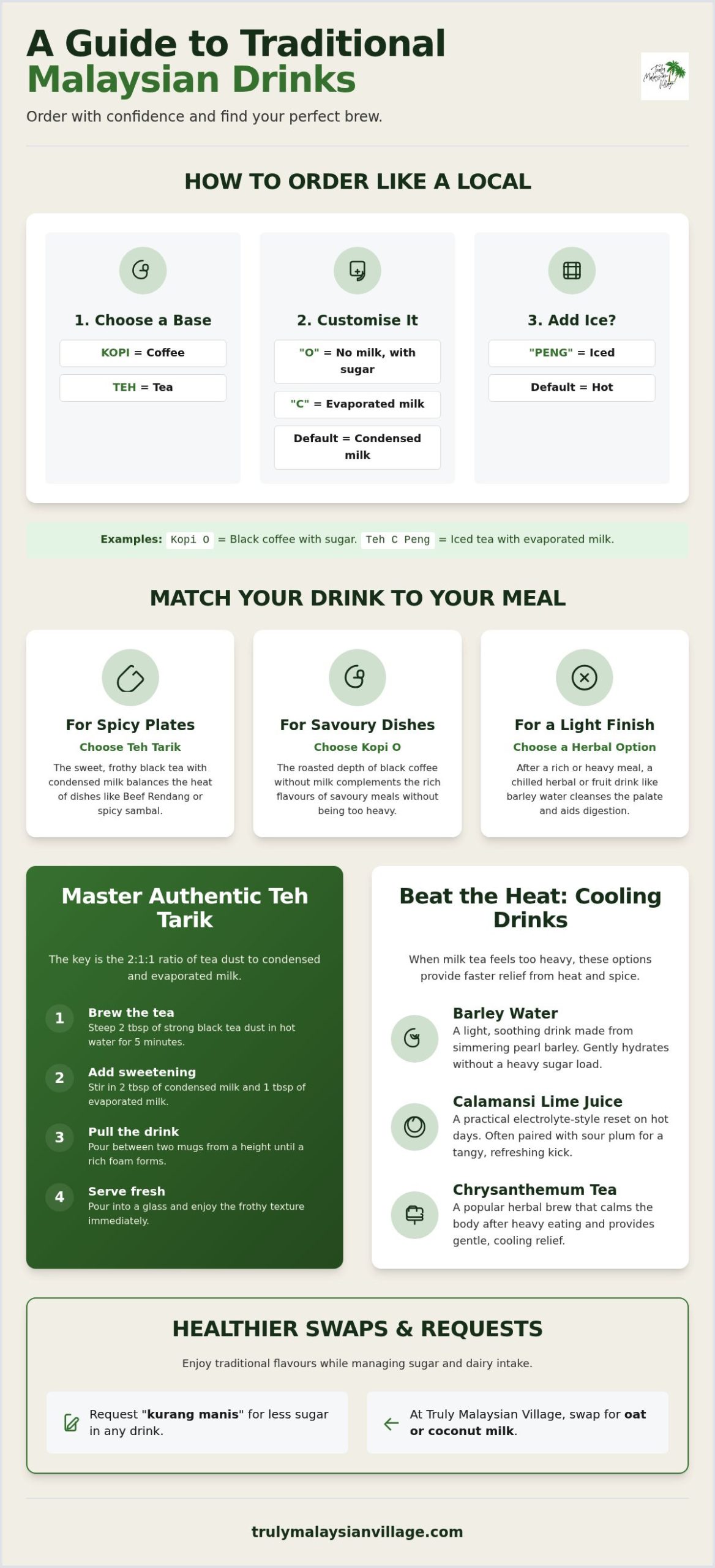
- Master the 2:1:1 ratio of black tea dust, condensed milk, and evaporated milk for authentic Teh Tarik.
- Except when ordering ‘Kopi O’ or herbal teas, expect high sugar content from condensed milk and syrups.
- Choose barley water or calamansi lime juice for the best cooling relief after eating spicy Malaysian dishes.
- Request oat or coconut milk swaps at Truly Malaysian Village to create dairy-free versions of classic brews.
Match Your Malaysian Meal to the Right Drink in Three Moves
Menu jargon stops slowing you down once you map each local name to a basic preparation and a clear use case.
Three situations come up again and again when you sit down to order:
- You want a sweet dairy classic with your spicy plate: choose pulled tea, the frothy black tea built on condensed milk.
- You want roasted depth without dairy beside a savoury dish: choose black coffee.
- You want a lighter finish after a heavy meal: choose a chilled herbal option.
With clients, standardising meal pairings cuts confusion during busy service hours, and proper menu translation helps you choose quickly. Placing an order at a local Indian-Muslim food stall (mamak stall) can feel like learning a new dialect; once you hold these three terms, you order with confidence.
Enjoying authentic flavours at Truly Malaysian Village brings these traditional refreshments straight to your table. A chilled herbal option pairs cleanly when you want something lighter than milk tea. More on this: Truly Malaysian Village.
“Kopi O” on the Menu Means Black Coffee, Sugar, No Milk
If the board only shows short codes, you need one rule: "Kopi O" is black coffee served with sugar and without any added milk.
Ordering local hot drinks such as pulled tea at a crowded Indian-Muslim food stall rewards the same code-reading habit. Adding "O" means no milk, while "C" indicates evaporated milk. Cold drinks add "Peng" at the end. Master brewers note that crafting a smooth cup still needs strict heat control, because careless pouring ruins the texture.
Order black coffee when you want bold roasted flavours; choose the iced version when you need quick heat relief. You can browse popular non-alcoholic drinks for more cold options once you know the codes.
Ideal Ratios for Teh Tarik and Iced Chocolate Malt at Home
Home versions taste close to the stall standard when you balance a strong brewed base against sweetened condensed milk, and the timing of each step matters as much as the ingredients.
Pulling tea creates a rich foam while cooling the liquid to a drinkable temperature in one motion. Use these steps for pulled tea:
- Brew the tea: steep two tablespoons of strong black tea dust in hot water for five minutes.
- Add sweetening: stir in two tablespoons of condensed milk and one tablespoon of evaporated milk.
- Pull the drink: tip the liquid repeatedly between two large metal mugs from a height until frothy.
- Serve fresh: tip into a clear glass and drink straight away.
Skilled prep bridges the gap between "too much" and "not enough," so the cup sits comfortably beside a balanced plate such as traditional nasi lemak.
For a generic iced chocolate malt drink, dissolve three tablespoons of powder in hot water before adding condensed milk and ice. Tipping warm liquid straight over ice dilutes the body, much as a melting ice cube thins a hot soup.
Herbal and Fruit Traditional Malaysian Drinks That Cool You Down
After chilli-heavy plates, herbal teas and chilled fruit infusions give you faster relief than another milky brew, and they support comfortable digestion.
On street food tours, locals often steady a spicy afternoon meal with soothing barley water or chrysanthemum tea; those brewed cups calm the body after heavy eating. Hot herbal brews suit quiet morning routines, whereas iced fruit juices fit humid midday outings. Calamansi lime juice paired with sour plum works as a practical electrolyte-style reset on hot Adelaide afternoons. Regional ingredients supply the cooling character you want without artificial sugars, and these options sit neatly beside the hearty morning plates in the breakfast dishes guide.
Why Barley and Grain Drinks Deserve a Place on Your Table
When milk tea feels too heavy for the heat, barley water gives you a light, soothing cool-down that still belongs to the same drinks tradition.
Client work shows people often skip these humble grain cups, yet they hydrate gently without a heavy sugar load. Fresh barley water stays a staple in local coffee shops: brewers simmer pearl barley with winter melon or pandan leaves for a subtly sweet profile you can drink warm or over ice.
Roasted rice water is another classic. Grain beverages suit you if you want a traditional herbal path instead of caffeinated tea, and unsweetened versions keep the refreshment clean.
When Sugar-Heavy Traditional Drinks Clash with Your Diet
Many traditional Malaysian beverages run high in sugar, so they can sit at odds with a tighter health target if you order them in the default style.
Sweeter cups such as pulled tea rely on condensed milk and syrups for their signature flavour. A practical shortcut: order reduced-sweetness black coffee at a local Indian-Muslim food stall and you cut unwanted calories on the spot. Customised brewing still depends on skilled staff who adjust sweetness accurately during preparation, so ask clearly for less sugar when you order. Low-sugar versions keep the cultural taste while respecting your daily wellness target.
5 Low-Sugar and Dairy-Free Swaps You Can Request
You can steer traditional drinks toward vegan and low-sugar needs by swapping condensed milk for plant milks and sweetening with stevia.
Swapping dairy for oat or coconut milk keeps a rich texture without overpowering the native flavours, which matters because traditional sweet drinks often hide high sugar levels. At a local Indian-Muslim food stall, state the swap and the sugar level in one clear line so the cup matches what you asked for.
| Beverage Base | Plant Modification | Sugar Level |
|---|---|---|
| Pulled tea | Oat milk | Low sugar |
| Black coffee | None (Naturally vegan) | Sweetened |
| Herbal cooling tea | None | No added sugar |
Pulled tea starts as a dairy drink in its classic form; the oat milk row above is the modified request, not the default recipe. Black coffee and herbal cooling tea already fit a vegan order when you leave them unsweetened.
Where to Order These Drinks at Truly Malaysian Village
You can drink these Malaysian beverages at Truly Malaysian Village, and you will also meet them at local night markets, casual hawker centres, and higher-end dining rooms.
During menu planning, review traditional offerings early so sweet and savoury elements stay balanced across the full beverage service. Street stalls keep costs accessible for everyday dining; mid-tier restaurants balance sit-down comfort with moderate spending; fine dining rooms charge premium rates for artisanal presentations. Hawker stalls fit a quick budget run, while upscale rooms suit formal events. To hold your event budget in line, contact the venue and ask for a personalised quote built around your headcount.
Details and enquiries: Truly Malaysian Village.
Frequently asked questions
What are common traditional Malaysian drinks?
Popular choices include pulled tea and black coffee, joined on many menus by herbal teas and fruit cordials.
What drinks are listed under Malaysian drinks?
A typical board features pulled tea and black coffee. You will also find herbal teas or sweet cordials at a traditional Indian-Muslim food stall.
Which subcategories exist for Malaysian drinks?
Traditional Malaysian drinks split into hot brews, iced refreshers, and sweet dessert beverages. Hot-option choice often follows meal timing; for event catering figures, request a personalised quote.
Which Malaysian drinks should you try first?
Start with pulled tea when you want a rich milky brew, or black coffee when you want a strong dark roast. Fresh coconut water gives you a naturally hydrating third option.
Enjoying Traditional Drinks in 2026
Once you know the core local terms, customising traditional Malaysian drinks becomes a short set of choices: rich milk blends such as pulled tea, lighter herbal infusions, or a bold black coffee when you want roast without dairy. Skilled preparation keeps sweet condensed milk in balance so the cup arrives the way you asked.
For an authentic taste of this range in South Australia in 2026, reserve your table at Truly Malaysian Village. The team crafts classic beverages to your sweetness preference; send a message if you need tailored dietary options for your table.

Article by
Amzar Hariz
Director of Truly Malaysian Village
Disclaimer
The content published on this website may include articles generated or assisted by AI writing tools. While we aim to provide helpful, accurate, and up-to-date information, we do not guarantee that all content is complete, error-free, or suitable for every individual situation.

