
A true Nasi Lemak isn’t just a quick breakfast; it’s a sensory blueprint of Malaysia’s heritage that many modern food courts have unfortunately forgotten. You’ve likely sat down to a plate of rice only to find the sambal lacks punch or the rice is missing that rich, coconut fragrance. It’s disappointing when you’re searching for an authentic taste of home but end up with a watered-down version that doesn’t hit the mark. If you’ve ever wondered exactly what is in a traditional nasi lemak, you’re not alone. We believe that every ingredient tells a story of craftsmanship and cultural pride.
We’ll show you why this dish is a sensory ecosystem where every flavour must achieve a perfect fair go of balance. In this guide, we’ll walk you through the five essential pillars that define this national treasure. You’ll discover how to spot a genuine version from the first whiff of pandan and appreciate the distinct heritage of Penang and Kelantan styles. Let’s explore the soul of Malaysia on a plate.
Key Takeaways
- Learn why the rice is the heartbeat of the dish, infused with coconut milk and aromatic pandan leaves for that signature creamy texture.
- Discover exactly what is in a traditional nasi lemak, from the fiery kick of authentic sambal belacan to the essential crunch of fried anchovies and peanuts.
- Uncover the regional secrets of Penang and Kelantan styles that distinguish a truly heritage-led plate from a standard food court offering.
- Understand how to elevate your meal with traditional proteins like Ayam Rempah or slow-cooked Beef Rendang for a complete Malaysian experience.
- Gain the confidence to spot an authentic version by looking for the five pillars of balance that define Malaysia’s beloved national treasure.
The Foundation: Why Nasi Lemak is Called ‘Fatty Rice’
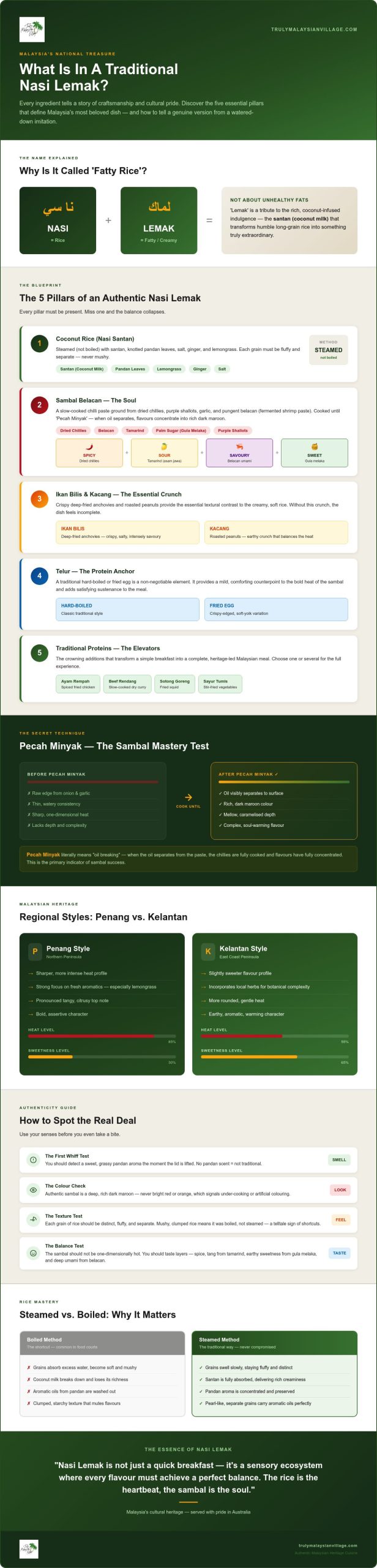
To truly appreciate What is Nasi Lemak?, you have to start with the name itself. In Malay, ‘Nasi’ means rice, and ‘Lemak’ translates to ‘fatty’ or ‘creamy’. It’s not a reference to unhealthy fats, but a tribute to the rich, coconut-infused indulgence that makes this dish Malaysia’s soul on a plate. When people ask what is in a traditional nasi lemak, they’re often searching for the secret to that perfect, fragrant grain that feels like a warm welcome from a family kitchen. It’s the ‘santan’ (coconut milk) that does the heavy lifting, transforming humble long-grain rice into something truly extraordinary. This foundation is where the heritage of our Penang and Kelantan roots first becomes evident, setting the stage for the bold flavours to come.
The Art of the ‘Lemak’ Texture
The secret to a world-class Nasi Lemak lies in the delicate balance of moisture and richness. Lemak is the rich, indulgent mouthfeel that defines the dish’s quality. While the coconut cream adds a heavy, luxurious weight, the rice itself should remain beautifully fluffy and separate. If it’s mushy or clumped together, the magic is lost. Traditional methods favour steaming over boiling for this very reason. Steaming allows the grains to swell slowly, absorbing the santan without breaking down. This ensures each spoonful has a distinct, pearl-like texture that carries the aromatic oils perfectly. You can check out our weekday menu to see how we maintain this standard every single morning.
Fragrant Aromatics Beyond the Coconut
While coconut is the star, it’s the supporting cast of aromatics that creates the deep, nostalgic scent that defines a Malaysian kitchen. Knotted pandan leaves are absolutely non-negotiable. They’re tucked into the rice during the steaming process, releasing a sweet, grassy aroma that lingers long after the lid is lifted. When considering what is in a traditional nasi lemak, most people think only of the coconut, but the aromatics are just as vital. We add a precise pinch of salt to highlight the coconut’s natural sweetness, alongside thin slices of ginger and bruised stalks of lemongrass. These aren’t just for show; the ginger provides a subtle heat that aids digestion, while the lemongrass adds a citrusy top note that cuts through the richness, preventing the dish from feeling too heavy on the palate.
The Soul of the Dish: Authentic Malaysian Sambal
If the coconut rice is the body of the meal, the sambal is undoubtedly its heartbeat. You can have the fluffiest rice in the world, but if the sambal is thin or one-dimensional, the whole experience falls flat. When asking what is in a traditional nasi lemak, the answer always leads back to this complex, slow-cooked chilli paste. It starts with a base of rehydrated dried chillies, purple shallots, and garlic, all grounded into a ‘rempah’ or spice paste. The secret ingredient, however, is the pungent belacan (fermented shrimp paste), which provides a deep, savoury umami that you won’t find in generic chilli sauces. We take great pride in sourcing the right belacan to ensure that nostalgic, home-cooked scent fills the air.
Achieving the perfect flavour requires a fair bit of patience and a watchful eye. We cook our sambal until it reaches ‘Pecah Minyak’, where the oil separates from the paste and rises to the surface. This signifies that the chillies are fully cooked and the flavours have concentrated into a rich, dark maroon. A traditional Nasi Lemak recipe often highlights this stage as the primary indicator of success. It ensures the raw edge of the onion and garlic is gone, replaced by a mellow, caramelised depth that feels like a warm hug from a Malaysian village kitchen. Without this step, the sambal remains sharp and lacks the soul required for a national treasure.
Sweet, Sour, and Savoury: The Triple Threat
Balance is the key to a truly traditional sambal. It shouldn’t just be ‘blow-your-head-off’ hot; it needs to dance between different taste profiles. Tamarind (asam jawa) provides a necessary tang that cuts through the spice, while palm sugar (gula melaka) adds a subtle, earthy sweetness. This trio creates a complex sauce that complements the creamy rice rather than overpowering it. It’s about depth rather than just heat, ensuring every mouthful is as rewarding as the last.
Regional Sambal Nuances: Penang vs. Kelantan
Because our family roots stretch from Penang to Kelantan, we appreciate the subtle shifts in flavour across the country. Penang sambals often lean towards a sharper heat with a focus on fresh aromatics like lemongrass. In contrast, Kelantan versions tend to be slightly sweeter and may incorporate local herbs for a more botanical profile. When you understand what is in a traditional nasi lemak from different regions, you start to see the diversity of Malaysia itself. You can explore our traditional menu to see our signature sambal in action, which draws from these time-honoured family secrets. If you’re ready to experience this balance for yourself, book a table with us today.
The Four Pillars: Essential Traditional Condiments
While the rice and sambal often take the spotlight, a plate is never complete without the four essential pillars that surround them. These aren’t just garnishes or afterthoughts; they’re functional components designed to balance the richness of the coconut rice and the intensity of the chilli. When you look at what is in a traditional nasi lemak, you’ll see a deliberate orchestration of textures. From the sharp saltiness of the anchovies to the cooling crunch of the cucumber, every element ensures a fair go for your tastebuds. This balance is what transforms a simple meal into a national treasure that has sustained generations of Malaysians.
The Importance of the Ikan Bilis and Peanuts
Texture is everything in Malaysian cuisine, and the combination of ikan bilis (dried anchovies) and peanuts provides the necessary ‘krup krup’ or crunch. The anchovies must be fried until they’re golden and brittle, offering a punch of salt that cuts right through the creamy rice. To understand the history and cultural significance of Nasi Lemak, you have to appreciate its origins as a humble farmer’s breakfast. These protein-rich, shelf-stable ingredients provided the energy needed for a hard day’s work in the fields. We take a traditional village-style approach to our sides, ensuring the peanuts are roasted or fried to a deep, nutty perfection without any hint of bitterness. It’s a small detail, but it makes all the difference when you’re mixing everything together for that perfect mouthful.
Cooling Down with Cucumber and Egg
The final two pillars serve as the necessary calm after the storm of the sambal. Fresh cucumber slices are the only vegetable that truly belongs on a traditional plate. Their high water content and crisp texture act as a palate cleanser, cooling the mouth after each spicy bite. Alongside the cucumber, you’ll always find a hard-boiled or fried egg. The egg acts as a neutral protein anchor, its mild flavour absorbing the sambal’s complexity and providing a soft contrast to the crispy anchovies. While some modern versions might experiment with different sides, these four pillars remain the gold standard for anyone asking what is in a traditional nasi lemak. If you’re looking for the ultimate version of this balance, you can’t go past our Authentic Nasi Lemak Ayam Rempah: A Taste of Home, which pairs these traditional condiments with our signature spiced chicken.
Leveling Up: Traditional Proteins and Regional Specials
While the basic components of rice and sambal are enough for a satisfying breakfast, most Malaysians prefer to “level up” their plate with a hearty protein for lunch or dinner. This is where the dish truly adapts to the heritage and personality of the cook. When you look at what is in a traditional nasi lemak across different states, the protein choice often tells the story of the region. In our family, these additions aren’t just sides; they’re the result of hours of slow-cooking and precise spice blending, ensuring that every bite carries the weight of tradition and a sense of home-cooked comfort.
The Secrets of Ayam Rempah
Standard fried chicken simply doesn’t compare to the complexity of Ayam Rempah. What sets it apart is the “rempah” itself, which refers to the crispy, aromatic golden crumbs made from minced ginger, lemongrass, and galangal that cling to the chicken. We marinate the meat in a vibrant blend of turmeric, coriander, and cumin to achieve that iconic golden finish and deep, earthy flavour. Our Ayam Rempah is a family recipe passed down through generations of Malaysian village life. It provides a crunchy, savoury contrast that perfectly complements the creamy coconut rice and fiery sambal.
Rendang: The Ultimate Comfort Pairing
For those seeking something more indulgent, Beef or Chicken Rendang is the gold standard of accompaniments. Unlike a typical saucy curry, a traditional rendang is cooked down for hours until the liquid evaporates, leaving the meat tender and coated in a thick, concentrated paste of toasted coconut and spices. This “dry” style is essential for Nasi Lemak because it prevents the rice from becoming soggy, allowing the grains to maintain their integrity. If you’re planning a celebration or a corporate event, you can book our catering services to bring this slow-cooked perfection to your next big Malaysian feast.
Beyond the daily staples, our weekend offerings allow us to share even rarer regional gems from our roots in Penang and Kelantan. You might find Nasi Kerabu Kelantan on the menu, famous for its blue pea flower rice and an abundance of fresh, finely shredded herbs. These dishes reflect the diverse culinary landscape of Malaysia, proving that what is in a traditional nasi lemak can vary beautifully depending on the regional heritage of the family preparing it. To experience these regional flavours and find your own favourite pairing, secure your table with us today.
The Truly Malaysian Experience: From Village to Australia
Bringing the heart of a Malaysian village to the Australian table is a journey that began long before we opened our doors. For us, the triplets behind Truly Malaysian Village, our roots in Penang and Kelantan are the compass for everything we cook. We grew up surrounded by the aromatic steam of coconut rice and the rhythmic pounding of sambal in a mortar and pestle. Today, we use those same time-honoured recipes passed down through generations to ensure that the cultural identity of our homeland remains vibrant and alive. It’s more than just a meal; it’s a piece of our history that we’re honoured to share with our local community, making every guest feel like an invited member of our family.
In Malaysia, Nasi Lemak is the ultimate social glue. It’s the dish that brings families together for weekend breakfasts and marks the centrepiece of major celebrations. There’s a deep sense of comfort in knowing that the same flavours enjoyed in a bustling night market are being celebrated right here. This communal spirit is what we strive to recreate, proving that ‘tradition meets taste’ is much more than a tagline. It’s a commitment to preserving the soul of our heritage while providing a warm, nostalgic space for everyone to enjoy a genuine taste of home.
A Legacy of Flavour
Our journey into the hearts of food lovers began with a passion for sharing our heritage through catering, a service we still proudly provide for those wanting to bring the village feel to their own private events. Transitioning to a full restaurant experience allowed us to create a dedicated home for our craft. We’ve found that using fresh Australian ingredients actually enhances the plate, provided the soul of the preparation remains strictly traditional. When guests ask what is in a traditional nasi lemak at our table, we explain it’s a marriage of premium local produce and the specific, heritage-led spices that define our family’s legacy. This dedication to craftsmanship ensures that the flavours remain authentic, even thousands of kilometres away from their origins.
Enjoying Your Meal the Traditional Way
To get the most out of your plate, you have to embrace the ritual of the meal. The traditional way to enjoy Nasi Lemak is to mix a little bit of everything into a single, perfect spoonful. You want that creamy rice, a dab of fiery sambal, a few crunchy anchovies, and a slice of egg all at once. This creates the ‘fair go’ of balance we’ve spoken about throughout this guide. To complete the experience, we always recommend pairing your meal with a frothy, pulled Teh Tarik. The condensed milk’s sweetness is the perfect companion to the heat of the sambal. For more tips on exploring these vibrant tastes, take a look at our Authentic Malaysian Street Food: A 2026 Flavour Guide.
Experience the Heart of Malaysia at Your Table
We’ve explored the delicate orchestration of flavours and textures that define this national treasure. Understanding what is in a traditional nasi lemak means appreciating the slow-cooked sambal, the fragrant coconut rice, and the essential crunch of the four pillars. It’s a culinary ecosystem where every element provides a fair go of balance, reflecting the rich heritage of our Penang and Kelantan roots. These regional nuances transform a simple meal into an evocative journey home.
As a family-run business founded by triplets, we’re dedicated to preserving these time-honoured recipes. You don’t need a passport to experience the authentic soul of Malaysian village life; it’s all right here, crafted with dedication and fresh Australian ingredients. We invite you to pull up a chair and taste the difference that heritage makes. It’s about tradition meeting taste in every bite. Discover our authentic Nasi Lemak Ayam Rempah on our weekday menu and join us for a meal that feels like a warm welcome. We can’t wait to share a perfect, fragrant spoonful with you soon.
Frequently Asked Questions
Is Nasi Lemak always spicy?
Nasi lemak doesn’t have to be overwhelmingly spicy, though the sambal is designed to provide a gentle kick. The heat level depends on the ratio of dried chillies used in the paste. In a traditional Malaysian kitchen, we balance this fire with the sweetness of palm sugar and the tang of tamarind. This creates a complex flavour profile that warms the palate without overpowering the delicate coconut notes of the rice.
Can I eat Nasi Lemak for dinner or is it only for breakfast?
While it originated as a hearty breakfast for farmers, nasi lemak is now enjoyed at any time of the day. Many Malaysians find it to be the ultimate comfort food for lunch or dinner. When you consider what is in a traditional nasi lemak, the combination of protein, healthy fats, and carbohydrates makes it a complete, satisfying meal. It’s common to see it served with heavier sides like beef rendang for evening dining.
What is the difference between Nasi Lemak and Nasi Uduk?
The primary difference lies in the regional condiments and the specific aromatics used in the rice. Nasi Lemak is Malaysia’s national dish, typically served with sambal belacan, fried anchovies, and peanuts. Nasi Uduk is an Indonesian variation from Jakarta that often includes different spices like cloves and cinnamon in the rice. It’s usually served with fried tempeh, shredded omelette, and a different style of sambal, reflecting its distinct Betawi roots.
Is traditional Nasi Lemak gluten-free?
Most components of a traditional nasi lemak are naturally gluten-free, including the coconut rice, eggs, and fresh cucumber. However, you should always check the sambal and protein marinades. Some commercial shrimp pastes or soy sauces used in the preparation of chicken or beef rendang may contain trace amounts of wheat. At our table, we focus on time-honoured methods that prioritise fresh, whole ingredients, making it easier to manage dietary requirements for our guests.
What makes the rice in Nasi Lemak so fragrant?
The signature aroma comes from the marriage of fresh coconut milk and knotted pandan leaves. During the steaming process, the rice absorbs the sweet, grassy scent of the pandan while the coconut milk provides a rich, creamy depth. We also add bruised lemongrass and ginger to the pot to enhance the complexity. This creates a nostalgic fragrance that can be smelled from across the street, signalling that a fresh batch is ready.
Why is Nasi Lemak served with anchovies and peanuts?
These two ingredients provide the essential ‘fair go’ of texture that defines the dish. The salty, brittle crunch of the fried ikan bilis (anchovies) acts as a direct contrast to the soft, rich coconut rice. Meanwhile, the earthy nuttiness of the roasted peanuts rounds out the savoury profile. This combination ensures every mouthful has a satisfying variety of textures, preventing the creamy rice from feeling too heavy or one-dimensional on the palate.
What is Ayam Rempah and why is it served with Nasi Lemak?
Ayam Rempah is a traditional spiced fried chicken that features a golden coating of crispy ginger, lemongrass, and galangal crumbs. It’s a popular protein choice because its bold, aromatic spices perfectly complement the ‘lemak’ or richness of the rice. Our version is a family recipe passed down through generations, ensuring that the chicken stays juicy while providing a crunchy exterior that stands up to the fiery heat of our signature sambal.
Can I get a vegetarian version of a traditional Nasi Lemak?
A vegetarian version is certainly possible by making a few thoughtful adjustments to the traditional ingredients. The sambal must be prepared without belacan (shrimp paste), and the fried anchovies are typically replaced with extra peanuts or fried tofu for crunch. When guests ask what is in a traditional nasi lemak for vegetarians, we focus on the aromatic rice and fresh condiments, ensuring the spirit of the dish remains intact even without the seafood elements.

Article by
Amzar Hariz
Director of Truly Malaysian Village
Disclaimer
The content published on this website may include articles generated or assisted by AI writing tools. While we aim to provide helpful, accurate, and up-to-date information, we do not guarantee that all content is complete, error-free, or suitable for every individual situation.

