
Imagine sitting on a worn wooden stool in the heart of a Malaysian village, where the humid air carries the sharp, irresistible scent of toasted shrimp paste and sizzling chillies. For many home cooks in Australia, recreating that soulful, rustic experience often feels out of reach. You’ve likely faced the frustration of rice turning out soggy or a flavour profile that lacks the punchy, umami depth of a true heritage meal. It’s a common struggle to find the right balance of heat and texture without the guidance of a seasoned hand who knows the secrets of the village kitchen.
We understand that deep desire for a plate of food that tastes like home. This guide is designed to help home cooks across Australia master the best nasi goreng kampung, bringing authentic flavours directly to your kitchen. You’ll learn how to harness the power of belacan and ikan bilis, ensuring every grain of rice is infused with history and heart. We’ll explore the essential techniques for achieving ‘wok hei’ at home and provide a clear roadmap to the specific ingredients that define this iconic dish. By the end of this guide, you’ll be ready to create a meal that is a genuine piece of Malaysian craftsmanship.
Key Takeaways
- Discover why the rustic, savoury profile of village-style fried rice differs from the sweeter versions commonly found in Australian food centres.
- Master the ‘Holy Trinity’ of aromatics and learn why belacan is the non-negotiable soul of the best nasi goreng kampung Adelaide has to offer.
- Learn the traditional ‘tumbuk’ method of pounding spices to unlock deep, aromatic layers that a modern food processor simply cannot replicate.
- Stop the soggy rice trap by understanding the science of starch and how to properly prepare your grains for that perfect, individual texture.
- Connect with the heritage of Penang and Kelantan through time-honoured recipes preserved by the family-run team at Truly Malaysian Village.
What is Nasi Goreng Kampung? The Soul of the Malaysian Village
In the quiet mornings of a Malaysian village, the rhythm of a stone mortar hitting a pestle is the heartbeat of the kitchen. This is where Nasi Goreng Kampung begins. The word ‘Kampung’ translates to ‘village’, but in a culinary context, it represents a rustic, unpretentious way of life. This isn’t a dish designed for white tablecloths; it’s a soulful meal born from the need to nourish families with whatever was on hand. It embodies a sense of community and home-cooked comfort that transcends the simple list of ingredients in the pan.
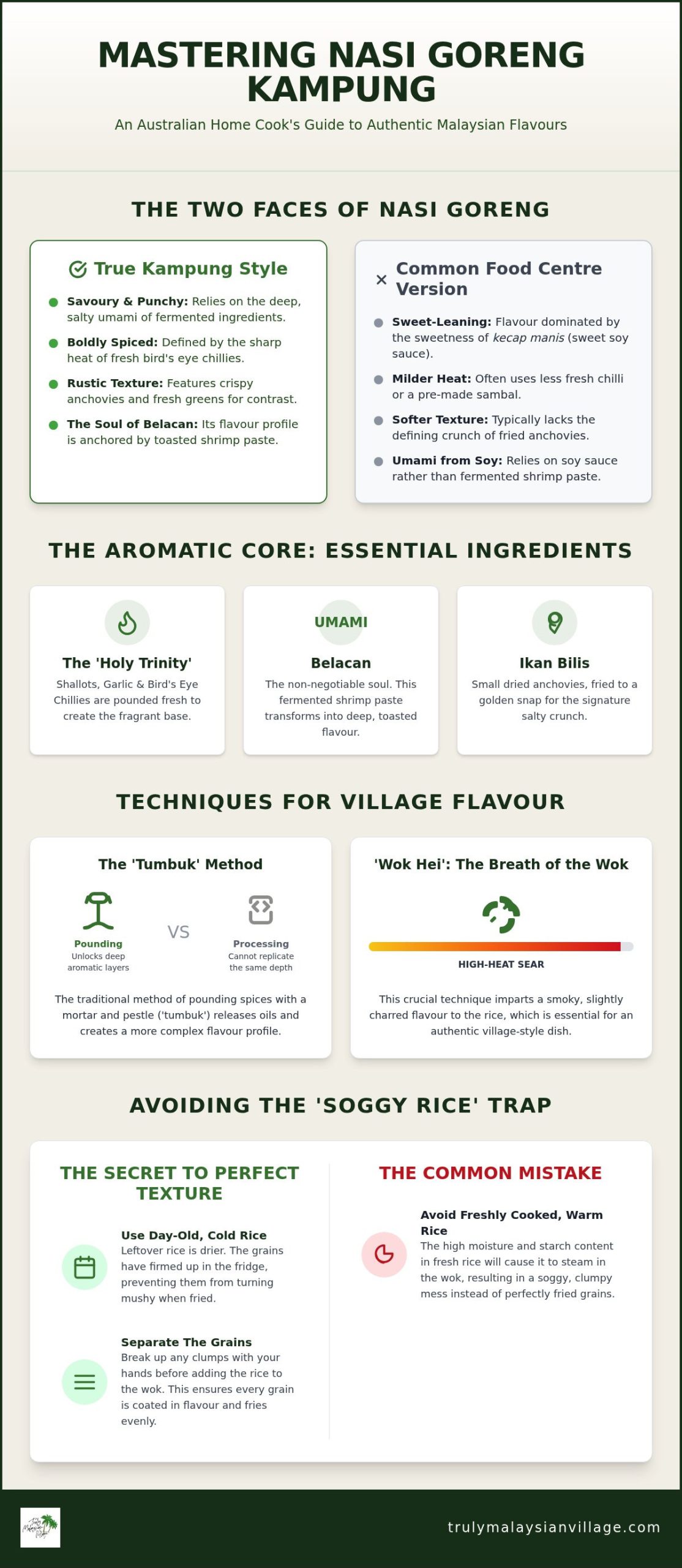
While many Australians are familiar with the standard Nasi Goreng found in local food centres, the village-style version is a different beast entirely. Most commercial versions lean heavily on the sweetness of kecap manis. In contrast, a true Kampung fry-up is savoury, punchy, and unapologetically bold. It relies on the depth of fermented prawn paste and the sharp bite of bird’s eye chillies. Traditionally, it’s a masterclass in sustainability. Families use leftover rice from the night before to ensure nothing goes to waste, transforming cold grains into a meal that’s a staple for breakfast, lunch, or a late-night supper. If you’re hunting for the best nasi goreng kampung Adelaide has to offer, you’re looking for these specific, traditional markers.
The Regional Influences of Penang and Kelantan
The soul of this dish often shifts depending on the cook’s roots. In Penang, the influence is felt through fiery, aromatic sambals that provide a lingering heat. Down in Kelantan, the flavours might lean towards a more herb-infused profile, reflecting the lush landscapes of the region. This heritage is at the core of our craft at Truly Malaysian Village. Our founders, triplets with deep roots in both Penang and Kelantan, preserve these time-honoured methods to create a perfect harmony of salt, spice, and umami. You can taste this dedication to authenticity on our weekday menu, where we bring these regional secrets to life.
Why Texture is King in Village Fried Rice
A plate of village fried rice is a sensory journey where texture plays a leading role. It starts with the ikan bilis, or dried anchovies. These are fried until they reach a golden, salty snap, providing a crunch that cuts through the soft rice. Then there’s the ‘wok hei’, or the breath of the wok. This requires a high-heat sear that leaves the rice slightly charred and smoky. Finally, fresh water spinach, or kangkong, is tossed in at the last moment. These leafy greens provide a crisp, clean contrast to the rich, spicy flavours of the rice, ensuring the best nasi goreng kampung Adelaide diners experience is as authentic as a meal served in a rural Malaysian home.
The Aromatic Core: Essential Ingredients for Nasi Goreng Kampung
The foundation of any great village fry-up rests on three humble pillars: shallots, garlic, and bird’s eye chillies, often called cili padi. Unlike urban recipes that might use a pre-made paste, the village style demands these are pounded together fresh. This release of oils creates a fragrance that defines the best nasi goreng kampung Adelaide locals seek. The shallots provide a subtle sweetness, the garlic adds a sharp depth, and the chillies deliver that signature, creeping heat that lingers on the palate.
Belacan is the non-negotiable soul of the dish. This fermented prawn paste is what separates a generic fried rice from a true Malaysian masterpiece. While its raw aroma is famously pungent, it transforms in the heat of the wok into a deep, toasted umami that anchors every other flavour. It adds a historical weight to the meal, connecting the diner to generations of coastal village cooking where fermented seafood was a precious source of protein and seasoning.
For the characteristic crunch, you’ll need high-quality ikan bilis (dried anchovies). Look for smaller, silvery ones; they crisp up more evenly and offer a more delicate saltiness. Pair this with a generous handful of kangkong, or water spinach. The hollow stems of the kangkong act like little straws, catching the oils and spices to ensure every bite is as vibrant as an authentic Nasi Goreng Kampung recipe should be.
Sourcing Authentic Spices in Australia
Finding these ingredients in Australia is easier than you might think. Most local Asian grocers stock blocks of belacan and bags of dried ikan bilis. When selecting bird’s eye chillies, look for firm, shiny skins; if they’re slightly wrinkled, they’ve lost their aromatic punch. For the rice, long-grain jasmine is the gold standard. It must be day-old and cold to ensure the grains stay separate. Fresh rice will clump and turn soggy, losing that distinct village texture we strive for.
Aussie Substitutes That Will Not Ruin the Flavour
If kangkong is out of season, English spinach or bok choy makes a fine alternative. They provide a similar leafy contrast, though they lack the signature crunch of kangkong stems. If the intensity of shrimp paste is too much for your palate, a small amount of high-quality fish sauce can provide a lighter umami boost. Always organise your ‘mise en place’ before you start; the actual cooking happens in a flash over high heat. If you’d rather leave the wok-work to the experts, you can always secure a table with us to experience the best nasi goreng kampung Adelaide can provide.
Master the Wok: An Authentic Nasi Goreng Kampung Recipe
Creating the best nasi goreng kampung Adelaide home cooks can produce starts long before the flame is lit. It begins with the rhythmic, steady thump of the stone mortar and pestle. While we take pride in serving this heritage dish at Truly Malaysian Village, we believe every kitchen should occasionally echo with these traditional sounds. This recipe isn’t just about mixing ingredients; it’s about the sequence and the soul you put into the preparation.
The ‘Tumbuk’ Method: Mortar and Pestle vs. Blender
In a modern kitchen, it’s tempting to reach for a blender to save time. However, a mechanical blade merely slices through the aromatics, often requiring added water that dilutes the final flavour. The ‘tumbuk’ method, or pounding, is superior because it crushes the cell walls of the shallots and chillies, releasing the essential oils that create a truly aromatic base. This mechanical friction creates a thick, pasty consistency that binds to the rice grains far better than a watery, blended alternative. To avoid a mess, add a pinch of salt to provide friction and start by pounding the harder ingredients like the belacan and chillies before adding the softer shallots.
Once your paste is ready, the cooking process follows a specific, time-honoured order to ensure every texture is preserved:
- Step 1: Heat a generous amount of oil and fry your ikan bilis until they are golden and crisp. Remove them immediately and set them aside. If you leave them in while you fry the rice, they will absorb moisture and lose that vital salty snap.
- Step 2: In the same fragrant oil, sauté your pounded spice paste. You are looking for the ‘pecah minyak’ stage, where the oil separates from the paste and turns a deep, vibrant red. This ensures the raw smell of the garlic and shallots has vanished, replaced by a complex, toasted depth.
- Step 3: Turn the heat to its maximum setting. Toss in your day-old rice, breaking up any clumps with the back of your ladle. Add your kangkong and seasonings, stirring constantly for two to three minutes until every grain is coated and slightly charred.
Achieving ‘Wok Hei’ on a Home Stove
The elusive ‘wok hei’, or breath of the wok, is what defines the best nasi goreng kampung Adelaide enthusiasts crave. On a standard home stove, the secret is to work in small batches. If you overcrowd the pan, the temperature drops and the rice begins to steam rather than sear. Use a heavy-based carbon steel wok or a cast iron pan that can retain high heat. Don’t be afraid of a little smoke; it’s the sign of a successful sear that brings the village spirit to your Australian kitchen. Add a dash of light soy sauce or a pinch of sugar right at the end, allowing it to caramelise against the hot metal for that authentic smoky finish. For those days when you’d rather experience this craftsmanship without the cleanup, our weekend menu is always ready to welcome you home.
Avoiding the ‘Soggy Rice’ Trap: Pro Tips for the Perfect Fry
The hallmark of a great village-style fried rice is the separation of the grains. If your dish turns into a clumpy, mushy mess, you’ve likely fallen into the trap of using fresh rice. At Truly Malaysian Village, we know that the best nasi goreng kampung Adelaide foodies enjoy depends on the science of starch. Freshly cooked rice is full of surface moisture and active amylopectin, which makes it incredibly sticky. By using rice that has rested, the starch undergoes a process called retrogradation, where the grains firm up and become resilient enough to withstand the high heat of the wok.
Rice Management 101
If you’ve forgotten to cook your rice a day ahead, don’t panic. You can mimic the ageing process by spreading freshly cooked rice onto a flat tray and placing it under a fan for thirty minutes. Even better, use the ‘fridge-dry’ method; leave the tray in the refrigerator uncovered. This cold, dry environment draws out excess moisture rapidly. When you’re ready to cook, use your fingers to gently break up any large clumps before they hit the pan. Jasmine rice is the preferred choice because its floral aroma provides a delicate counterpoint to the pungent shrimp paste, creating a layered sensory experience.
Managing your heat is equally vital. While the final toss requires a screaming hot pan, your aromatics need a gentler touch initially. If you burn the garlic or the belacan, the entire dish will take on a bitter, acrid note. Start with medium heat to slowly caramelise the shallots and release the oils from the paste. For the ikan bilis, the secret to a perfect snap is ensuring they are bone-dry before they hit the oil. Fry them until the bubbling subsides, which indicates the moisture has been completely replaced by crisp, golden oil. If you’re planning a larger gathering, our Malaysian catering services bring this same level of technical precision to your special events.
Troubleshooting Common Flavour Balances
Sometimes the heat from the cili padi can be overwhelming. If you find the spice level has escaped you, a tiny pinch of palm sugar or brown sugar can bridge the gap without making the dish sweet. If the flavour feels flat, you might need a little more depth; try adding a small amount of extra toasted belacan to the base. Finally, never underestimate the power of the telur mata, or fried egg with a runny yolk. The creamy fat of the yolk acts as a natural coolant, cutting through the intense umami and heat of the rice. To experience this perfect balance of texture and taste without the guesswork, book your table at Truly Malaysian Village today and let our family serve you.
Bringing the Village to Your Table with Truly Malaysian Village
At Truly Malaysian Village, we believe that food is the most powerful bridge between cultures. While mastering the wok at home is a rewarding journey, there is a specific magic that comes from a kitchen steeped in generations of memory. Our family-run brand was founded by triplets whose hearts remain firmly rooted in the vibrant food scenes of Penang and Kelantan. We’ve dedicated ourselves to preserving these time-honoured recipes, ensuring that every plate of the best nasi goreng kampung Adelaide has to offer feels like an invitation into our family home.
Our Nasi Goreng Kampung is a cornerstone of our weekday menu, loved for its unpretentious, punchy flavours. We don’t believe in shortcuts; we believe in the soul of the service. This means every batch of spice paste is prepared with the same dedication to depth and aroma that our ancestors practised. To complete the experience, we suggest pairing your rice with our succulent Chicken Satay, grilled to perfection, and a frothy, hand-pulled Teh Tarik. It’s a combination that captures the rhythmic, bustling energy of a Malaysian morning.
Our Commitment to Authenticity and Heritage
The ‘Truly Malaysian’ difference lies in how we marry the best of two worlds. We source fresh, premium Australian produce and pair it with traditional aromatic spices that define our heritage. This fusion allows us to maintain the integrity of our family recipes while ensuring the highest quality for our guests. We see ourselves as cultural ambassadors, eager to share the diverse, spicy, and umami-rich landscape of Malaysia with our local community. There are no hidden ingredients here, just honest flavours and a high level of dedication.
Experience the Taste of Home
Beyond our daily staples, we invite you to explore our weekend specials. These are the moments where we showcase rarer regional dishes that are often hard to find outside of a traditional Malaysian village. Whether you are dining in with us to enjoy the warmth of our community-focused atmosphere or looking to bring these flavours to a larger celebration, we are here to host you. For those planning a special event, our professional catering brings the best nasi goreng kampung Adelaide can provide directly to your venue. We don’t just provide a service; we share a piece of our legacy with every guest we serve.
Savour the Authentic Spirit of the Kampung
Mastering the rustic art of village-style fried rice is a journey through history, requiring patience, high heat, and a deep respect for traditional aromatics. We’ve shared the secrets to achieving that elusive ‘wok hei’ and the importance of using aged jasmine rice to avoid the common soggy trap. By embracing the punchy depth of belacan and the essential crunch of ikan bilis, you can now recreate a piece of the Malaysian countryside in your own kitchen. However, for those evenings when you crave the expertise of a family-run kitchen, we are here to welcome you.
At Truly Malaysian Village, our heritage is baked into every grain. Founded by triplets with deep roots in Penang and Kelantan, we remain 100% committed to traditional Malaysian flavours through authentic family recipes passed down through generations. Whether you’re a seasoned home cook or a curious food lover, we invite you to experience the best nasi goreng kampung Adelaide can offer in an atmosphere of genuine warmth. Book Your Table at Truly Malaysian Village today and let us share our story with you. We can’t wait to host you at our table.
Frequently Asked Questions
What is the difference between Nasi Goreng and Nasi Goreng Kampung?
Nasi Goreng Kampung is distinguished by its savoury, rustic profile compared to the sweeter versions often found in Australian food centres. While standard fried rice relies on kecap manis for sweetness, the village style prioritises umami depth from fermented prawn paste and the sharp heat of bird’s eye chillies. It lacks the dark colour of commercial varieties, focusing instead on the aromatic blend of pounded shallots and garlic that creates a truly soulful experience.
Is Nasi Goreng Kampung usually very spicy?
Traditional village fried rice is known for its significant heat, typically derived from fresh bird’s eye chillies. These small but mighty peppers provide a creeping spice that defines the dish’s character. If you’re sensitive to heat, you can reduce the number of chillies or remove the seeds, but a certain level of spice is essential to balance the rich, savoury notes of the shrimp paste and fried anchovies.
Can I make a vegetarian version of Nasi Goreng Kampung?
You can certainly create a vegetarian adaptation, though it requires clever substitutes to maintain that signature umami depth. Instead of belacan, try using a small amount of dark miso paste or fermented soybean paste to mimic the fermented funk. Replace the crunchy ikan bilis with salted, fried tempeh bits or crispy fried mushrooms. While it deviates from the traditional recipe, these swaps ensure you still enjoy a flavourful, village-inspired meal.
What is the best type of rice to use for Malaysian fried rice?
Long-grain jasmine rice is the gold standard for achieving the best nasi goreng kampung Adelaide enthusiasts expect. Its floral aroma complements the pungent spices, but the most important factor is the age of the rice. Using day-old, chilled grains ensures the starch has firmed up, allowing the grains to stay separate in the wok. Freshly cooked rice contains too much moisture, which leads to a clumpy, steamed texture rather than a crisp fry.
How do I keep the anchovies (ikan bilis) crunchy?
The secret to maintaining that vital snap is to fry your ikan bilis separately before you begin the rice. Once they reach a golden brown, remove them from the oil and drain them on a paper towel. Don’t toss them into the wok while the rice is still moist; instead, sprinkle them over the dish just before serving. This ensures they remain a salty, crunchy highlight rather than becoming chewy or soft during the cooking process.
Why is my fried rice always soggy when I cook it at home?
Sogginess usually occurs because of excess moisture or a lack of intense heat. If you use fresh rice or overcrowd your pan, the temperature drops and the rice begins to steam in its own liquid. To fix this, always use cold rice and cook in smaller batches on your highest stove setting. This allows the grains to sear quickly, locking in the flavours while keeping the texture light and individual.
What are the best side dishes to serve with Nasi Goreng Kampung?
A classic village fry-up is best enjoyed with traditional accompaniments that balance the bold heat:
- A fried egg (telur mata) with a runny yolk for creamy richness.
- Fresh cucumber and tomato slices for a cooling contrast.
- Crunchy keropok or prawn crackers for extra texture.
- A side of our signature Chicken Satay for a complete feast.
These additions transform the rice into a well-rounded meal that captures the true essence of village dining.
Do I really need to use belacan (shrimp paste)?
Belacan is the non-negotiable soul of the dish and is essential for achieving the best nasi goreng kampung Adelaide has to offer. While its raw scent is quite strong, it undergoes a beautiful transformation when toasted in hot oil, providing a foundational umami that cannot be replicated by salt or soy sauce alone. It is this specific, fermented depth that gives the dish its rustic identity and connects it to traditional Malaysian heritage.

Article by
Amzar Hariz
Director of Truly Malaysian Village
Disclaimer
The content published on this website may include articles generated or assisted by AI writing tools. While we aim to provide helpful, accurate, and up-to-date information, we do not guarantee that all content is complete, error-free, or suitable for every individual situation.

