
Have you ever tucked into a plate of noodles expecting a fiery, smoky embrace, only to be met with a soggy, overly sweet pile of generic stir-fry? It’s a common disappointment for those searching for the best mee goreng Adelaide has to offer, as many versions lack the complex depth and signature char that define the Malaysian original. We understand that finding a dish that tastes like home is about more than just hunger; it’s about honouring a heritage of bold flavours and meticulous craft.
In this guide, we’ll reveal the secrets behind a truly authentic Mee Goreng and explain why the perfect balance of spice, texture, and the elusive “wok hei” makes all the difference. You’ll discover the essential culinary markers of a top-tier plate and learn how traditional “Kampung” methods create a dining experience that feels like a nostalgic trip to the streets of Malaysia. From the first aromatic whiff to the final spicy bite, we’re helping you find the soulful meal you’ve been craving.
Key Takeaways
- Learn how the fusion of Indian-Muslim (Mamak) spices and the firm texture of yellow noodles creates the foundation of a genuine Malaysian plate.
- Understand the science of “wok hei” and why the intense heat of a professional burner is the only way to achieve that authentic smoky finish.
- Master the differences between Malaysian and Indonesian styles to help you track down the best mee goreng Adelaide can provide.
- Discover the “smell test” and other simple markers that reveal whether a kitchen is dedicated to traditional, soul-stirring Malaysian methods.
- Explore how the “Kampung” style of cooking preserves culinary heritage and provides a deeply nostalgic dining experience that feels like home.
What Defines the Best Mee Goreng in Adelaide? The Anatomy of an Authentic Plate
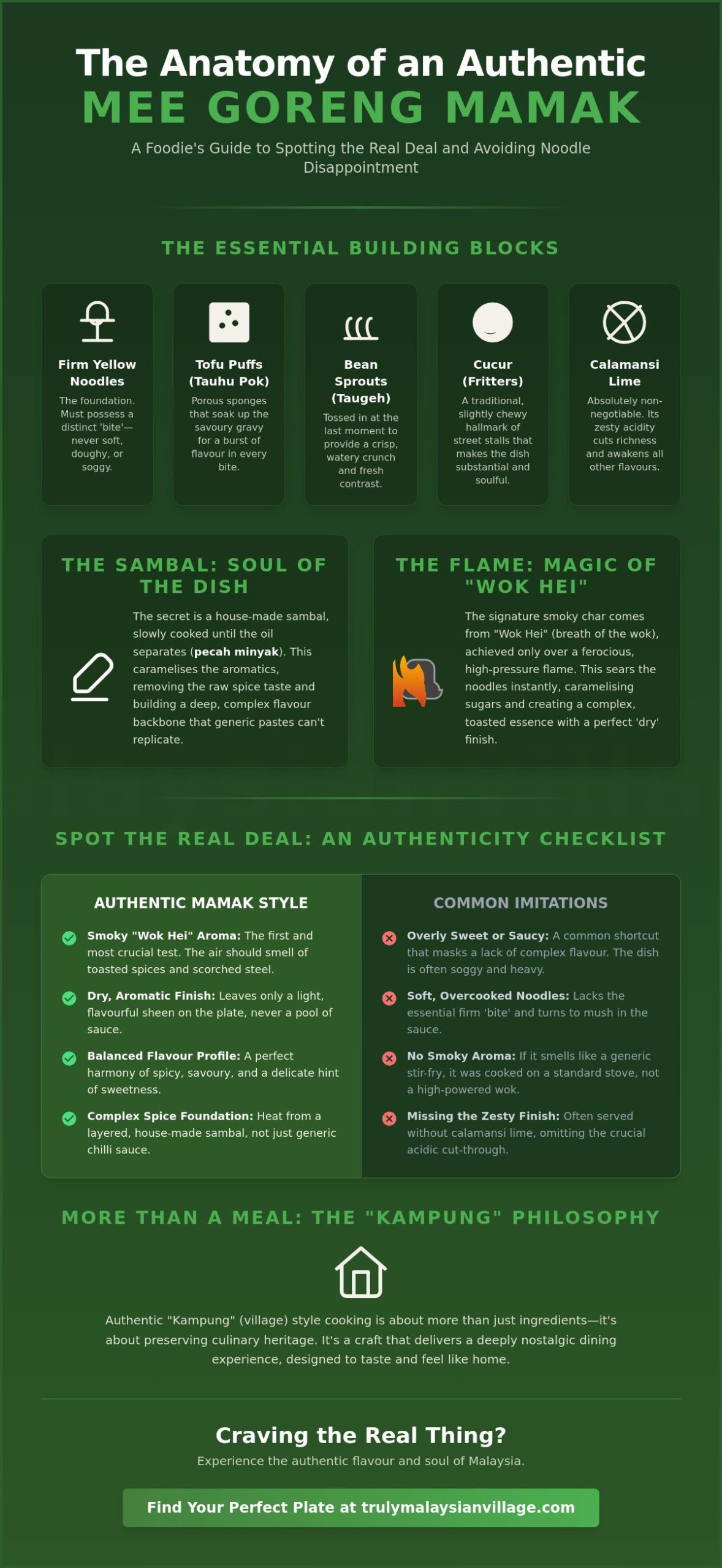
Truly authentic Mee Goreng is a vibrant cultural tapestry woven into a single plate. It represents a beautiful collision of history, where firm Chinese yellow noodles meet the bold, aromatic spices of the Indian-Muslim community. This specific style, often referred to as Mee Goreng Mamak, is a far cry from the generic stir-fried noodles found in many food court stalls. When you’re searching for the best mee goreng Adelaide can offer, you’re really looking for a dish that respects this complex lineage and the craftsmanship required to balance such intense flavours.
The foundation of the dish lies in the texture of the yellow noodle itself. It shouldn’t be soft or doughy; rather, it needs a distinct “bite” that holds up against the intense heat of the wok. This is the stage where the holy trinity of flavours—spicy, savoury, and a delicate hint of sweetness—must find perfect equilibrium. While some modern versions lean too heavily on sugar, a genuine Malaysian plate uses sweetness only to round out the sharp edges of the chilli. To finish, a squeeze of fresh calamansi lime is absolutely non-negotiable. Its zesty, floral acidity cuts through the richness, awakening every other ingredient on the plate and providing that signature Malaysian tang.
The Essential Ingredients of a Village-Style Stir-Fry
A village-style stir-fry relies on a specific architecture of textures that work together in harmony. Fresh bean sprouts (taugeh) are tossed in at the final moment to provide a crisp, watery crunch that contrasts with the dense noodles. Tofu puffs (tauhu pok) act as tiny, porous sponges, soaking up the intense gravy so that every mouthful bursts with savoury liquid. For a truly traditional experience, look for the inclusion of cucur (fritters). These savoury bites add a unique, slightly chewy texture that is a hallmark of the street stalls found across Malaysia, ensuring the dish feels substantial and soulful.
Balancing the Heat: The Secret Sambal Base
The soul of the dish is the sambal. A master chef knows that the paste must reach the “pecah minyak” stage, where the oil separates from the chilli, to ensure the raw edge of the spices has been cooked out. This process leaves behind a deep, caramelised richness that forms the backbone of the meal. Unlike generic, store-bought chilli pastes that offer one-dimensional heat, a house-made Malaysian sambal carries layers of toasted shrimp paste and aromatics. This complexity allows you to enjoy the best mee goreng Adelaide has to offer with a heat level that warms the palate without masking the intricate secondary spices. It’s a labour of love that turns a simple noodle dish into a nostalgic masterpiece.
The Secret of the Flame: Understanding “Wok Hei” and Noodle Craft
Walking into a kitchen where the air is thick with the scent of toasted spices and scorched iron is the first sign you’ve found the best mee goreng Adelaide can provide. This sensory experience is driven by a singular, legendary force known as “Wok Hei”. While many home cooks try to recreate this dish, a standard domestic stove simply cannot generate the ferocious, high-pressure heat required to achieve that elusive smoky finish. It’s a performance of fire and steel that transforms humble ingredients into something far greater than the sum of their parts.
Wok Hei is the complex charred aroma produced by stir-frying over intense heat. This phenomenon occurs when the moisture on the surface of the noodles evaporates almost instantly, allowing the sugars to caramelise and the oil to hit its smoking point. This isn’t about burning the food; it’s about a controlled, lightning-fast sear that infuses every strand with a deep, toasted essence. To experience this level of craftsmanship firsthand, you might want to secure your table and witness the difference that a professional flame makes.
The skill of the “toss” is equally vital. A master chef uses a rhythmic, flicking motion to send the noodles airborne, ensuring they spend just enough time in the hottest part of the pan without breaking. This technique ensures that the sambal base coats every centimetre of the yellow noodles without them becoming oily or heavy. When done correctly, the result is a “dry” finish. Unlike the soggy, sauce-drenched versions often found in generic eateries, a superior Malaysian Mee Goreng leaves only a light, aromatic sheen on the plate.
The Physics of High-Heat Stir-Frying
The Maillard reaction is the scientific magic behind the flavour. At extreme temperatures, the proteins and sugars in the wheat noodles react to create hundreds of different flavour compounds, giving the dish its characteristic savoury depth. Timing is everything here, especially with the egg. A chef must wait for the precise moment to scramble the egg into the mix so it achieves a delicate, “shredded” look rather than disappearing into a mushy clump. This precision is what separates a standard meal from a nostalgic masterpiece.
Why Freshness Matters in the Pan
Freshness is the silent partner of the flame. Using fresh noodles instead of dried or frozen alternatives ensures a supple, elastic mouthfeel that can withstand the wok’s intensity. This high heat also works to snap-cook the vegetables, preserving their vibrant colour and natural crunch. Following the traditional “Village” method, cooking is done in small, focused batches. This prevents the wok temperature from dropping, ensuring that every serving maintains that vital, smoky soul from the first bite to the last.
Mamak Style vs. Indonesian Mie Goreng: Knowing the Difference
Distinguishing between regional styles is essential if you’re on a quest for the best mee goreng Adelaide has to offer. While many diners might assume all fried noodles are created equal, the Malaysian Mamak version and the Indonesian Mie Goreng are actually quite different. The Indonesian style relies heavily on Kecap Manis, a thick, sweet soy sauce that gives the dish a deep, glossy brown colour and a sugary finish. Malaysian Mamak noodles, however, are celebrated for their nuttier profile and a sharp, tomato-based acidity that cuts through the richness.
This Malaysian version is deeply influenced by Indian-Muslim heritage. This is why you’ll often find diced potatoes and a specific, aromatic curry powder blend in the mix. These ingredients add a starchy, comforting dimension that isn’t found in other variations. If you prefer a more rustic, seaside feel, the Kampung (Village) style provides a spicy-dry approach that often features fresh seafood. This humble, home-cooked version brings the soul of the Malaysian coast directly to your plate. We take pride in these distinctions, ensuring our weekday offerings remain true to their specific cultural roots.
It’s also useful to understand the technical difference between Mamak and Hawker styles. Mamak noodles are spice-heavy and bold, reflecting the vibrant street food culture of the Indian-Muslim community. Hawker-style noodles, often found in Chinese-Malaysian markets, are generally lighter and less reliant on intense spice pastes. Recognising these markers ensures you aren’t just ordering noodles; you are choosing a specific culinary heritage that resonates with your own memories of home.
The Mamak Heritage in Malaysian Noodle Culture
The roots of this dish stretch back to the iconic street stalls of Penang and Kuala Lumpur. Across the Causeway, the Mamak style is the undisputed king of late-night comfort food. The secret lies in a spice profile of cumin, coriander, and fennel seeds. These spices combine to create that characteristic Malaysian aroma that instantly evokes memories of humid nights and bustling markets. It’s a flavour that feels like a warm embrace from a seasoned host who knows exactly how to satisfy a craving.
Visual and Flavour Cues for the Discerning Diner
You can often tell which style you’re about to enjoy just by looking at the plate. The Malaysian style usually presents as a vibrant orange-red, while the Indonesian version is a much darker, richer brown. Toppings also serve as a guide. While Indonesian plates might feature prawn crackers, the Malaysian Mamak style prioritises fresh lime and fried shallots to provide a zesty balance. Knowing these differences helps you identify the best mee goreng Adelaide can provide, ensuring your meal matches your nostalgic expectations exactly.
A Foodie’s Guide to Evaluating an Authentic Malaysian Kitchen
Finding the best mee goreng Adelaide has to offer requires more than just a quick glance at a menu; it demands a sensory investigation. The first and most reliable indicator is often the “Smell Test”. Before you even take a seat, you should be greeted by the unmistakable, pungent aroma of toasted shrimp paste and the sharp, smoky scent of seared noodles. If the air is sterile or smells only of generic vegetable oil, the kitchen likely lacks the high-heat intensity needed to produce a soulful, traditional meal. A true Malaysian kitchen is a place of aromatic pride where the scent of heritage precedes the service.
Another vital marker is the focus of the menu. Authentic establishments rarely try to be a “jack of all trades” by offering every dish from across Asia. Instead, a dedicated Malaysian kitchen will specialise in a few core, time-honoured classics. When you see a menu that prioritises foundational dishes like Nasi Lemak Ayam Rempah, you know the chefs are committed to mastering the complex spice pastes that define our culture. This specialisation is a sign of respect for the craft, ensuring that every plate of Mee Goreng receives the individual attention it deserves.
The atmosphere and beverage pairings also tell a story. An authentic space feels less like a sterile food court and more like a “Village” (Kampung), where guests are treated as family. This sense of belonging is completed by the presence of traditional drinks. A frothy, hand-pulled Teh Tarik is the essential companion to a spicy noodle dish, providing a creamy sweetness that cuts through the heat. If you’re ready to experience this level of cultural immersion, we invite you to book a table and join us for a meal that feels like home.
What the Best Malaysian Restaurants Have in Common
The hallmark of a superior kitchen is a fierce commitment to house-made sauces. Commercial, bottled “Mee Goreng” bases are an immediate red flag for any discerning diner. You should also look for staff who possess a deep understanding of the “pedas” (spicy) scale and can guide you through the heat levels with confidence. Finally, listen to the kitchen. A constant, rhythmic clanging of metal on metal is a wonderful sign; it means the woks are being handled with the vigour required for that perfect, smoky finish we discussed earlier.
Why “Village” Style Wins for Authenticity
The “Village” or Kampung style of cooking is built on traditional recipes passed down through generations. It’s a method that honours the past while utilising fresh, local Australian produce to elevate the depth of authentic Malaysian spices. This approach introduces the “Heart” factor into every meal. It is the difference between a dish that is merely assembled and one that is cooked with the same love and dedication you would find in a rural Malaysian home, creating a nostalgic experience that lingers long after the final bite.
Truly Malaysian Village: Bringing the Kampung to Your Plate
At Truly Malaysian Village (TMV), we believe that food is the most powerful way to preserve our collective heritage. We don’t just cook for customers; we host guests in a way that honours the “Kampung” (village) spirit of our roots. Every plate served is a testament to the time-honoured methods we’ve carried with us, ensuring that when you search for the best mee goreng Adelaide can offer, you find a meal that resonates with the soul. Our kitchen is a place where legacy meets the plate, bringing the warmth of a Malaysian home to the heart of South Australia.
Our Mee Goreng is a labour of love. It represents hours of dedicated preparation, from the careful blending of our house-made sambal to the precise management of the wok’s intense flame. We focus on that perfect balance of Mamak-style spices, ensuring each bite carries the smoky depth and complex flavour profile that only true “wok hei” can provide. While the noodles are often the star, many of our guests find that our Nasi Lemak Ayam Rempah makes the perfect companion. The fragrant coconut rice and spiced fried chicken provide a beautiful contrast to the savoury noodles, creating a feast that celebrates the full spectrum of Malaysian street food.
Our Signature Noodle Experience
The secret to our signature dish lies in our refusal to take shortcuts. We maintain the essential snap of the yellow noodles by adhering strictly to the traditional “dry-fry” technique. This ensures that every strand is coated in a rich, concentrated glaze rather than swimming in a heavy, soggy sauce. It’s a texture that speaks of craftsmanship and deep respect for our ingredients. We invite you to explore our full menu to see our weekday favourites and weekend specials, each crafted to provide a nostalgic trip back to the bustling markets of our youth.
Catering and Community: Sharing the Village Spirit
Our philosophy is simple: “Good things are meant to be shared.” We love bringing the best mee goreng Adelaide has to offer beyond our own walls through our dedicated Malaysian catering services. Whether it is a private celebration, a community gathering, or a corporate event, we aim to share the “Village” spirit with every guest you host. We handle the complexities of traditional cooking so you can focus on the joy of connection. A meal with us isn’t just about satisfying hunger; it is a heartfelt journey back to the vibrant, spicy, and welcoming heart of Malaysia.
Experience the Soul of Malaysian Street Food
Finding a truly authentic plate of noodles is a journey through history, heat, and heritage. We’ve explored how the smoky “wok hei” and the specific balance of Mamak spices define a genuine culinary experience. By understanding the nuances between regional styles and the importance of traditional “Kampung” methods, you’re now ready to find a meal that offers more than just sustenance; it offers a sense of home. It’s about recognizing the craft behind the flame and the love poured into every spice paste.
At Truly Malaysian Village, we’re dedicated to preserving these time-honoured traditions for our community. Whether it’s our specialist Nasi Lemak Ayam Rempah or our frothy, street-style Teh Tarik, every offering is a heartfelt tribute to our roots. We invite you to discover the best mee goreng Adelaide has to offer and enjoy a dining experience where every guest is treated like family. We don’t just serve food; we share our culture.
Book a table and taste the best Mee Goreng in Adelaide today. We look forward to welcoming you into our village and sharing the authentic, nostalgic flavours of Malaysia with you soon.
Frequently Asked Questions
Is Mee Goreng supposed to be very spicy?
Authentic Mee Goreng usually carries a medium heat that builds gradually on the palate. It shouldn’t be so overwhelming that it masks the secondary spices like cumin and coriander. The spice level typically depends on the house-made sambal base used by the kitchen. If you’re searching for the best mee goreng Adelaide provides, you’ll find that the heat is perfectly balanced with a touch of sweetness and zesty lime to keep the flavours vibrant.
What is the difference between Mee Goreng and Char Kway Teow?
The primary difference lies in the type of noodle used and the overall flavour profile. Mee Goreng features round yellow wheat noodles and is often spicier and nuttier due to the Mamak spice blend. Char Kway Teow uses flat rice noodles and relies on a savoury, smoky soy sauce base often featuring cockles. While both require high heat, the specific spice pastes used create two entirely different national culinary identities on the plate.
Can Mee Goreng be made vegetarian or vegan?
Mee Goreng can be adapted for vegetarian or vegan diets by substituting animal proteins with extra tofu and fresh vegetables. However, traditional Malaysian versions often use shrimp paste in the sambal base. To ensure a truly vegan meal, it’s essential to ask if the kitchen uses a plant-based sambal. Many authentic spots are happy to accommodate these needs while still maintaining that vital, smoky wok flavour through careful, high-heat frying techniques.
Why do some places call it “Mamak” Mee Goreng?
This term refers to the Indian-Muslim community in Malaysia who pioneered this specific style of street food. Mamak Mee Goreng is distinct because it incorporates Indian spices like curry powder and often includes ingredients like boiled potatoes and tofu. It represents a unique cultural fusion that you won’t find in the Indonesian version. This heritage is what gives the dish its soulful, complex, and slightly nutty character that many diners crave.
What are the best side dishes to order with Malaysian fried noodles?
Ordering Chicken Satay or a side of Beef Rendang provides the perfect contrast to the spicy noodles. The creamy peanut sauce or the rich, slow-cooked gravy adds a luxurious layer to your dining experience. To finish, a cold Milo Ais or a frothy Teh Tarik helps soothe the palate after the spice. These traditional pairings are common in the best mee goreng Adelaide spots, turning a simple meal into a nostalgic feast.
Is it possible to get a “wok hei” flavour in a takeaway container?
You can certainly enjoy the smoky essence of wok hei in a takeaway meal, provided it’s eaten while fresh and hot. The charred aroma is created during the frying process and stays infused in the noodles. However, the texture of the noodles can soften if they sit in a sealed container for too long. For the best experience, we recommend opening the lid slightly to let steam escape and enjoying your meal as soon as possible.
What makes the “Yellow Noodles” in Mee Goreng different from Ramen?
These yellow noodles are typically thicker and have a more elastic, springy texture compared to most ramen varieties. They are alkaline noodles, which gives them a distinct yellow hue and allows them to withstand the intense heat of a wok without breaking apart. While ramen is designed to soak up broth, these wheat noodles are crafted to hold onto thick, spicy sauces, ensuring every strand is perfectly glazed with flavour during the stir-fry.
How do I know if a Malaysian restaurant is actually authentic?
Look for a focused menu that highlights traditional staples like Nasi Lemak Ayam Rempah rather than a broad range of generic dishes. An authentic kitchen will also carry the unmistakable aroma of toasted shrimp paste and the rhythmic sound of woks clanging. If the staff can explain the specific spice levels and the space feels like a welcoming village home, you’ve likely found a spot that honours true Malaysian craftsmanship and heritage.

Article by
Amzar Hariz
Owner of Truly Malaysian Village
Disclaimer
The content published on this website may include articles generated or assisted by AI writing tools. While we aim to provide helpful, accurate, and up-to-date information, we do not guarantee that all content is complete, error-free, or suitable for every individual situation.

