
A BBQ isn’t essential for satay with a browned, savoury finish. To learn how to grill satay without a BBQ, cook chicken in batches in a skillet, or use an air fryer for another indoor option. An oven grill can also brown the skewers, so you can enjoy satay at home without outdoor equipment.
That familiar flavour comes from more than a flame. The size of the chicken pieces, how evenly they’re coated in marinade and how the heat reaches each side all affect the result. Choose a method that suits your kitchen, and keep the process manageable, whether you’re making a relaxed meal for yourself or food to share.
This guide compares skillet, air-fryer and oven methods, then explains how to prepare the chicken and serve it with peanut sauce. You’ll learn how to monitor browning, check that the chicken is cooked through and serve the skewers. A few thoughtful steps can make an indoor cook a warm Malaysian-inspired meal.
Key Takeaways
- Marinate the chicken in the refrigerator for 2 hours to build flavour before cooking.
- Soak wooden skewers in water for 30 minutes before threading on the chicken.
- Use an air fryer as another indoor option, and judge doneness by whether the chicken is cooked through.
- Whisk the peanut dipping sauce as it cooks, stopping when it’s smooth and slightly thickened.
- The client recommends keeping leftover satay skewers in an airtight container in the refrigerator for up to 4 days.
Cooking chicken satay in a skillet without a grill
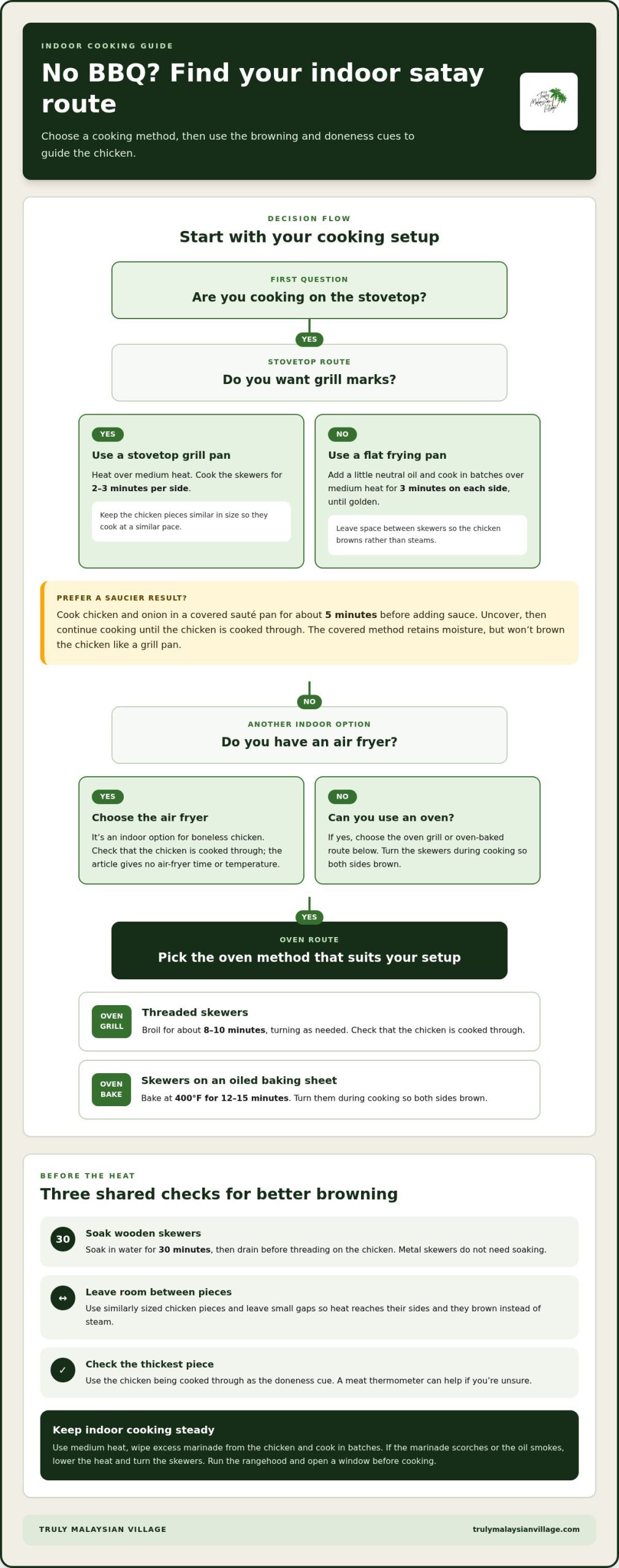
A stovetop grill pan, frying pan or oven broiler can cook chicken satay indoors. Choose the method that suits your equipment, then focus on evenly sized pieces and steady browning.
Choose a grill-free cooking method
For grill marks, heat a stovetop grill pan over medium heat and cook the skewers for 2-3 minutes per side. Use a flat frying pan for simpler turning, or broil threaded skewers for about 8-10 minutes, turning as needed. Check that the chicken pieces are similar in size so they cook at a similar pace.
For a saucier approach, cook chicken and onion in a covered sauté pan for about five minutes before adding sauce. The lid helps retain moisture, but the chicken won’t brown as it would in a grill pan. Uncover the pan when you add the sauce, then continue cooking until the chicken is cooked through.
Cook skewers in a frying pan
Add a little neutral oil to a frying pan over medium heat, then arrange the skewers without crowding them. Cook in batches for 3 minutes on each side until golden. Leave space between skewers so the chicken browns instead of steaming, and turn each skewer once its first side has coloured.
If the skewers don’t fit, slide the chicken pieces off and cook them directly in the pan. Turn the pieces to brown different sides, then check the thickest one before serving. A meat thermometer can help if you’re unsure whether the chicken is cooked through.
Soak wooden satay skewers
Soak wooden skewers in water for 30 minutes before threading on the chicken. Drain them before use, then leave a little space between pieces so heat reaches their sides. This applies whether you’re using a frying pan, stovetop grill pan or oven broiler.
Metal skewers don’t need soaking. If wooden skewers are too long for your pan, trim them before cooking or cook the chicken without skewers. Similar-sized pieces help each skewer cook evenly, while leaving gaps between pieces helps them brown rather than steam.
Limit smoke while cooking indoors
Use medium heat, add a little oil and wipe excess marinade from the chicken before placing it in the pan. If the marinade starts to scorch or the oil smokes, lower the heat and turn the skewers. Cook in batches instead of crowding the pan, where trapped steam can prevent browning.
Run the rangehood and open a window before cooking to clear fumes. Keep the pan at a steady heat and don’t leave it unattended. If smoke builds, move the pan off the element until it settles. These steps can help manage smoke, but no cooking method can guarantee an alarm won’t sound.
Serving satay with sauces and accompaniments
- Serve the peanut sauce in a shallow bowl beside the chicken instead of coating every skewer. Guests can choose how much sauce they want, and the browned surface stays visible. A wide bowl is easier for dipping than a narrow cup. Add a spoon for anyone who prefers sauce over rice.
- Check the sauce consistency before serving. If it’s too thick to dip, stir in a small splash of coconut milk to loosen it. If it seems thin, warm it gently while stirring until it coats a spoon. Adjust in small amounts and taste as you go to keep the peanut flavour balanced.
- Offer chilli or sambal in a separate small dish for guests who want extra heat. This keeps the spice optional and lets diners season each bite. A lime wedge adds a sharp contrast to the creamy dip. Avoid mixing all the condiments together, which can mask their distinct flavours.
- Choose accompaniments that make the meal easy to share. Serve satay with rice for a filling plate, or add sliced cucumber for a cool, crisp contrast. Arrange each item in its own dish, leaving room for the skewers and dipping bowls. Guests can build their plates without crowding the table or mixing sauces.
- Bring the chicken to the table after it has rested, and arrange the skewers in a single layer where possible. Stacking them traps steam against the browned surfaces and can soften them. Keep extra sauce in a separate bowl rather than pouring it over the platter, so any untouched skewers stay less sauced.
- For a shared meal, place small plates and napkins within reach, then let everyone dip their own skewer. Use a clean serving spoon for sauce, not a utensil that has touched chicken. If you’d prefer to enjoy Malaysian Chicken Satay without preparing it yourself, book a table for satay and make the meal a relaxed occasion.
Cook the peanut dipping sauce for about 6 minutes while stirring often, until smooth and thickened. The satay sauce contains ¼ cup of reduced fat peanut butter, and the recipe simmers the sauce uncovered for about four minutes to reduce it. Use its smooth, thickened texture as a cue when preparing it for the table, and keep it in a separate bowl so diners can choose how much to add. A spoon beside the bowl makes it easy to serve the sauce over rice as well as to dip the skewers.
The peanut sauce can be made ahead and kept in the refrigerator for at least a week, which can make serving the meal more relaxed. Keep the sauce apart from the chicken until guests are ready to eat, and set it within easy reach alongside the other accompaniments. If you have prepared it in advance, check its consistency before serving and stir it well so it is ready for dipping. Keeping the sauce in its own dish also makes it simple for guests to control each bite and leaves the browned chicken visible on the platter.
Cooking satay in an air fryer
If you’re learning how to grill satay without a BBQ, an air fryer is one indoor option for boneless chicken. An oven or frying pan works too, though each method handles and browns the chicken differently.
Set the cooking time and heat
For oven-baked satay, arrange skewers on an oiled baking sheet and cook at 400°F for 12 to 15 minutes. Turn them during cooking so both sides brown. In a frying pan, cook skewers in batches for 3 minutes on each side over medium heat. On a grill, cook over medium heat for 3 to 5 minutes per side, turning as needed.
Check that chicken is cooked through
Check the thickest chicken piece rather than relying on the smallest piece or browned exterior. If you’re unsure, use a meat thermometer to check that the chicken is cooked through. If the centre needs more cooking, return the skewer to the heat and check again. A golden surface shows browning, not whether the centre is ready.
- For air-fried satay, arrange the skewers in a single layer with space around each one. This allows hot air to circulate and helps the chicken cook evenly. Turn the skewers partway through, then check the thickest piece. Air fryers vary, so follow the appliance’s cooking guidance and judge doneness by the chicken, not just its browned edges.
Keep the marinade coating light. Excess sauce can drip into the basket, and a thick coating may brown before the chicken cooks through. If the skewers don’t fit, remove the chicken pieces and arrange them without overlapping. Curry paste and other ingredients still coat the boneless chicken and add flavour.
- For charcoal cooking, place the skewers over steady heat and turn them often. Watch for flare-ups when oil or marinade drips onto the coals. Move the chicken away from direct flames if it darkens too quickly. Smoke adds flavour, but blackened edges don’t show that the centre is cooked through.
When comparing ways to grill satay without a BBQ, start with evenly sized chicken pieces for more even cooking. Cut larger pieces smaller before threading, and don’t pack them tightly together. Once cooked through, rest the skewers briefly while you prepare the sauce or plates.
Marinating time
- Place the chicken in its marinade in the refrigerator for 2 hours before cooking. This gives the seasoning time to coat the pieces and develop flavour without leaving raw chicken at room temperature. Use a covered container or sealed food-safe bag, and turn the chicken once if the marinade doesn’t reach every piece. Keep raw chicken separate from ready-to-eat foods.
- Allow at least an hour if you want a more pronounced marinade flavour and better browning. Eight hours is recommended when time allows, while marinating chicken for at least an hour can enhance browning and produce juicier, more tender, flavourful meat. Treat these as options, not a reason to leave chicken out. Keep it chilled throughout marinating.
- Plan an overnight marinade when preparing ahead, or marinate for up to 24 hours. A longer rest gives the seasoning more time to flavour the chicken, but the pieces still need to remain refrigerated. For an easy sequence, mix the marinade, coat the chicken, cover it, then place it in the fridge before bed. Cook it the following day.
- Shorten the wait when dinner needs to be ready sooner. One satay marinade can be left for at least 20 minutes or overnight; another recommends at least 3 hours, though 20 minutes is also sufficient. A brief marinade gives the surface time to take on seasoning, while a longer rest develops flavour further. Use the recipe’s timing as your guide.
- Match the marinade to the chicken pieces and cooking method. Skinless chicken cut into even pieces takes seasoning across its exposed surfaces, while thicker pieces need an even coating before they go into a pan or air fryer. Stir the red curry paste and other marinade ingredients thoroughly, then turn the chicken so each piece is coated.
- Keep marinade that has touched raw chicken separate from anything served at the table. Before cooking, lift out the chicken and let excess marinade drip back into its container. This helps reduce splattering and excess browning in a hot pan. Discard the used marinade and use fresh sauce for dipping. Refrigerate leftovers promptly after cooking.
Broiling time and browning
Broil threaded chicken satay for about 8-10 minutes, turning as needed for even colour. To prevent skewers burning in an oven or grill pan, soak wooden skewers in water for 30 minutes and keep them away from direct flame.
- Arrange the skewers in a single layer on an oiled baking sheet, leaving space between pieces. Broil for about 8-10 minutes, checking the colour as they cook. Turn them if one side browns faster, and move the tray if the chicken edges darken before the centres cook through.
- Watch the marinade as well as the chicken. A coating with sugar or finely chopped ingredients can darken quickly under a broiler, so scrape off excess marinade before cooking. Aim for a golden surface with browned edges, not a blackened coating. Keep the oven door and tray position consistent as you check progress.
- For a stovetop grill pan, preheat it over medium heat before laying down the skewers. Cook the chicken for about 2-3 minutes per side, turning when the first side has developed colour. Avoid pressing down with a spatula, which can squeeze juices from the pieces and make browning less even.
- Use chicken pieces of similar thickness so the outside and centre cook at a similar pace. Even strips of chicken breast can brown quickly, while thicker pieces need more time. If the edges darken early, lower the heat or move the skewers away from the hottest area. Continue cooking until the thickest piece is cooked through.
- Check the thickest piece rather than relying on colour alone. If you’re unsure, use a meat thermometer to check whether the chicken is cooked through. Rest the cooked skewers for 2-3 minutes before serving, allowing the surface to settle while you prepare the dipping sauce and plates.
- For your favourite recipe, combine the marinade thoroughly before coating the chicken, then keep any dipping sauce separate from raw-chicken marinade. Serve the browned skewers soon after resting, with sauce on the side so each piece keeps its colour and texture. If you’d rather enjoy Chicken Satay prepared for you, book a table for satay.
For a grill, cook chicken satay over the hot side for 5 to 8 minutes, turning often, until it is cooked through and lightly charred. Treat those cues together: the goal is not simply a browned exterior but chicken that is cooked through with a light char. Keep the skewers moving over the hot side as they cook rather than leaving one face in place throughout the cooking period. Check the pieces as you turn them, paying attention both to the surface and to whether the chicken is cooked through. Use the stated cooking window as a guide, but let the condition of the chicken and its light char define the finish. Once both conditions are met, take the skewers from the hot side.
Truly Malaysian Village: Nasi Lemak Ayam Rempah
Truly Malaysian Village is a natural next step when you’d rather enjoy Malaysian satay without cooking it at home. Its Chicken Satay offers a ready-made way to bring the dish to your table, while Nasi Lemak Ayam Rempah pairs Malaysian flavours with a familiar rice-based meal.
For a slower-cooked option, choose Beef Rendang, or give TMV Gift Cards to someone who enjoys Malaysian food. These dishes and gift cards suit different occasions, from enjoying a meal to sharing a food-focused present. They’re another way to enjoy Malaysian cooking after trying the skillet or air-fryer methods in this guide.
For Malaysian favourites, enjoy a meal at Truly Malaysian Village or order online for delivery across Australia.
Bring Malaysian flavour to your next meal
Knowing how to grill satay without a BBQ can make an ordinary evening feel like a shared occasion. Decide what suits the moment: prepare a meal at home, invite others to gather around the table, or take a night off cooking. Malaysian food brings warmth to each setting.
As you plan your next meal, think beyond the cooking method and focus on the experience you want to create. A relaxed dinner is a chance to try a new flavour, revisit a favourite or enjoy time together over food. When you’d rather leave the cooking to someone else, Truly Malaysian Village serves Malaysian favourites.
Book a table at Truly Malaysian Village and enjoy a Malaysian meal. Your next memorable dinner can start with a simple plan.
Frequently Asked Questions
How to cook satay skewers under an oven grill (broiler)?
Cook threaded chicken skewers under the oven grill for about 8-10 minutes, turning them as needed for even browning. Arrange them on a lightly oiled tray with space between each skewer, then watch closely as the marinade colours. Check the thickest chicken piece before serving; browned edges alone don’t show whether the centre has cooked through. Rest the skewers briefly while preparing the plates.
Can you cook satay in a regular frying pan or cast-iron skillet?
Yes, a regular frying pan or cast-iron skillet works for satay without a BBQ. Add a little neutral oil, heat the pan over medium heat, then cook skewers in batches for 3 minutes on each side until golden. If the skewers don’t fit comfortably, remove the chicken pieces and cook them directly in the pan, turning to brown different sides.
How to make satay sauce and serve it with grilled skewers?
Whisk peanut butter, coconut milk, red curry paste, soy sauce, lemon juice and coriander in a saucepan. Warm gently for about 5 minutes, whisking until smooth and slightly thickened. Serve the sauce in a separate dipping bowl so each person can add as much as they like. Keep dipping sauce separate from any marinade that has touched raw chicken, and use a clean spoon for serving.

Article by
Amzar Hariz
Director of Truly Malaysian Village
Disclaimer
The content published on this website may include articles generated or assisted by AI writing tools. While we aim to provide helpful, accurate, and up-to-date information, we do not guarantee that all content is complete, error-free, or suitable for every individual situation.

