
Sweet soy sauce is the flavour note that brings savoury fried rice and chicken chop together. To understand what nasi goreng chicken chop is, picture nasi goreng, Indonesian-style fried rice, served with chicken chop and a rich, sweet-savoury sauce.
The appeal is in the contrast: fragrant rice, tender chicken and glossy sauce, with vegetables and seasonings adding colour and flavour. The exact balance varies, but sweet soy gives the dish depth without making the rice the whole story.
This guide explains how to build that balance at home, from choosing vegetables and seasoning the rice to cooking the chicken and combining the sauces. It also covers serving ideas, including fresh garnishes and accompaniments that round out the plate. Each element has its own role in this comforting, generous meal.
Key Takeaways
- Understand how fried rice, chicken chop and sweet soy sauce come together in this hearty dish.
- Choose vegetables and seasonings that balance the rice’s savoury depth with a touch of sweetness.
- Finish the plate with fresh garnishes and accompaniments that add colour and contrast.
- Learn how cooking order and chilled rice can help you get a better stir-fried texture.
- Know which sauces and ingredients may affect allergen needs, and explore other Malaysian favourites at Truly Malaysian Village.
What is Nasi Goreng?
Nasi goreng is Indonesian-style fried rice, seasoned and cooked in a pan or wok. Nasi goreng chicken chop pairs the seasoned rice with a separate chicken chop. To make it at home, stir-fry the rice with chicken, vegetables and sauces, then serve the chicken chop alongside.
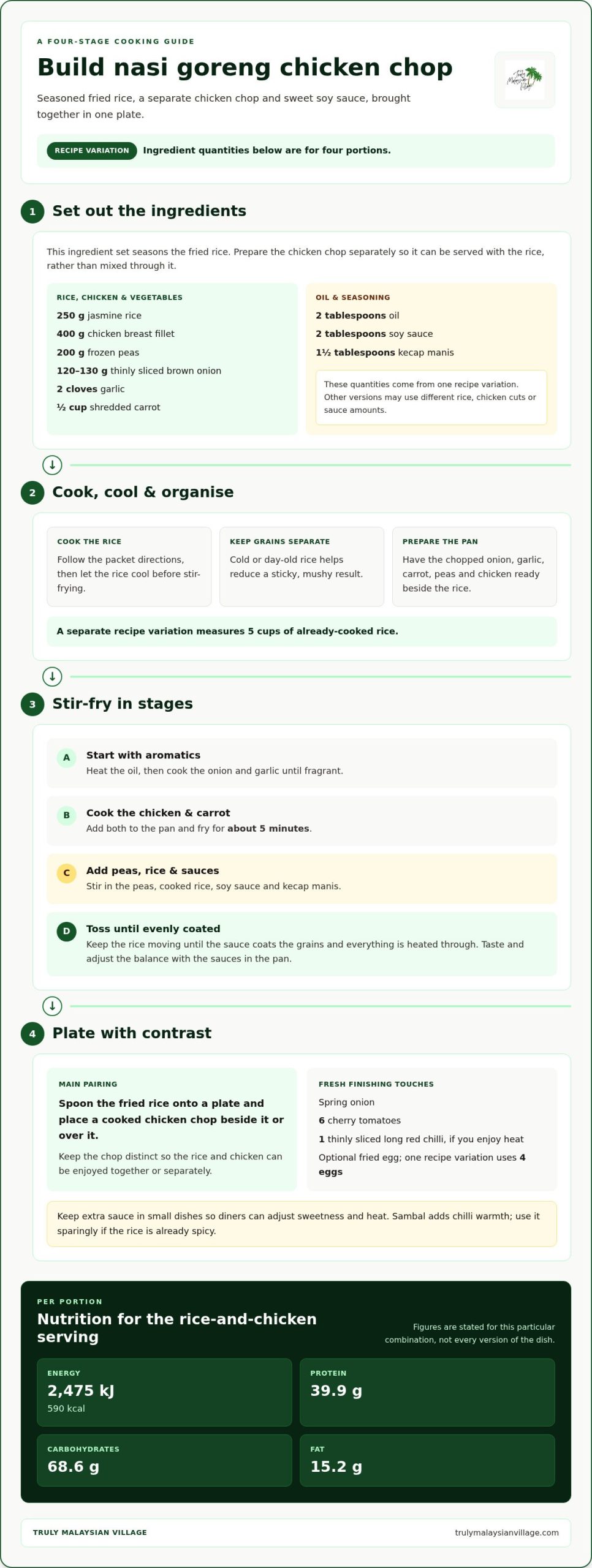
- Gather ingredients for four portions. Use 250 g jasmine rice, 400 g chicken breast fillet and 200 g frozen peas. Add 120-130 g thinly sliced brown onion, 2 cloves of garlic and ½ cup shredded carrot. Set out 2 tablespoons of oil, 2 tablespoons of soy sauce and 1½ tablespoons of kecap manis. These quantities draw on a recipe variation; other versions use different rice, chicken cuts or sauce amounts. Prepare the chicken chop separately, so it can be served with the fried rice rather than mixed through it.
- Cook and prepare the rice. Follow the rice packet’s directions, then let the rice cool before stir-frying. Cold or day-old rice helps the grains stay separate and reduces a sticky, mushy result. If you already have cooked rice, measure 5 cups for a different recipe variation. Keep the rice ready beside the chopped onion, garlic, carrot, peas and chicken. This preparation makes the cooking order easier to manage once the wok or frying pan is hot.
- Stir-fry the ingredients in stages. Heat the oil, then cook the onion and garlic until fragrant. Add the chicken and carrot, and fry for about 5 minutes. Stir in the peas, cooked rice, soy sauce and kecap manis. Toss until the sauce coats the rice and the ingredients are heated through. Keep the rice moving so the sweet soy flavour spreads evenly, rather than collecting in one patch. Taste and adjust the balance with the sauces already in the pan.
- Serve with chicken chop. Spoon the fried rice onto plates and add a cooked chicken chop beside or over each portion. The contrast is the point: savoury, sauce-coated rice alongside a substantial piece of chicken. For a more complete plate, add garnishes such as spring onion or sliced red chilli. Keep the chicken chop distinct so diners can enjoy the components together or separately.
When considering a serving, keep the rice and chicken chop together as described: the figures apply to the recipe per portion, rather than to an isolated component. The recipe’s stated energy content is 2,475 kJ per portion, and its stated energy content is 590 kcal per portion. It contains 39.9 g of protein per portion and 68.6 g of carbohydrates per portion; its stated fat content is 15.2 g per portion.
Other versions may use different rice, chicken cuts or sauce amounts, so these values are best read as figures for this particular combination rather than as a universal profile for nasi goreng. They offer a point of reference when considering the whole plate, with the seasoned rice and separate chicken chop served together.
Serving suggestions and garnishes
- Plate the rice and chicken with clear contrast. Spoon the nasi goreng into a shallow bowl or onto a dinner plate. Place the chicken chop beside it rather than burying it under the rice. This keeps its cooked surface distinct and lets diners choose each bite. For a generous presentation, shape the rice into a neat mound and leave space around both components. The Indonesian-style fried rice brings savoury seasoning, while the chop makes the meal substantial. Serve promptly to keep the rice warm and the chicken appealing.
- Add fresh garnishes just before serving. Scatter a handful of spring onion over the rice for a crisp, savoury finish. Add 6 cherry tomatoes around the plate for fresh colour and a juicy contrast. If you enjoy heat, top the rice with 1 thinly sliced long red chilli. Keep the chilli on top, where diners can move it aside or mix it through. A little garnish goes a long way. Avoid covering the rice completely, so its fried grains and seasonings remain visible.
- Offer an egg for a richer plate. A fried egg is an optional nasi goreng accompaniment, and a recipe variation uses 4 eggs. Cook the eggs separately, then place one alongside each rice portion. A soft yolk can mingle with the sauce when broken, while a firmer yolk keeps each mouthful more distinct. Prepare the egg after the rice, so it reaches the table warm. For a lighter presentation, skip the egg and let the chicken chop remain the main accompaniment.
- Balance the sauce with fresh, simple sides. Serve extra sauces in small dishes rather than pouring them over the rice, so diners can adjust sweetness and heat. A little sambal adds chilli warmth; use it sparingly if the fried rice is already spicy. Fresh tomato can offset a deeply savoury plate. Since garlic and sweet soy season the rice, choose sides that add freshness rather than competing flavours. Serve the garnishes alongside while everything is warm.
- Finish the plate with care. Wipe the rim, arrange the chicken chop neatly and check that each serving includes rice and garnish. Keep extra chilli separate for those who prefer a milder meal. For a shared table, serve tomatoes and other garnishes in small dishes, so diners can adjust their plates without disturbing the main serving. This simple arrangement preserves the contrast between warm fried rice, chicken and fresh toppings, and makes the meal easy to serve at home.
Chicken, vegetables and sweet soy sauce
- Choose a chicken cut that suits your version. Thinly sliced thigh cooks quickly and stays tender in a hot pan. One recipe uses 250 g of chicken thigh fillets, while another uses 500 g of finely chopped chicken breast. These are separate recipe versions, not quantities to combine. Cut the chicken evenly, so pieces cook at a similar rate. For a chicken chop presentation, keep the chop separate from the diced or sliced chicken in the fried rice. A tablespoon of kecap manis can also flavour a chicken marinade.
- Use vegetables for sweetness, colour and texture. Shredded carrot softens quickly and brings gentle sweetness. A recipe version uses 1 cup, while another uses ½ cup. Choose the amount according to how prominent you want carrot to be. Frozen peas add soft bursts of sweetness, while finely sliced onion brings savoury depth. Cut vegetables into similar-sized pieces where possible. This helps them cook evenly and keeps larger pieces from overpowering the rice or chicken.
- Build the sweet soy flavour gradually. Kecap manis is Indonesian sweet soy sauce, darker and thicker than typical soy sauce. Its sweetness and deep savoury taste coat the rice well. One recipe adds ¼ cup to the stir-fried rice. For a homemade version, combine ¼ cup soy sauce with ¼ cup brown sugar, then simmer the mixture for 3-4 minutes. Another version uses 3 tablespoons of kecap manis, or dark soy sauce and honey instead. Add sauce in stages, tasting as you go.
- Stir-fry in an order that protects texture. Start with aromatics such as onion and garlic, then add the chicken. Cook until nearly done before adding firm vegetables such as carrot. Add peas and rice later so they heat through without becoming soft. Pour the sweet soy around the pan and toss to coat. If the rice seems dry, add a little more sauce. If it tastes too sweet, balance it with soy sauce rather than extra sugar.
- Store and reheat leftover portions carefully. Refrigerate cooked nasi goreng for up to 3 days, or freeze portions for up to 2 months. Reheat a portion in a wok or frying pan for 3-4 minutes, stirring until piping hot. Keep the chicken chop separate if you want its surface to retain its texture. Add a small splash of water if the rice has dried during storage. Stir regularly so the sauce and heat spread through the portion.
How is nasi goreng chicken chop typically prepared and served?
- Cook the rice before heating the wok. One recipe version starts with 250 g jasmine rice, cooked and cooled. Another uses 5 cups of cooked jasmine rice. Treat these as alternatives, not amounts to combine. Spread the cooked rice out so excess steam can escape. Prepare the remaining ingredients before cooking, as stir-frying moves quickly once the pan heats. A separate recipe lists 30 minutes for preparation and 20 minutes for cooking, giving you time to organise each stage.
- Season and cook the chicken chop separately. Keep the chop distinct from the rice so it remains the plate’s centrepiece. Cook it in a separate pan while preparing the rice, or cook it first and keep it warm. Turn it as needed for even browning, then let it rest briefly before serving. This keeps chicken juices from softening the fried rice and makes plating easier.
- Build the fried rice in the wok. Heat 2 tablespoons of toasted sesame oil, then add the aromatics and vegetables. A recipe variation uses 2 tablespoons of soy sauce, while another includes 1-2 tablespoons of oyster sauce. Add the cooked rice and toss to distribute the seasoning. Fry the rice mixture for 2-3 minutes, stirring often. For more toasted edges, leave the rice untouched for 20-30 seconds at a time before turning it.
- Cook eggs as an optional topping. One recipe uses 4 eggs and 1 tablespoon of vegetable oil for frying. Cook the eggs separately while the rice finishes, then place them on top or beside each serving. A runny yolk mixes into the rice when broken; a firmer egg keeps the flavours separate. Other versions use a different egg count, so choose the amount that suits your table.
- Plate the components while warm. Spoon the nasi goreng onto each plate, then set the chicken chop beside or over the rice. Add an egg if using one, and finish with a garnish such as spring onion or sliced chilli. Serve extra sauce separately so diners can adjust the flavour. Serve straight away, while the rice is hot and the chicken’s browned surface contrasts with the soft grains.
A further version uses cold or day-old rice, which the recipe recommends to help prevent the nasi goreng from sticking together and becoming mushy. It uses 350 g of white long-grain rice, with ½ cup of shredded or grated carrot mixed into the fried rice. These ingredients offer another set of proportions to follow rather than combining them with the amounts in other versions. For extra savoury depth, shrimp paste can be added at about ½ teaspoon. Preparing the chicken nasi goreng takes 15 minutes, and cooking it takes 10 minutes, so have the ingredients ready before beginning the quick cooking stage. Once cooked, serve the rice with the chicken chop while both are warm, keeping the components arranged so the rice and chicken remain distinct on the plate.
What allergens may be in nasi goreng chicken chop?
- Check every sauce label before cooking. Nasi goreng recipes may include soy sauce, kecap manis, oyster sauce, fish sauce or shrimp paste, and ingredients vary by brand and recipe. Read each product label rather than relying on the sauce name alone. Homemade kecap manis also combines soy sauce and brown sugar. When preparing food for someone with an allergy, identify every sauce used, including marinades and dipping sauces. Keep the packaging nearby so ingredient details are available.
- Look closely at sesame ingredients. One chicken marinade recipe uses 1 teaspoon of toasted sesame oil. Sesame oil may be easy to overlook because it is added in a small amount. Check both the marinade and any cooking oil blend. If sesame is a concern, leave that ingredient out and choose a suitable alternative based on the person’s needs. Don’t assume a dish is sesame-free simply because sesame seeds aren’t visible on the plate.
- Ask what is in the oyster or fish sauce. Some nasi goreng versions include 1-2 tablespoons of oyster sauce, while others use fish sauce or shrimp paste. These ingredients can be blended into the rice, making them difficult to identify by sight. Check the packaging and recipe before serving. If you’re adapting the dish, omit the sauce that raises concern and season with ingredients that are suitable for the diner.
- Treat egg as a separate ingredient. Fried egg is an optional nasi goreng topping, and one recipe version uses 4 eggs. Leaving the egg off the plate avoids adding it as a visible garnish, but check the other ingredients too. Keep egg preparation separate from the rice if making different servings. Use clean utensils and serving plates for each portion, and label which plate includes egg.
- Review the chicken chop and side sauces as well. The rice is only part of the meal. Check the chicken marinade, coating, cooking ingredients and any accompanying sauce. Garnishes and condiments can also affect the ingredients on the plate. Before cooking, list each sauce and optional topping. For a shared meal, tell diners what went into the rice and chicken, and serve condiments separately.
Truly Malaysian Village: Nasi Lemak Ayam Rempah
Truly Malaysian Village serves Nasi Lemak Ayam Rempah for anyone ready to enjoy another Malaysian rice dish. Rempah is a Malaysian spice paste made by grinding herbs and spices, giving the dish a flavour profile distinct from sweet-soy fried rice and chicken chop.
For other comforting Malaysian favourites, Beef Rendang and Chicken Satay offer different ways to enjoy familiar spices and savoury flavours. TMV Gift Cards are another way to share a meal with someone who enjoys Malaysian food. These dishes are a natural next step when you’re ready to taste rather than cook.
Visit trulymalaysianvillage.com to explore the menu or get in touch.
Bring Malaysian flavours to your table
Knowing what nasi goreng chicken chop is can open the door to a wider appreciation of Malaysian cooking. Shape your own version around the flavours you enjoy, or use your next meal to discover another dish. Each recipe and shared plate offers a different way to enjoy familiar, comforting tastes.
For a meal away from your kitchen, Truly Malaysian Village serves Nasi Lemak Ayam Rempah, Beef Rendang and Chicken Satay. Each offers a distinct experience, from fragrant rice to richly seasoned meat and grilled chicken. Choose one when you’d like someone else to take care of the cooking and settle in for a Malaysian meal.
Ready to plan your visit? Contact Truly Malaysian Village and take the next step towards enjoying a welcoming meal. You’re invited to explore, savour and find a new favourite.
Frequently Asked Questions
What is nasi goreng chicken chop?
It describes a composed meal rather than one fixed recipe. The name signals nasi goreng served with a chicken-chop component, while allowing for different seasonings and presentations. When comparing versions, notice how the rice is seasoned and the chicken prepared. Those choices can make plates with the same name taste quite different.
What ingredients are in nasi goreng?
Nasi goreng ingredients vary by recipe, so there’s no required combination. For a practical home approach, choose your protein first, then select vegetables that cook at a similar pace. Add seasonings to suit your preferred balance of savoury, sweet or spicy. This flexible starting point avoids reliance on an exact ingredient list and helps each component cook evenly.
What sauces and sides usually come with nasi goreng chicken chop?
There’s no single required sauce or side pairing. A little lime can add a tangy contrast, while a simple cucumber salad makes a cool, fresh side. For a group meal, include a mild accompaniment alongside bolder flavours. This gives diners a choice of contrasts and helps balance the plate without adding another rich component.
What is a chicken chop in Malaysian or Singaporean cuisine?
A chicken chop is a cooked piece of chicken served separately beside or over the fried rice as the meal’s substantial centrepiece.
How many calories are in nasi goreng chicken chop?
The listed versions provide 590 kcal or roughly 494 kcal per serving.

Article by
Amzar Hariz
Director of Truly Malaysian Village
Disclaimer
The content published on this website may include articles generated or assisted by AI writing tools. While we aim to provide helpful, accurate, and up-to-date information, we do not guarantee that all content is complete, error-free, or suitable for every individual situation.

