
Around 70% of Australian employees say they would gladly head into the workplace if their employer provided lunch. Yet for whoever is tasked with feeding the floor, figuring out how to plan a weekly office lunch menu often feels like an uphill battle. You find yourself wrestling with complex dietary needs, dealing with long queues at the office microwave, and watching staff morale sink over another predictable tray of bland sandwiches. Food should foster connection and genuine comfort, not create a midday logistical nightmare.
Feeding your workplace ought to feel like sharing heartfelt hospitality, rather than solving an administrative chore. In this guide, you will master the step-by-step process of designing, organising, and catering a weekly office lunch menu that delights your team. We explore how to manage allergen safety, clear kitchen bottlenecks, and curate a five-day rotation of fresh, aromatic meals that make office days something everyone eagerly anticipates.
Key Takeaways
- Audit medical allergies and dietary preferences through structured intake surveys to safeguard health and build an inclusive food culture.
- Discover how to plan a weekly office lunch menu that balances lighter starts with hearty mid-week meals to keep afternoon energy levels steady.
- Eliminate office microwave queues and counter bottlenecks by selecting the right serving format, whether individually boxed meals or generous buffet spreads.
- Lock in dependable catering delivery windows fifteen to thirty minutes prior to scheduled meetings so food arrives warm and ready to serve.
- Cure workplace lunch boredom by introducing aromatic, slow-simmered heritage dishes like Beef Rendang that turn ordinary break times into shared cultural experiences.
Auditing Dietary Requirements and Building Your Workplace Lunch Profile
Hospitality begins with making every guest feel considered and safe at the table. When learning how to plan a weekly office lunch menu for a diverse workplace, success depends on moving beyond guesswork. Unlike cooking at home, coordinating office meals means balancing medical realities, cultural customs, and personal tastes across dozens of desks without friction.
Collecting Dietary Needs and Allergy Data Efficiently
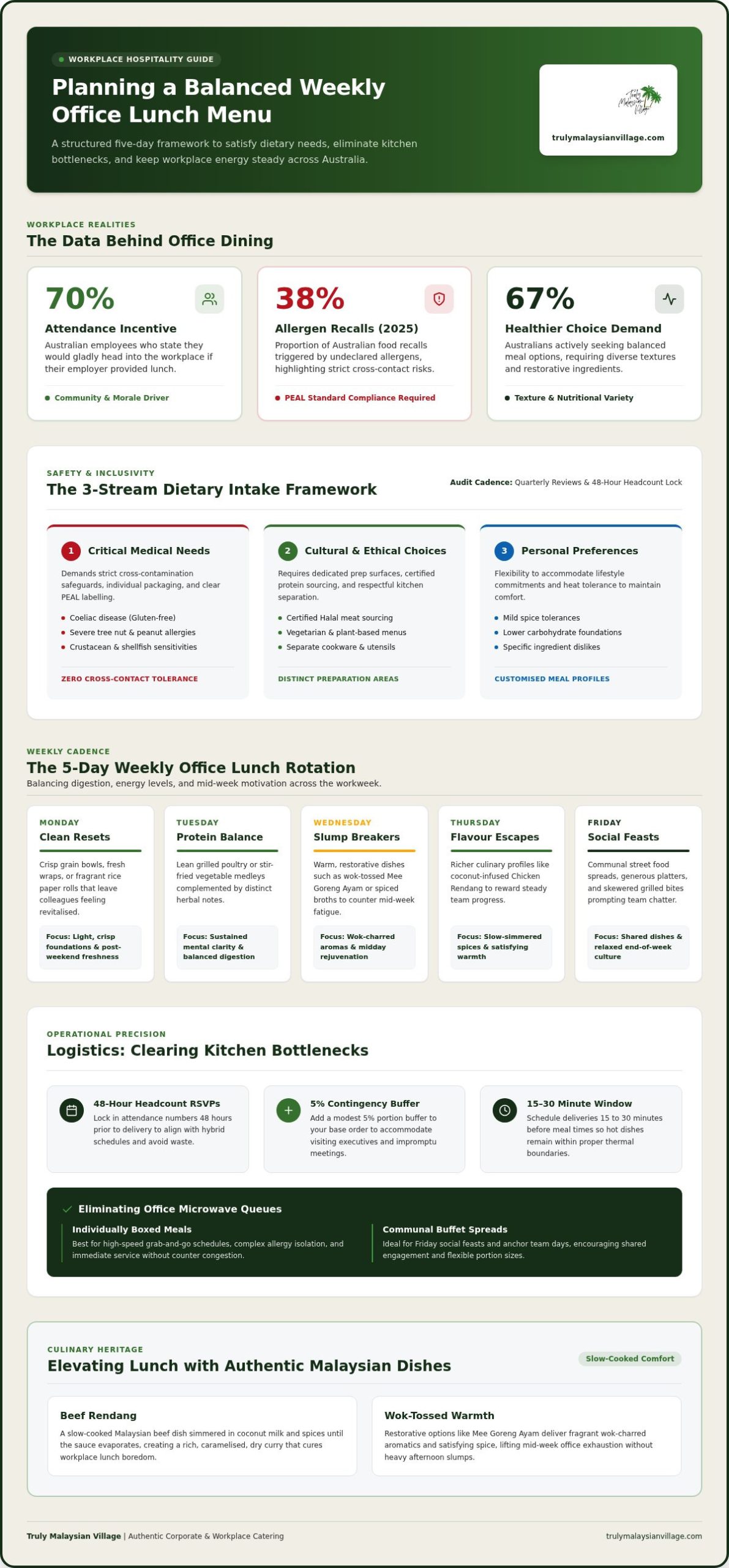
Start by setting up a confidential digital intake survey to log every team member’s dietary requirements. You need clear distinctions between severe medical allergies, digestive intolerances, and lifestyle preferences. In 2025, undeclared allergens accounted for 38% of Australian food recalls, proving how easily cross-contact issues occur without structured tracking. Caterers must comply with Plain English Allergen Labelling (PEAL) standards to identify ingredients like peanuts, crustacea, and gluten clearly. Maintain a living register that groups requests into three clear streams:
- Critical medical needs: Coeliac disease, tree nut allergies, and severe food sensitivities requiring strict cross-contamination safeguards and individual packaging.
- Cultural and ethical choices: Halal, vegetarian, and plant-based commitments that dictate distinct prep surfaces and protein sourcing.
- Personal preferences: Mild spice tolerances, low-carb options, or ingredient dislikes.
Audit this register quarterly so new starters are welcomed seamlessly and departing staff do not distort your order sizes.
Factoring in Hybrid Schedules and Fluctuating Headcounts
Modern workplaces rarely see full attendance five days a week. While traditional meal preparation focuses on fixed household portions, feeding a hybrid team demands visibility over anchor days when staff attendance peaks. Establishing a firm RSVP deadline 48 hours before delivery keeps portions accurate and avoids unnecessary waste.
Calculate base orders around confirmed numbers, adding a modest 5% buffer to accommodate visiting executives or impromptu meetings. Checking through a versatile weekday menu gives you the flexibility to map specific protein-to-plant ratios as headcount numbers shift throughout the week, ensuring you master how to plan a weekly office lunch menu that leaves no one overlooked.
Designing a Balanced 5-Day Weekly Office Lunch Rotation Schedule
A successful menu moves with the natural energy of your team. The greatest pitfall when learning how to plan a weekly office lunch menu is treating every workday the same. Forcing cold wraps onto a celebratory Friday deflates the room, while delivering heavy gravies during a frantic Monday morning derails afternoon focus. True culinary care lies in designing a rhythm that nourishes, energises, and brings people together.
Structuring Daily Menu Themes from Monday to Friday
Build a five-day cadence that matches the workplace lifecycle:
- Monday (Clean Resets): Crisp grain bowls, fresh wraps, or fragrant rice paper rolls that leave colleagues feeling revitalised.
- Tuesday (Protein Balance): Lean grilled poultry or stir-fried vegetable medleys with distinct herbal notes.
- Wednesday (Slump Breakers): Warm, restorative dishes like wok-tossed Mee Goreng Ayam or spiced broths to lift mid-week exhaustion.
- Thursday (Flavour Escapes): Richer culinary profiles such as coconut-infused Chicken Rendang to reward team progress.
- Friday (Social Feasts): Communal street food spreads, generous platters, and skewered grilled bites that prompt team chatter before the weekend.
Preventing Workplace Lunch Boredom Across Repeated Weeks
Boredom sets in when caterers rely on matching sauces and uniform preparations. About 67% of Australians actively seek healthier meal options, but they also crave variety. Contrast textures every single day: pair velvety curries with crisp cucumbers, or tender pulled meats with crunchy pickled vegetables. Rather than serving repeated cold sandwiches, rotate between steaming jasmine rice, wok-tossed flat noodles, and spiced grain foundations.
Balancing Energy Levels and Avoiding the Afternoon Slump
Midday meals should sustain mental clarity, not trigger heavy fatigue. Adhering to the core 4 Steps to Food Safety ensures your hot selections stay within proper thermal boundaries without degrading into greasy, heavy leftovers. Moderate simple starches by pairing carbohydrates with colourful vegetables, such as Sayur Masak Lemak Putih, and lean proteins.
Swap sugary commercial cans for soothing drinks like hot or iced Teh Tarik. A thoughtfully staged calendar changes the workday atmosphere entirely; when you are ready to shape an inspiring rotation for your workplace, you can easily reserve an office order that keeps energy high from Monday through Friday.
Managing Workplace Kitchen Logistics, Food Safety, and Serving Formats
Nothing stalls a workday faster than twenty people waiting for two office microwaves. A 2024 survey showed that 90% of Australian workers get a lunch break, with 30 minutes being the standard duration. Spending twenty of those minutes queueing in a crowded breakroom completely defeats the purpose of providing sustenance. When considering how to plan a weekly office lunch menu, matching your food selections to your physical office layout is just as important as the flavours you pick.
Buffet-Style Platters versus Individually Labelled Boxes
Your choice of packaging sets the operational speed of the entire lunch hour. Match the format to your schedule:
- Individually labelled boxes: Essential for tight schedules, multi-team presentations, and off-site training sessions. Each colleague grabs their designated meal without touching shared utensils. Boxes must feature plain-text ingredient declarations to avoid dangerous mix-ups.
- Communal buffet platters: Ideal for team-building days, relaxed milestone celebrations, and end-of-week gatherings. Chafing dishes let colleagues customise their plate ratios while mingling away from their workstations.
Optimising Breakroom Space and Mitigating Appliance Queues
Crowded kitchen benches cause unnecessary friction. Eliminate appliances entirely by booking hot dishes delivered at ready-to-eat temperatures in insulated thermal carriers. This removes microwave bottlenecks immediately. If you operate on a single communal island bench, stagger department breaks by fifteen minutes to maintain flow. Position plant-based, gluten-free, and halal meals on a completely separate side table to prevent serving spoons from jumping between trays and compromising safety.
Meeting Workplace Food Safety and Temperature Standards
Corporate coordinators must uphold the Australia New Zealand Food Standards Code (Standard 3.2.2). Potentially hazardous hot food must remain at or above 60°C, while chilled items must be held at or below 5°C. Follow the two-hour standard for open buffets: any warm meal left at room temperature past this mark should be cleared away immediately. Package untouched leftovers into clean containers and refrigerate them straight away, ensuring your plan to master how to plan a weekly office lunch menu protects team wellbeing from setup to pack-down.
Selecting Workplace Catering Partners and Structuring Reliable Orders
Reliability turns a good menu into an effortless office routine. Even the most inspired meal falls flat if the courier turns up half an hour late or delivers crushed boxes leaking curry gravy down the boardroom table. When learning how to plan a weekly office lunch menu, your partnership with kitchen providers dictates whether lunch brings genuine relief or unnecessary administrative headaches.
Evaluating Reliability and Packaging Quality in Corporate Caterers
Vetting caterers requires looking past marketing photos to check real-world operational standards. Look for these core qualifications:
- Packaging integrity: Containers should be rigid, insulated, and genuinely leak-proof so rich gravies stay contained during transport.
- Certified food safety management: Standard 3.2.2A mandates that food service and catering providers maintain a certified Food Safety Supervisor and keep clear records proving food remains safe and protected from cross-contact.
- Punctuality records: High-traffic metropolitan corridors present predictable delays; your provider must demonstrate proven logistical discipline during peak delivery hours.
Coordinating Seamless Delivery Timings and Invoicing Cycles
Schedule your catering drop-off fifteen to thirty minutes before colleagues leave their desks. This small buffer allows you to unbox meals, set out utensils, and verify dietary labels before hungry crowds arrive. Setting up recurring weekly schedules reduces admin work dramatically, letting you roll multiple sittings into a consolidated monthly account. Exploring reliable options like curated weekday lunch menus simplifies this process, giving your organisation a dependable cadence without requiring manual reordering each morning.
Establishing Rapid Employee Feedback Loops for Continuous Improvement
A menu thrives when it responds to the room. Send out a simple three-question poll every Friday afternoon asking colleagues to score meal taste, portion sizes, and delivery presentation on a quick five-point scale. Track which staples disappear first and flag dishes that leave untouched leftovers. Addressing constructive feedback quickly shows staff their comfort matters, refining your approach as you master how to plan a weekly office lunch menu for long-term enjoyment.
Take the uncertainty out of your upcoming schedule and treat your team to fresh, dependable hospitality; simply place your weekly catering order to secure your delivery window today.
Elevating the Workweek with Authentic Malaysian Office Catering
Nothing brings colleagues together quite like the aroma of home-style comfort cooking. When deciding how to plan a weekly office lunch menu that genuinely lifts spirits, stepping away from western sandwich platters opens up a world of shared warmth. Centring your workweek on time-honoured culinary traditions transforms lunch from a routine pause into an anticipated cultural gathering.
Energising Teams with Signature Malaysian Spices and Aromas
Authentic Malaysian dishes rely on rempah, a finely ground spice paste that creates unmatched depth. Rather than masking ingredients with heavy salt, dishes like slow-simmered Beef Rendang cook gently for hours in rich coconut milk and lemongrass until the gravy caramelises into tender perfection. Fragrant sambal tumis is stir-fried slowly until it reaches the pecah minyak stage, where the oil separates to signal deeply developed warmth and sweetness. For fast-paced days, wok-tossed Mee Goreng delivers unmistakable wok hei, reviving tired teams with smoky, high-heat energy.
Accommodating Halal, Vegetarian, and Gluten-Conscious Team Members
Malaysian cuisine naturally accommodates broad dietary profiles without making anyone feel like an afterthought. Traditional preparation methods are inherently halal-friendly, giving multi-faith teams complete peace of mind. Malaysia’s national pride, Nasi Lemak, pairs coconut-milk rice infused with fragrant Pandan leaf alongside hard-boiled eggs, roasted peanuts, and crisp cucumber, providing a naturally gluten-conscious foundation. Pair these with tender Chicken Satay skewers, or offer creamy vegetable curries and Sayur Masak Lemak Putih to delight plant-based diners.
Setting Up an Authentic Workplace Feast with Truly Malaysian Village
Family recipes passed down through generations carry a distinct brand of hospitality. Truly Malaysian Village crafts authentic weekday menus that adapt directly to your floor plan, whether you require tidy, individually boxed portions for rapid lunch-and-learns or generous communal buffet tables. Partnering with seasoned professionals for your event catering services takes the guesswork out of how to plan a weekly office lunch menu that satisfies every palate.
Ready to banish boring breakroom lunches? Discover authentic Malaysian catering for your office and turn your next team gathering into a fragrant, memorable feast.
Transform Your Workplace Table into a Daily Gathering
A great meal turns an ordinary workday into a moment of genuine connection. By tracking dietary profiles early, balancing daily meal themes, and choosing ready-to-eat hot deliveries, you remove the stress from corporate catering. Mastering how to plan a weekly office lunch menu means creating a dependable rhythm where your team feels truly valued and cared for each afternoon.
Truly Malaysian Village makes feeding your team feel like welcoming guests into a family home. As a family-owned kitchen celebrating authentic Malaysian heritage recipes, we craft specialised weekday catering menus designed for effortless office lunches. From rich, aromatic curries and slow-simmered classics to tender satay skewers and wok-tossed noodles, our dishes bring warm comfort straight to your breakroom. When you are ready to banish lunch fatigue and share wholesome flavours your colleagues will love, explore authentic Malaysian office catering to reserve your weekly deliveries.
Frequently Asked Questions
How many days in advance should I plan a weekly office lunch menu?
Plan your schedule at least one to two weeks in advance. When learning how to plan a weekly office lunch menu, early coordination gives your kitchen partner sufficient time to source fresh herbs, produce, and quality proteins. Locking in headcounts and RSVPs 48 hours prior allows caterers to prep complex spice bases properly. It also ensures you secure reliable midday delivery slots before courier schedules fill up.
How do I calculate portion sizes when ordering food for an office lunch?
Order on a strict one-to-one ratio for confirmed attendees, adding a 5% to 10% buffer for drop-ins or visiting clients. A balanced corporate lunch should supply roughly 150 to 200 grams of cooked protein, 150 grams of grains or noodles, and 100 grams of vegetables per diner. If you are serving hearty dishes like Beef Rendang or wok-tossed noodles, portion control remains steady, whereas lighter leafy salads require slightly larger volumes.
What is the best way to handle severe food allergies in an office lunch order?
Require individually sealed and clearly labelled containers for any meal catering to severe allergies or coeliac requirements. Never place allergen-sensitive meals alongside communal platters where serving utensils can mingle. Confirm that your caterer adheres to Plain English Allergen Labelling standards and maintains certified food safety supervision under Standard 3.2.2A. Setting up a dedicated collection table away from main kitchen traffic protects sensitive diners and prevents accidental cross-contact.
Are individual meal boxes or buffet setups better for corporate office lunches?
Individual meal boxes work best for tight agendas and training sessions, while buffets excel at building community. Individually boxed portions keep queues moving quickly and protect specific dietary meals from accidental mixing. On the other hand, hot chafing buffets encourage relaxed conversation, allowing team members to tailor their own carbohydrate and protein balance. Choose boxed meals for boardroom discussions and save shared buffets for Friday celebrations or social milestones.
How can I prevent hot catered meals from getting cold before the meeting ends?
Request insulated thermal drop-off bags from your caterer and set up chafing dishes with water pans and fuel burners. Food standards require hot dishes to remain at or above 60°C throughout service. High-quality caterers transport warm meals in heavy-duty thermal carriers that preserve kitchen heat for up to forty-five minutes. Keep chafing lids closed tightly until the moment colleagues begin serving themselves to retain steam, aroma, and essential dining temperature.
What are good office lunch menu ideas to avoid afternoon fatigue?
Combine slow-release complex carbohydrates with lean proteins, fresh herbs, and crisp vegetables rather than heavy, creamy sauces. Discovering how to plan a weekly office lunch menu that maintains focus means pairing aromatic, lean proteins like Chicken Satay with cooling cucumber slices, pickled vegetables, and fragrant jasmine rice. Balance warm mains with vegetable sides like Sayur Masak Lemak Putih to keep digestion light, and finish with refreshing iced beverages instead of sugary commercial cans.
Can authentic Malaysian dishes cater to vegetarian and gluten-free employees?
Yes, traditional Malaysian recipes adapt naturally to both vegetarian and gluten-conscious diets without losing authentic character. Staples like Nasi Lemak feature coconut rice, hard-boiled eggs, peanuts, and cucumber, providing an easy gluten-conscious baseline. Plant-based team members can enjoy vegetable stir-fries, spiced potato curries, and Sayur Masak Lemak Putih simmered with coconut milk and herbs. Because heritage cooking builds flavour through fragrant spice pastes rather than flour thickeners, dietary adjustments feel natural and satisfying.

Article by
Amzar Hariz
Director of Truly Malaysian Village
Disclaimer
The content published on this website may include articles generated or assisted by AI writing tools. While we aim to provide helpful, accurate, and up-to-date information, we do not guarantee that all content is complete, error-free, or suitable for every individual situation.

