
Imagine waking up the morning after a beautiful family gathering with a fridge full of leftover Beef Rendang and Satay, only to feel a prickle of doubt about the best way to warm them up. You want to relive that soulful, aromatic experience, but the fear of a dodgy tummy or ending up with dry, rubbery chicken often leads to good food going to waste. Learning how to reheat catered food safely is about more than just avoiding the bacterial danger zone between 40°F and 140°F; it’s about honouring the craft and heritage that went into the original meal.
We promise to give you the confidence to use a food thermometer like a seasoned host, ensuring every bite reaches the vital 165°F internal temperature required for absolute safety. You’ll discover expert techniques to restore the just-cooked magic to Malaysian favourites, from keeping your Nasi Lemak rice light and fluffy to ensuring your sauces remain rich and velvety. This guide walks you through the essential two-hour timing rules and equipment tips to turn your leftovers into a brilliant second feast that feels like a warm, heartfelt embrace.
Key Takeaways
- Protect your family by keeping leftovers out of the 5°C to 60°C “Danger Zone” where harmful bacteria like Salmonella can quickly multiply.
- Learn how to reheat catered food safely by using a digital probe thermometer to ensure every dish reaches a piping hot core temperature of at least 75°C.
- Revive the authentic soul of Malaysian favourites like Nasi Lemak and Beef Rendang using gentle steaming and slow-heating methods to restore their original textures.
- Select the best equipment for the job, using the oven to maintain crispy finishes or the stove-top to ensure rich, aromatic sauces don’t separate.
- Minimise the risk of leftovers by accurately calculating portions for your next event, ensuring every guest is well-fed without unnecessary waste.
Understanding the Food Safety “Danger Zone”
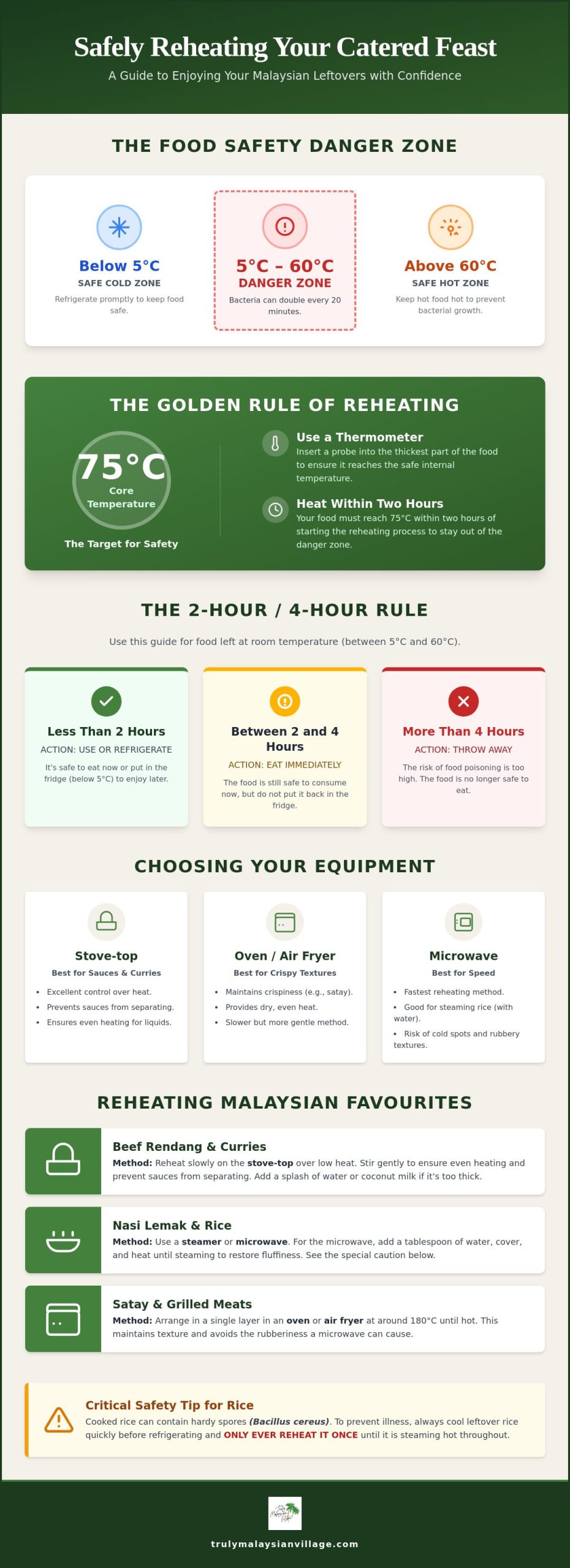
The lingering aroma of lemongrass and toasted coconut is a beautiful reminder of a successful gathering. However, the journey from a festive buffet to your fridge involves a delicate window of time where safety must come first. To understand how to reheat catered food safely, we first have to look at what happens while the food is sitting on the table. Bacteria thrive in a specific environment known as the temperature danger zone, which spans from 5°C to 60°C. Within this range, microscopic gatecrashers like Salmonella can double their numbers every twenty minutes.
Catered meals are uniquely vulnerable. Unlike a dish cooked and served immediately at home, catering often involves transit time and hours spent on a warming tray or a communal table. By the time you pack away the leftovers of your Beef Rendang or Chicken Satay, the food has already spent significant time in that risky middle ground. This is why the cooling phase is so critical. You must get those leftovers into the fridge as quickly as possible to stop the clock on bacterial growth. High-risk items common in Malaysian feasts, such as meat, seafood, eggs, and coconut-milk-based sauces, require the most vigilance.
The 2-Hour/4-Hour Rule Explained
Australian food safety standards provide a clear guide for managing leftovers. If your food has been out of the fridge for less than two hours, it’s safe to eat or refrigerate for later. Between two and four hours, the food is still safe to consume immediately, but you shouldn’t put it back in the fridge. Once the four-hour mark passes, the risk of food poisoning is too high; you must bin it. Remember, knowing how to reheat catered food safely won’t help if the food has already sat out too long. Reheating kills most bacteria, but it doesn’t always destroy the heat-stable toxins they leave behind. Use this quick checklist before you start the stove:
- Has the food been at room temperature for less than four hours?
- Was it covered while on the buffet table?
- Is the fridge temperature set at or below 5°C?
Why Rice Requires Extra Caution
Cooked rice is one of the most misunderstood items in the kitchen. It often carries spores of Bacillus cereus, a hardy bacterium that can survive the initial boiling process. If rice is left to cool slowly at room temperature, these spores germinate and multiply. When you’re dealing with a large tray of Nasi Lemak, the centre of the rice can stay warm for a long time. You should spread the rice out to cool it rapidly before refrigerating. Always follow the ‘once only’ rule for rice; reheating it multiple times significantly increases your risk of illness. When you do warm it up, ensure it’s steaming hot all the way through to keep your family safe.
While professional event catering teams use strict temperature controls during delivery, the responsibility shifts to the host once the lids are opened. Taking these precautions ensures your second feast is just as joyful as the first.
Essential Tools and Temperatures for Safe Reheating
Creating a beautiful second feast starts with the right equipment. While your senses tell you when a Beef Rendang smells divine, they can’t accurately judge if the centre of a thick meat chunk has reached a safe temperature. This is why a digital probe thermometer is a non-negotiable tool for every Aussie kitchen. To master how to reheat catered food safely, you need to aim for the “Golden Number” of 75°C. While Food Standards Australia New Zealand (FSANZ) sets 60°C as the minimum for hot holding, reaching 75°C ensures that any bacteria that might have begun to stir are effectively neutralised.
Timing is just as critical as the temperature itself. You must ensure your food reaches that 75°C target within two hours of starting the reheating process. If food lingers too long in the lukewarm range, you risk creating a breeding ground for pathogens. This is a common pitfall when using slow cookers or large pots on a weak stove. Always stir your curries and rotate your dishes frequently. This simple act eliminates “cold spots” where bacteria could survive even if the rest of the dish is steaming.
Following best practices for the safe handling of leftovers protects the love and effort put into the original meal. If you’re feeling inspired to host another gathering without the stress of the first cook, you can always book your next catering experience with us and focus entirely on the hospitality.
How to Use a Probe Thermometer Correctly
To get an accurate reading, insert the probe into the thickest part of the meat or the very centre of the dish. Avoid touching the bottom of the pan or any bones, as these can give a false high reading. Hold the probe in place for about 15 seconds until the digital display stabilises. Accuracy is paramount, but so is hygiene. Always sanitise the probe with an alcohol wipe or hot soapy water both before and after use to prevent cross-contamination between different dishes.
Maintaining Moisture While Heating
The secret to a “just-cooked” texture lies in the power of steam. When you reheat catered food, moisture is your best friend. Always cover your dishes with a lid or foil to trap steam, which helps heat the food more evenly and quickly. If your Chicken Rendang or Sayur Masak Lemak Putih looks a bit thick after a night in the fridge, add a small splash of water or a tablespoon of coconut milk. This little trick prevents the sauce from splitting and stops the meat from becoming rubbery or dry, preserving that lush, aromatic appeal we all crave.
Reheating Malaysian Favourites: Dish-Specific Strategies
Malaysian cuisine is a beautiful tapestry of delicate textures and bold, soul-warming aromatics. When you are looking at how to reheat catered food safely, you must consider the specific needs of each dish to avoid ruining the craftsmanship behind the meal. For instance, Nasi Lemak and other coconut rice dishes can easily become hard or unpleasantly dry in the fridge. To restore that signature fluffiness, use a steamer or place a small cup of water in the microwave to create a moist environment. This prevents the grains from becoming soggy while ensuring they are heated through evenly.
Stir-fried noodles like Mee Goreng often clump together once chilled, losing their inviting, silky appeal. A quick toss in a non-stick pan with a tiny splash of water or oil will help separate the strands without making them greasy. Keep the heat at a medium setting and move the noodles constantly. This methodical approach ensures every strand is piping hot without sticking to the pan. Following USDA food safety guidelines ensures that these high-carb dishes are brought up to temperature quickly, preventing any dormant bacteria from spoiling your second feast.
The Art of Reheating Rendang
While a microwave is convenient, it often creates “cold spots” in dense meats and can cause the rich oils in a Beef Rendang to separate unpleasantly. Reheating on the stove-top over a low flame is much better for preserving the integrity of the dish. Rendang is a slow-cooked dry curry that requires gentle heat to maintain its complex spice profile. If the oil has pooled at the top during refrigeration, stir it back into the meat as it warms to emulsify the sauce. This patience rewards you with a dish that tastes just as deep and soulful as it did the day it was first prepared.
Rescuing the Perfect Satay
The challenge with Satay Chicken is keeping the meat tender while maintaining that beautiful char-grilled flavour. Using an oven set to 160°C is often more effective than a grill for the second round of heating; it warms the skewers through without scorching the delicate bamboo sticks. To keep the peanut sauce creamy and smooth, reheat it separately in a small saucepan. If the sauce has thickened too much in the fridge, whisk in a tablespoon of warm water to restore its velvety consistency. Covering the skewers with foil during the first few minutes in the oven will trap steam, ensuring the meat stays succulent rather than becoming rubbery.
Equipment Guide: Oven, Microwave, or Stove-top?
Choosing the right tool to bring your leftovers back to life is about more than just convenience; it’s about preserving the delicate balance of flavours and textures that make Malaysian cuisine so special. While you might be tempted to use whatever is closest, understanding how to reheat catered food safely requires matching the method to the dish. For your liquid-based treasures like Beef Bone Soup or Penang Laksa, the stove-top is your most faithful companion. It allows you to stir constantly, ensuring the heat is distributed evenly while you breathe in those reviving aromatics.
However, there are two common kitchen items you must strictly avoid for the initial reheating phase: the slow cooker and the bain-marie. These are designed to keep already-hot food at a steady temperature. They simply don’t have the power to move food through the 5°C to 60°C danger zone quickly enough. Using them to warm up cold leftovers can leave your meal sitting in a bacterial breeding ground for hours. If you’re planning a large event and want to avoid the stress of managing equipment yourself, you can reserve our professional catering services to handle the heavy lifting of food safety for you.
Microwave Mastery for Small Portions
The microwave is a marvel of efficiency for a quick lunch, but it’s notorious for creating frustrating cold spots. To combat this, use the ‘ring’ method by arranging your food in a circle around the edge of the plate, leaving the centre empty. This encourages more even energy distribution. Always cover your dish with a microwave-safe lid to trap steam, which speeds up the process and keeps your Mee Goreng from drying out. Allowing for a two-minute resting period after the timer pings is also vital. This pause lets the heat conduct through to the very centre of the food, ensuring safety and a consistent temperature.
Oven Instructions for Large Platters
When you have a large spread to revive, the oven is the gold standard. It’s particularly effective for maintaining the integrity of crispy elements, like the skin on our Buttermilk Chicken. Set your oven between 160°C and 180°C for a gentle, thorough heat that won’t scorch the outside before the middle is ready. To prevent the top from drying out or burning, cover the platter tightly with foil for the first fifteen minutes. Organise your oven racks to allow plenty of air circulation around each dish. This methodical approach ensures that every guest enjoys a meal that feels as though it has just left the kitchen of a master chef.
Planning Your Next Event for Maximum Freshness
Hosting a gathering should be a joy, a moment to share the soul of your heritage with those you love. When you partner with professional event catering, much of the ‘heavy lifting’ regarding food safety is handled before the food even reaches your table. Expert teams use commercial-grade equipment to ensure every Beef Satay and Mee Goreng stays well outside the danger zone during transit. However, even the most meticulous planning can lead to a few extra portions. To keep your kitchen safe, aim to calculate your order based on roughly 350 grams of main dish per guest. This careful planning minimises the amount of food you will need to worry about later.
While this guide has shown you how to reheat catered food safely, the ultimate goal is always to enjoy a meal at its peak. There is a profound difference between a dish that has been chilled and revived and one that is served fresh from the wok, still singing with the heat of the flame. Reviving leftovers is a practical skill, but nothing quite matches the vibrant, aromatic appeal of a meal prepared specifically for the moment you sit down to eat.
Storing Leftovers Like a Pro
When the last guest has departed, the way you store your leftovers determines the quality of your next meal. Follow the ‘shallow container’ rule. By transferring large batches of curry or rice into smaller, shallow dishes, you allow the heat to escape quickly. This rapid cooling prevents bacteria from gaining a foothold in the centre of the food. Don’t forget to label and date every container. It is an easy way to avoid the ‘mystery meat’ gamble three days later. While saucy dishes like our Chicken Rendang freeze beautifully for up to three months, rice-based favourites are best kept in the fridge and enjoyed within 24 hours to maintain their delicate texture.
Experience the Truly Malaysian Village Difference
Sometimes, the best way to enjoy a brilliant feast is to let someone else handle the cooking from start to finish. We invite you to skip the microwave and join us at the ‘village’ for a plate of Nasi Lemak Ayam Rempah served exactly as it should be. Our kitchen is a place of dedication, where traditional Penang and Kelantan recipes are brought to life with fresh ingredients and time-honoured methods. For those looking for something truly unique, our weekend specials offer rotating dishes that capture the diverse spirit of Malaysian street food. There is no substitute for the warmth of a fresh-cooked meal and the sense of belonging that comes with a seat at our table.
Master the Art of the Second Feast
Honouring the soul of a Malaysian meal doesn’t end when the first guest leaves. By mastering how to reheat catered food safely, you ensure that every bite of leftover Beef Rendang or Nasi Lemak remains a heartfelt experience for your family. Remember the golden rule: use your probe thermometer to reach 75°C and employ gentle steaming to keep your rice light and fluffy. These simple steps protect your loved ones while preserving the aromatic depth of the traditional spices and the integrity of the dish.
As a family-run business, we pour our passion for heritage into every dish, using fresh local ingredients and authentic recipes from Penang and Kelantan. We believe that food is a bridge between worlds; we’re here to help you create those meaningful connections at your next gathering. If you’re ready to host a celebration without the stress of the kitchen, discover our authentic Malaysian catering services for a feast your guests will never forget. We look forward to sharing a piece of our village with you and ensuring your next event is truly brilliant.
Frequently Asked Questions
Can I reheat catered food more than once?
You should only reheat catered food once. Every time you cool and warm a dish, it passes through the danger zone where bacteria can flourish. For the best flavour and safety, only take out the portion you plan to eat immediately and keep the rest chilled in the fridge. This practice ensures your meal stays delicious without increasing the risk of illness.
How long does catered food stay safe in the fridge?
Most catered dishes will stay safe and delicious for two to three days when kept in a fridge set at or below 5°C. Ensure you use airtight containers to preserve those beautiful, aromatic spices. If you don’t think you’ll finish your Beef Rendang within that window, it’s better to freeze it as soon as it has cooled to keep the flavours intact.
Is it safe to reheat rice that has been sitting out for a few hours?
It depends on exactly how long the rice has been left out. Following the 2-hour/4-hour rule is vital here. If the rice has been at room temperature for more than four hours, you must throw it away. Rice is particularly prone to hardy spores that survive cooking, so if you’re in doubt, it’s always safer to start fresh.
What temperature should catered food be when reheated?
To ensure you know how to reheat catered food safely, you must aim for an internal temperature of at least 75°C. This temperature should be maintained for at least 15 seconds to neutralise any harmful bacteria. Using a digital probe thermometer is the only way to be certain that the centre of your Chicken Satay or Rendang is truly safe to enjoy.
Can I use a slow cooker to reheat my leftovers?
No, you should never use a slow cooker to reheat leftovers. These appliances are designed to maintain heat rather than provide a rapid rise in temperature. Using one for reheating can leave your food sitting in the danger zone for far too long. Instead, use your oven or stove-top to get the food through the risky temperature range as quickly as possible.
How do I know if the chicken is reheated all the way through without a thermometer?
While a thermometer is the only foolproof method, you should look for food that is steaming hot all the way to the core. If you don’t have a thermometer, cut into the thickest piece of chicken to ensure it is piping hot inside. However, we strongly recommend investing in a probe to give you absolute confidence in your family’s safety and well-being.
Can I reheat food in the aluminium trays it came in?
Aluminium trays are perfectly fine for the oven, but you must never put them in the microwave. If you’re using the oven, ensure the tray is covered with foil to trap steam and prevent the food from drying out. For microwave heating, always transfer your meal to a ceramic or glass dish first to avoid damaging your appliance or causing a fire.
What is the best way to reheat seafood dishes like Laksa or Barramundi?
The stove-top is the best choice for liquid-based dishes like Laksa. Heat it gently while stirring to keep the coconut milk from splitting. For a delicate fish like our Sweet Sour Barramundi, the oven is better. It helps maintain the texture of the fish without making it rubbery, ensuring your second feast is just as soulful and inviting as the first.

Article by
Amzar Hariz
Director of Truly Malaysian Village
Disclaimer
The content published on this website may include articles generated or assisted by AI writing tools. While we aim to provide helpful, accurate, and up-to-date information, we do not guarantee that all content is complete, error-free, or suitable for every individual situation.

