
You don’t just sit down for a meal in Malaysia; you’re welcomed into a living heritage that has been simmering for generations. It’s completely natural to feel a bit lost when faced with a menu that blends Malay, Chinese, and Indian traditions into one vibrant, aromatic mix. Learning about Malaysian food for beginners shouldn’t be stressful, even if you’re unsure about the heat or the cultural origins of your plate.
This guide is your personal invitation to discover the soul-warming staples and vibrant spices that define our nation’s most iconic flavours. We’ll help you gain a confident understanding of the classics, from spotting an authentic Nasi Lemak Ayam Rempah to understanding the aromatic depth of a slow-cooked Beef Rendang. By the time you’ve finished reading, you’ll feel like an invited guest at a village feast rather than a stranger at the table, ready to order your first Teh Tarik or Nasi Kandar Penang with ease.
Key Takeaways
- Discover the unique ‘Kampung’ spirit, where Malay, Chinese, and Indian influences blend to create a soulful and nostalgic dining experience.
- Master the essentials of Malaysian food for beginners by learning how to identify a truly authentic Nasi Lemak, the coconut-infused national dish of Malaysia.
- Explore the approachable world of street food classics like Satay and Mee Goreng, which offer a gentle and delicious introduction to the nation’s vibrant flavours.
- Demystify the heat by understanding that Malaysian spices are crafted for aromatic depth and soul-warming comfort rather than just intense chilli burn.
- Shift your perspective from customer to ‘invited guest’ as you learn the cultural stories behind every plate, making your first visit feel like coming home.
What is Malaysian Cuisine? A Melting Pot of Village Traditions
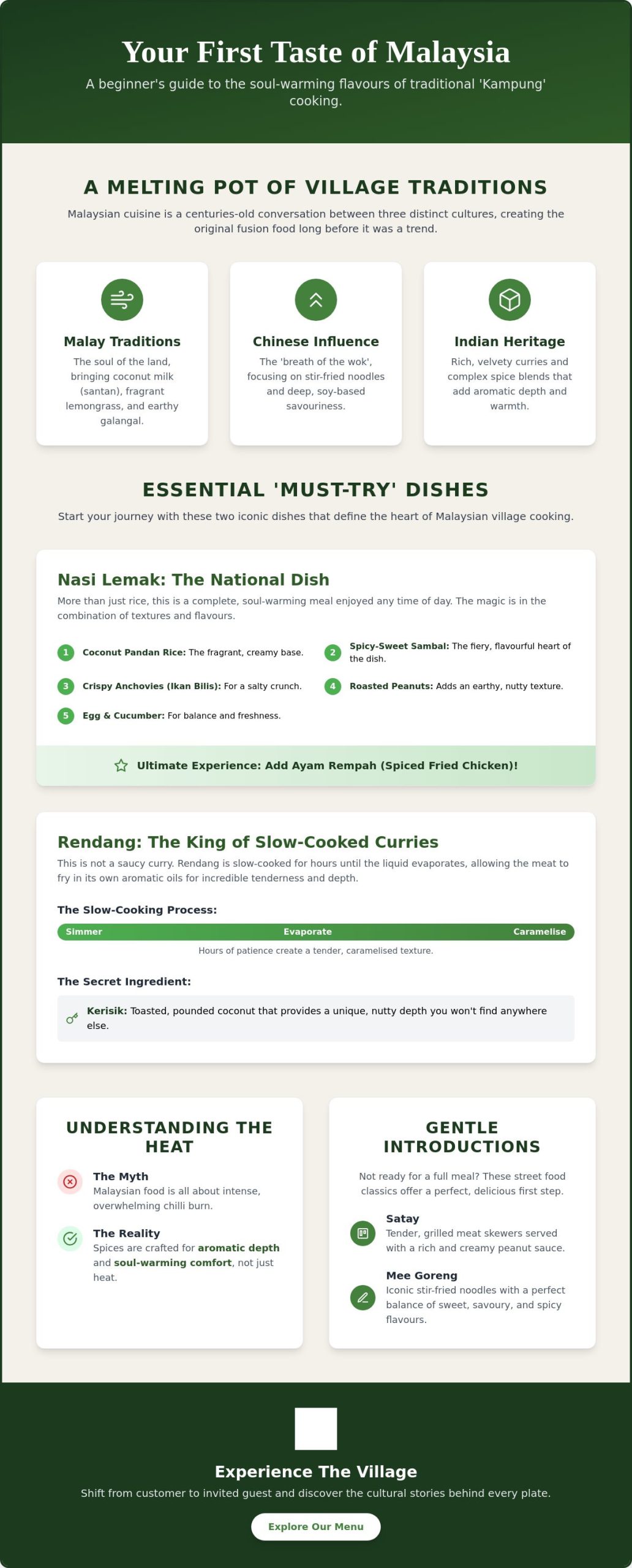
Imagine a table where three distinct cultures have sat together for centuries, sharing recipes and refining tastes. That’s the essence of Malaysian food. It isn’t just a style of cooking; it’s a centuries-old conversation between Malay, Chinese, and Indian heritages. For those exploring Malaysian food for beginners, it’s helpful to think of it as the original fusion food, long before the term became a trendy buzzword in Australian cafes. To understand the heart of Malaysian cuisine, you have to look beyond the menu and into the history of the ‘Kampung’ or village.
At its heart lies the concept of ‘Kampung’ cooking. In the village, food isn’t just fuel. It’s an expression of love, crafted with time-honoured traditions and a deep sense of soul. This approach creates a unique kind of comfort food that resonates perfectly with the Australian palate, offering a warmth that feels both exotic and strangely familiar. Malaysian cuisine is a harmonious blend of aromatic spices, coconut richness, and savoury depth.
The Three Pillars of Flavour
Malay traditions bring the soul of the land through the use of coconut milk, known as santan, alongside fragrant lemongrass and earthy galangal. The Chinese influence introduces the ‘breath of the wok,’ focusing on the art of stir-fried noodles and deep, soy-based savouriness. Finally, the Indian pillar contributes rich, velvety curries and complex spice blends that have become inseparable from the national identity. You can experience these layers of history firsthand by browsing our weekday menu or our special weekend offerings.
Why ‘Authentic’ Matters for Beginners
When you’re just starting out, the word ‘authentic’ can feel a bit intimidating. However, in the context of traditional cooking, it simply means staying true to those village roots rather than settling for a watered-down, commercialised version. Heritage-led cooking uses time-honoured methods to develop layers of flavour that quick-service ‘Asian fusion’ spots often skip. It’s the difference between a sauce that’s just hot and one that has been simmered for hours to reach a perfect, aromatic balance. Choosing traditional recipes ensures you feel like an invited guest in a cultural experience, rather than just another customer. By focusing on these village foundations, Malaysian food for beginners becomes an accessible journey into a world of nostalgic, home-cooked comfort.
The Essential ‘Must-Try’ Dishes for Your First Visit
Walking into a Malaysian eatery for the first time can feel like opening a book in a language you haven’t quite mastered yet. It’s completely normal to feel a bit overwhelmed by the choices on offer. To make Malaysian food for beginners truly approachable, we always suggest starting with the heavy hitters. These are the dishes that have defined our culture for decades. They aren’t just meals; they’re the heart of the village experience. Whether you’re dining in for lunch or dinner, these staples provide the perfect introduction to our world of flavour.
Nasi Lemak: More Than Just Rice
Nasi Lemak is the undisputed national dish of Malaysia. While some might describe it as a breakfast item, it’s a soul-warming plate enjoyed at any hour. The foundation is rice steamed with coconut milk and pandan leaves, creating a fragrant, creamy base. It’s traditionally served with a dollop of spicy-sweet sambal, crispy anchovies (ikan bilis), roasted peanuts, fresh cucumber, and a hard-boiled egg. For the ultimate experience, we recommend the Nasi Lemak Ayam Rempah. The spiced fried chicken adds a satisfying crunch and a layer of aromatic herbs that perfectly complements the coconut rice. You can learn more about why this combination is so special in our guide to Authentic Nasi Lemak Ayam Rempah in Adelaide: A Taste of Home.
Rendang: The King of Slow-Cooked Curries
If you’re looking for something rich and deeply satisfying, Beef Rendang is the answer. Unlike the saucy curries you might be used to, a traditional Rendang is a ‘dry’ curry. The secret lies in the slow-cooking process. The meat simmers in coconut milk and a complex spice paste for hours until the liquid evaporates. This allows the meat to effectively fry in its own aromatic oils, resulting in a tender, caramelised texture. A crucial ingredient is ‘kerisik’, which is toasted, pounded coconut that provides a unique nutty depth. While Beef Rendang is the classic choice for celebrations, Chicken Rendang offers a slightly lighter but equally flavourful alternative. This dish represents the patience and craftsmanship of village cooking.
For those who find it hard to choose just one thing, Nasi Kandar Penang is a fantastic option. It allows you to enjoy a variety of different gravies and side dishes all on one plate, creating a personalised feast. If you’re ready to start your journey, you can reserve your table with us today and let our hosts guide you through your first authentic experience. This is why Malaysian food for beginners usually begins with these iconic, soul-warming plates; they offer a taste of home that everyone can appreciate.
Street Food Classics: Noodles, Skewers, and Savoury Bites
If you ever find yourself in a Malaysian village at dusk, you’ll hear the rhythmic clinking of woks and smell the sweet smoke of charcoal fires. This is the world of hawker culture, a communal way of eating that brings people from all walks of life together. For those exploring Malaysian food for beginners, the street food scene is where the nation’s heart truly beats. With over 50,000 registered hawker stalls across the country, street food is more than just a quick bite; it’s a social ritual that celebrates heritage through every charred noodle and grilled skewer.
The Art of the Skewer: Satay
Chicken Satay is arguably the most accessible entry point for any newcomer. What sets Malaysian Satay apart from other regional versions is the aromatic marinade, which is heavily infused with fresh lemongrass, turmeric, and local spices. These skewers are grilled over glowing charcoal to achieve a perfect smoky finish. They are traditionally served with a rich, chunky peanut sauce that strikes a delicate balance between savoury and sweet. To round out the meal, you’ll find fresh cucumber, red onion, and ketupat, which are compressed rice cakes that soak up the sauce beautifully. Because they are easy to eat and universally loved, these skewers are a brilliant option for event catering when you want to share a taste of the village with friends.
Noodle Lovers’ Paradise
Malaysian noodle dishes are a masterclass in texture and ‘wok hei,’ a Cantonese term meaning the ‘breath of the wok.’ This refers to the smoky, charred flavour that only comes from stir-frying over intense heat. Mee Goreng is the quintessential example of this. It’s a spicy, savoury stir-fry of yellow noodles, often tossed with bean sprouts, tofu, and prawns. If you prefer something with a different mouthfeel, Mee Rebus offers a unique experience. It features a thicker, potato-based gravy that is velvety and comforting, providing a wonderful contrast to the drier stir-fries. You can explore these different textures on our Truly Malaysian Village weekday menu, where we bring these street-side classics to your table.
No street food feast is complete without a glass of Teh Tarik. This ‘pulled’ milk tea is poured back and forth between two vessels from a height, creating a thick, frothy head and a perfectly smooth temperature. The process isn’t just for show; it aerates the tea and blends the condensed milk to create a creamy, soul-warming beverage. It’s the essential drink to wash down the vibrant spices of your meal. Understanding these street food staples is a vital part of Malaysian food for beginners, as it shows how simple ingredients can be transformed into something extraordinary through tradition and fire.
Understanding the Heat: A Beginner’s Guide to Sambal and Spice
One of the biggest hurdles when exploring Malaysian food for beginners is the fear of the unknown heat. It’s a common misconception that every dish will leave you reaching for a jug of water. In reality, our cuisine is far more concerned with being ‘aromatic’ than simply ‘burning hot.’ The heat is a layer of flavour, designed to dance with other ingredients rather than overpower them. When you understand how to navigate the spice, you unlock the true soul of the village kitchen. It’s about finding the harmony between the fire of the chilli and the soothing embrace of coconut milk.
At the centre of this experience is Sambal. It isn’t just a chilli sauce; it’s the heart of the dish. Most authentic recipes start with a base of Sambal belacan, which uses fermented shrimp paste to create a deep, savoury umami foundation. While some might find the idea of shrimp paste intimidating, we see it as a masterclass in depth-building. It provides a salty, earthy backbone that transforms a simple stir-fry into a complex masterpiece. A balanced Malaysian meal always includes a cooling element, like fresh cucumber or a milky drink.
The Flavour Palette: Sweet, Salty, Sour, and Spicy
A great Malaysian meal hits every part of the tongue in a single bite. This harmony is achieved through clever pairings that balance richness with acidity. For example, the refreshing sourness of tamarind, known as ‘asam,’ is often used to cut through the richness of coconut-heavy curries. On the other end of the spectrum, you’ll find the deep, smoky sweetness of Gula Melaka (palm sugar). This isn’t just for desserts; it’s frequently used to mellow out the sharp edges of a spice paste. This constant interplay ensures that even the boldest dishes feel rounded and complete, rather than one-dimensional.
Ordering Like a Pro
Managing the heat is easy when you follow the ‘communal table’ philosophy. Instead of ordering one large spicy dish for yourself, we encourage you to order several different plates to share with the family. This allows you to alternate between a fiery Beef Rendang and a milder noodle dish or a soothing soup. You can always ask our hosts for a version that’s ‘less spicy’ (pedas sikit), which allows you to enjoy the aromatic herbs without the intense burn. To truly settle the palate, we recommend pairing your meal with a creamy Milo Ais or a frothy Teh Tarik. The dairy in these drinks acts as a natural fire extinguisher. Ready to test your palate? You can book your table at Truly Malaysian Village and let us introduce you to the perfect balance of spice and soul.
Experience the Village: Dining with Truly Malaysian Village
At Truly Malaysian Village, we believe that a meal is more than just a transaction; it’s a shared moment of cultural pride and connection. We’ve carefully brought the heart of the ‘Kampung’ to Australia, creating a sanctuary where the scents of bruised lemongrass and toasted coconut evoke a deep sense of nostalgia. For those navigating Malaysian food for beginners, our philosophy is rooted in the idea of the ‘invited guest.’ We don’t just serve customers; we welcome friends into a space where every recipe has been passed down through generations. This soft but confident approach ensures that you feel comfortable asking questions about ingredients or spice levels, knowing you’re in the hands of a passionate cultural ambassador.
A Taste of Heritage at Home
We take immense pride in the legacy and craftsmanship behind every dish we serve. Whether it’s the meticulous, hours-long simmering of our Beef Rendang or the rhythmic ‘pulling’ required to create the perfect frothy head on a Teh Tarik, we refuse to take shortcuts. These time-honoured methods are essential for maintaining the ‘home-cooked’ quality that defines our Nasi Lemak Ayam Rempah. By honouring these roots, we provide a dining experience that feels authentic and heartfelt. If you’re curious about how these village traditions fit into the wider local landscape, you can read more in our guide on Authentic Malaysian Street Food in Adelaide: A 2026 Flavour Guide.
Host Your Own Village Feast
Sometimes, the most meaningful way to experience the spirit of the village is to share a feast with those you love. Our professional catering services allow you to host your own cultural celebration with ease, bringing the soul of our kitchen to your event. A large, communal Nasi Lemak platter is the ultimate conversation starter, encouraging guests to interact and explore different textures and flavours together. We invite you to explore our full menu for your next weekend gathering. Whether you’re visiting us for a quiet lunch or organising a grand celebration, we’re here to ensure your journey into Malaysian cuisine is warm, welcoming, and deeply satisfying. Join us today and let us share a piece of our heritage with you.
Start Your Culinary Journey at the Village Table
Stepping into the vibrant world of Malaysian food for beginners is about more than just picking a dish; it’s about embracing a legacy of flavour that has been perfected over centuries. You’ve discovered the aromatic secrets of sambal and the comforting richness of our slow-cooked rendang. Now, you’re ready to experience the true soul of the village firsthand. Our doors are always open to those who seek authentic, home-cooked quality and a sense of belonging.
At Truly Malaysian Village, we take pride in our authentic Nasi Lemak Ayam Rempah, prepared using traditional village recipes that have stood the test of time. Our warm, nostalgic atmosphere ensures that every guest feels like part of the family from the moment they arrive. Every plate we serve is a testament to our dedication to time-honoured spices and heartfelt craftsmanship. We look forward to welcoming you to our table and guiding you through a meal you’ll never forget.
Book your table at Truly Malaysian Village and start your flavour journey today! We can’t wait to share the magic of the village with you soon.
Frequently Asked Questions
Is Malaysian food very spicy for beginners?
Malaysian food for beginners doesn’t have to be a fire-breathing experience. While we certainly love our chillies, many of our most beloved dishes focus on aromatic depth rather than raw heat. Dishes like Beef Bone Soup or Chicken Satay rely on ginger, turmeric, and lemongrass for flavour. You can always ask for your sambal on the side to control the spice level yourself.
What is the difference between Nasi Lemak and Nasi Goreng?
The primary difference lies in how the rice is prepared and the final texture of the dish. Nasi Lemak is rice steamed with coconut milk and pandan leaves to create a creamy, fragrant base. Nasi Goreng, such as our Nasi Goreng Kampung, is stir-fried in a wok with various spices and ingredients. One is a delicate, aromatic staple, while the other is a smoky, savoury stir-fry.
I’m a vegetarian; can I find authentic Malaysian options?
Yes, there are many ways to enjoy a vegetarian feast even though traditional recipes often use shrimp paste. Many of our noodle dishes, like Mee Goreng, can be adapted with fresh vegetables and tofu to suit your needs. We always encourage you to speak with our friendly hosts so we can guide you toward the best plant-based options that still capture the nostalgic village spirit.
What exactly is Teh Tarik and why is it ‘pulled’?
Teh Tarik is a strong black tea blended with sweet condensed milk to create a rich, comforting beverage. The ‘pulling’ refers to the process of pouring the tea back and forth between two vessels from a height. This technique aerates the tea to create a signature frothy head, ensures a perfectly smooth blend, and cools the drink to an ideal temperature for sipping.
Is Malaysian food similar to Thai or Indian cuisine?
Malaysian cuisine is a unique intersection of these cultures but remains entirely distinct. It borrows the complex dry spices and velvety curry techniques of India and the fresh, citrusy herbs favoured in Thailand. These influences are then blended with the indigenous Malay use of coconut milk and galangal. The result is a richer, more layered flavour profile that feels like a soulful fusion of the two.
What should I order if I want something mild but authentic?
If you prefer to avoid the heat, Chicken Satay or a hearty Beef Bone Soup are excellent starting points. These dishes are deeply flavourful and use traditional spices like cinnamon, star anise, and turmeric without the intense chilli kick. They offer a gentle yet authentic introduction to the aromatic world of the village kitchen, making them perfect for your first visit.
What is the best way to eat Nasi Lemak; should I mix everything together?
There are no strict rules, but the most traditional way is to keep the components separate on your plate. Most diners prefer to take a small portion of coconut rice and combine it with a little sambal, a peanut, and a piece of egg in every spoonful. This allows you to appreciate the contrast of crunchy, creamy, and spicy textures in every single mouthful.
Can I book Malaysian catering for a small private party?
We certainly provide professional catering services for private gatherings and intimate celebrations. Bringing a Nasi Lemak platter or a spread of Satay to your home is a wonderful way to introduce friends to these vibrant flavours. Our team takes care of the preparation using our heritage recipes, allowing you to relax and enjoy the role of a welcoming host.

Article by
Amzar Hariz
Owner of Truly Malaysian Village
Disclaimer
The content published on this website may include articles generated or assisted by AI writing tools. While we aim to provide helpful, accurate, and up-to-date information, we do not guarantee that all content is complete, error-free, or suitable for every individual situation.

