
Imagine being invited to a sun-drenched veranda in a quiet village, where the air is thick with the aroma of Nasi Lemak Ayam Rempah and the sound of shared laughter. You’re eager to tuck in, but a sudden wave of uncertainty hits; should you reach for the fork or follow your host’s lead? It’s completely natural to feel anxious about being disrespectful when faced with unfamiliar customs. Most of us have felt that prickle of nerves, wondering if we’re about to break a rule or overlook a dietary taboo. Understanding Malaysian food etiquette is about more than just which hand you use; it’s about honouring the soul of the hospitality and the heritage in every dish.
We promise that by the time you’ve finished reading, you’ll feel like a welcome guest at any table, from a city eatery to a humble family home. We’ll explore the historical “why” behind hand-washing, the nuances of communal sharing, and how to respect dietary needs with grace. Discover the heart of Malaysian hospitality through essential dining customs that will make you feel like a true part of the community. You’ll gain the confidence to enjoy an authentic connection with both the food and your hosts. Let’s pull up a chair together.
Key Takeaways
- Embrace the beautiful concept of “budi” to understand how kindness and respect are woven into every shared meal.
- Gain confidence in Malaysian food etiquette by mastering the “right-hand only” rule, a vital sign of purity in Malay and Indian traditions.
- Navigate the multicultural table with grace by learning the essentials of Halal dining and respecting specific dietary taboos like beef or pork.
- Perfect the art of the communal feast by knowing exactly how to serve elders and guests first, ensuring a harmonious dining experience for everyone.
- Learn why staying to “lepak” after your meal is the ultimate compliment you can pay to your host’s hospitality.
Why Malaysian Food Etiquette is the Heart of the Meal
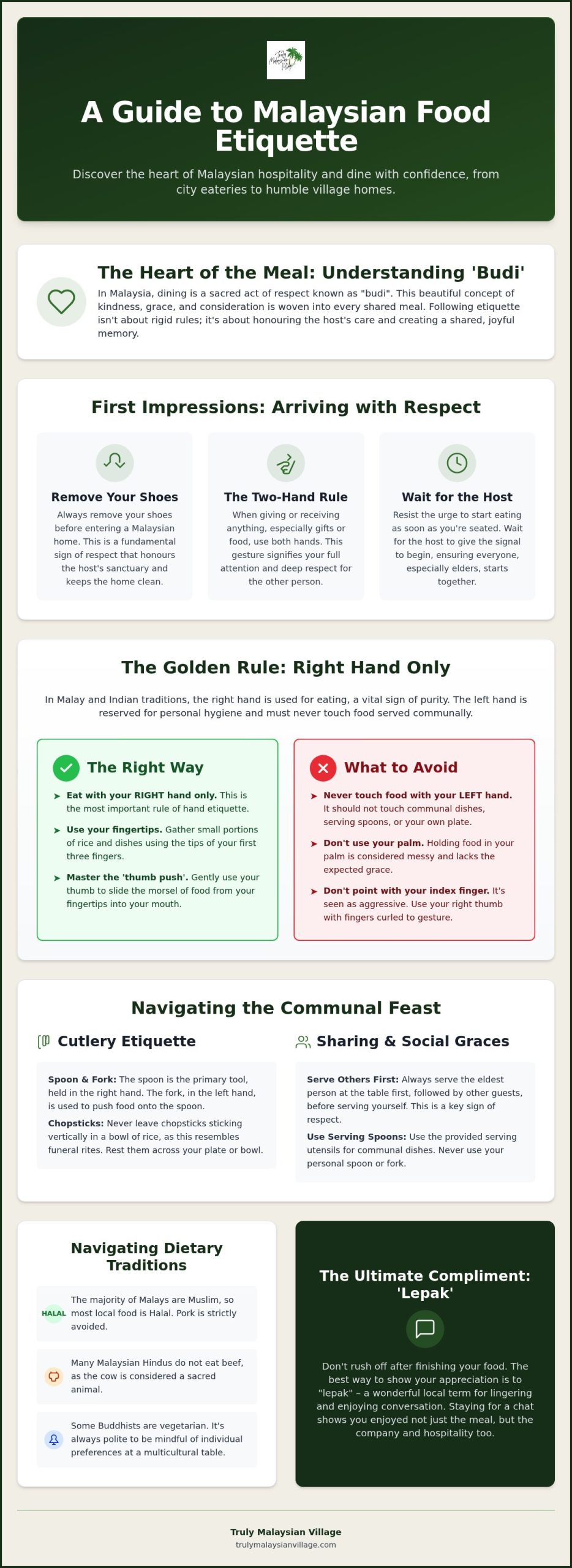
In Malaysia, dining is far more than a simple act of nourishment; it’s a sacred dance of respect known as “budi”. This beautiful concept of kindness and grace is woven into the very fabric of every meal. When you embrace Malaysian food etiquette, you aren’t just following rules. You’re acknowledging the deep love and care your host has poured into the kitchen. Understanding these customs allows you to appreciate the soul of the cooking, transforming a plate of rice and curry into a shared memory.
Traditional dining fosters a profound sense of belonging within the community. In a village setting, the host takes on the role of a “protector” of the guest’s comfort. Their primary goal is to ensure you feel entirely at home, often anticipating your needs before you even realise them yourself. This dedication creates an atmosphere where everyone feels seen and valued, making the dining table the most important place in the house.
The “Village” Philosophy of Dining
Communal eating stands as the cornerstone of our culture. While vibrant street food stalls offer a quick taste of local life, the true heart of the experience lies in family-style feasts. This is where the “Truly Malaysian” spirit is most visible. Sharing various dishes of Malay cuisine from the centre of the table encourages conversation and connection. It’s a transition from individual consumption to a collective celebration, where every gesture reflects a heritage of togetherness.
First Impressions: Arriving and Greeting
Your journey into Malaysian hospitality begins the moment you step through the door. Removing your shoes is a non-negotiable sign of respect, a quiet way to honour the host’s sanctuary and keep the home clean. It’s a small act that immediately signals your willingness to adapt to local traditions. Malaysian food etiquette also dictates how we handle objects; always use both hands when giving or receiving something, such as one of our gift cards. This “two-hand rule” shows that you’re offering your full attention and respect to the person in front of you. Once you’re seated, resist the urge to tuck in immediately. Wait for the host to signal the start of the meal, ensuring the elders and guests are ready to enjoy the feast together.
The Golden Rule: Hand Etiquette and the Right Way to Eat
There is a unique, tactile joy in feeling the texture of warm rice and aromatic curry between your fingertips. In Malay and Indian traditions, using the right hand exclusively for eating is a vital sign of purity and spiritual cleanliness. This practice isn’t just about tradition; it’s a way to connect more deeply with the craftsmanship behind the meal. As detailed in various guides on Eating Customs in Malaysia, the left hand is strictly reserved for personal hygiene and should never touch the communal food or the serving spoons.
To eat like a local, use the tips of your first three fingers to gather a small portion of rice and side dishes. You should never use your palm to hold the food, as this is considered messy and lacks the grace expected at a family table. Once you have a neat morsel at your fingertips, bring your hand to your lips and use your thumb to gently slide the food into your mouth. Mastering this “thumb push” technique shows your hosts that you respect the heritage of the meal and helps you enjoy your Nasi Lemak Ayam Rempah with true confidence.
Navigating Cutlery and Utensils
While hands are traditional, many modern settings provide a spoon and fork. In Malaysian food etiquette, the spoon is your primary tool, held in the right hand, while the fork in the left acts as a “pusher” to help load the spoon. If you’re enjoying a bowl of Penang Laksa or Fried Keow Teow, you might use chopsticks. Remember never to leave them sticking vertically out of a rice bowl, as this resembles incense sticks offered to the dead. When you need a breather, rest your utensils across your plate. Placing them parallel to each other at the end of the meal is a polite signal that you’ve finished and are thoroughly satisfied.
The Art of the Thumb Point
Small gestures can speak volumes about your cultural literacy. In Malaysia, pointing at food or people with your index finger is considered quite rude and aggressive. Instead, use your right thumb to gesture, with your other fingers tucked neatly into your palm. It’s a subtle, soft movement that reflects the gentle nature of village hospitality. Practising this refined point will instantly mark you as a “pro” diner who understands the nuances of local life. If you’re feeling ready to put these skills to the test, why not secure a table for your next family dinner and experience the warmth of our village hospitality firsthand?
Navigating Dietary Traditions: Halal, Hindu, and Buddhist Sensitivities
Malaysia’s rich cultural tapestry is most visible at the dinner table, where friends from various backgrounds share a single meal. This multicultural reality means that Malaysian food etiquette involves a deep awareness of religious dietary sensitivities. With the global halal economy projected to reach $3.4 trillion by the end of 2026, the importance of these standards has never been more prominent. At a traditional Malay table, you’ll find that pork and alcohol are entirely absent. Similarly, many of our Hindu and Buddhist friends avoid beef out of respect for the sacredness of the cow. Understanding these boundaries isn’t about restriction; it’s about creating a space where everyone feels safe to eat. If you’re unsure about a specific ingredient, it’s perfectly polite to ask your host or the server. A simple query about whether a dish contains beef is seen as a sign of a thoughtful guest.
Alcohol-Free Hospitality
There is a unique beauty in the “dry” restaurant experience, where the focus shifts entirely to the complex, aromatic flavours of the food and traditional brews. Authentic Malaysian hospitality often centres around a frothy glass of Teh Tarik or a chilled Milo Ais rather than wine or beer. In a Halal-certified environment, bringing your own (BYO) alcohol is considered a significant breach of respect. Instead, we invite you to discover the depth of a hearty Beef Bone Soup or the “Zest of the Village” through our house-made beverages. These drinks are designed to complement the spice and richness of the meal, providing a refreshing lift without the need for spirits. It’s a chance to fully immerse yourself in the authentic village vibe.
The Sacredness of Certain Ingredients
While beef and chicken Rendang are absolute staples of our heritage, you’ll never find pork on our menu. This choice honours the traditions of our founders and ensures our table remains open to all. However, it’s also important to be aware of hidden ingredients like Sambal Belacan. This fiery condiment relies on a pungent shrimp paste base, which is vital for flavour but important for those with shellfish allergies to note. When you browse our weekend special menu, you’ll see a selection of dishes that celebrate these time-honoured recipes with full transparency. Being mindful of these nuances allows you to enjoy the feast with a clear conscience and a happy heart.
The Art of the Communal Feast: Sharing Dishes and Social Graces
In a traditional Malaysian home, a meal is never just “every man for himself”. It’s a collective experience designed to be shared, where the table becomes a vibrant hub of connection. This communal style, known as “hidang”, is the soul of our hospitality. When you sit down to a feast, the order of service is paramount. We always ensure that elders and guests are served first, a practice that honours their wisdom and presence. Malaysian food etiquette encourages you to take modest portions initially, allowing everyone at the table to enjoy a fair go at the rich, aromatic “rempah” (spice) that defines our cooking. It’s about balance and ensuring the bounty is distributed with love and care.
Serving Etiquette for Shared Plates
When reaching for those central dishes, always use the dedicated serving spoon rather than your own cutlery. This keeps the meal hygienic and shows respect for the other diners. If you find yourself eyeing the last piece of Satay Chicken, the polite gesture is to offer it to others first. Only after everyone has declined should you claim that final, charcoal-grilled morsel. Keeping the communal area tidy and organised throughout the feast is another subtle way to show your appreciation for the host’s hard work. A clean table reflects a clear heart and a disciplined guest, making everyone feel more comfortable.
Respecting the Elders
The presence of elders brings a sense of legacy to the meal. If you need to walk past a senior person at the table, it’s customary to perform a “tunduk”, a slight, respectful bow of the head and shoulders. This small movement acknowledges their status without interrupting the flow of the gathering. Crucially, the most senior person should always take the first bite before anyone else starts eating. During the meal, keep the conversation light and positive. We believe that good tucker should be enjoyed with a happy spirit, so we tend to avoid heavy or controversial topics while we eat. Following these nuances of Malaysian food etiquette ensures the meal remains a harmonious experience for all.
As the feast winds down, the social role of Teh Tarik (pulled tea) takes centre stage. This frothy brew is the perfect companion for a post-dinner chat, helping to settle the stomach and extend the warmth of the evening. It’s the final flourish that turns a simple dinner into a true village celebration. If you’re ready to experience this heartfelt tradition for yourself, secure your spot at our table and join us for a feast that feels like home.
Bringing the Village Spirit to Your Own Table
Mastering Malaysian food etiquette is a journey that doesn’t end at the restaurant door. It’s a way of living and sharing that you can bring into your own home to create a sense of belonging for your own guests. Whether you’re hosting a small gathering or organising a larger celebration, remember that authenticity matters far more than perfection. Your guests will value the heart and effort you put into the meal much more than a perfectly executed finger-scoop. Food has a magical way of bridging the gap between cultures, turning strangers into friends over a shared plate of Beef Rendang or Chicken Satay.
One of the most vital parts of the experience is the “lepak”. This concept of relaxing and lingering after a meal is a crucial sign that you’ve truly enjoyed the company and the tucker. In our village culture, rushing off as soon as the last bite is gone can feel a bit cold. Instead, stay a while. Let the conversation flow as the plates are cleared. This unhurried pace shows your host that the meal was about more than just filling your belly; it was about the connection you shared.
Planning a Malaysian Feast
If you’re looking to host your own event, you can easily apply these traditions by choosing Malaysian catering that honours the craft. To set up a “village-style” spread, arrange the dishes in the centre of the table to encourage that communal “hidang” spirit we discussed earlier. Don’t forget to include a selection of colourful kuih-muih (traditional sweets) to provide the perfect, sugary finish to the feast. Creating this warm, welcoming atmosphere mirrors our own Penang and Kelantan roots, ensuring your guests feel like they’ve stepped into a quiet corner of the village for an afternoon.
Practising at Your Local Favourite
The best way to feel truly confident is to practice in an environment that breathes these values every day. At Truly Malaysian Village, our family-run business is dedicated to preserving the time-honoured methods passed down through our heritage. We invite you to explore our weekday menu and put your new skills to the test in a space where you’re always treated like family. Malaysian food etiquette is a language of respect, and there’s no better place to speak it than at a table filled with the “Zest of the Village”. We can’t wait to welcome you home.
Pull Up a Chair at Our Village Table
Embracing Malaysian food etiquette is about more than just knowing which hand to use; it’s a heartfelt invitation into our heritage. By mastering the graceful “thumb push” technique and respecting the sacred boundaries of Halal and beef-free dining, you’ve already begun to speak our language of respect. Remember that the communal spirit of “hidang” thrives on the joy of sharing, where serving your elders first and lingering to “lepak” after the meal are the ultimate marks of a welcome guest.
We invite you to experience this genuine hospitality firsthand at Truly Malaysian Village. As a family-run business led by triplets with deep Penang and Kelantan roots, we take immense pride in our award-winning recipes passed down through generations. Our Halal-friendly space is designed for meaningful communal connection, where every plate of Nasi Lemak Ayam Rempah tells a story of home and comfort.
Experience authentic Malaysian hospitality at Truly Malaysian Village and let us welcome you into our family circle. We can’t wait to see you at the table.
Frequently Asked Questions
Is it okay to use a fork and spoon instead of my hands?
Yes, using a fork and spoon is perfectly acceptable in most dining settings today. In many modern Malaysian restaurants, these are the standard tools provided to every guest. You should hold the spoon in your right hand to eat and use the fork in your left hand as a “pusher”. This method is a common part of Malaysian food etiquette and ensures you can enjoy your meal comfortably while still respecting local traditions.
What should I do if I am offered food that I cannot eat for dietary reasons?
Politely inform your host of your dietary requirements as early as possible with a warm smile. Malaysians are incredibly accommodating hosts and would much rather you speak up than feel uncomfortable during the feast. A brief, honest explanation like “I don’t eat beef for religious reasons” is always respected. Your transparency is seen as a sign of trust, allowing the host to offer delicious alternatives like our Chicken Satay or Fried Keow Teow.
Do I need to tip at a Malaysian restaurant in Australia?
Tipping is not a strict requirement in Australia, though it is always appreciated for exceptional service. If you’ve enjoyed a particularly heartwarming meal or felt the true “Zest of the Village,” a small tip is a lovely gesture. Most diners might round up the bill or leave about 10 per cent if the experience was outstanding. It is a kind way to show your gratitude for the host’s dedication and the kitchen’s craftsmanship.
Can I bring my own wine to a Malaysian restaurant that does not serve alcohol?
No, you should avoid bringing alcohol to any Halal-certified establishment. Since these venues focus on providing a pure and inclusive environment for the Muslim community, bringing wine or beer (BYO) is considered quite disrespectful. Instead, embrace the authentic experience by trying a frothy Teh Tarik or a chilled Milo Ais. These traditional drinks are specifically crafted to complement the rich, spicy flavours of our heritage recipes, providing a refreshing lift to your palate.
What is the most respectful way to point at a dish on the menu?
Use your right thumb while keeping your other fingers tucked neatly into your palm. In Malaysian food etiquette, pointing with your index finger is considered quite aggressive and rude. This subtle thumb gesture is a soft, respectful way to indicate your choice, whether you are ordering a bowl of Penang Laksa or a serve of Beef Rendang. It is a small detail that instantly shows your hosts you understand the nuances of our culture.
How do I signal to the host that I am finished with my meal?
Place your spoon and fork parallel to each other on the right side of your plate once you have finished. This clear visual cue tells the host that you are satisfied and have completed your meal. If you have been eating with your hands, washing them thoroughly in the provided bowl and drying them is the primary signal. Staying to “lepak” or chat for a while after this also shows you have enjoyed the hospitality.
Is it rude to finish everything on my plate?
Not at all; finishing everything on your plate is actually seen as a wonderful compliment to the cook. It shows that you have thoroughly enjoyed every morsel of the meal and appreciate the effort that went into it. However, in a communal setting, ensure you only take what you can reasonably finish to avoid any waste. A clean plate is generally welcomed as a sign of deep satisfaction and respect for the food provided.
Should I arrive exactly on time for a Malaysian dinner party?
Arriving on time or a few minutes late is generally acceptable in Malaysian social circles. While professional meetings are strictly punctual, social gatherings often follow a more relaxed “village” rhythm. Aiming for the stated time is respectful, but don’t panic if you are ten minutes behind. Your presence and your willingness to engage with the community are much more important to your host than the exact tick of the clock on the wall.

Article by
Amzar Hariz
Director of Truly Malaysian Village
Disclaimer
The content published on this website may include articles generated or assisted by AI writing tools. While we aim to provide helpful, accurate, and up-to-date information, we do not guarantee that all content is complete, error-free, or suitable for every individual situation.

