
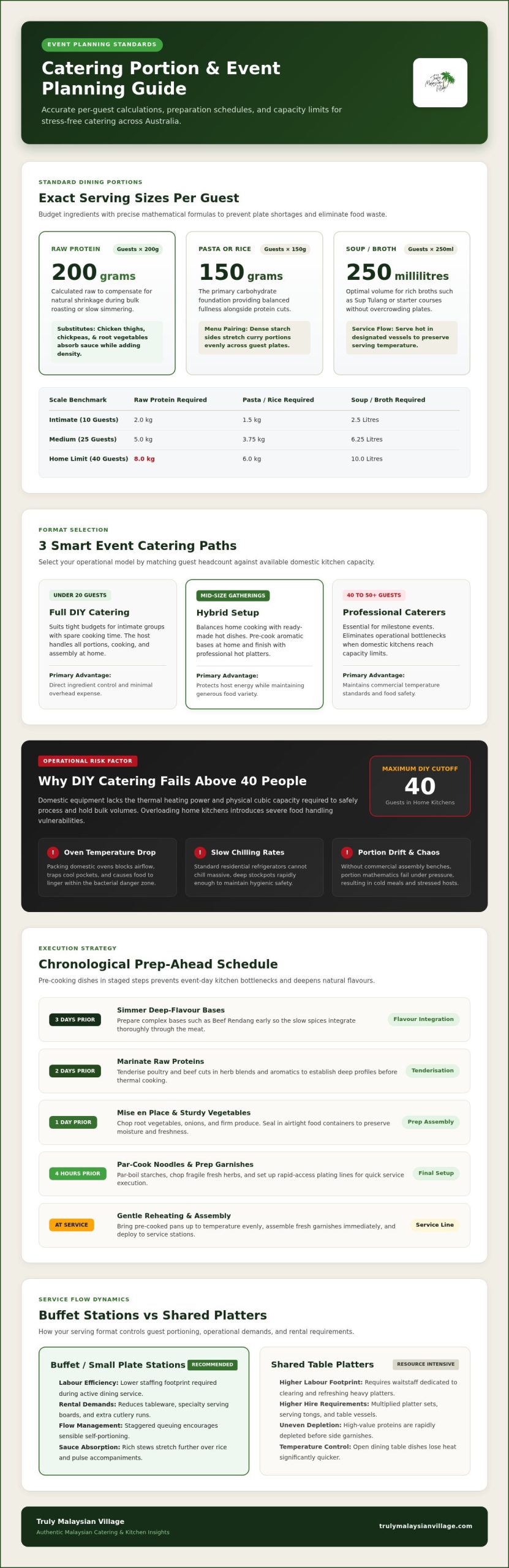
Calculating exact food per person (serving sizes) requires budgeting roughly 200g of raw protein, 150g of pasta or rice, and 250ml of soup per guest to prevent waste while avoiding shortages. For events in Australia, bulk self-catering can keep raw catering costs low when using smart recipe scaling. Detailed preparation strategies help maintain quality across each platter. Your core decisions are portion math, DIY versus hired help, and where the budget stretches furthest without shorting guests.
Key Takeaways: Plan your menu by budgeting 200g of raw protein, 150g of pasta or rice, and 250ml of soup per guest to ensure sufficient portions.
- Switching from shared platters to buffet-style service saves approximately A$5 per guest in labor and rental costs.
- Avoid DIY catering for groups over 40 people because domestic ovens cannot safely maintain required holding temperatures.
- Prepare deep-flavor bases like rendang three days early to improve spice integration and reduce event-day workload.
Choose Your Event Setup: 3 Smart Catering Paths
Matching your catering format to group size prevents budget blowouts and stress. Typical situations we meet: under twenty guests with spare cooking time (stay full DIY and scale the 200g raw protein, 150g pasta or rice, and 250ml soup figures yourself); a hybrid party of mid-size where energy runs short (pre-cook bases at home and finish with bought hot platters); corporate milestones or groups near fifty (bring in professional caterers, because home kitchens overwhelm fast).
With clients, self-catering holds for intimate numbers, while larger groups need structured support. Organising food without professional help for fifty people quickly overwhelms home kitchens.
To select the right setup, balance your available hands against food per person.
- Full DIY suits tight budgets for intimate groups.
- Hybrid setup balances home cooking with ready-made hot dishes.
- Professional catering removes operational stress.
Planning business functions needs extra strategy. Learn practical corporate menu planning so food execution stays professional. Pick the path that safeguards your peace of mind.
How much food do I actually need per person?
Budget roughly 200g of raw protein, 150g of pasta or rice, and 250ml of soup per person so group scaling stays predictable.
Estimating ingredient volumes for large numbers can feel like a puzzle under pressure. Scaling a custom Menu up or down needs clear math to keep your budget steady. Standard dining portions vary by dish, so exact food per person remains the practical way to prevent shortages.
| Food Category | Serving Size per Person | Group Size Calculation |
|---|---|---|
| Raw Protein | 200 grams | Guests x 200g |
| Soup | 250 millilitres | Guests x 250ml |
| Pasta or rice | 150 grams | Guests x 150g |
For cost-effective protein (cheap meat) dishes, aim for Small Plate stations (buffet style) setups to manage flow.
Tip: Calculate raw protein weights at 200g per person so shrinkage during bulk roasting or slow cooking still leaves a satisfying serve on the plate.
Budgeting: Cut Costs With 5 Smart Protein Swaps
Swapping whole beef cuts for budget-friendly ingredients drops your overall catering bill immediately. Budget constraints mean you must secure cheap meat (cost-effective protein) without sacrificing taste. For an authentic Asian spread, order through the village kitchen and stretch your dollar further.
Pulses and root vegetables absorb curry sauce while adding satisfying bulk. Australian retail price trends show that skinless chicken thighs and chickpeas keep raw food expenses low while keeping guest plates full.
Managing total food per person gets easier when you pair dense proteins with heavy grain sides. Serving rich stews buffet style (Small Plate stations) encourages moderate portioning and stretches the feast without thin plates.
Prep Ahead in Stages and Free Up Event Day
Pre-cooking dishes in structured stages prevents kitchen chaos on the event day. In catering runs, I start with an assembly line for raw ingredients to clear bottlenecks. Organising your prep schedule early keeps each dish at peak flavour. Check the authentic Menu and choose dishes that hold well over time.
Follow this chronological prep schedule:
- 3 Days Prior: Simmer deep-flavour bases like rendang so the spices integrate thoroughly.
- 2 Days Prior: Marinate meats to tenderise proteins and build aromatic profiles.
- 1 Day Prior: Chop sturdy vegetables and store them in airtight containers.
- 4 Hours Prior: Par-cook noodles and prepare fresh garnishes for quick assembly.
- At Service: Reheat cooked pans gently and assemble fresh components right away.
Hand each stage to the next on a fixed clock so the final workload shrinks. Batching tasks keeps your kitchen tidy and protects hours you would otherwise lose on the day.
When DIY Catering Fails: Why Bulk Cooking Hurts
Cooking for more than 40 guests at home creates food safety and logistics risks that standard residential kitchens cannot handle. Domestic equipment lacks the heating power and capacity needed to process massive volumes safely.
Situation: a host tries to roast and hold protein for a crowd above 40 in a packed home oven. Action: in my own catering work I have watched domestic ovens fail to hold safe temperatures when filled tight; stuffed appliances trap cool air and push food into bacterial growth zones, while standard fridges cannot chill massive pots of hot food fast enough. Result: cold meals, stressed hosts, and wasted ingredients, with food per person slipping out of control without commercial prep space.
Hiring professional caterers remains the safe choice for large events.
Managing Dietary Needs Without Cooking 10 Dishes
You can satisfy diverse dietary requirements by setting up modular, self-serve food stations instead of preparing multiple distinct meals.
Build your core menu with inclusive ingredients so catering stays lean. Start with rice or salad bases, then let guests customise at interactive counters using separate protein, sauce, and topping bowls. This self-serve approach covers gluten-free, vegetarian, and dairy-free diets inside a single kitchen footprint.
Treat the layout as modular stations for your event buffet style. You limit cross-contamination and still deliver enough food per person so no guest feels sidelined. Offer whole grains, legumes, and plenty of vegetables for a balanced plate guests can trust.
Buffet vs Shared Platter: Save A$5 Per Guest
Self-service stations slash event costs by reducing paid service staff and minimising overall food wastage.
Situation: a client faced hefty platter rental fees and oversized serves that looked full on the table yet left stacks of leftovers. Solution: switch to Small Plate buffet stations that drop rental needs and guide portion flow. Result: costs fall by about A$5 per guest against platter service, with less clean-up labour at the end of the night.
Platters still fit intimate VIP tables, while buffets suit large venues that need speed. If standing service worries you, interactive food stations tend to spark networking rather than block it. Ask for a tailored cost breakdown when you compare formats for your headcount.
Raise Affordable Dishes Into a Polished Feast Area
When you host guests, thoughtful presentation turns simple meals into memorable visual events.
In client projects, attendees notice vertical arrangement before they judge taste, so presentation earns its keep. Stagger dishes on wooden crates for immediate height and impact.
Separate drink stations from food tables to prevent room bottlenecks. A clear movement pathway keeps crowd flow steady and relaxed.
Set up buffet style along a central wall with clear entry points. Warm string lights and small battery candles add glow without heat risks.
Placing cheap meat options on raised wooden boards makes affordable spreads look lavish. Strategic styling turns basic catering into a polished feast area without extra stress.
Planning a large group event in the Illawarra?
Hosting a large event in the Illawarra becomes calmer when you trade home cooking for professional group catering. Self-catering often buries accurate food per person under prep work. In our work with catered events, handing over the kitchen lets hosts enjoy their guests and drops hours of chopping.
Truly Malaysian Village delivers authentic, crowd-pleasing banquets directly to your local venue. Rich curries and street food favourites draw people together around shared platters. A full spread fits busy planners who need reliable catering, while DIY works only for smaller gatherings.
If you want a strong feast without the kitchen headache, request a personalised quote for your Illawarra date.
Details and enquiries: Truly Malaysian Village.
Frequently asked questions
What recipes are suitable for feeding a large group?
Slow-cooked curries, tray bakes, and large-scale pasta dishes work well for a crowd. Preparing food in single tiny batches slows your kitchen. Dishes like braised beef or pulled pork scale up in big stock pots or commercial ovens. Serving buffet style lets guests customise meals without extra labour from you.
How can I prepare dishes ahead of time?
Cook your base sauces, marinades, and stews up to two days before the event. Chilling these main elements improves their flavours while saving setup hours on the day. Keep delicate salad greens separate from dressings until the last minute. Reheat wet dishes slowly in holding pans so they stay moist.
What side dishes pair well with bulk meals?
Steamed rice, roasted root vegetables, and fresh crunchy slaws complement most heavy main courses. These options hold on serving tables without losing texture. Choose sides that share similar oven temperatures so baking schedules stay tidy. Simple grain salads also work at room temperature.
How do I keep a gathering affordable?
Focus on plant proteins, seasonal vegetables, and cheap meat cuts like chicken thighs or pork shoulder. Buying pantry staples in commercial quantities reduces the total expense. You can request figures on tailored catering packages when you want exact numbers. A targeted batch menu prevents unnecessary food waste.
How much food do I actually need per person?
Calculate your menu with generous food per person based on event length and guest demographics. Plan for roughly 200g of raw main protein alongside 150g of pasta or rice per guest, plus 250ml of soup when you serve one. Big crowds eat slightly more than small dinner parties, so build in a ten percent buffer for unexpected appetites.
Master Your Next Gathering
Organising food per person for large groups takes careful calculation so shortages stay off the table. Banqueting teams balance rich dishes with lighter options to keep guests satisfied through the event. Proper menu planning for a large group supports steady kitchen operations and dining worth remembering.
Structured preparation removes stress from group event planning, and large portions reward precise timing.
For your upcoming event in 2026, explore authentic shared-plate catering and secure expert group dining with the Truly Malaysian Village team, who tailor professional banquet planning to your occasion.

Article by
Amzar Hariz
Director of Truly Malaysian Village
Disclaimer
The content published on this website may include articles generated or assisted by AI writing tools. While we aim to provide helpful, accurate, and up-to-date information, we do not guarantee that all content is complete, error-free, or suitable for every individual situation.

