
Have you ever spent hours waiting for a slow cooker only to end up with a watery beef stew instead of a rich, caramelised masterpiece? It’s a common frustration for those searching for the best beef rendang adelaide has to offer, as the transition from a traditional wood-fired hearth to a modern appliance often loses that authentic soul. You want beef that falls apart at the touch of a fork and a sauce that’s dark, dry, and intensely aromatic, not a soupy mess that lacks depth.
We believe that every meal should feel like an invitation to a family table, filled with the warmth of heritage and the pride of a well-crafted dish. This recipe will guide you through the secrets of slow-cooked Malaysian beef, from sourcing quality brisket at the local shops to the patient art of making kerisik. You’ll learn how to balance fresh galangal and star anise to create a reliable, village-style feast that works perfectly in your Australian kitchen every single time. We’ll show you how to achieve that signature oil-separated finish and deep colour that defines a truly authentic rendang.
Key Takeaways
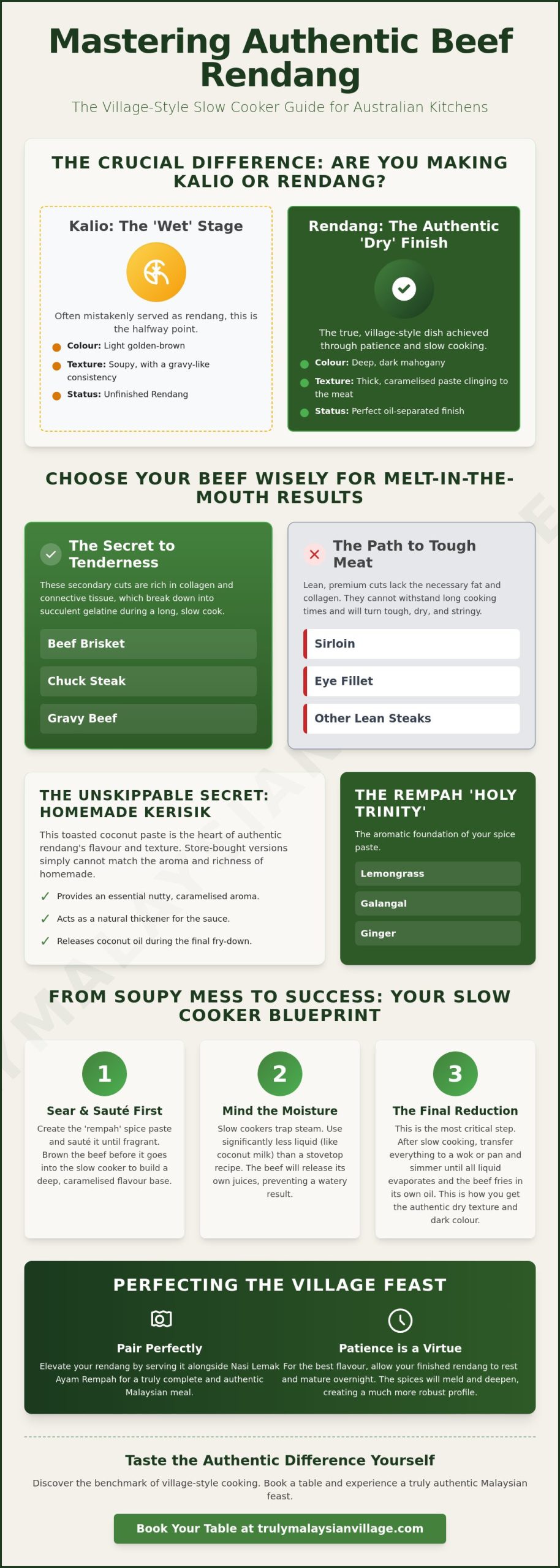
- Learn the crucial distinction between a “wet” Kalio and a truly authentic “dry” Rendang to ensure your dish reaches its traditional, dark, and caramelised potential.
- Discover why selecting secondary cuts like brisket or chuck steak is the secret to achieving melt-in-the-mouth tenderness in a slow cooker while avoiding tough, stringy meat.
- Master the art of crafting your own kerisik at home to provide the essential nutty aroma and thick texture that store-bought alternatives simply cannot match.
- Follow our refined searing and sautéing techniques to create the best beef rendang adelaide home cooks can produce, ensuring the oil separates for a perfect, village-style finish.
- Elevate your feast by pairing the dish with Nasi Lemak Ayam Rempah and allowing the flavours to mature overnight for a deeper, more robust profile.
Understanding the Aromatic Legacy of Malaysian Beef Rendang
To truly understand why food lovers spend so much time searching for the best beef rendang adelaide has to offer, we have to look beyond the plate and into the soul of the village. Beef Rendang isn’t just a curry; it’s a slow-cooked masterpiece that serves as a testament to patience and cultural pride. Originating from the Minangkabau people, this dish was traditionally crafted to preserve meat in a tropical climate, using a complex blend of spices and coconut milk that acts as a natural preservative. The history of rendang reveals a journey of migration and tradition, where each spice tells a story of heritage and home.
One of the most important things to realise is that authentic rendang is a “dry” curry. In many local cafes, you might be served “Kalio,” which is the halfway point of the cooking process. Kalio is still wet, light in colour, and has a gravy-like consistency. A true, village-style rendang is cooked until the liquid has completely evaporated, allowing the beef to fry in its own rendered fats and coconut oils. This process creates a deep, dark mahogany hue and a concentrated flavour profile that is unmatched by any quick-fire stew. The slow cooker is our modern bridge to this ancient method, providing the gentle, consistent heat needed to transform tough cuts of Australian beef into something that melts at the touch of a fork.
The “Low and Slow” Village Tradition
In the villages of Malaysia, rendang is often a communal effort, cooked in massive iron woks over open wood fires for the better part of a day. This “low and slow” approach is essential for the aromatics to reach their full potential. The slow cooker mimics this traditional hearth beautifully, maintaining a steady temperature that coaxes the oils from the lemongrass, galangal, and turmeric. This method preserves the delicate aromatic oils that give the dish its heartbeat, filling your kitchen with a nostalgic scent that feels like a warm hug from home.
Why Slow Cooker Rendang Often Goes Wrong
The most common frustration with home-cooked rendang is ending up with a soupy, watery mess. Because slow cookers are designed to trap moisture, they don’t allow for the natural evaporation that happens in a traditional wok. If you simply toss in a standard stovetop recipe, the flavours will be diluted. Success requires a specific approach to liquid ratios and a final reduction stage. You have to be brave enough to let the sauce thicken until it clings to the meat like a rich, spice-laden blanket, ensuring you achieve that authentic, oil-separated finish that defines the best beef rendang adelaide enthusiasts crave.
Selecting the Best Beef and Spices for Slow Cooking
Creating a dish that captures the essence of a village feast begins with selecting the right ingredients. In Australia, we are blessed with some of the finest produce in the world, and choosing the correct cut of meat is the foundation for the best beef rendang adelaide families will ever share. For a slow cooker, you need cuts that are rich in connective tissue. Beef brisket, chuck steak, or gravy beef are your best friends here. As of June 2026, high-quality brisket and chuck are readily available at Coles or Woolworths for approximately $18.00 per kg, making this a budget-friendly way to feed a crowd without sacrificing quality.
You might be tempted to use a leaner cut like sirloin or eye fillet, but these will fail you in the slow cooker. Lean meat lacks the collagen necessary to withstand long cooking times, often turning tough and stringy. The science of slow cooking explains that tough fibres only break down into succulent gelatine when held at a consistent, gentle heat over several hours. This transformation is what gives the beef its melt-in-the-mouth texture. If you’d like to experience this perfect texture before trying it yourself, you can always book a table with us to taste the benchmark of village-style cooking.
The Rempah: Creating Your Spice Base
Rempah is the aromatic heartbeat of Malaysian cuisine, a complex paste that defines the character of every dish. To build yours, you’ll need the “Holy Trinity” of aromatics: lemongrass, galangal, and ginger. Fresh lemongrass is currently around $9.90 per kg at Adelaide’s Finest Supermarkets, while galangal sits at about $22.90 per kg. When preparing your rempah, blending shallots, garlic, and fresh turmeric creates a vibrant base. We recommend using a mix of soaked dried chillies for a deep, smoky colour and fresh chillies for a bright, immediate heat. This balance ensures your rendang has a layered complexity rather than just a one-dimensional spice kick.
Essential Pantry Staples
To achieve a rich, velvety sauce, always opt for a high-fat coconut cream. The fat is essential for the “oil separation” phase where the spices truly fry and caramelise. You’ll also need a souring agent like tamarind pulp or asam keping to cut through the richness. Finally, don’t forget Gula Melaka (palm sugar). It provides a deep, smoky sweetness that white sugar simply cannot replicate, helping you succeed in recreating the best beef rendang adelaide has to offer in your own kitchen.
The Secret Technique: Crafting Your Kerisik at Home
While the spices and the cut of beef provide the foundation, the true soul of the dish lies in a single, humble ingredient: kerisik. This toasted coconut paste is what separates a standard curry from the best beef rendang adelaide locals will remember long after the meal is over. Kerisik acts as both a thickener and a flavour bomb, delivering a deep, nutty richness that defines the village-style experience. While some might reach for a pre-packaged jar from the supermarket, store-bought versions often lack the fragrant, essential oils that only come from fresh preparation. The New York Times’ Beef Rendang recipe rightly emphasises the importance of this step, but making it yourself ensures your rendang has that unmistakable home-cooked heart.
To begin, take a few cups of unsweetened desiccated coconut and place them in a dry pan over medium-low heat. You must stay by the stove, stirring constantly to ensure an even toast. The coconut will slowly transform from a snowy white to a shimmering golden brown, and finally to a deep, toasted bronze. Once it reaches this stage, immediately remove it from the heat. While still warm, transfer the coconut to a mortar and pestle. This is where the craftsmanship begins. You need to pound the toasted flakes until they release their natural oils, turning the mixture from a dry powder into a dark, glossy, and slightly gritty paste. If you’re short on time, a modern spice grinder can do the job, but the traditional method allows you to feel the texture change as the oils emerge.
Why Kerisik is Non-Negotiable
In a slow cooker environment, kerisik is your most powerful ally. Because slow cookers don’t allow for much evaporation, the sauce can often stay too thin. Kerisik acts like a sponge; it absorbs the excess coconut milk and binds the aromatics to the meat. It provides that unique “gritty” yet creamy mouthfeel that is the hallmark of the best beef rendang adelaide enthusiasts expect. If you find yourself with extra, don’t let it go to waste. Kerisik stores beautifully in the freezer for several months, meaning you’re always just one step away from your next feast.
Troubleshooting Your Toasted Coconut
The line between perfectly toasted and burnt is thin. If the coconut turns black, it will introduce a bitter flavour that can’t be masked. If this happens, it’s best to start again. You’ll know you’ve succeeded when the paste feels oily to the touch and smells like a warm, tropical afternoon. Whether you use a traditional mortar and pestle for the soul of the process or a grinder for speed, the goal remains the same: a rich, dark paste that will anchor your rendang in tradition.
Your Step-by-Step Guide to the Best Beef Rendang Recipe (Slow Cooker)
Bringing the soul of a Malaysian village into your home requires more than just a set of ingredients; it demands a respect for the process. While many recipes suggest simply tossing everything into a pot, the best beef rendang adelaide home cooks create is built on layers of flavour. This method uses the slow cooker to tenderise the meat, but relies on traditional stovetop techniques to ensure the final dish isn’t a watery stew. By following these three distinct phases, you’ll achieve a result that is rich, dark, and deeply aromatic.
Phase 1: The Aromatic Sauté
Frying your rempah is a step you cannot afford to skip. Before the slow cooker even comes out of the cupboard, you must sauté your freshly blended spice paste in a pan with a generous amount of oil. You are looking for the “pecah minyak” moment, where the oil separates from the paste and rises to the surface. This signifies that the raw aromatics have cooked through and their flavours have intensified. During this stage, add your whole spices: star anise, cinnamon sticks, and cloves. Searing your beef chunks in a separate hot pan until they develop a dark, caramelised crust will also lock in the juices and provide a robust foundation for the long cook ahead.
Phase 2: The Slow Transformation
Transfer your seared beef and the fried spice paste into the slow cooker bowl, scraping every bit of flavour from the pans. Pour in your high-fat coconut cream and stir gently to combine. Set your appliance to “Low” for 6 to 8 hours or “High” for 4 hours if you’re in a bit of a rush. Resist the urge to open the lid frequently, as each peek releases the steam and heat necessary for breaking down those tough beef fibres. About an hour before the time is up, bruise your makrut lime leaves and tuck them into the liquid to release their citrusy perfume. The beef is ready when it pulls apart with a fork.
Phase 3: Achieving the Signature Dry Finish
This is where the magic happens. Most slow cooker rendangs end up too “wet,” but we’re aiming for that authentic, dry village finish. Transfer the contents of your slow cooker back into a large wok or wide pan on the stovetop. Over medium heat, let the sauce reduce until the liquid has evaporated and the beef begins to fry in the remaining coconut oil. This is the perfect time to stir in your homemade kerisik and a piece of Gula Melaka. You’ll notice the colour shift from a light orange to a deep, magnificent mahogany. To see how the professionals achieve this perfect balance of texture and spice, book your next village feast with us and experience the difference for yourself.
Perfecting the Village Experience: Serving and Pairing
Once your slow cooker has finished its work and you have reduced the sauce to that thick, dark mahogany finish, it’s time to set the table. A village-style feast is about more than just a single dish; it’s about the harmony of flavours that define a communal experience. To truly honour your hard work in creating the best beef rendang adelaide has ever seen, you must pair it with the right companions. The richness of the beef requires a balance of acidity, crunch, and fragrance to make every bite feel as vibrant as the first.
The ultimate partner for this dry curry is undoubtedly Nasi Lemak Ayam Rempah. The coconut-infused rice provides a creamy, aromatic base that complements the spices, while the spiced fried chicken adds a different layer of savoury depth. For a complete palate, we recommend serving a side of Acar awak (pickled vegetables). The sharp tang of the vinegar and the crunch of the vegetables provide a necessary lift that cuts through the intense richness of the coconut oils. If you want a bit of extra heat, a small dollop of sambal belacan on the side will provide that authentic Malaysian kick.
The Ideal Accompaniments
Traditional pairings are designed to balance the “heat” of the spices with cooling elements. Fresh cucumber slices and a handful of roasted peanuts are non-negotiable for providing a refreshing texture. To drink, nothing matches the soul of this meal like a hot, frothy cup of Teh Tarik. The sweetness of the pulled tea mellows the spice, creating a nostalgic dining experience that feels like a warm hug from home. It’s these small details that transform a simple dinner into a genuine cultural celebration.
Storing and Reheating for Maximum Flavour
Experienced cooks know that rendang always tastes better the next day. By allowing the dish to rest, you give the complex web of galangal, lemongrass, and toasted coconut time to fully entwine with the beef fibres. This maturation process results in a more mellow and sophisticated profile. When storing your masterpiece, remember these tips:
- Refrigeration: Place the rendang in an airtight container once cooled. It will stay fresh and delicious for up to 5 days.
- Freezing: This dish freezes exceptionally well. Portion it out for a quick, high-quality village meal on those busy weeknights when you don’t have time to cook.
- Reheating: To prevent the beef from drying out, reheat it gently in a pan with a tiny splash of water or coconut milk. This helps loosen the oils without diluting the concentrated flavour.
While mastering this recipe at home is a rewarding journey, we know that sometimes you want to simply sit back and be the guest. If you’re looking to bring this level of authenticity to your next event without the hours of preparation, we invite you to explore our catering services. We take great pride in recreating the best beef rendang adelaide families enjoy, delivered with the same love and care we put into our own family table.
Bring the Soul of the Village to Your Dining Table
Mastering the art of slow-cooked rendang is a journey of patience and cultural pride. By choosing robust cuts like brisket and dedicating time to crafting your own toasted kerisik, you’ve moved beyond a simple curry to create a legacy on a plate. You now understand that the secret to the best beef rendang adelaide families can enjoy lies in that final, patient reduction to a rich, dry finish. These techniques reflect the same “low and slow” traditional methods we use in our own kitchen, inspired by authentic family recipes passed down through generations.
While the slow cooker makes this village-style feast accessible, there’s something truly special about being the guest at a table where every detail is handled with care. We invite you to experience our award-winning Malaysian flavours in the heart of the community, where we continue to honour the craftsmanship of our heritage. Explore our full menu of authentic Malaysian favourites and let us share the warmth of our home-cooked traditions with you. We look forward to welcoming you for a truly memorable feast soon.
Frequently Asked Questions
What is the best cut of beef for a slow cooker rendang?
Beef brisket, chuck steak, or gravy beef are the ideal choices for a slow-cooked rendang. These secondary cuts are rich in connective tissue that breaks down into succulent gelatine during the long, gentle simmer. While lean cuts like sirloin might seem premium, they’ll become dry and stringy in the appliance. Using these traditional cuts ensures you’re on the path to creating the best beef rendang adelaide home cooks can provide.
Can I make beef rendang in a slow cooker without kerisik?
You can technically skip the kerisik, but the dish will lack the signature nutty aroma and dark, toasted colour of a true village-style feast. Kerisik acts as a vital thickener and provides that unique, slightly gritty mouthfeel that defines an authentic Malaysian experience. Without it, your rendang will feel more like a standard beef curry rather than the complex, layered masterpiece it’s meant to be.
Why is my slow cooker rendang so watery and how do I fix it?
Slow cooker rendang often ends up watery because the sealed lid prevents the natural evaporation needed to thicken the sauce. To fix this, you must transfer the contents to a wide pan or wok on the stovetop for a final reduction. Simmering the mixture over medium heat until the liquid has evaporated and the beef begins to fry in its own oils is the only way to achieve that authentic dry finish.
How spicy is authentic Malaysian beef rendang?
Authentic Malaysian beef rendang typically sits at a medium spice level, designed to be aromatic rather than purely fiery. The rich coconut milk and palm sugar work beautifully to mellow the heat from the dried chillies, creating a balanced profile that most palates can enjoy. You can easily adjust the heat by reducing the number of bird’s eye chillies in your rempah while keeping the milder dried chillies for depth and colour.
Can I substitute galangal with regular ginger in the recipe?
Galangal and ginger are not interchangeable, as their flavour profiles are distinct and serve different roles in the spice paste. Galangal has a sharp, piney, and almost citrus-like aroma, while ginger provides a zesty, warming heat. If you can’t find fresh galangal at your local market, look for it in the frozen section or use a small amount of galangal powder to maintain the integrity of the dish.
How long does beef rendang last in the fridge?
Your beef rendang will remain fresh and delicious for up to five days when stored in an airtight container in the fridge. In fact, many believe it tastes even better on the second or third day as the spices have more time to penetrate the meat. It also freezes exceptionally well for up to three months, making it a perfect meal-prep option for busy Australian households.
Is beef rendang gluten-free and dairy-free?
Beef rendang is naturally dairy-free and is easily made gluten-free by checking your whole spice sources and any added seasonings. It relies on coconut milk for its creamy texture rather than any dairy products. Since the primary ingredients are fresh aromatics, beef, and coconut, it’s an excellent choice for guests with specific dietary requirements, though you should always double-check your store-bought tamarind paste labels.
Can I use this slow cooker recipe for chicken rendang instead?
You can certainly use this method for Chicken Rendang, though you’ll need to reduce the cooking time to prevent the meat from overcooking. Chicken thighs are the best choice for the slow cooker, and they usually only require about three to four hours on the “Low” setting. Because chicken releases less fat than beef, you might need to add a little extra coconut cream to achieve that perfect finish.

Article by
Amzar Hariz
Owner of Truly Malaysian Village
Disclaimer
The content published on this website may include articles generated or assisted by AI writing tools. While we aim to provide helpful, accurate, and up-to-date information, we do not guarantee that all content is complete, error-free, or suitable for every individual situation.

