
What if the true soul of Malaysian cooking isn’t found in the fire of a chilli, but in the gentle fragrance of lemongrass and toasted coconut? For many, the thought of sitting down to a local feast brings a slight hesitation, a quiet fear of that accidental “chilli explosion” that leaves you reaching for the nearest glass of water. It’s a common misconception that non-spicy Malaysian dishes are rare or that our food culture revolves solely around a fiery Sambal. In reality, the heart of our kitchen is built on a foundation of delicate aromatics and time-honoured techniques that don’t require heat to shine.
We understand that looking at a traditional menu can feel like a gamble when you’re trying to keep things mild for yourself or the kids. This guide promises to help you discover a world where flavour reigns supreme without the burn. We will explore the fragrant herbs that give our food its signature depth and provide a curated list of safe, delicious orders that allow you to share the joy of our heritage with the whole family.
Key Takeaways
- Uncover how secret aromatics like lemongrass and ginger provide incredible depth of flavour without any chilli heat.
- Order with confidence from traditional menus by choosing iconic staples like Nasi Lemak or Nasi Kandar with a focus on savoury gravies.
- Explore a curated selection of non-spicy Malaysian dishes that are perfect for the whole family and those who prefer a gentle, aromatic dining experience.
- Learn why authentic slow-cooked masterpieces like Beef Bone Soup and Beef Rendang offer a rich, soul-warming taste that doesn’t rely on fire.
- Master the art of pairing your meal with nostalgic local favourites like Teh Tarik or a chilled Milo Ais for a truly authentic finish.
Beyond the Chilli: Why Authentic Malaysian Food Isn’t Always Spicy
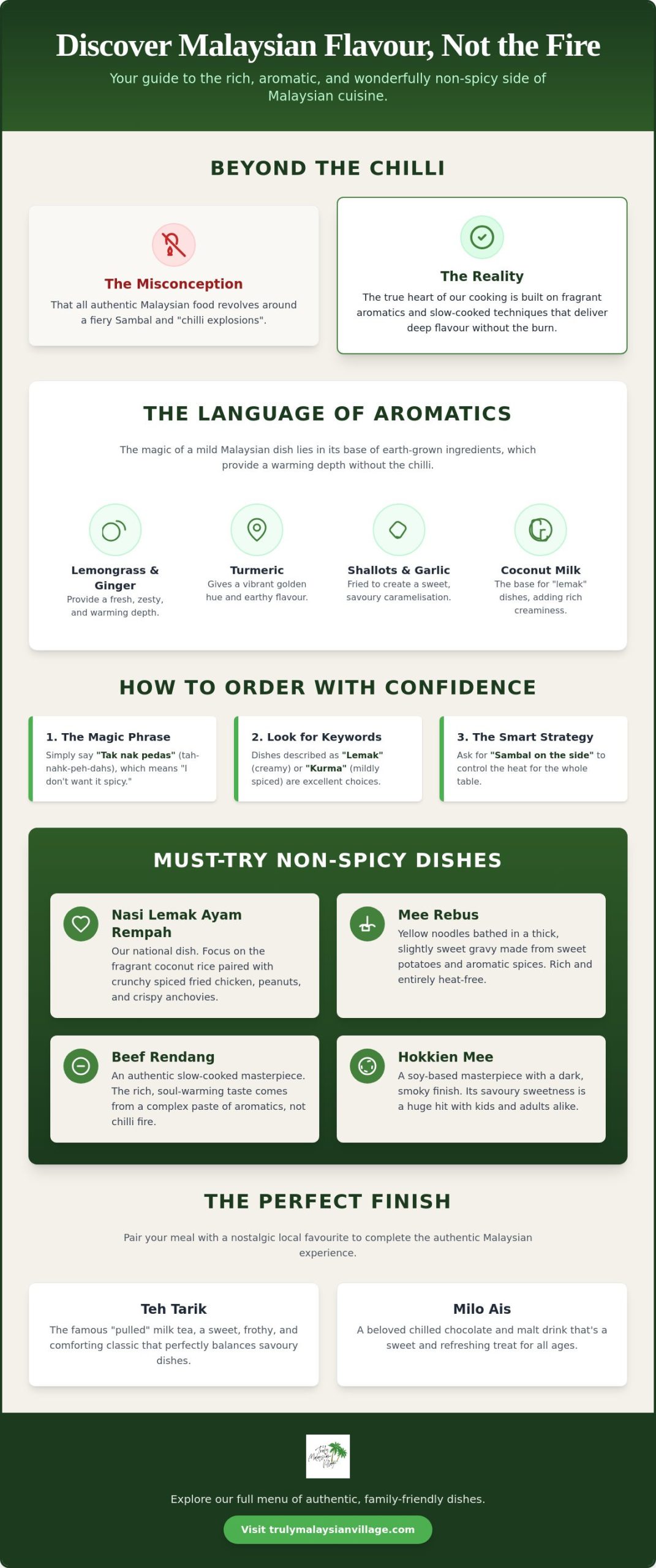
Malaysian cooking is often painted with a single brush of fire and heat, but this overlooks the incredible diversity of our heritage. Our food is a beautiful tapestry woven from Malay, Chinese, and Indian threads. This melting pot of Malaysian cuisine ensures that for every fiery laksa, there’s a gentle, soul-warming alternative. It’s a common mistake to think that authenticity requires a high Scoville rating. In reality, the most cherished family recipes are often those that let the ingredients speak for themselves.
Authentic cooking relies on what we call the “Three Faces” of the kitchen: earth-grown aromatics, rich fats like coconut milk, and high-quality proteins. When these elements find balance, the result is a deep, complex flavour that doesn’t need to shout with chilli. This is the essence of Makanan Selesa, or comfort food. It’s the kind of meal a grandmother prepares to soothe the soul, focusing on nourishment rather than a challenge for your tastebuds. Exploring non-spicy Malaysian dishes is simply a journey back to these foundational, home-cooked roots where ginger and galangal provide a warming depth without the burn.
The Secret Language of Aromatics
The magic of a mild Malaysian dish lies in its base. Turmeric is a staple, giving many dishes a vibrant golden hue and a subtle, earthy bitterness. We rely heavily on the humble shallot and garlic, which are often pounded into a paste and fried until they reach a sweet, savoury caramelisation. Perhaps the most nostalgic scent in any Malaysian home is the Pandan leaf. Often called the “vanilla of the East”, these long green leaves are tied into knots and dropped into rice or sweets to infuse them with a delicate, floral aroma that is unmistakably tropical.
How to Order Like a Pro for a Mild Palate
If you’re visiting a local eatery in 2026, don’t let a complex menu intimidate you. A simple phrase to remember is “Tak nak pedas”, which literally means “don’t want spicy”. Most chefs are happy to accommodate, especially for families. When you’re browsing our weekday menu, look for dishes described as “lemak” (creamy/rich) or “kurma” (mildly spiced with nut-based gravies). A clever trick for mixed groups is the “Sambal on the side” strategy. This allows the heat-seekers to add their own fire while you enjoy the pure, aromatic profile of the main dish. Keep an eye out for “hidden” heat in garnishes like fresh sliced chillies, which are easy to set aside before you tuck in.
Hearty Rice and Noodle Dishes for a Savoury Experience
When you find yourself at a bustling Malaysian eatery, the scent of seasoned rice and the rhythmic clatter of a wok against a burner are the first things to greet you. While many associate these sounds with the sizzle of chilli, some of the most satisfying meals in our culture lean into deep, savoury umami profiles. These hearty staples are the backbone of our daily life, offering a sense of fullness and home-cooked comfort that doesn’t rely on heat to be memorable. It’s a beautiful way to eat, focusing on the quality of the grain and the skill of the stir-fry.
Nasi Lemak: The National Dish Reimagined
Nasi Lemak is often called our national dish, and while the fiery sambal usually takes the spotlight, the real soul of the meal is the coconut milk rice. Steeped with fresh pandan leaves and ginger, the rice is fragrant and creamy enough to enjoy on its own. To experience one of the best non-spicy Malaysian dishes, simply pair this rice with our Nasi Lemak Ayam Rempah. This spiced fried chicken provides a satisfying crunch and a burst of flavour from a ginger and lemongrass marinade. When you add toasted peanuts and crispy ikan bilis, you get a perfect balance of textures that delights the palate without any need for chilli.
Mild Noodle Classics
For noodle lovers, the options are just as diverse and comforting. Mee Rebus is a fantastic choice, featuring yellow noodles bathed in a thick, slightly sweet gravy made from sweet potatoes and aromatic spices. It’s rich, filling, and entirely heat-free. If you prefer something with a dark, smoky finish, Hokkien Mee is a soy-based masterpiece that kids absolutely love for its savoury sweetness. You can also enjoy a classic Char Kway Teow by asking for the “no-chilli” version. This allows you to truly taste the “wok hei”, or the breath of the wok, which gives the noodles their signature charred flavour. You might find this Malaysian food guide helpful for seeing how these regional favourites are adapted for different tastes.
Nasi Kandar Penang is another customisable favourite where you can lead the way. By choosing mild gravies like kurma or a simple dhal, you can create a plate that is rich in spices but low on fire. If you are looking for a crowd-pleaser that bridges the gap between East and West, our Nasi Goreng Chicken Chop is a brilliant pick. It combines savoury fried rice with a crispy, succulent chicken thigh, making it a reliable hit for the whole family. If you’re planning your next family dinner, you might like to reserve a table and discover these gentle flavours for yourself.
Whether you are browsing our weekday selections or looking for a weekend treat, there is always a way to navigate the menu for a mild experience. Authentic food is about the love put into the preparation, and these dishes prove that depth of flavour is a journey all on its own.
Crowd-Pleasing Favourites: Satay, Roti, and Street Snacks
Walking through a Malaysian night market, the first thing that hits you isn’t the heat of a chilli, but the sweet, smoky aroma of meat grilling over charcoal. Street food is the heartbeat of our culture. It offers some of the most accessible and beloved non-spicy Malaysian dishes for travellers and locals alike. These snacks are designed for sharing, bringing people together over small plates that are big on heritage and heart. As part of the “Truly Malaysian, Truly Sedap” campaign leading into Visit Malaysia Year 2026, iconic snacks like satay are being celebrated as the gold standard of our culinary identity. It’s a wonderful time to explore these flavours, as more modern eateries are elevating these “kampung” favourites into premium dining experiences while keeping the traditional, mild spice profiles intact.
The Art of the Satay Skewer
Satay is perhaps our most iconic export. Each skewer is a labour of love, marinated in a blend of fresh lemongrass, turmeric, and local spices that give the meat its signature golden glow. While we offer both Beef Satay and Chicken Satay, the chicken version is a perennial favourite for its tender, honey-sweet finish. You can check out our Satay Chicken on the menu to see how we keep this tradition alive. Many guests worry that the accompanying peanut sauce, or Kuah Kacang, will be too hot. In reality, a traditional sauce prioritises the creamy, earthy crunch of roasted peanuts and a gentle sweetness, making it perfectly safe for those who prefer zero heat.
Roti Canai: More Than Just Bread
If comfort had a texture, it would be the flaky, buttery layers of a fresh Roti Canai. This flatbread is a masterpiece of craftsmanship, stretched and tossed until it’s paper-thin before being folded into a crispy, doughy delight. It’s the ultimate “gateway” food for anyone new to the cuisine. You can enjoy it like a local by dipping it into a mild lentil dhal or even a simple sprinkle of sugar for a sweet treat. For something a bit more substantial, there are several varieties to choose from:
- Roti Telur: Stuffed with a whisked egg for a soft, savoury centre.
- Roti Bawang: Filled with sweet, softened onions that caramelise as the bread cooks.
- Murtabak: A thick, savoury stuffed pancake filled with minced meat and aromatics, serving as a complete, non-spicy meal.
These dishes prove that you don’t need chilli to create a memorable street food experience. Whether you’re grabbing a quick snack or sitting down for a family feast, these buttery, grilled delights offer a sense of belonging that everyone can enjoy.
Warming Soups and Rich, Non-Spicy Braises
Beyond the sizzle of the wok lies the quiet, rhythmic bubbling of a stockpot, where some of the most profound flavours of our heritage are born. While many visitors assume Malaysian soups are always laksa-based and fiery, our tradition of slow-cooked braises tells a different story. These dishes are the soul of a family dinner, designed to nourish and warm you from the inside out. They rely on hours of simmering to coax out deep, savoury notes from quality proteins and whole spices, creating a dining experience that is both sophisticated and incredibly comforting.
Sup Tulang: The Soul in a Bowl
If you’re looking for the ultimate liquid gold, our Beef Bone Soup (Sup Tulang) is a revelation. We use a traditional “Sup Bunjut” spice pouch, which infuses the broth with the nostalgic scents of cinnamon, star anise, and cardamom. This isn’t just a starter; it’s a staple for family gatherings and cool evenings when you need something substantial. Beef Bone Soup is a nutrient-dense, aromatic beef broth that serves as a cornerstone of Malay comfort food. It’s a clear, hearty soup that proves non-spicy Malaysian dishes can be just as complex and satisfying as their chilli-laden counterparts.
Rendang Without the Regret
A common mistake is thinking that all Rendang must be hot. While some regional versions carry a kick, an authentic Beef Rendang is actually about the celebration of “kerisik”—toasted, pounded coconut that has been slow-cooked until it caramelises. This process creates a natural sweetness and a nutty depth that defines the dish. It’s vital to distinguish between “chilli heat” and “spice complexity”. In our kitchen, we focus on the latter, using galangal and turmeric to build layers of flavour. Our Chicken Rendang is a gentler, creamier cousin that is particularly popular for those who prefer a milder dinner. If you’re planning a large gathering, you can organise your next function with our mild catering options to ensure everyone enjoys the feast.
For those who prefer seafood, our Sweet Sour Barramundi Fried Fish is a vibrant, fruit-forward alternative. It uses a tangy, vibrant sauce that perfectly complements the crispy skin of the fish without any hidden fire. These slow-cooked masterpieces are a testament to the patience of Malaysian craftsmanship. They offer a sense of belonging that is accessible to every palate, regardless of your tolerance for heat. To experience these rich, aromatic braises for yourself, we invite you to book your next meal and join our table.
Traditional Beverages and Sweets to Cool the Palate
A true Malaysian feast is never just about what is on the plate; it is a holistic experience that finds its perfect balance in the glass. In our culture, beverages are often chosen for their “cooling” properties, designed to soothe the senses and provide a refreshing counterpoint to the rich, aromatic layers of the meal. Whether you have spent the evening enjoying slow-cooked braises or savoury noodles, the final ritual of a local drink brings a sense of completion and shared joy. These traditional refreshments are the silent heroes of the table, turning a simple dinner into a heartfelt celebration of heritage and home-cooked familiarity.
Teh Tarik: The National Drink
Teh Tarik, or “pulled tea”, is as much a performance as it is a beverage. The tea is poured back and forth between two vessels with high, sweeping motions, a technique that requires years of practice to master. This “pulling” process does more than just cool the tea. It creates a signature frothy head and a velvety, creamy texture that a standard stir simply cannot replicate. It is the ultimate companion to a plate of fragrant coconut rice. To see how these elements come together, you can experience the culture in our guide to Nasi Lemak Ayam Rempah. The sweetness of the condensed milk and the strength of the black tea provide a robust finish that lingers long after the last bite.
Planning a Non-Spicy Malaysian Feast
When you are organising a corporate function or a private family gathering, the diversity of non-spicy Malaysian dishes makes for an effortless and inclusive menu. Choosing a balanced spread ensures that every guest, from the little ones to the elders, feels like an invited guest at our table. A successful feast often starts with the golden crunch of satay, moves into the hearty depths of a Beef Bone Soup, and finds its rhythm with a variety of mild rice and noodle plates. It is about creating a journey of textures and aromas that everyone can participate in without hesitation.
Closing the meal on a nostalgic note is a tradition we hold dear. For many, this means a tall, chilled glass of Milo Ais. This chocolate malt drink is a staple of childhood memories across the country, served with plenty of ice to keep the Australian summer at bay. By mixing these savoury, sweet, and aromatic elements, you provide a full experience that showcases the true soul of our kitchen. If you are ready to share this piece of our home with your friends and family, we invite you to explore our catering options and let us help you host a truly memorable event that celebrates flavour without the fire.
Embrace the Aromatic Legacy of Our Kitchen
Malaysian cuisine is a deep, soulful journey that extends far beyond the heat of a chilli. We have explored how the true essence of our heritage is found in the fragrance of pandan and the rich caramelisation of coconut. Choosing non-spicy Malaysian dishes allows you to appreciate the intricate craftsmanship and the layers of flavour that define our home-cooked favourites. It’s an invitation to sit back and savour the subtle, earthy notes that have brought families together for centuries.
Our kitchen is built on authentic recipes passed down through generations, ensuring every bite carries the warmth of tradition. We offer a welcoming, family-friendly atmosphere that feels like home; whether you are dining in or looking for professional catering for corporate and private events, we are here to serve you. We would love to share a piece of our culture with you and your loved ones. Book your next meal with us and experience the heartfelt hospitality that makes every guest feel like part of the family.
Frequently Asked Questions
Is all Malaysian food spicy by default?
No, Malaysian food is definitely not spicy by default. Our culinary heritage is a beautiful melting pot where many non-spicy Malaysian dishes take centre stage, relying on aromatic roots like galangal, turmeric, and lemongrass for depth rather than chilli. While we love our heat, a significant portion of our traditional recipes focuses on the “lemak” or creamy richness of coconut milk and the savoury umami of slow-cooked proteins.
What are the best Malaysian dishes for children?
For the little ones, we recommend starting with our Chicken Satay or a buttery Roti Canai. These dishes offer a gentle introduction to our flavours without any hidden fire. Another reliable favourite is the Nasi Goreng Chicken Chop; it provides a familiar, savoury profile that kids love. These options ensure the whole family can enjoy a meal together without anyone worrying about a spicy surprise.
How can I tell if a dish on the menu is spicy?
You can identify mild dishes by looking for descriptors like “lemak”, which indicates a rich coconut base, or “kurma”, which refers to a mild, nut-based gravy. Avoid dishes with “sambal” or “pedas” in the name if you want to stay clear of heat. If you’re ever unsure, simply ask our staff for “tak nak pedas”, which is the local way to request your meal without chilli.
Is Beef Rendang always hot?
Authentic Beef Rendang is actually more about the slow caramelisation of coconut milk than it is about fire. While it contains a complex blend of spices, the primary goal is a rich, nutty depth created by the “kerisik” or toasted coconut. In our kitchen, we prioritise this aromatic complexity, making our rendang a deeply flavourful experience that doesn’t rely on aggressive chilli heat to be authentic.
Can I ask for a non-spicy version of Mee Goreng?
You certainly can ask for a mild version of our stir-fried noodles. Our chefs are happy to prepare a “no-chilli” Mee Goreng that swaps the spicy pastes for a savoury, soy-forward sauce. This allows you to enjoy the smoky “wok hei” and the fresh ingredients of the stir-fry without the burn, making it a perfect choice for those who prefer a gentler palate.
What is the best non-spicy drink to pair with Malaysian food?
Teh Tarik is the gold standard for a non-spicy pairing. Its creamy, frothy texture provides a wonderful contrast to savoury meals, acting as a “cooling” element for the palate. If you prefer something cold, a chilled Milo Ais is equally popular. This chocolate malt drink is a nostalgic favourite that offers a sweet, refreshing finish to any traditional Malaysian feast.
Are there non-spicy options for large group catering?
We provide a wide range of non-spicy Malaysian dishes for our catering services, from our aromatic Beef Bone Soup to golden skewers of satay. These dishes are staples for large gatherings because they are universally loved and safe for all guests. Choosing a mild, aromatic menu ensures that everyone at your corporate or private event feels included and can enjoy the full breadth of our culture.
What should I order if I like savoury but not spicy flavours?
If you crave savoury depth, order the Nasi Lemak Ayam Rempah but ask to have the sambal served on the side. The coconut-infused rice and ginger-marinated chicken offer a brilliant umami experience on their own. You might also enjoy the Mee Rebus, which features a thick, sweet potato-based gravy that is rich, filling, and entirely heat-free, providing a deeply satisfying meal.

Article by
Amzar Hariz
Owner of Truly Malaysian Village
Disclaimer
The content published on this website may include articles generated or assisted by AI writing tools. While we aim to provide helpful, accurate, and up-to-date information, we do not guarantee that all content is complete, error-free, or suitable for every individual situation.

