
Picture yourself at a sun-drenched table on a Saturday morning, waiting for a steaming bowl that smells of star anise and nostalgia. You might find yourself wondering exactly what is mee rebus and how it differs from the fiery Laksa or smoky Mee Goreng often found on the same menu. It’s a common feeling for those new to the depths of Malaysian street food, where every dish carries its own complex story. We know that choosing the right bowl can be a bit daunting when you aren’t sure about the spice levels or the secret behind that signature thick texture.
In this guide, you’ll discover the rich history and the velvety layers that make this dish a cornerstone of our heritage. We’ll walk you through the authentic ingredients, from the humble sweet potato base to the essential garnishes that bring the whole plate to life. You will learn how to recognise the perfect balance of sweet and savoury flavours and why our family recipes from Penang and Kelantan make this dish a must-try weekend ritual. Whether you prefer your Mee Rebus with chicken, beef, or a mix of both, you’re about to uncover why this soulful classic is so beloved across Australia.
Key Takeaways
- Learn exactly what is mee rebus and how this “boiled noodle” dish evolved into a complex, starchy masterpiece that perfectly balances sweet and savoury notes.
- Discover the secret role of mashed sweet potato in creating that signature velvety gravy, enriched by a fragrant rempah of galangal and lemongrass.
- Explore the subtle regional differences between Penang and Kelantan styles to help you recognise authentic craftsmanship and heritage in every bowl.
- Master the art of the “Holy Trinity” of garnishes and find out why a simple squeeze of calamansi lime is the non-negotiable final touch for flavour balance.
- Understand why this soulful classic is celebrated as a weekend ritual at Truly Malaysian Village, where family recipes are prepared with love and care.
Defining Mee Rebus: More Than Just “Boiled Noodles”
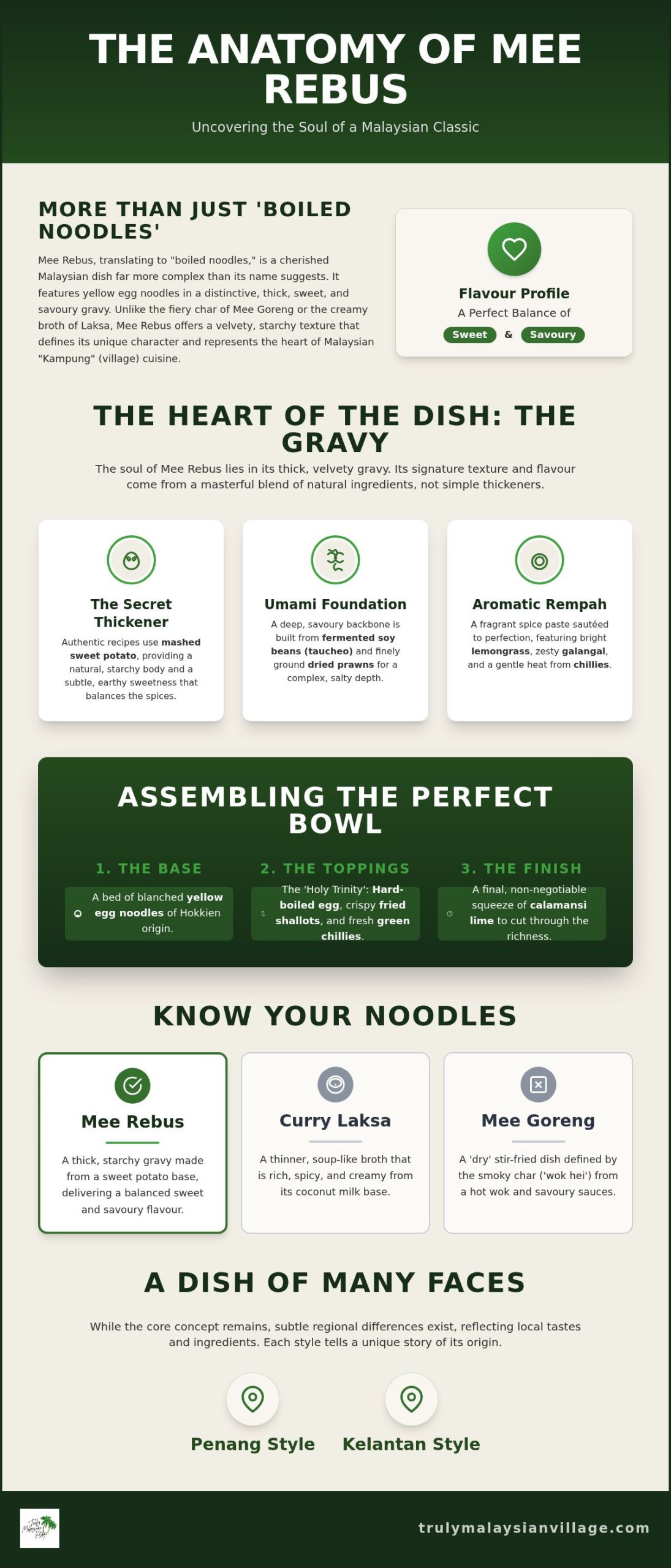
To understand what is mee rebus, one must first look at the beautiful simplicity of its name. In the local dialects of Malaysia, “Mee” refers to the yellow egg noodles of Hokkien origin, while “Rebus” is the Malay word for the act of boiling. At its heart, this dish is a comforting bowl of thick, yellow noodles drenched in a starchy, spicy-sweet gravy that feels like a warm hug from a village kitchen. It stands as a proud pillar of Malaysian street food, representing a time when meals were crafted slowly with whatever the land provided.
Many newcomers often confuse this dish with its famous cousins, but the differences are distinct. While Mee Goreng is defined by the smoky char of a hot wok and Curry Laksa relies on a thin, coconut milk-based broth, Mee Rebus occupies a unique space. Its gravy is thick enough to coat the back of a spoon, offering a velvety mouthfeel that neither stir-fries nor soups can replicate. It’s a staple of the “Kampung” or village life, where the aroma of simmering spices would signal a community gathering or a quiet weekend at home.
The Literal vs. Culinary Meaning
The translation of “boiled noodles” is actually a bit of a misnomer. While the noodles are indeed blanched in boiling water before serving, the true magic lies in the hours spent simmering the intricate gravy. This isn’t a quick-boil soup; it’s a slow-cooked reduction where spices and vegetables meld into something far greater than their parts. Mee Rebus is a sweet-savoury noodle dish with a sweet potato base. This careful process of building layers of flavour is what separates a true heritage recipe from a simple snack.
A Dish of Many Names
Across Southeast Asia, you might encounter this classic under various titles such as Mie Rebus or Mie Kuah. This shared heritage connects the kitchens of Malaysia, Singapore, and Indonesia, showing how flavours travelled along ancient trade routes. The Mee rebus found today is a perfect example of the “Muhibbah” spirit, a Malay word describing the harmonious blending of cultures. By combining Chinese-style egg noodles with a Malay-inspired spice paste and local sweet potatoes, the dish becomes an edible map of our multicultural history. At Truly Malaysian Village, we honour this legacy through our weekend specials, ensuring that the soul of the village remains alive in every serve for our Australian community.
The Anatomy of the Gravy: Why Texture is Everything
If you ask a Malaysian grandmother what is mee rebus, she won’t point to the noodles first; she’ll point to the pot of simmering, golden-brown gravy. The texture is the defining characteristic of this dish. Unlike thinner soups, this gravy must be velvety and substantial enough to cling to every strand of noodle. It’s a delicate dance of ingredients that creates a mouthfeel often described as “lemak” (rich), though it surprisingly achieves this without the heavy use of coconut milk found in Laksa. This viscosity is the hallmark of a chef who understands the soul of the recipe.
The complexity of the gravy comes from a careful layering of flavours. It begins with a savoury backbone that draws from the history of mee rebus and its roots in the Malay Peninsula. Two powerhouse ingredients provide the essential umami depth: salted fermented soy beans (taucheo) and finely ground dried prawns. These elements offer a salty, funky complexity that balances the sweetness perfectly, ensuring the dish never feels one-dimensional.
The Role of the Sweet Potato
The secret behind that signature thickness isn’t cornflour or a heavy roux. Instead, authentic recipes rely on mashed sweet potato. This traditional method provides a natural, starchy body that feels much more sophisticated on the palate. Beyond texture, the sweet potato offers a gentle, earthy sweetness that acts as a buffer against the heat of the chillies. It’s a clever bit of culinary engineering that also packs a nutritional punch, providing vitamins and fibre that you simply won’t find in a processed thickener.
The Essential Malaysian Spice Rack
No gravy is complete without a robust “Rempah” or spice paste. This fragrant base is carefully pounded and then sautéed in oil, a process known as “tumis”, until the oil separates. This step is vital because it ensures the spices are fully cooked and their aromatic oils are released. Key ingredients include:
- Lemongrass (Serai): Provides those bright, citrusy top notes that lift the heavier flavours.
- Galangal (Lengkuas): Adds an earthy, pine-like depth that lingers on the tongue.
- Belacan (Shrimp Paste): Delivers that unmistakable Malaysian aroma and pungent soul.
When these spices meet the sweet potato and umami-rich soy beans, they create a harmony that defines the dish. It’s a labour of love that requires patience and a keen sense of smell to get just right. If you’re eager to taste this craftsmanship for yourself, why not reserve a table for our next weekend special and experience the village hospitality firsthand?
Regional Variations: From Penang to Kelantan
While the basic components of the dish remain consistent, the answer to what is mee rebus often depends on which part of the Malaysian peninsula you call home. Like a living piece of history, the recipe has travelled from rural villages to bustling city centres, picking up local nuances along the way. These regional twists are a testament to the “Air Tangan”, or the unique touch of the cook, which ensures that family heritage is preserved even as ingredients adapt to new surroundings. At Truly Malaysian Village, our roots in Penang and Kelantan allow us to bring a specific, heartfelt depth to every bowl we serve.
The Penang Connection
In the north, particularly in Penang, the dish is heavily influenced by the vibrant Mamak (Indian-Muslim) community. Here, Mee rebus shares a close culinary DNA with Pasembur, the famous Malaysian Indian salad. This version often features a lighter, more aromatic profile where the gravy is infused with a complex blend of spices that lean into the fragrant rather than the fiery. It’s a sophisticated balance that reflects the island’s multicultural history. You can explore our weekend specials for more regional classics that celebrate this northern heritage.
Southern vs. Northern Palates
As you move across the country, you’ll notice distinct shifts in gravy thickness and spice intensity. Southern variations, particularly those closer to Johor or Singapore, often boast a much thicker, heartier gravy with a pronounced sweetness from the sweet potato base. In contrast, the northern styles tend to be slightly more fluid, allowing the individual notes of the rempah to shine through. The choice of protein also varies; while some regions stick to traditional beef, others might incorporate local seafood or chicken to suit the community’s palate.
Kelantan’s herb-heavy traditions profoundly influence the aromatic profile of the dish, introducing subtle layers of fresh botanicals that soften the starchy base. This eastern influence brings a gentler, slightly sweeter undertone that prioritises fragrance over raw heat. Whether it’s the bold spices of a Mamak stall or the herb-infused comfort of a Kelantanese kitchen, these variations show that the dish is never static. It’s an evolving masterpiece of Malaysian identity that continues to bring people together, regardless of where they are in the world.
The Diner’s Guide: Toppings, Garnishes, and Etiquette
A bowl of this classic noodle dish is never served bare. If you are still discovering what is mee rebus, you will soon realise that the toppings are far more than mere decoration. They are a carefully curated “Holy Trinity” that provides the essential structural and flavour balance to the starchy gravy. Every bowl traditionally features a hard-boiled egg for creamy richness, cubes of fried tofu (tauhu goreng) that act like sponges to soak up the sauce, and a handful of blanched bean sprouts for a clean, watery crunch. These elements ensure that the dish feels substantial and varied with every bite.
Beyond the basics, the final flourishes of sliced green chillies and crispy fried shallots add sharp heat and aromatic depth. However, the most vital component is the calamansi lime. In Malaysian culture, the lime squeeze is a ritual. Without that hit of acidity, the sweet potato base can feel overly heavy on the palate. The citrus juice brightens the entire profile, cutting through the sweetness and lifting the earthy notes of the galangal and lemongrass. It is the secret to making a large portion feel light and refreshing from start to finish.
At Truly Malaysian Village, we understand that everyone has their own preference for heartiness. We offer protein customisation that allows you to tailor your experience. You can choose between tender, shredded chicken, savoury chunks of beef, or a mix of both for the ultimate weekend treat. This flexibility makes the dish accessible to everyone, whether you are looking for a light snack or a full, protein-rich meal.
Mastering the Flavour Balance
To eat like a local, don’t leave the garnishes sitting on top. Use your spoon and fork to gently fold the lime juice, chillies, and shallots into the gravy. This ensures the acidity is distributed evenly and the shallots release their toasted aroma into the sauce. The contrast between the soft, yielding yellow noodles and the occasional snap of a fresh bean sprout is what makes the experience so addictive. It’s a textural journey that rewards those who take the time to mix their bowl thoroughly.
A Dish for Every Time of Day
Historically, this was the fuel of village life, often enjoyed as a robust breakfast before a long day of work. In the modern context, it has transitioned into a beloved lunch option or a comforting weekend dinner. While we celebrate this dish as a special highlight, you can also see our weekday menu for other noodle classics like Mee Goreng if you are visiting us during the week. No matter the hour, it remains a soulful reminder of home-cooked heritage. If you’re ready to experience these flavours for yourself, we invite you to book your table for our next weekend special and join our village family.
Experience the Heart of the Village: Mee Rebus at TMV
At Truly Malaysian Village, we believe that understanding what is mee rebus is only the beginning. The true magic happens when you sit down in a space that feels like a home away from home and taste the legacy for yourself. Our recipe is a heartfelt tribute to our family roots, blending the aromatic finesse of Penang with the soulful, herb-rich traditions of Kelantan. We don’t take shortcuts. We honour the time-honoured methods passed down through generations to ensure every bowl carries the authentic spirit of the village.
Because the signature gravy requires hours of slow-simmering to reach its perfect velvety texture, we serve our Mee Rebus as a dedicated weekend special. This tradition makes each serving a ritual worth waiting for, a moment to slow down and savour the craftsmanship involved. For the ultimate meat-lover’s experience, we recommend our “Mix” option. This customisation allows you to enjoy both tender chicken and savoury beef, ensuring every spoonful is packed with a variety of textures and deep, meaty flavours.
A Family Legacy in Every Bowl
The story of our kitchen began with triplets who shared a single mission: to bring the warmth and comfort of Malaysian hospitality to our local community. We see ourselves as cultural ambassadors, where “tradition meets taste” in every dish we prepare. By combining fresh Australian ingredients with traditional Malaysian spices, we create a bridge between our heritage and our modern home. You can Discover Our Guide to Malaysian Street Food in our detailed guide to see how these values shape everything we do.
Plan Your Visit
If you are new to our flavours, Mee Rebus is the perfect introduction to the sophisticated depth of Malaysian cuisine. Its balanced profile of sweet, savoury, and mild spice makes it an accessible entry point for any palate. To complete your journey, we suggest pairing your meal with a traditional Teh Tarik. The creamy, frothy notes of this pulled milk tea provide a delightful counterpoint to the starchy, rich gravy of the noodles. We invite you to join our family table and experience a taste of the village that you won’t soon forget.
Book your table for our next weekend special and let us share a piece of our history with you.
Embrace the Soul of Malaysian Heritage
Understanding what is mee rebus means looking beyond a simple bowl of noodles to see the layers of history and craftsmanship involved. We’ve explored how the velvety sweet potato gravy and the fragrant rempah create a profile that is uniquely Malaysian. It’s a dish that celebrates the harmony of sweet and savoury flavours, brought to life by the essential squeeze of calamansi lime and the crunch of fresh garnishes. Every bowl is a story of community, tradition, and the enduring warmth of village life.
At Truly Malaysian Village, our kitchen is a place where family heritage from Penang and Kelantan meets the best fresh Australian ingredients. As a family-run business founded by triplets, we pour our passion for authenticity into every slow-simmered pot. We invite you to step into our world and experience this soulful classic for yourself. There is no better way to spend a Saturday than by joining our table and sharing in a recipe passed down through generations. To ensure you don’t miss out on our next special, please secure your weekend booking to try our authentic Mee Rebus. We can’t wait to welcome you into our village family.
Frequently Asked Questions
Is Mee Rebus spicy?
Mee Rebus is typically a mild to medium dish, making it accessible for those who prefer a gentle warmth over intense heat. The primary spice comes from the aromatic rempah base, while the fresh green chillies served on top allow you to customise the fire to your liking. It’s more about the fragrant depth of galangal and lemongrass than a raw chilli burn. This balance makes it a family favourite that everyone can enjoy.
What is the difference between Mee Rebus and Mee Curry?
The main difference lies in the base and texture of the gravy. While Mee Curry relies on a thinner, coconut milk-based broth with curry powder, Mee Rebus uses a starchy sweet potato mash to achieve its signature velvety thickness. To understand what is mee rebus, you have to appreciate its unique sweet-savoury profile, which is quite different from the spicy, creamy punch of a traditional curry noodle soup.
Can I get a vegetarian version of Mee Rebus?
Traditional recipes usually include dried prawns and shrimp paste for umami depth, so most authentic versions aren’t vegetarian. However, the core of the dish is the sweet potato and spice paste. If you’re cooking at home, you can substitute the shrimp paste with fermented soy beans or a mushroom-based sauce. At our village, we stick to our heritage recipes, which do include these traditional seafood elements for that genuine flavour.
What kind of noodles are used in Mee Rebus?
Authentic Mee Rebus always features thick, yellow egg noodles, often referred to as Hokkien noodles. These noodles are chosen for their sturdy texture, as they need to hold up under the weight of the heavy, starchy gravy without becoming soggy. They are briefly blanched before serving to ensure they stay springy. This specific pairing is what gives the dish its satisfying, substantial mouthfeel that locals have loved for generations.
Why is sweet potato used in the sauce?
Sweet potato is the secret to the dish’s iconic texture and flavour balance. It acts as a natural thickener, creating a smooth, velvety sauce without the need for processed flours or starches. Beyond the texture, the tubers provide a gentle, earthy sweetness that perfectly complements the savoury fermented soy beans and the heat of the spices. It’s a brilliant example of traditional Malaysian culinary ingenuity using simple, whole ingredients.
Is Mee Rebus healthy?
When prepared traditionally, it’s a relatively balanced meal that incorporates whole vegetables like sweet potato and bean sprouts. The dish provides a good mix of carbohydrates for energy and protein from the eggs, tofu, and your choice of meat. While the gravy is rich, it achieves its thickness through vegetables rather than heavy fats. It’s a wholesome, filling option that offers plenty of nutrients alongside its comforting, nostalgic flavours.
How should I store and reheat Mee Rebus?
It’s best to store the gravy and noodles in separate containers in the fridge to prevent the noodles from absorbing all the sauce. When you’re ready to eat, reheat the gravy gently on the stove, adding a splash of water if it has thickened too much. Quickly blanch fresh noodles or microwave the stored ones separately before combining. This method preserves the velvety texture of the sauce and the bite of the noodles.
What are the best drinks to pair with Mee Rebus?
To truly understand what is mee rebus as a cultural experience, you should pair it with a classic Malaysian beverage. A frothy, hot Teh Tarik or a refreshing Milo Ais provides the perfect creamy contrast to the savoury, spiced gravy. The sweetness of these drinks helps to balance the earthy notes of the rempah. These pairings are staples of Malaysian coffee shops and bring an extra layer of comfort to your meal.

Article by
Amzar Hariz
Director of Truly Malaysian Village
Disclaimer
The content published on this website may include articles generated or assisted by AI writing tools. While we aim to provide helpful, accurate, and up-to-date information, we do not guarantee that all content is complete, error-free, or suitable for every individual situation.

