
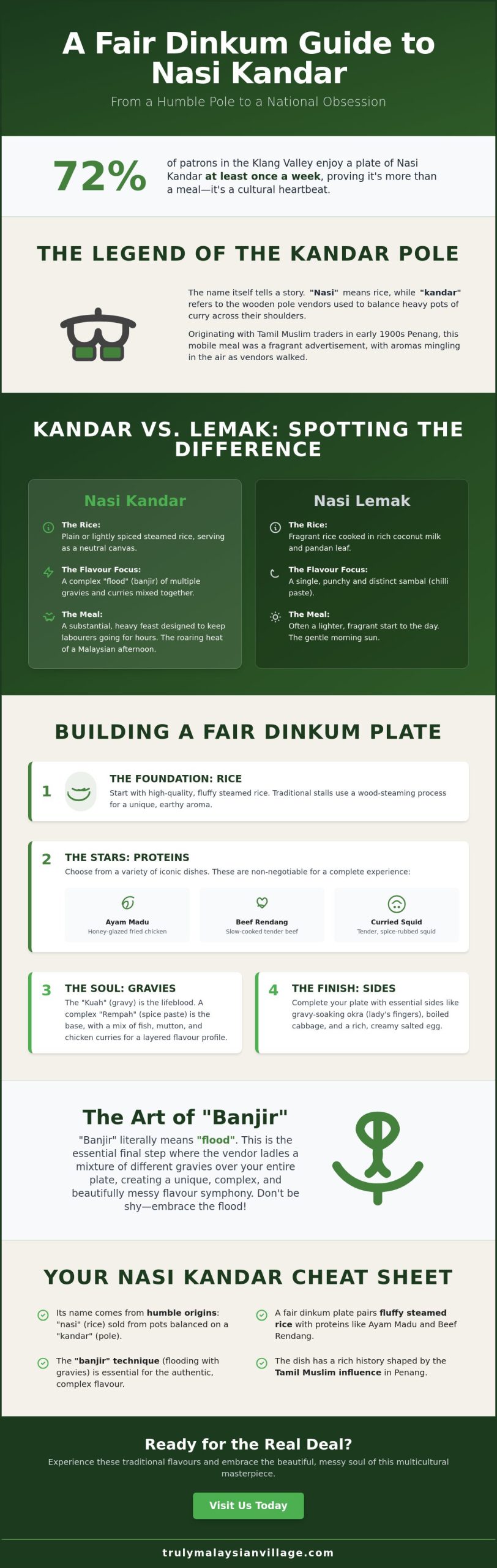
Did you know that 72 per cent of patrons in the Klang Valley sit down for a plate of Nasi Kandar at least once every week? It’s a staggering figure that proves this dish is far more than just a quick lunch; it’s a vibrant cultural heartbeat. For many, the first glance at a plate drenched in a dark, swirling mix of diverse gravies can be a bit overwhelming. You might find yourself wondering, what is nasi kandar, and how does it truly differ from the Nasi Lemak you enjoyed for breakfast? It’s natural to feel a little hesitant about the “messy” appearance or unsure of how to navigate a bustling traditional stall for the first time.
We understand that sense of curiosity mixed with a dash of uncertainty. We’re here to help you embrace the “banjir” experience with total confidence and pride. You’ll discover the rich history of this Penang icon, which began in the early 1900s when Tamil Muslim traders balanced heavy pots on poles over their shoulders. We’ll walk you through the essential components of an authentic plate and the soulful craftsmanship behind every aromatic gravy and vibrant flavour. This guide explores the legacy of the dish so you can feel like an invited guest at any stall, ready to order your own legendary feast like a local.
Key Takeaways
- Understand exactly what is nasi kandar by exploring its humble origins as a meal sold from pots balanced on a traditional shoulder yoke.
- Learn how to assemble a fair dinkum plate by pairing fluffy steamed rice with iconic proteins like Ayam Madu and Beef Rendang.
- Discover why the “banjir” technique is essential for a true feast, where a flood of different gravies creates a unique and complex flavour profile.
- Gain a deeper appreciation for the dish’s history and the Tamil Muslim influence that shaped its aromatic, spice-rich legacy in Penang.
- Feel confident ordering an authentic version and embracing the beautiful, messy soul of this multicultural Malaysian masterpiece.
What is Nasi Kandar? Defining the Soul of Penang
Imagine wandering through the humid, spice-scented streets of Penang a century ago. You’d likely hear the rhythmic footsteps of vendors before you even caught a whiff of the gravy. If you’ve ever asked yourself what is nasi kandar, think of it as a fair dinkum celebration of spice and community. It is the ultimate Malaysian “pick-and-mix” feast, where a simple mound of steamed rice becomes a canvas for a dozen different curries. This isn’t just lunch; it’s a cultural cornerstone that defines the Mamak (Tamil Muslim) identity. What began as a modest meal for dock labourers has transformed into a national obsession that brings people from all walks of life together at the same table.
The Legend of the Kandar Pole
The name itself carries the weight of history. “Nasi” means rice, while “kandar” refers to the wooden pole or yoke that vendors once balanced across their shoulders. Picture a vendor navigating the bustling port of Penang, carrying heavy wooden buckets suspended from a flexible mangrove pole. This “kandar” motion was more than just transport; the gentle swaying helped the aromas of the various curries mingle in the air, acting as a fragrant advertisement. Even after these mobile feasts moved into permanent “Ottu Kadai” stalls, the name stuck as a badge of honour. It represents a legacy of hard work and the soul of a community that built a culinary empire from a single pole.
Nasi Kandar vs. Nasi Lemak: Spotting the Difference
It’s easy for visitors to mix this up with Nasi Lemak, but they are distinct experiences. While Nasi Lemak relies on rice cooked in coconut milk and a punchy sambal, Nasi Kandar usually starts with plain or lightly spiced steamed rice. The focus here is entirely on the “flood” of complex gravies rather than a single spicy condiment. Nasi Kandar is also a much more substantial, heavy meal. It was designed to keep a worker going for hours, whereas Nasi Lemak often feels like a lighter, more fragrant start to the day. If Nasi Lemak is the gentle morning sun, Nasi Kandar is the full, roaring heat of a Malaysian afternoon. It’s a meal that demands your full attention and a very healthy appetite.
The Building Blocks: What Makes a Fair Dinkum Nasi Kandar Plate?
Walking into an authentic stall, the first thing you’ll notice isn’t the meat, but the towering clouds of steam rising from the rice. To truly understand what is nasi kandar, you have to start with this foundation. A fair dinkum plate begins with high-quality, fluffy steamed rice. In the most traditional kitchens, this rice is wood-steamed, a process that infuses every grain with a subtle, earthy aroma that plain electric cookers simply can’t replicate. It’s the perfect, neutral canvas for the heavy, spice-laden masterpieces that follow.
Once the rice is laid down, the real craft begins with the selection of proteins. While every vendor has their secrets, a few stars are non-negotiable for a complete experience:
- Ayam Madu: A gorgeous honey-glazed fried chicken that offers a sweet, sticky contrast to the savoury gravies.
- Beef Rendang: Slow-cooked until the meat is fork-tender and the spices have caramelised into a rich, dark coat.
- Curried Squid: Tender, spice-rubbed squid that adds a delicate seafood note to the heavier meats.
If you’re ready to taste these layers for yourself, you can book a table with us to experience these traditional methods firsthand.
The Signature Curries and Gravies
The soul of the dish lies in the “Rempah,” a complex spice paste that forms the base of every pot. These curries aren’t just thrown together; they are a labour of love. Fish curry is added for its bright tanginess, while mutton curry provides a deep, gamey richness, and chicken curry rounds things out with a familiar, mellow sweetness. Kuah is the lifeblood of the dish, often simmered for hours to develop a deep, aromatic complexity that binds every ingredient together. It’s this careful blending of different “Kuah” that gives the dish its legendary depth.
Essential Sides You Can’t Skip
No plate is complete without the greenery and the crunch. Okra, or lady’s fingers, is the traditional vegetable of choice because its unique texture allows it to hold onto the gravy perfectly. You’ll also often find boiled cabbage or fresh chillies to add a bit of bite. A salted egg is another essential, providing a sharp, creamy richness that cuts through the intense spices. Finally, the crispy papadum provides the necessary crunch to balance out a “wet” dish, ensuring every mouthful has a bit of everything. For those visiting on a Saturday or Sunday, our Nasi Kandar Penang captures this exact balance of texture and tradition.
The Art of “Banjir”: Why More Gravy Means More Flavour
If you’ve ever seen a plate of rice so heavily drenched in sauce that the grains are barely visible, you’ve witnessed the “Banjir.” In Malay, this means “flood,” and it is the defining characteristic of a true feast. While some might hesitate at the sight of such a messy presentation, this is exactly where the magic of the dish resides. To understand what is nasi kandar in its truest form, you must embrace this beautiful, aromatic chaos. It isn’t just about making the rice wet; it’s about creating a complex, layered explosion of taste where no two bites are ever quite the same.
The visual of mixed gravies can be a bit of a shock for those used to keeping their foods separate. However, the “mess” is a deliberate culinary choice. As the various curries pool together, they begin to trade secrets. The sharpness of one spice paste mellows the sweetness of another, resulting in a depth of flavour that a single curry simply cannot achieve. It’s a sensory experience that rewards those who are brave enough to muck in and enjoy the ride.
The “Kuah Campur” Philosophy
This mixing isn’t random; it’s guided by the “Kuah Campur” (mixed gravy) philosophy. By combining seafood, meat, and vegetable gravies, the vendor creates a “secret sauce” effect right on your plate. Typically, a master server will pour the heavier, thicker gravies first to anchor the rice before drizzling lighter, tangier curries over the top. This allows the fluffy rice to absorb a diverse spectrum of spices, from the earthy warmth of turmeric to the sharp bite of star anise. It creates a unified but incredibly diverse taste profile that keeps your palate guessing with every spoonful.
How to Order Like a Pro
When you’re standing at the counter, don’t be shy about your preferences. If you want the full, legendary experience, simply ask for “Kuah Banjir.” The server will then expertly flood your plate with a selection of their best pots. For those who might be a bit more cautious or prefer a drier texture, “Kuah Sikit” (a little gravy) is a perfectly acceptable request, though you might miss out on that iconic flavour meld. A pro tip for balancing the heat is to ask for a mix of the fiery squid gravy and a milder dhal or honey chicken sauce. This creates a beautifully balanced meal that provides a bit of a kick without overwhelming your senses.
A Multicultural Tapestry: The History of Tamil Muslim Influence
To truly grasp what is nasi kandar, we have to look past the plate and toward the people who first carried it. The story begins with Tamil Muslim migrants from Southern India who arrived in the bustling port of Penang during the early 1900s. These pioneers brought with them a deep, ancestral knowledge of spices, but they didn’t just replicate the recipes from their homelands. Instead, they embraced their new surroundings, blending fiery Indian spice profiles with local Malaysian treasures like fragrant pandan leaves and zesty lemongrass. This beautiful marriage of cultures birthed what we now celebrate as “Mamak” culture. It’s a unique identity that sits at the intersection of Indian heritage and Malay tradition, creating a sense of belonging that is as rich as the gravies themselves.
From the very beginning, Nasi Kandar stalls acted as the original community hubs. These weren’t just places to grab a quick feed; they were meeting grounds where people from all walks of life gathered. Whether you were a dock labourer looking for a substantial meal or a trader discussing business, the stall was a neutral territory. This communal spirit remains the heartbeat of the experience today. It’s a place where social status doesn’t matter, only the shared love for a well-flooded plate of rice and a warm sense of hospitality.
From Street Side to Global Icon
As the decades passed, the dish evolved from a humble street-side meal carried on yokes to the iconic stalls found across Malaysia. Many of these spots have become famous for their “24-hour” service, acting as the backdrop for everything from a sunrise breakfast to a late-night supper with mates. Because the recipes are often closely guarded family secrets, many establishments have been run by the same lineage for generations. This dedication to craftsmanship ensures that the soul of the dish remains intact, preserving a flavour profile that has remained largely unchanged for over a century.
The Australian Connection
Today, that same spirit is finding a new home on the Australian mainland. There’s a growing hunger for authentic Malaysian flavours that offer more than just a surface-level experience. For many seeking a nostalgic taste of home, finding a place that recreates that “Village” feel is essential. Maintaining the integrity of the dish overseas requires a commitment to traditional methods, from the slow-simmering of the rempah to the way the rice is steamed. It’s about sharing a piece of history that has travelled across oceans while keeping the flavours as fair dinkum as they are in Penang.
If you’re ready to experience this multicultural legacy for yourself, book your table today and join us for a feast that honours these timeless traditions.
Bringing the Truly Malaysian Village Experience to Your Table
At Truly Malaysian Village, we see ourselves as more than just a restaurant; we are the custodians of a rich, aromatic history. Every plate we serve is a heartfelt tribute to the bustling street stalls of Penang where this legacy began. Our Nasi Kandar Penang stays true to its heritage by honouring the slow, methodical processes that define authentic Mamak cooking. We don’t believe in shortcuts because we know that to truly answer the question of what is nasi kandar, you have to taste the depth that only comes from hand-crafted rempah and gravies that have simmered until they reach perfection.
Our kitchen is a place where heritage meets the modern Australian table, creating a bridge between two worlds. We invite you to sit down, relax, and let the nostalgia of a traditional Malaysian feast wash over you. It’s about more than just filling your belly; it’s about the warmth of a community and the pride of a culture shared through food. We take great pride in being a place where mates can gather and families can reconnect over a shared love for authentic flavours.
Our Signature Approach to Nasi Kandar
We focus on sourcing authentic ingredients and employing time-honoured techniques that respect the soul of the service. Every spice is toasted and ground with intention, ensuring the flavour profile remains as bold and evocative as the original recipes from Southern India. To complete your sensory journey, we recommend pairing your meal with a frothy, freshly pulled Teh Tarik. The love and care that goes into every pot of our Beef Rendang and curry ensures that each guest feels like an invited family friend rather than just a customer.
Host Your Own Malaysian Feast
If you’re planning a special event and want to offer something truly memorable, our professional catering services bring the village experience directly to you. Nasi Kandar is a unique, conversation-starting alternative to standard event tucker, allowing your guests to customise their own plates with a variety of rich proteins and vibrant gravies. It’s a communal way of eating that encourages storytelling and connection. For more inspiration on how to bring these flavours to life, feel free to explore our Authentic Malaysian Street Food Guide. We look forward to welcoming you to the table for a feast you won’t soon forget.
Experience the Soul of Penang at Our Table
We’ve journeyed from the historical streets of Penang to the vibrant “banjir” technique that makes this dish a true icon. By now, you’ve discovered that understanding what is nasi kandar is about more than just identifying ingredients; it’s about embracing a century of Tamil Muslim craftsmanship and the beautiful, messy harmony of mixed gravies. Whether it’s the crunch of a papadum or the deep, slow-cooked richness of our Beef Rendang, every element on the plate tells a story of multicultural pride and home-cooked comfort that stays with you long after the last bite.
As passionate cultural ambassadors of Malaysian cuisine, we take immense pride in preserving these authentic Penang-style recipes for our community. Whether you’re joining us for a weekend lunch or require professional catering for corporate and private events, we’re here to ensure your experience is nothing short of legendary. It’s time to gather your mates and dive into a feast that feels like a warm welcome home. Book your table or order your Malaysian feast today and let us share the heart of the village with you. We can’t wait to see you at the table.
Frequently Asked Questions
Is Nasi Kandar very spicy?
The level of heat depends entirely on the specific combination of gravies you choose for your plate. While some seafood and mutton curries pack a fair dinkum punch, others like dhal or honey chicken are much milder and sweeter. You have the power to balance the heat by asking the server for a mix of spicy and savoury sauces. This ensures you get that iconic aromatic kick without it becoming an overwhelming experience for your palate.
What is the best time of day to eat Nasi Kandar?
While you can enjoy this dish at almost any hour, it is traditionally a heavy lunchtime feast or a legendary late-night supper. In Malaysia, many stalls operate around the clock to cater to the hungry masses at all hours. It’s the perfect substantial meal for when you need plenty of energy to get through the day or a comforting feed to share with mates after the sun goes down.
Can I get a vegetarian version of Nasi Kandar?
You can certainly enjoy a delicious vegetarian version by focusing on the vibrant vegetable-based offerings available at the counter. Simply ask for a generous serving of steamed rice topped with okra, cabbage, and a variety of meat-free gravies like dhal or vegetable curry. Adding a boiled or salted egg is a great way to include some extra protein and richness while keeping the meal free from meat and seafood.
What is the difference between Nasi Kandar and Nasi Biryani?
The main difference lies in how the rice and spices are prepared and served together. When asking what is nasi kandar, remember it features plain or lightly spiced rice with various curries poured over the top at the point of service. In contrast, Nasi Biryani is a more integrated dish where the rice, meat, and spices are slow-cooked together in a single pot to infuse every grain with flavour throughout the cooking process.
Why is it called “Nasi Kandar” if there are no poles anymore?
The name remains a deeply nostalgic tribute to the original vendors who once walked the bustling streets of Penang. These pioneers carried their rice and curry pots in heavy wooden buckets balanced on a flexible shoulder yoke, known as a “kandar” pole. Even though modern stalls are permanent fixtures, the name serves as a badge of honour for the hard-working Tamil Muslim traders who established this culinary legacy over a century ago.
How do I eat Nasi Kandar traditionally?
Traditionally, this meal is enjoyed using your right hand to fully experience the textures and aromas of the feast. You use your fingers to mix the different gravies into the rice, creating the perfect, flavourful mouthful every time. If you aren’t comfortable using your hands, a spoon and fork are perfectly acceptable. The most important part of the tradition is ensuring you have plenty of gravy to create that iconic, flooded “banjir” effect.
What drinks pair best with Nasi Kandar?
A creamy, frothy Teh Tarik is the classic choice to balance the bold and spicy flavours of the meal. If you’re looking for something cold, a refreshing Milo Ais or a zesty lime juice works beautifully to cleanse the palate between spicy bites. These traditional beverages are designed to complement the richness of the curries, making your dining experience feel like an authentic and inviting trip to a Malaysian village.
Is Nasi Kandar gluten-free?
Most components of the dish, such as the steamed rice and slow-cooked meat curries, are naturally gluten-free. However, you should be careful with certain fried items or thickeners used in specific rempah pastes that might contain flour. Crispy papadums are often made from lentil flour but can sometimes include wheat as a binding agent. It’s always a good idea to chat with the server about how specific dishes are prepared if you have strict dietary requirements.

Article by
Amzar Hariz
Owner of Truly Malaysian Village
Disclaimer
The content published on this website may include articles generated or assisted by AI writing tools. While we aim to provide helpful, accurate, and up-to-date information, we do not guarantee that all content is complete, error-free, or suitable for every individual situation.

