
Did you know that 9.8 million Australians drink tea at least once a week, yet most of us are missing out on the soul-stirring depth of a true Malaysian classic? Imagine standing at your kitchen bench, clutching a mug of what should be a frothy masterpiece, only to find a weak, bitter liquid that has lost its bubbles before you’ve even taken a sip. It is a common frustration for anyone learning how to make teh tarik at home, especially when the “pulling” process ends up more on the floor than in the glass.
We understand that desire for a brew that tastes like a warm hug from home, balancing bold tannins with that signature creamy sweetness. You do not need to be a professional to master this craft; you just need the right technique and a bit of patience. This guide promises to help you master the art of the perfect frothy Malaysian pulled tea in your own kitchen. We will explore the best tea dust and milk options from local shops like Coles or Aldi, the secrets to a long-lasting froth, and the step-by-step method to share a piece of Malaysian heritage with your mates.
Key Takeaways
- Discover the rich heritage of “Mamak” stalls and why this beloved “pulled tea” remains the heartbeat of Malaysian street food culture.
- Learn why traditional tea dust and a specific blend of evaporated and condensed milk are the essential secrets to achieving an authentic, creamy texture.
- Master the physical technique of how to make teh tarik at home to create a thick, stable froth that lasts until the very last sip.
- Understand the importance of a “low and slow” steep at the correct temperature to ensure your tea base is bold and aromatic without any bitterness.
- Find out how to pair your brew with a fragrant Nasi Lemak Ayam Rempah for a truly nostalgic and soul-warming dining experience.
What is Teh Tarik? The Soul of Malaysian Tea Culture
Imagine the humid air of a Malaysian evening, the clatter of plates, and the rhythmic, splashing sound of tea being poured from a great height. This is the unmistakable atmosphere of the Mamak stall. Teh tarik is far more than just a sweet beverage; it is a symbol of community and a testament to Malaysia’s rich multicultural tapestry. The name literally translates to “pulled tea” in Malay, describing the theatrical way the liquid is tossed between two vessels. While it looks like a performance for the tourists, every pour serves a vital functional purpose. Understanding this ritual is the first step for anyone wanting to learn how to make teh tarik at home that truly captures the spirit of the village.
The froth is the crown of the drink. It provides a velvety mouthfeel that softens the punchy tannins of the black tea. Without that thick layer of bubbles, the tea feels heavy and overly sweet. The act of pulling transforms the ingredients into a harmonious, airy delight that lingers on the palate. When you master how to make teh tarik at home, you aren’t just following a recipe; you’re preserving a craft that has been passed down through generations of dedicated street vendors.
The History Behind the Froth
The story of this iconic brew begins with Indian Muslim immigrants who settled in the Malay Peninsula. These vendors, affectionately known as Mamak, brought their tea traditions and adapted them to local tastes. Over decades, this humble drink evolved into the unofficial national beverage of Malaysia. It is the ultimate social lubricant. Much like Aussies might gather for a flat white or a cold beer in the arvo, Malaysians find connection over a steaming glass of teh. It represents a beautiful fusion of Indian spice culture and Malay sweetness, creating a flavour profile that is deeply nostalgic for anyone who has spent time in Southeast Asia.
Why We Pull: Aeration and Temperature
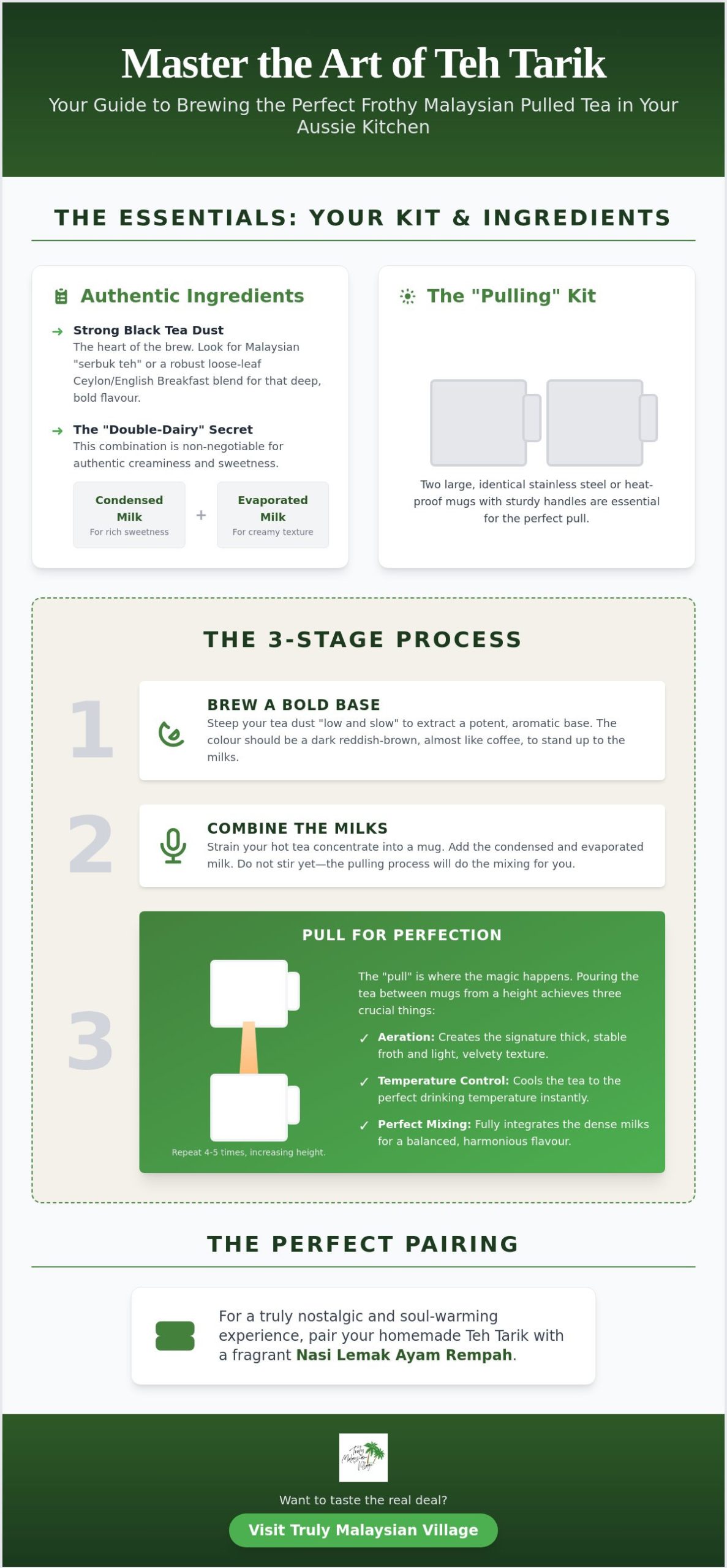
The “pull” is where the science meets the soul. By pouring the tea back and forth from a significant height, you are aerating the liquid. This process does three critical things:
- Aeration: It incorporates tiny air bubbles, creating that signature stable froth and a lighter texture.
- Temperature Control: The long stream of tea cools the boiling liquid to the perfect drinking temperature almost instantly.
- Perfect Mixing: It ensures the thick, sticky condensed milk and evaporated milk are fully integrated with the tea base.
A stirred tea is often flat and one-dimensional. In contrast, a properly pulled tea has a consistent temperature and a balanced sweetness throughout the entire cup. Mastering this physical technique is what separates a basic milky tea from a genuine masterpiece.
Essential Ingredients and Kit for Your Aussie Kitchen
Before you clear your kitchen bench and prepare for the pour, you must stock your pantry with the right tools. Learning how to make teh tarik at home requires more than just a standard tea bag and a splash of dairy. You need ingredients that can stand up to the vigorous aeration process without losing their character. If you’ve ever wondered why your home brew lacks that “Mamak” soul, it usually comes down to using the wrong tea or skipping the evaporated milk. To get that deep, nostalgic flavour, you need components that are bold, thick, and unapologetically sweet.
The gear is just as vital as the ingredients. Forget your delicate porcelain teacups for now. You need two large, identical stainless steel or heat-proof mugs with sturdy handles. These are your “pulling” vessels. Stainless steel is preferred because it retains heat well and won’t shatter if the mugs clink together during a particularly enthusiastic pour. If you’d rather see the masters at work before trying it yourself, you can always book a table to experience the real deal first-hand.
Choosing the Right Tea Base
Authentic teh tarik relies on “tea dust” rather than whole leaves. This finely ground black tea has a massive surface area, allowing it to release a potent, reddish-brown liquor almost instantly. While you can find a 1kg bag of Boh Tarik Serbuk Teh at many Asian grocers for about $19.99, you can also find great alternatives at your local supermarket. Look for a robust loose-leaf Ceylon or a “Strong” English Breakfast blend. The goal is a brew so dark and tannic that it looks almost like coffee before the milk is added. This strength ensures the tea flavour isn’t drowned out by the sweetness of the condensed milk.
The Secret Milk Ratio
This is where the magic happens. A true pulled tea uses a “double-dairy” approach. You need the thick, sugary hit of sweetened condensed milk combined with the silky, savoury body of evaporated milk. A tin of Coles Sweetened Condensed Milk and a carton of ALDI Farmdale Evaporated Milk are perfect staples for your pantry. We avoid fresh milk because it’s too thin; it won’t hold the bubbles created during the pulling process. Most experts recommend two tablespoons of condensed milk and one tablespoon of evaporated milk per mug, but you should adjust this to suit your own palate. A tiny pinch of salt or a slice of smashed ginger can also be added to the pot to give the brew an extra layer of warmth and complexity.
Once you have your kit ready, you are halfway to mastering how to make teh tarik at home. The combination of high-tannin tea and heavy milk creates the perfect chemistry for a froth that won’t disappear the moment you set the cup down.
The Brewing Process: Mastering the Bold Base
The foundation of any great cup lies in the strength of its base. To truly understand how to make teh tarik at home, you must first respect the brewing process. This isn’t a quick dip of a tea bag while you wait for the toaster to pop. It is a slow, deliberate extraction that requires patience and high heat. As the tea dust steeps, your kitchen will fill with a heavy, aromatic scent that is both comforting and revitalising. This is the moment where the legacy of the craft truly begins to take shape, bridging the gap between your Aussie kitchen and the bustling streets of Penang.
You are not just making a drink; you are creating a sensory experience that requires precision. The temperature of your water and the duration of the steep will determine whether your tea is a masterpiece or a disappointment. When done correctly, the result is a liquid that is bold enough to stand up to the heavy sweetness of the condensed milk without being drowned out. It should feel like a warm, soulful embrace in a mug.
Steeping for Maximum Flavour
Start by bringing fresh water to a rolling boil. For the most authentic result, you want your water at a temperature between 95 and 100 degrees Celsius. Pour this over your tea dust and let it sit. While many recipes suggest a quick brew, a 5-8 minute steep is non-negotiable for Teh Tarik. This “low and slow” method allows the dust to release every ounce of its deep, earthy colour and punchy tannins.
Look for a specific visual cue: your tea should be incredibly dark, almost resembling a strong batch of black coffee. If it looks like a standard cuppa, it isn’t ready yet. To ensure a smooth, grit-free experience, the straining method is crucial. Traditional vendors use a “sock” strainer, which is a long, cloth-lined hoop that is excellent for catching every fine particle. If you don’t have one, a very fine mesh metal strainer will do the trick, provided you are careful not to let any sediment slip through into your final brew.
The Initial Mix
Once your base is strained and steaming, it’s time for the initial mix. This step must happen while the tea is still piping hot to ensure the dairy integrates perfectly. Add your condensed and evaporated milk to one of your stainless steel mugs, then pour the hot tea directly over them. Stir the mixture thoroughly before you even think about the first pull. You want a completely uniform liquid with no sticky streaks of condensed milk hiding at the bottom of the mug. The perfect pre-pulled mixture should be a rich, deep terracotta colour. This specific hue indicates that you have achieved the right balance of bold tea and creamy dairy, setting the stage for the aeration to come. Mastering how to make teh tarik at home depends on this consistency; if the base is too pale, your final froth will likely collapse before you can enjoy it.
How to Pull Teh Tarik: The Step-by-Step Technique
The moment of truth has arrived. This is where you transform a simple mixture into a cultural icon. Before you begin, safety must be your priority. Unlike a professional Mamak stall with tiled floors and industrial drainage, your kitchen is likely not built for major spills. Clear your kitchen bench entirely and put on an apron to protect your clothes from stray splashes. Ensure your mugs are dry on the outside so you have a firm, steady grip. When you are learning how to make teh tarik at home, it’s tempting to go for a dramatic, high pour immediately, but starting small is the secret to building both confidence and a stable froth.
Hold your bottom mug firmly on the bench for the first pour. Lift the top mug just a few centimetres and let the liquid flow in a steady, thin stream. Once you feel the rhythm, gradually increase the height. You are aiming for a smooth, continuous ribbon of tea that breaks the surface of the bottom mug with enough force to create aeration. Repeat this motion four to six times. By the final pull, you should see a thick, tan-coloured foam rising to the top. If you find the physical technique a bit daunting, you can always book a table at our village to see how our seasoned team handles the pour with grace and precision.
The “Tarik” Motion Explained
Success lies in the angle of the pour. Tilt the top mug slightly forward so the tea glides over the rim rather than glugging out in uneven bursts. There is a common myth that you need to pull the tea several metres into the air to be authentic. In reality, a height of about 50cm is plenty for a home kitchen. This distance provides enough aeration to create a silky crown without sending hot liquid flying across your tiles. Focus on catching the stream in the centre of the bottom mug to minimise splashing and keep the process tidy.
Troubleshooting Your Froth
If your bubbles look large and pop instantly, your mixture might be too thin. The sugar in the condensed milk acts as a stabiliser for the froth; you may need to add a touch more if the bubbles won’t hold their shape. Conversely, if you pull the tea too many times, the liquid will cool down too much, resulting in a lukewarm drink. Stop pulling once the froth is dense and the tea is still at a comfortable, steaming temperature. Mastering how to make teh tarik at home is about finding that perfect sweet spot between beautiful aeration and a satisfyingly hot serve.
The Perfect Pairing: Bringing the Village to Your Table
Once you have mastered the physical technique of how to make teh tarik at home, the next step is to create the right environment to enjoy it. In Malaysia, a cup of tea is rarely a solitary affair. It is the centrepiece of a communal table, surrounded by the laughter of friends and the clatter of shared plates. To truly bring the village to your own dining room, you must think about the balance of flavours on your plate. A well-pulled tea is a sensory delight on its own, but its soul truly shines when it is served as part of a traditional feast. It is the ultimate social lubricant, designed to be sipped slowly while you catch up with your mates.
The beauty of this beverage lies in its versatility. While it is a breakfast staple for many, it also serves as the perfect afternoon pick-me-up or a soothing finish to a spicy dinner. When you share your home-brewed creation, you aren’t just serving a drink; you are offering a piece of heritage. It is about the warmth of the welcome and the care put into every pour. By following this guide, you have moved beyond being a simple tea drinker to becoming a cultural ambassador in your own kitchen.
Traditional Savoury Accompaniments
The bold sweetness of the tea is designed to complement, not compete with, the fiery heat of traditional dishes. A rich Nasi Lemak Ayam Rempah is the ultimate partner for your brew. The creamy texture of the tea provides an instant cooling effect against the spicy sambal, while the punchy tannins cut through the richness of the coconut rice and fried chicken. Similarly, the savoury saltiness of Mee Goreng or a few sticks of charred Chicken Satay creates a beautiful contrast that keeps the palate refreshed. The sugar in the tea acts as a bridge, balancing the intense spices and making every bite feel harmonious.
Malaysian Hospitality at Home
Hospitality is the heartbeat of our culture. When you are ready to serve, use clear glasses instead of opaque ceramic mugs. This allows your guests to appreciate the beautiful, layered transition from the dark tea base to the frothy, tan crown you have worked so hard to achieve. It adds a touch of theatre to the experience, making the drink feel as special as it tastes. If you are planning a larger gathering and want to focus on the “tarik” performance rather than the kitchen prep, organising a Malaysian-themed catering experience can turn a simple arvo tea into an unforgettable event. You can even invite your friends to try their hand at pulling their own tea; it is a fantastic way to break the ice and share the joy of learning how to make teh tarik at home together.
Bring the Taste of the Village to Your Kitchen
Mastering the perfect froth is more than just a kitchen skill; it is an invitation to experience Malaysian heritage in your own home. By choosing the right tea dust and embracing the “low and slow” steep, you have already laid the foundation for a brew that carries deep, nostalgic flavours. Remember that the “pull” is as much about aeration as it is about temperature, creating that signature velvety mouthfeel that defines the authentic Mamak experience.
Learning how to make teh tarik at home allows you to share this soulful ritual with your loved ones, turning a simple arvo break into a meaningful cultural connection. While your kitchen bench might see a few splashes along the way, the reward is a rich, aromatic cup that tastes like a warm hug. If you would rather leave the “pulling” to the experts and pair your tea with a full feast of heritage recipes, we would love to host you.
Check out our full menu of authentic Malaysian treats and experience the expertly prepared traditional beverages that bring the heart of the village straight to your table. We look forward to welcoming you soon.
Frequently Asked Questions
Can I make Teh Tarik with regular tea bags?
You can use regular tea bags, but you will need to use at least two or three bags per cup to achieve the necessary strength. Standard tea bags often contain larger leaves that do not release their tannins as quickly as traditional tea dust. If you are using bags, choose a strong English Breakfast or Ceylon blend and let it steep for at least eight minutes to ensure the flavour is not lost once the milk is added.
Is Teh Tarik the same as Chai tea?
Teh Tarik is distinct from Chai tea because it focuses on the aeration of the tea rather than a complex blend of spices. While Chai relies on ingredients like cardamom, cloves, and cinnamon, authentic pulled tea is primarily about the high-tannin black tea base and the creamy milk. The unique, frothy texture created by the pulling motion is what truly sets it apart from other milky teas found across Asia.
How do I make Teh Tarik less sweet without losing the froth?
You can reduce the sweetness by increasing the ratio of evaporated milk while cutting back on the condensed milk. Since the sugar in condensed milk helps stabilise the bubbles, your froth might be slightly less dense, but the aeration from the pull will still provide a lovely mouthfeel. Experiment with adding a tiny pinch of salt to balance the flavours without needing as much sugar to make the tea taste full.
What is the best brand of tea for authentic Teh Tarik?
Boh is widely considered the gold standard for an authentic experience, particularly their Tarik Serbuk Teh dust. It provides that deep reddish colour and robust flavour that defines the drink. If you are learning how to make teh tarik at home and cannot find Boh, look for any high-quality Ceylon tea dust or a very fine loose-leaf tea from your local Asian grocer to get the best results.
Can you make a cold version of Teh Tarik (Teh Tarik Ais)?
You can certainly create a chilled version known as Teh Tarik Ais. The secret is to perform the pulling process while the tea is still hot to create the essential froth, then pour the finished brew over a tall glass filled with ice. This keeps the creamy texture intact while providing a refreshing, cold treat that is perfect for a hot Australian summer afternoon.
Why does my Teh Tarik taste bitter?
Bitterness usually occurs if the water was too hot for too long or if you squeezed the tea bags or dust too hard while straining. While you need a long steep for strength, boiling the tea leaves directly in a pot for an extended time can release harsh tannins. Ensure your water is just off the boil and let it steep naturally to get a bold base that remains smooth and aromatic.
Is it possible to make a vegan Teh Tarik at home?
It is possible to make a vegan version by using plant-based alternatives like condensed coconut milk and evaporated oat or soy milk. These substitutes have the thickness required to hold a froth, though the flavour profile will shift toward a more nutty or coconut-forward note. The technique for how to make teh tarik at home remains exactly the same, so you can still enjoy the ritual of the pull.
What happens if I do not pull the tea?
If you skip the pulling process, you are simply making “Teh Susu,” which is a standard hot milk tea. Without the aeration, the drink lacks the velvety, light texture and the iconic frothy head. Pulling also helps to perfectly integrate the thick milks and cools the liquid to an ideal drinking temperature, so skipping this step means missing out on the soul of the beverage.

Article by
Amzar Hariz
Owner of Truly Malaysian Village
Disclaimer
The content published on this website may include articles generated or assisted by AI writing tools. While we aim to provide helpful, accurate, and up-to-date information, we do not guarantee that all content is complete, error-free, or suitable for every individual situation.

