
You might think a plate of rice completely submerged in five different gravies is a kitchen accident, but in Malaysia, it’s a carefully orchestrated symphony of flavour known as the “flood”. It’s completely natural to feel a bit overwhelmed when you’re standing before a vibrant mountain of curries and sides, wondering exactly what is nasi kandar and how it differs from your morning Nasi Lemak. The sheer variety of spiced meats, seafood, and vegetables can be intimidating, especially when the queue is long and the heavy aromas are spinning your head.
We’re here to welcome you into the fold and share the soul of this legendary staple. You’ll discover the humble origins of the “kandar” pole that once balanced these heavy pots on the shoulders of Tamil Muslim traders. We’ll show you how to identify an authentic plate and explain the cultural etiquette of the “banjir” style. By the time we’re finished, you’ll have the confidence to step up to any stall and order a perfectly flooded rice dish like a seasoned local. Let’s explore the rich heritage and craftsmanship behind every aromatic spoonful.
Key Takeaways
- Uncover the rich history of the “kandar” pole and how 19th-century Tamil Muslim traders shaped this iconic Penang staple.
- Gain a clear understanding of what is nasi kandar by mastering the art of the “curry flood” and the layering of diverse, aromatic gravies.
- Identify the signature proteins and sides, such as Ayam Goreng and Beef Rendang, that form the heart of a truly authentic meal.
- Feel confident ordering like a local using the traditional point-and-choose system to customise your perfect mountain of rice.
- Learn how these time-honoured Malaysian flavours are being meticulously preserved and served with a warm village spirit right here in Australia.
What is Nasi Kandar? Defining the Legendary Dish
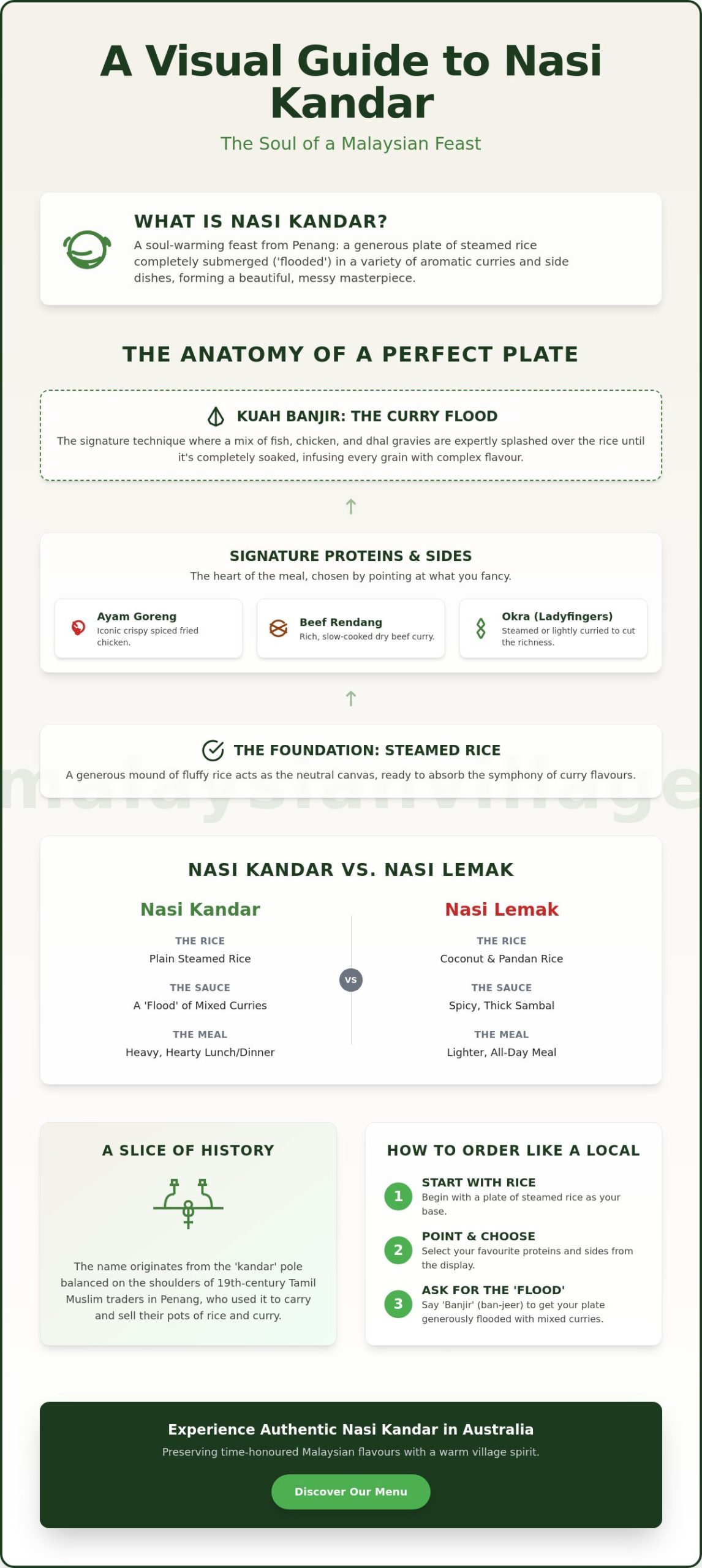
At its heart, Nasi Kandar is a soul-warming feast that hails from the northern reaches of Malaysia, specifically the vibrant streets of Penang. It’s a simple concept executed with incredible depth; a generous serving of steamed rice topped with an array of aromatic curries and side dishes that create a beautiful, messy masterpiece. This isn’t just food. It’s a piece of living history on a plate. It serves as a cornerstone of Mamak culture, where the bold, punchy spices of Southern India meet the fresh, local ingredients of the Malay Peninsula. If you’ve ever found yourself asking what is nasi kandar while staring at a colourful display of simmering pots, you’re looking at the quintessential Malaysian lunch that brings people from all walks of life together.
The dish is defined by its variety. You aren’t just picking one curry; you’re participating in a tradition of abundance. From the crispy crunch of Ayam Goreng to the tender richness of beef, every element is designed to stand up to the intense flavours of the gravies. Nasi Kandar is the ultimate Malaysian comfort food that celebrates a beautiful fusion of heritage and heat.
The Etymology of the ‘Kandar’ Pole
To truly understand the dish, you have to picture the bustling streets of 19th-century Penang. You’d see hardworking vendors balancing a heavy bamboo or mangrove pole across their shoulders. On either end hung large baskets filled with rice and pots of simmering curry. This pole is the “kandar”, and it’s where the name originates. This balancing act allowed vendors to bring their hot tucker directly to the labourers and dockworkers who needed a hearty, affordable meal. This portable nature influenced the recipes, ensuring the food stayed delicious even as the vendor walked kilometres in the tropical heat. Over time, these wandering sellers moved into permanent “Ottu Kadai” or wall-side stalls, but the spirit of that robust, street-side meal remains unchanged.
Nasi Kandar vs. Nasi Lemak: Spotting the Difference
It’s easy for newcomers to get these two Malaysian icons mixed up, but they offer very different experiences. The distinction starts with the grain. While Nasi Lemak is famous for its fragrant rice cooked in coconut milk and pandan, Nasi Kandar uses plain or mildly spiced steamed rice as a neutral canvas. The role of the sauce is also different. Nasi Lemak usually centres around a spicy, thick sambal. In contrast, what is nasi kandar without the “gravy flood”? Here, several different curry sauces are splashed over the rice until it’s completely soaked. Because it’s packed with substantial proteins and heaps of sides, Nasi Kandar is generally considered a “heavy” meal, perfect for a filling lunch or a late-night dinner that sticks to your ribs.
The Anatomy of a Perfect Plate: Curries, Sides, and the ‘Flood’
When you sit down to a proper Malaysian feast, the visual impact is the first thing that hits you. It’s not just a meal; it’s a vibrant landscape of colour and aroma. The foundation of any authentic plate starts with the rice. Most of the time, you’ll get a generous mound of fluffy steamed white rice, though some spots offer a mildly spiced ‘nasi briyani’ for those wanting an extra layer of fragrance. When people ask what is nasi kandar, they’re usually mesmerised by the protein stars that crown the rice. You might choose a piece of Ayam Goreng (fried chicken) with its golden, spiced skin, or perhaps a rich, slow-cooked beef rendang. Mutton curry and Ayam Madu (honey-ginger chicken) are also fan favourites, offering a balance of heat and subtle sweetness that defines the Mamak kitchen.
Kuah Banjir: The Art of the Curry Flood
The defining characteristic of this dish is undoubtedly the ‘banjir’ or the flood. This is a deliberate technique where the vendor expertly splashes multiple gravies over your rice until it’s completely submerged. It’s a functional step that softens the rice and ensures every single grain is infused with spice. As noted by TasteAtlas on Nasi Kandar, this dish is celebrated for its incredible variety and deep cultural roots. Vendors typically mix fish, chicken, and dhal gravies together; this creates a complex flavour profile that’s impossible to replicate with just one sauce. The result is a messy, beautiful symphony of flavours that changes with every bite.
Common Proteins and Veggie Accoutrements
To round out the plate, you need the right mix of textures. Ayam Rempah, or spiced fried chicken, is the quintessential crunchy companion that provides a satisfying contrast to the soft, flooded rice. For the veggies, okra (ladyfingers) is considered the gold standard. These are usually steamed or lightly curried to maintain a slight snap, helping to cut through the richness of the heavy gravies. You’ll often find salted egg, stir-fried cabbage, and perhaps some ‘Sotong’ (squid) or prawns if you’re in the mood for seafood. We reckon no plate is truly complete without a dollop of sambal belacan on the side. This pungent, spicy condiment provides that extra kick that ties the whole experience together. If you’re already dreaming of that first aromatic bite, you can book a table with us and experience the authentic flood for yourself.
The Tamil Muslim Legacy: A History of Flavour
To truly grasp what is nasi kandar, we must look back at the resilient Tamil Muslim community who journeyed from Southern India to the shores of Penang. These pioneers, often referred to as ‘Mamak’ traders, brought more than just their belongings; they carried a rich culinary heritage that would eventually redefine Malaysian street food. Upon arriving, they didn’t just replicate their home-style curries. Instead, they showed incredible craftsmanship by adapting their recipes to suit the local Malay palate, incorporating ingredients that were readily available in their new tropical home. This beautiful exchange of culture and taste is what gave the dish its unique, soulful identity.
The growth of these food stalls was further shaped during the British colonial era by new licensing regulations and the expansion of urban centres. What started as a humble way for immigrants to make a living soon became an essential part of the city’s fabric. Even today, Penang remains the undisputed spiritual home of the dish. While you can find it across the country, purists reckon the air in Penang just makes the gravy taste better. It’s a legacy built on hard work and a passion for sharing a good meal with the community, ensuring that the tradition remains as vibrant today as it was over a century ago.
From Baskets to Brick-and-Mortar
The journey from a worker’s quick tucker to a national obsession was a gradual evolution. As the popularity of the ‘kandar’ vendors grew, they moved away from the balancing poles and began setting up ‘Ottu Kadai’. These were small stalls built directly against the walls of shophouses, becoming the lively social hubs where people from all backgrounds would gather. At the centre of it all was the ‘Nasi Kandar Man’. He wasn’t just a server; he was a maestro of the ladle. With years of experience, he knew exactly how to mix the various gravies to create a personalised flavour profile for every guest. This level of dedication and personal touch is why the dish has maintained its status as a beloved institution.
Spices that Define the Heritage
The aromatic appeal of the dish comes from a masterful blend of two worlds. You’ll find the heavy, warming presence of star anise, cinnamon, and cardamom, which are hallmarks of Indian spice profiles. However, these are balanced by the bright, fragrant addition of lemongrass and pandan leaf, reflecting the local Southeast Asian environment. This multicultural tapestry of ingredients is literally served on a single plate, offering a taste of history in every mouthful. It’s this careful balance of depth and freshness that makes the dish so addictive. When you sit down to eat, you aren’t just enjoying a meal; you’re honouring a centuries-old story of migration and community spirit.
How to Order Nasi Kandar Like a Local
Walking up to the counter for the first time can feel like a bit of a whirlwind, but don’t be shy; the point-and-choose system is all part of the fun. To the uninitiated, the process might look chaotic, but once you grasp what is nasi kandar at its core, you’ll see it’s a beautifully organised system of flavour. It’s an interactive experience where you get to build your own masterpiece under the guidance of a seasoned pro behind the counter. Whether you’re a first-timer or a regular, knowing what is nasi kandar in terms of ordering etiquette will make your visit much more rewarding.
Start with your base. Decide if you’re up for a massive ‘mountain’ of rice or a more modest portion to start your journey. Next, choose your ‘Hero’ by picking one or two main proteins to anchor the meal. While we’ve talked about the variety of meats before, this is the moment where you decide the direction of your flavour journey. Finally, use the magic words. If you want the full experience, ask for ‘Kuah Campur’ (mixed gravy) or go all out with ‘Banjir’ to ensure your plate is perfectly flooded with that legendary mix of sauces.
Navigating the Counter
The visual layout of a stall is designed to tempt you, with rows of simmering stainless steel pots and trays of golden, spiced fried chicken. Most Nasi Kandar is naturally quite punchy, so if you aren’t a fan of serious heat, look for the lighter-coloured gravies or ask the server for a milder mix. A pro tip for achieving the perfect balance is pairing a rich, heavy meat like beef rendang with a lighter veggie side. This ensures you don’t get overwhelmed by the richness before you finish your plate. It’s all about creating a harmony of textures and spice levels that suits your personal taste.
Etiquette and the ‘Village’ Experience
Nasi Kandar is traditionally a communal experience, a time to slow down and connect with your mates. It’s best enjoyed with a frothy, pulled Teh Tarik to help settle the spices and provide a sweet finish. For many Malaysians living abroad, these aromas are a direct line to home, evoking a deep sense of nostalgia and comfort. We encourage you to embrace the ‘mess’ on your plate. That beautiful, chaotic mingle of sauces is exactly where the soul of the dish lives. It’s not supposed to look tidy; it’s supposed to taste like a hug from the inside. If you’re ready to put these tips into practice, secure your spot today and join us for a proper village-style feast.
Truly Malaysian Village: Bringing Nasi Kandar to Australia
At Truly Malaysian Village, we’ve made it our heartfelt mission to honour the legacy of the Penang traders who first balanced those heavy ‘kandar’ poles. We understand that for many Malaysians living in Australia, the craving for a proper feed isn’t just about hunger; it’s about a deep, nostalgic connection to home. For locals who are still discovering what is nasi kandar, we offer a warm, inviting gateway into this vibrant culture. We’ve taken those time-honoured Penang recipes and brought them across the pond to share with a broad Australian audience. You don’t need a passport or a long-haul flight to understand what is nasi kandar at its most soulful; you just need a seat at our table.
Our commitment to the ‘Village’ feel goes beyond the menu. It’s about the warmth of our hospitality and the authentic aromatic appeal that hits you the moment you walk through our doors. We believe that the best food is served with a sense of belonging, and we treat every guest like an invited member of the family. Our Nasi Kandar Penang is a must-try for anyone seeking a true taste of Malaysia, meticulously prepared to capture the essence of the streets where this legendary dish was born.
Our Signature Approach to the ‘Flood’
The secret to a legendary plate lies in the harmony of the gravies. We meticulously organise our curries to ensure you get that perfect ‘Kuah Campur’ experience every single time. It’s a delicate balancing act. Our kitchen team acts as the maestro of the ladle, mixing the sauces to create a complex, layered flavour that coats every grain of rice. We take immense pride in our slow-cooked proteins. From the rich, falling-apart tenderness of our Beef Rendang to the spiced, golden perfection of our Ayam Rempah, every element is a testament to traditional craftsmanship. We’ve worked hard to bring that bustling ‘Mamak’ stall atmosphere to a local setting, ensuring the soul of the service remains intact.
Plan Your Next Malaysian Feast
Whether you’re looking for a quiet weekend lunch or you’re in need of professional catering for a big cultural celebration, we bring the village to you. Nasi Kandar is the perfect choice for group gatherings because it celebrates variety and communal joy. There’s something special about a table filled with friends, all sharing in the ‘mess’ of a perfectly flooded plate. We reckon there’s no better way to celebrate heritage than through a shared meal that sticks to your ribs and warms your heart. We invite you to pull up a chair, join the family, and experience the dedication we pour into every aromatic spoonful. Your seat is waiting.
Experience the Heart of Penang in Your Own Backyard
By now, your understanding of what is nasi kandar should go beyond the simple “flooded” rice description to encompass the incredible craftsmanship behind every ladle of gravy. You’ve discovered how a humble balancing pole in 19th-century Penang evolved into a national treasure, defined by its complex “Kuah Campur” and bold spice profiles. This dish is a celebration of community and heritage; a messy and beautiful masterpiece that offers a warm hug from the inside with every mouthful.
At Truly Malaysian Village, we’re dedicated to preserving this legacy through our authentic Penang-style recipes and a nostalgic atmosphere that makes you feel like an invited guest in our home. We invite you to step away from the bustle of the day and immerse yourself in the aromatic appeal of a true village feast. Whether you’re a long-time fan or a curious newcomer, we’re ready to share the soul of our kitchen with you. Book your table or explore our authentic Nasi Kandar menu here and join our family for a meal you won’t soon forget. We can’t wait to welcome you.
Frequently Asked Questions
Is Nasi Kandar very spicy?
Nasi Kandar generally has a punchy heat, but the spice level varies depending on the specific curries you choose. While the mixed gravy is known for its kick, understanding what is nasi kandar in terms of heat means you can balance the spices by picking milder options like dhal or honey-ginger chicken. It’s all about how you customise your plate to suit your own palate and comfort level.
What is the best side dish to have with Nasi Kandar?
Steamed okra, or ladyfingers, is widely considered the quintessential side dish for an authentic experience. These green veggies provide a fresh snap that cuts through the richness of the heavy gravies. Other popular choices include salted egg and stir-fried cabbage, which add a lovely textural contrast to the soft, flooded rice. We reckon a bit of crunch makes the whole meal sing.
Can I get a vegetarian version of Nasi Kandar?
Yes, you can definitely enjoy a vegetarian version by focusing on the variety of vegetable curries and sides available. If you are exploring what is nasi kandar as a vegetarian, a plate filled with dhal, stir-fried cabbage, and steamed okra is just as soul-warming as any meat dish. It is a great way to experience the aromatic flavours and heritage without the protein-heavy options.
Why is it called ‘Nasi Kandar’?
The name comes from the bamboo or mangrove pole, called a “kandar”, which vendors used to balance across their shoulders. In 19th-century Penang, these itinerant traders would carry two heavy baskets of rice and curry at each end of the pole. This portable method allowed them to serve a proper feed to workers directly on the street, giving birth to the name we still use today.
What is the difference between Nasi Kandar and Nasi Biryani?
The main difference lies in the rice and the way it is served. Nasi Biryani uses long-grain basmati rice cooked with spices and meat in a single pot, whereas Nasi Kandar typically uses plain steamed rice topped with a variety of separate curries. While Biryani is a complete dish on its own, Nasi Kandar is an interactive pick and mix feast that relies on the “flood”.
How do I ask for the mixed gravy flood?
You simply need to use the phrase “Kuah Campur” for mixed gravies or “Banjir” if you want your plate completely flooded. This tells the server to splash a bit of everything over your rice, from the fish curry to the dhal. It is the secret to getting that complex, signature flavour that makes the dish so legendary among Malaysian food lovers and locals alike.
Is Nasi Kandar healthy?
It is a hearty and substantial meal, but you can make it more balanced by choosing plenty of vegetable sides. While the gravies are rich and full of spice, opting for steamed okra and cabbage alongside a single protein helps manage the portion size. Like most comfort foods, it is best enjoyed as a satisfying treat that celebrates tradition, flavour, and a sense of belonging.
Can I order Nasi Kandar for a large group event?
Absolutely, Nasi Kandar is a fantastic choice for group gatherings and cultural celebrations because of its diverse range of flavours. We offer professional catering services that bring the village atmosphere directly to your event. It is a brilliant way to feed a crowd while providing a unique, interactive dining experience that your mates and family will remember long after the last bite.

Article by
Amzar Hariz
Owner of Truly Malaysian Village
Disclaimer
The content published on this website may include articles generated or assisted by AI writing tools. While we aim to provide helpful, accurate, and up-to-date information, we do not guarantee that all content is complete, error-free, or suitable for every individual situation.

