
A picky eater doesn’t have to choose between familiar food and Malaysian flavours. Malaysian food for picky eaters can include approachable options such as chicken satay, roti canai, fried rice and chicken rice. Where possible, serve sauces separately, and offer plain rice or noodles as a familiar fallback if a new dish feels like too much.
It’s understandable to want children to enjoy a meal without pressure or surprises. This guide covers mild dishes to consider, easy fallback foods and practical ways to plan a meal around a child’s preferences. You’ll find ideas for introducing new flavours gently while keeping something recognisable on the table.
Key Takeaways
- Start with familiar flavours and milder choices, such as chicken satay, roti canai or chicken rice.
- Keep chilli and sauces separate where possible so children can choose how much flavour to add.
- Have plain rice or noodles in mind as a familiar fallback if a new dish doesn’t appeal.
- Plan a child-friendly meal by pairing one familiar food with a small taste of something new.
- Explore Malaysian dishes at a gentle pace, letting children decide what they’re ready to try.
1. Mild and familiar Malaysian dishes for children
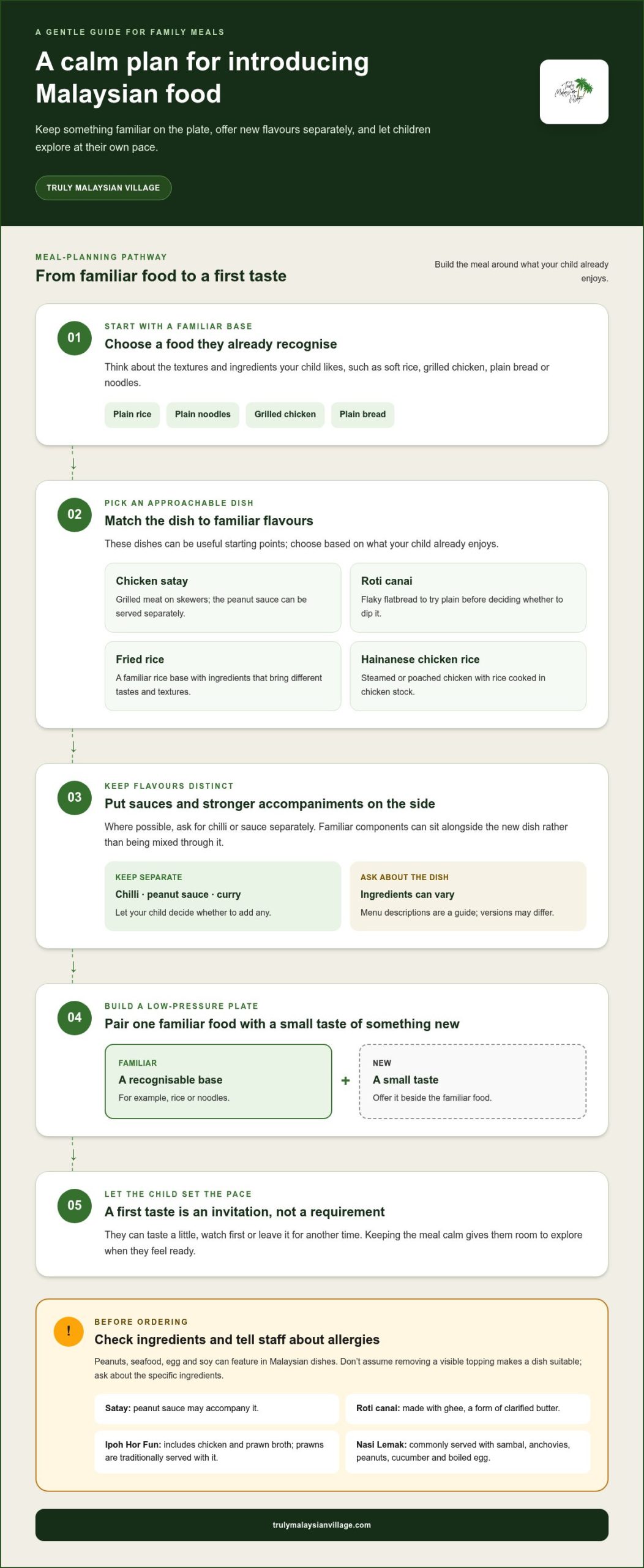
Yes, Malaysian dishes can offer children familiar textures and gentle flavours. Chicken satay, roti canai, fried rice and Hainanese chicken rice are useful starting points. Each has recognisable ingredients, while sauces and stronger seasonings can often be kept separate. Choose a dish based on what your child already enjoys, such as soft rice, grilled chicken or bread they can try plain.
Roti canai is flaky flatbread, often served with curry for dipping. A child can try a small piece plain before deciding whether to dip it. The bread is made with ghee, a form of clarified butter, so it may not suit children who avoid dairy. If an allergy or dietary need matters, ask about the ingredients before ordering and explain which foods your child must avoid.
For a warm bowl, consider Ipoh Hor Fun. It combines flat rice noodles with chicken and prawn broth, and is traditionally served with poached chicken and prawns. The soft noodles and broth may suit children who enjoy noodle soup. If prawns are unfamiliar, offer the noodles and broth separately from the other ingredients, so your child can explore each part at their own pace.
Hainanese chicken rice pairs steamed or poached chicken with rice cooked in chicken stock. Ginger, chilli sauce and dark soy sauce can accompany it, allowing diners to choose what to add. Fried rice is another familiar option: the rice provides a recognisable base, while egg, vegetables or protein bring different tastes and textures. Check the ingredients first to help choose a dish your child is more likely to try.
Malaysian street foods that may appeal to children and cautious eaters include chicken satay, roti canai, fried rice and chicken rice. Satay is grilled meat on skewers, often accompanied by peanut sauce, cucumber and onion. Keep the sauce separate and consider peanut allergies before sharing it. Crispy fried snacks may appeal to children who prefer crunch, but ingredients vary, so check the dish description before choosing.
Across Australia, look for Malaysian restaurants in your local dining area and scan menus for familiar ingredients. Dishes with separate condiments, rice or noodles can give children a clear starting point. A menu description may also help you spot chicken, egg or vegetables your child already eats. Restaurant menus differ, so use dish names as a guide rather than assuming every version has the same ingredients or level of heat.
Once you’ve chosen a dish, make the order easy to manage: ask for chilli or sauce separately where possible, and request familiar components on the side. Serve a small taste of the new food beside something your child recognises. If your child prefers to watch first, let them do that without turning the meal into a negotiation. A calm first taste can leave room for curiosity next time.
2. Is Malaysian food good for fussy eaters?
Yes, Malaysian food can suit fussy eaters when you start with familiar ingredients and keep strong sauces separate. Chicken satay, roti canai and fried rice are approachable examples, while dishes such as Nasi Lemak and char kway teow call for a closer look at their accompaniments and ingredients.
Satay is grilled, marinated meat served on skewers, commonly with peanut sauce, cucumber and onion. Ask for the peanut sauce on the side, then let your child try a small piece of chicken first. The grilled meat has flavour on its own, while separate sauce lets each diner choose how much to add. Beef satay offers the same skewer format with a different meat.
Roti canai is flaky flatbread traditionally dipped in curry. A child can taste it plain, then dip a corner if they’re comfortable with the curry’s flavour. Nasi Lemak may be less predictable for a cautious eater: its coconut rice is commonly served with sambal, anchovies, peanuts, cucumber and boiled egg. Separate components can help a child choose what to try, but sambal contains chilli.
Char kway teow is a stir-fried flat rice noodle dish commonly made with prawns, egg, bean sprouts and chives. Its savoury flavour and mixed textures may be unfamiliar, so it isn’t automatically the gentlest choice. Ask for chilli separately where possible, and consider whether your child accepts prawns, egg and vegetables before ordering.
Beef Rendang offers a different texture: slow-cooked beef becomes tender in a rich sauce made with coconut milk, herbs and spices. It isn’t necessarily chilli-hot, but its deep, fragrant flavour may be new to children used to plain meat. A small taste alongside familiar rice can make the first bite less daunting. Satay’s peanut sauce can also be served separately, so children can sample the grilled meat without committing to the condiment.
Peanuts, seafood, egg and soy can feature in Malaysian dishes. Peanut sauce accompanies satay; prawns appear in char kway teow; egg is common in fried rice and noodle dishes; and soy sauce can season stir-fries. If your child has an allergy, tell restaurant staff before ordering and ask about the ingredients in the specific dish. Don’t assume removing a visible topping makes a dish suitable.
For a first meal, choose one familiar base, such as rice, then add a small portion of grilled chicken or a mild-tasting accompaniment. Keep chilli and peanut sauce separate, and let your child decide what goes on their plate. Plan a Malaysian meal around the flavours your family already enjoys.
3. Plain noodles, rice and familiar back-up foods
Plain rice and noodles can give a child a recognisable option alongside a new Malaysian dish. Treat them as a familiar base: serve a small portion first, then offer a little sauce or topping separately. This lets children explore at their own pace while keeping the main flavours distinct.
Nasi Lemak shows how one rice dish can come with different accompaniments. Its coconut milk rice is commonly served with sambal, anchovies, peanuts, cucumber and boiled egg. For a cautious eater, separate the rice from the sides and let them choose a familiar item, such as cucumber. The coconut flavour is part of the rice itself, so it may taste different from plain steamed rice.
Fried rice can be a useful middle ground: the rice stays familiar while other ingredients add flavour. Malaysian nasi goreng is often topped with a fried egg, and recipes may include vegetables or protein. Ask which ingredients are mixed through, then consider whether the child prefers egg, chicken or vegetables served separately. A simpler serving with fewer mixed components may feel easier to approach.
For noodles, distinguish soft, plain noodles from a more strongly seasoned stir-fry. Char kway teow uses flat rice noodles stir-fried with prawns, egg, bean sprouts and chives. High-heat wok cooking can add a smoky, charred flavour known as wok hei. That aroma and combination of ingredients may be unfamiliar, so offer a small taste beside a plainer option.
Beef Rendang with rice pairs tender, slow-cooked beef with a rich coconut milk and spice sauce. Instead of mixing everything together, place a small amount of rendang beside the rice. The child can try the rice first, then add a little sauce or meat if the flavour appeals. This keeps the familiar base available while introducing the slow-cooked dish gradually.
A practical fallback can be simple: choose one accepted base, add one new ingredient and keep other components separate. For example, pair plain rice with a small piece of chicken, then place cucumber or a spoonful of sauce nearby. If a child prefers noodles, offer them before adding stir-fried toppings. A banana can be a familiar snack after the meal, but it won’t replace rice or noodles as the main fallback.
At a Malaysian restaurant, scan the menu for rice or noodle dishes and identify which ingredients are mixed in. Choose the simplest combination your child recognises, then let them decide whether to taste an unfamiliar side. This makes a shared meal easier to organise without asking a child to accept every new flavour at once.
4. A simple Malaysian food plan for children
A child-friendly Malaysian meal can pair a familiar food with a small taste of something new. Start with a base your child accepts, such as plain rice or noodles. Add a familiar protein, then offer a condiment or vegetable separately for optional tasting. This gives children a clear choice without making every part of the meal unfamiliar.
For a restaurant meal in Australia, plan the order before arriving. Look at the menu together and let your child choose between recognisable options, such as chicken or rice. Then select one new item to share, perhaps a cucumber side or a small piece of grilled meat. Keep sambal and richer gravies apart from the child’s serving, so familiar food stays separate.
At home, a gentle tasting plan can use the same ingredients in different ways. If your child likes chicken and rice, serve them separately one evening. Another time, add a small spoonful of sauce beside the rice, not over it. Offer a vegetable such as cucumber or carrot alongside the meal. Seeing an ingredient without pressure to eat it can make the next tasting feel more familiar.
The Malaysian Healthy Plate offers a broad meal-planning guide: half the plate is vegetables and fruit, while carbohydrates and protein each take a quarter. For children who accept only a few foods, use that structure as a gradual direction rather than a demand to fill every section immediately. For example, keep rice as the accepted carbohydrate, then add a small piece of chicken and one familiar vegetable.
Malaysian cuisine brings together Malay, Chinese and Indian influences, so dishes can differ in seasoning, texture and ingredients. In Australian restaurants, families can order different dishes for the table and share them. Choose familiar food for your child, then add a new dish for everyone to taste. A shared meal lets adults explore more flavours while a child keeps their own choices manageable.
Keep the meal calm and unhurried. Allow about 20 minutes for a child’s brain to catch up with their stomach, and avoid turning each bite into a negotiation. Serve water or an unsweetened drink with the meal, and offer seconds if your child is still hungry. A short, predictable routine helps children know what to expect at dinner.
After the meal, note which texture or flavour your child accepted, such as soft noodles, crisp cucumber or plain rice. Use that detail to guide the next meal: keep one accepted food, then change just one element. This gives your family a practical way to explore Malaysian dishes at home or in restaurants without making every meal a test.
5. Food options for picky eaters
Choosing Malaysian cuisine for a cautious eater works best when you focus on accepted ingredients, texture and flavour. A child who enjoys crisp foods might prefer cucumber or a grilled skewer; one who likes soft textures may try rice or noodles first. Treat each dish as a set of components, rather than expecting a child to accept the whole plate at once.
Start with a food your child already eats, then change one feature. If plain rice is familiar, offer a small taste of coconut rice beside it. If they like chicken, a small piece of grilled chicken can introduce a savoury marinade without making the whole meal unfamiliar. Keep a new sauce separate, so your child can explore its aroma or taste without it covering an accepted food.
Texture can matter as much as spice. A child who avoids mixed dishes may find ingredients easier to approach when served separately. Try cucumber beside rice, or offer a small amount of a new vegetable alongside a preferred protein. For a child who likes crisp textures, a crunchy element may feel more inviting than a soft stew. Let them look at, smell or touch a new food before tasting it.
Malaysian food reflects Malay, Chinese and Indian influences, so dishes can differ in seasoning, texture and ingredients. “Savoury” doesn’t mean a dish is mild, and a traditional recipe may include chilli, seafood, soy or peanuts. Check the listed ingredients and keep condiments aside when possible. For allergies, tell staff clearly and ask about the specific dish, including sauces and cooking ingredients.
Some reluctance around unfamiliar foods can appear as children grow more independent. Food neophobia, or hesitation around new foods, is common between roughly two and six years of age. A calm routine can help: offer a familiar food, include a small new portion and avoid pressuring a child to eat it. One meal doesn’t need to become a test of an entire cuisine.
Keep an eye on the range of foods your child accepts. If the list is shrinking or contains fewer than around 10-15 foods, seek professional advice. This is especially useful when mealtimes become difficult or the child’s accepted options keep narrowing. The focus is practical support for the child’s eating, not persuading them to finish one particular Malaysian dish.
For a shared meal, choose familiar options for your child and one new dish for the table. Adults can enjoy the full traditional flavours while children explore at their own pace. Book a Malaysian meal for your family and make room to discover new favourites together.
Truly Malaysian Village: Nasi Lemak Ayam Rempah
Truly Malaysian Village gives families a place to explore Malaysian flavours through familiar dishes and traditional favourites. Nasi Lemak Ayam Rempah pairs coconut rice with chicken, offering a distinctive starting point for a child curious about a new meal. Chicken Satay is another recognisable choice, served as grilled meat on skewers; Beef Rendang offers a richer, slow-cooked taste for diners ready to try deeper spice flavours.
Choose a dish that suits your child’s comfort with new textures and seasonings, or share a few tastes around the table. For a food-loving family member, TMV Gift Cards make a thoughtful present. To plan your next family meal or ask about catering, contact Truly Malaysian Village or visit trulymalaysianvillage.com.
Make the next meal a gentle discovery
Planning Malaysian food for picky eaters is less about finding one perfect dish and more about making room for choice. Let your child’s familiar preferences guide the next step: a texture they enjoy, an ingredient they recognise or a flavour they’re curious about. As their comfort grows, the family table can hold both well-loved favourites and new tastes.
For your next outing, choose a meal that lets everyone explore Malaysian cooking at their own pace. Share what your family enjoys and plan a visit that feels relaxed and welcoming. Arrange your family visit with Truly Malaysian Village, and take the next step towards a meal everyone can enjoy.
Frequently Asked Questions
Is Malaysian food good for fussy eaters?
Yes, Malaysian food can suit fussy eaters if you choose dishes by texture and ingredients, not just by name. A child who prefers separate foods may find a rice dish easier to approach than a mixed noodle stir-fry. Start with the component they recognise, then let them decide whether to taste another part. A shared table also lets adults enjoy more strongly seasoned dishes without making those the child’s only option.
Is Malaysian food too spicy for kids?
No, not all Malaysian dishes are hot, though chilli features in some recipes and condiments. Sambal is a chilli paste often served alongside food, so its presence doesn’t mean every part of a meal has the same heat. Ask for sambal or chilli sauce separately, and choose a dish whose description doesn’t mention chilli if your child avoids heat. Coconut rice can still have other flavours even without added chilli.
What Malaysian dishes are mild and suitable for picky eaters?
Chicken satay, plain roti canai, fried rice and chicken rice are useful starting points for children who prefer familiar flavours. The best fit depends on what your child accepts: soft bread, grilled meat, rice or broth. At a restaurant, compare menu descriptions and choose a familiar texture first. A mild-tasting dish may still contain ingredients your child avoids, so consider the full combination before ordering.
Which Malaysian foods have familiar ingredients like chicken, rice, noodles, or eggs?
Hainanese chicken rice combines chicken and rice, while nasi goreng is fried rice often topped with egg. Mee Goreng uses noodles, and Malaysian versions commonly include vegetables, egg and a protein. These dishes offer recognisable ingredients within Malaysian cooking. Seasoning and additional ingredients vary, so read the menu description rather than relying on a familiar name alone. A child may prefer components served separately.
What are the least spicy Malaysian dishes, and how can you order them without chilli?
Plain roti canai, chicken rice and simply prepared fried rice are options to consider when avoiding chilli. Ask for the meal without chilli and request sambal or chilli sauce separately. You could say, “Could we have this without chilli, with sambal on the side?” This gives you control over the condiment. The main dish may still have its own seasoning, so choose one described as mild or plain.
Which Malaysian dishes can be served with sauces or toppings on the side?
Satay is commonly served with peanut sauce, so ask for it separately. Nasi Lemak accompaniments such as sambal, anchovies, peanuts, cucumber and egg may also be arranged apart from the rice. For chicken rice, ask whether sauces and condiments can be served on the side. This lets diners choose components individually, which can help when children prefer foods not to touch.
How can you explain dietary preferences or request mild food at Malaysian restaurants in Australia?
Use a short, specific request: “My child prefers mild food. Could you recommend a dish without chilli?” Then name any ingredients they avoid and ask for sauces or toppings separately. For an allergy, state the ingredient clearly, such as peanuts, prawns, egg or soy, and identify the dish you’re considering. This gives restaurant staff useful details to discuss the order and its ingredients.

Article by
Amzar Hariz
Director of Truly Malaysian Village
Disclaimer
The content published on this website may include articles generated or assisted by AI writing tools. While we aim to provide helpful, accurate, and up-to-date information, we do not guarantee that all content is complete, error-free, or suitable for every individual situation.

