
What if the bowl you have been calling laksa for years is actually a distant, creamy cousin to the true, tangy soul of Malaysian street food? For many, the search for authentic Penang Laksa Adelaide is often met with the disappointment of watered-down flavours or the confusing substitution of Curry Laksa in place of the sharp, savoury Asam variety. You probably recognise that hollow feeling when a dish lacks the aromatic punch of torch ginger flower or the deep, complex funk of fermented shrimp paste that defines a genuine home-cooked meal.
We believe that every guest deserves a seat at the table of tradition, where recipes are treated with the respect and craftsmanship they deserve. This guide promises to help you master the distinct profile of Asam Laksa and identify the non-negotiable ingredients that make it authentic. We will show you exactly how to find those nostalgic, village-style flavours in South Australia, ensuring your next meal feels less like a transaction and more like a warm welcome home.
Key Takeaways
- Understand the unique sour and spicy profile of Asam Laksa, which relies on a poached mackerel and tamarind base rather than the creamy coconut milk found in common curry versions.
- Discover why authentic Penang Laksa Adelaide requires non-negotiable herbs like Bunga Kantan (torch ginger flower) and Daun Kesum to achieve its signature aromatic depth.
- Learn how to reimagine this classic with plant-based ingredients like seaweed and mushrooms to replicate the essential “oceanic” umami flavour for a vegan-friendly meal.
- Identify the hallmarks of a high-quality broth through simple sight and scent tests, ensuring your bowl is thick, opaque, and perfectly balanced.
- Connect with the heritage of Malaysian street food by finding a local kitchen that honours time-honoured recipes and the nostalgic comfort of village-style cooking.
What is Penang Laksa? Understanding the Sour and Spicy Soul
Imagine walking through a bustling night market in George Town, where the air is thick with the scent of charred rice noodles and the sharp, floral tang of ginger flower. This is the birthplace of a dish that carries the very heart of the island in every spoonful. Unlike the creamy, coconut-heavy bowls found in most local food courts, authentic Penang Laksa Adelaide offers a completely different experience. It is a vibrant, poached mackerel-based soup that trades richness for a complex, refreshing brightness. The soul of this dish lies in the “Asam,” or tamarind, which provides a signature sour profile that cleanses the palate and awakens the senses.
For many Australians, “laksa” usually implies a thick curry broth. While that version is undoubtedly comforting, it lacks the bracing, coastal energy of the Penang variety. True Asam Laksa is a labour of love, requiring hours of simmering fish with aromatic roots to create a broth that is both light and deeply savoury. It is more than just a meal; it is a nostalgic journey back to the “kampung” or village, where food was shared with open hearts and recipes were guarded like family heirlooms.
The History of Asam Laksa: From Coastal Villages to Global Fame
The roots of this iconic dish are deeply intertwined with the history of laksa and the unique Peranakan culture of the Malay Peninsula. Born in coastal fishing communities, the recipe was shaped by what the sea and the land provided. Freshly caught mackerel and abundant tamarind pods became the foundation of a dish that could sustain a family while offering a burst of flavour. Over generations, it evolved from a humble seaside staple into a world-renowned delicacy. For Malaysians living in South Australia, a bowl of Penang Laksa Adelaide serves as a vital connection to home, acting as a “soul food” that bridges the gap between their heritage and their modern life in the suburbs.
Why the Balance of Flavours is Non-Negotiable
Achieving the perfect bowl requires a delicate dance between the “holy trinity” of Malaysian flavours: the sharp sourness of tamarind, the heat of fresh chillies, and the deep, fermented umami of shrimp paste. This foundation is then elevated by a calculated contrast of fresh toppings. Thinly sliced cucumber, red onions, and sweet pineapple are piled high, while a handful of fresh mint and ginger flower adds a cooling, herbal finish. These elements work together to cut through the intensity of the fish broth, ensuring each bite is balanced. Asam Laksa is the ultimate representation of Malaysian culinary complexity. If you’re looking to experience this craftsmanship for yourself, you can often find it featured on our weekend specials, where we prepare it with the same patience and love found in a traditional Penang kitchen.
- Sour: Derived from tamarind and dried sour fruit (asam gelugur).
- Spicy: A blend of fresh and dried chillies for a layered heat.
- Savoury: Flaked mackerel and high-quality fermented shrimp paste (petis udang).
The Anatomy of Authenticity: Essential Penang Laksa Ingredients
Finding a bowl of Penang Laksa Adelaide that tastes like the streets of George Town is no small feat. It requires a kitchen that refuses to take shortcuts with the ingredients. Authenticity is found in the pungent, floral, and earthy notes that only specific Malaysian flora can provide. Without these, you are simply eating a fish soup; with them, you are experiencing a vital part of Malaysian food culture. We treat these ingredients with the reverence they deserve, knowing they are the building blocks of a nostalgic experience.
The aromatic heart of the dish is Bunga Kantan, or torch ginger flower. Its bright pink petals offer a citrusy, floral scent that is impossible to replicate. This is paired with Daun Kesum, often called Vietnamese Mint or “laksa leaf,” which provides a sharp herbal undertone. Then there is the fish. We use Ikan Kembung (mackerel) because its natural oiliness creates a rich, flaked texture that gives the broth its signature body. Ikan Kembung is non-negotiable because the flesh holds its shape even after being shredded, providing those meaty morsels that hide at the bottom of the bowl. Finally, no bowl is complete without a finishing touch of Hee Ko, a thick, sweet-salty prawn paste that adds a dark, fermented depth to every mouthful.
Finding Traditional Herbs in Australia
For those trying this at home, head to your local Asian grocer, particularly in the western suburbs of Adelaide. Look for fresh Daun Kesum in the herb section, but be prepared to hunt for frozen Bunga Kantan if fresh isn’t available. Always choose tamarind pulp over pre-made concentrates; the pulp has a cleaner, more vibrant acidity that defines the “Asam” profile. Don’t forget the noodles. You need thick, translucent rice noodles known as Lai Fun. Their slippery texture provides the essential “slurp” factor that holds onto the broth without becoming soggy.
The Role of Belacan in the Spice Paste
The foundation of the spice paste is Belacan. You must toast this fermented shrimp paste until it becomes fragrant and crumbly to release its deep umami essence. We balance the heat by blending fiery bird’s eye chillies with milder, dried long chillies for a layered warmth. The slow-simmered broth develops its character over several hours as the mackerel oils and tamarind tang meld into a deep, soul-warming base. If the process sounds daunting, you can always reserve your table to taste the result of our patience and care for yourself.
Vegan Malaysian Recipes: Reimagining the Classics
Sharing a meal is one of the most profound ways to build a sense of belonging. We believe no one should be left out because of their dietary choices. While the traditional broth for Penang Laksa Adelaide relies heavily on poached mackerel, reimagining this classic for a vegan lifestyle is about honouring the spirit of the dish rather than just following a rigid list of ingredients. It is a way to invite a wider community into our village, ensuring that the complex, nostalgic flavours of Malaysia are accessible to everyone. Creating a plant-based version isn’t about compromise; it’s about using the land’s bounty to recreate the same emotional connection to heritage.
The challenge lies in replicating that specific “oceanic” umami that defines Asam Laksa. By understanding the Peranakan culture and laksa origins, we can identify the core flavour pillars and find plant-based equivalents that respect the tradition. At Truly Malaysian Village, we value these inclusive dining experiences, as they reflect our commitment to being a welcoming host for all who seek a taste of home.
The Secret to Vegan Umami in Malaysian Cooking
Replicating the depth of a fish broth requires a bit of culinary alchemy. Dried shiitake mushrooms and kombu (seaweed) are the heroes here, providing a robust, savoury foundation that mimics the saltiness of the sea. Instead of the pungent Belacan, we turn to Tauchu, a fermented soy bean paste, to provide that essential fermented funk. To get the texture right, soy-based proteins or even heart of palm can recreate the flaked consistency of mackerel, ensuring the mouthfeel remains true to the original experience of Penang Laksa Adelaide.
A Roundup of Vegan-Friendly Malaysian Street Food
Beyond the laksa bowl, many other “village” favourites can be adapted with care and craftsmanship. These plant-based versions maintain the soul of the dish through traditional spice pastes and cooking methods:
- Vegan Satay: We use marinated mushrooms or tempeh, charred to perfection and served with a rich, authentic peanut sauce.
- Mee Goreng: This stir-fry achieves its smoky “wok hei” finish using dark soy, tomato paste, and a blend of fresh chillies.
- Nasi Lemak: The fragrant coconut rice remains the star, while we substitute anchovies with extra crispy salted peanuts and seasoned tofu.
These adaptations ensure that the legacy of Malaysian street food continues to thrive, evolving to meet the needs of a modern audience while keeping its historical heart intact.
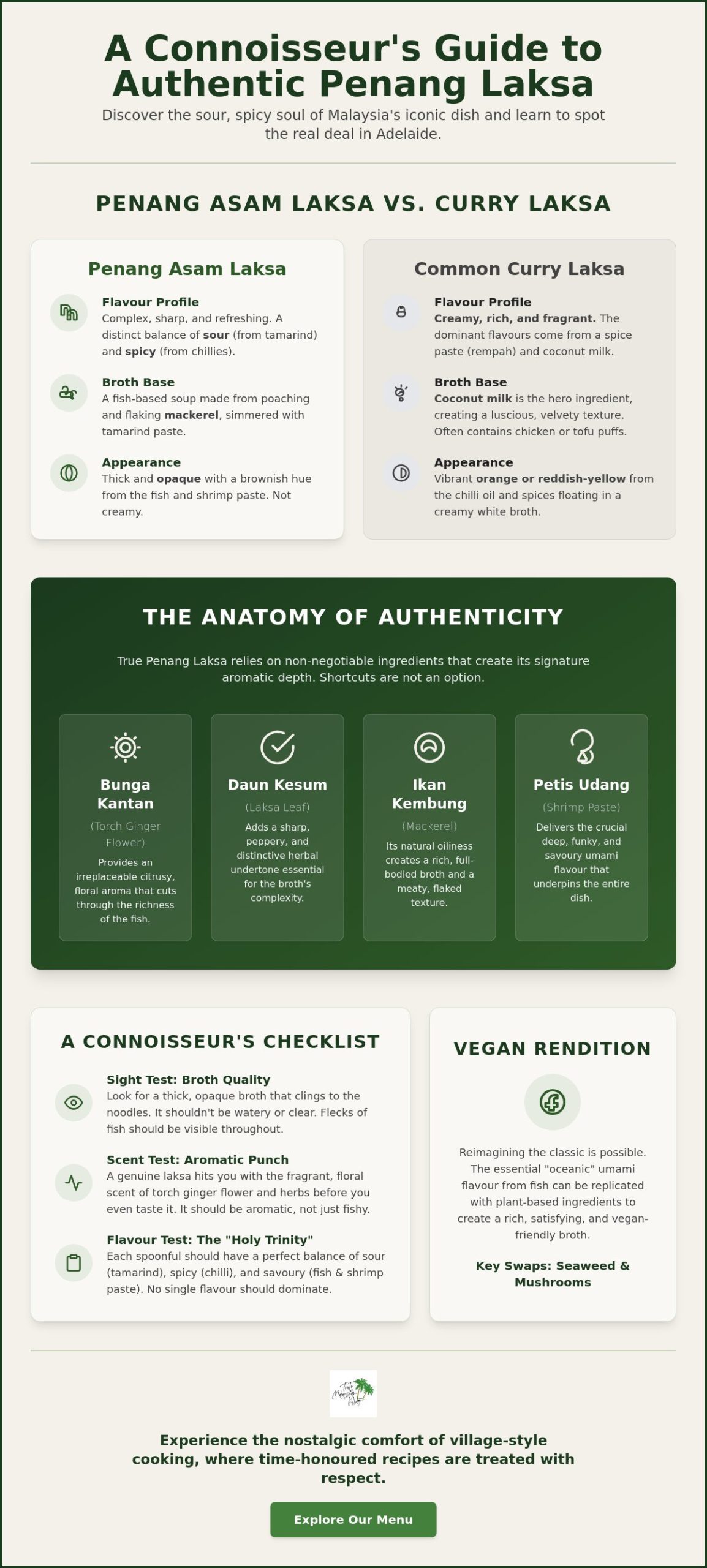
How to Judge a Good Laksa: A Connoisseur’s Roundup
When you sit down for a bowl of Penang Laksa Adelaide, your first instinct shouldn’t be to pick up the spoon. Instead, let your senses do the initial work. A true connoisseur knows that authenticity is revealed before the first bite is even taken. It’s in the way the broth clings to the noodles and the specific aromatic profile that rises from the steam. To truly appreciate the craftsmanship involved, you need to know what to look for in a bowl that honours the village traditions of Malaysia.
The “Sight Test” is your first clue. The broth must be thick and opaque, a result of the mackerel being poached and then finely flaked back into the soup. If the liquid is translucent or watery, the kitchen has likely skimped on the fish foundation. Next comes the “Scent Test.” You should detect a bold, earthy pungency from the shrimp paste immediately, but it must be softened by the delicate, floral notes of the ginger flower. Finally, look at the garnish ratio. A generous heap of julienned cucumber, red onion, and fresh pineapple provides the essential crunch and acidity to balance the savoury depths of the fish. The heat level is equally vital; it should be a slow, creeping warmth that complements the tamarind’s sourness rather than masking it.
Common Mistakes in Modern Laksa Preparations
Many modern interpretations fall into the trap of over-sweetening the broth. This is often done to cater to a broader palate, but it destroys the intricate sour-spicy balance that makes the dish legendary. Another common error is using thin rice vermicelli. These noodles are far too delicate for the heavy, textured broth of a proper Asam Laksa. You need the springy, thick rice noodles that can stand up to the intensity of the soup. Finally, neglecting the fresh garnish is a cardinal sin. Without that raw onion and cucumber, the dish loses the textural contrast that defines the street-side experience.
The Difference Between Homemade and Commercial Broths
There is a world of difference between a broth made from a jar and one born from a village-style approach. Commercial pastes often lack the bright, citrusy zing of fresh tamarind and the nuanced heat of hand-ground chillies. We believe in the slow way, where the broth is allowed to simmer for half a day to develop its full character. This patience ensures that every spoonful of Penang Laksa Adelaide carries the depth of tradition. You can tell a restaurant uses authentic, imported ingredients by the complexity of the “Hee Ko” prawn paste, which should be thick, dark, and intensely savoury. If you’re ready to put our kitchen to the test, you can book your table now and experience the difference that genuine craftsmanship makes.
Experiencing the Village: Authentic Flavours and Catering
At Truly Malaysian Village, we don’t just serve food; we invite you into a living piece of our heritage. As guardians of time-honoured recipes, we believe every bowl of Penang Laksa Adelaide should feel like a warm hug from a loved one. Our philosophy is rooted in the idea of the welcoming host, where communal dining isn’t just a choice but a way of life that fosters a sense of belonging and cultural pride. This is why we treat our kitchen as the heart of the community, where the soul of Malaysia is kept alive through the careful craftsmanship of every spice paste and slow-simmered broth.
Every dish that leaves our kitchen is a tribute to the generations of cooks who came before us. When you visit us at our Port Road home in Allenby Gardens, you aren’t just a customer; you’re a guest in our village. This dedication to legacy is what makes our Penang Laksa Adelaide stand out in a world of fast-food shortcuts. We take the time to do things properly because we know that real flavour can’t be rushed. It requires patience, tradition, and a deep respect for the ingredients that define our culture.
Malaysian Catering for Your Next Big Occasion
If you’re looking to share this love with your own community, it’s easy to organise a Malaysian feast for your next big occasion. Whether it’s a corporate gathering or a private celebration, we can help you customise a menu that speaks to the soul of your event. You might choose to feature our signature Nasi Lemak Ayam Rempah, ensuring your guests enjoy a fair dinkum authentic experience. From the smoky aroma of our Satay to the complex layers of our traditional noodles, we bring the village atmosphere directly to your venue, providing a meal that people will remember long after the last plate is cleared.
Join Us at the Village for a Weekend Treat
For those who prefer to visit us in person, we invite you to join us for a weekend treat that celebrates the diversity of our homeland. Our special weekend menu often features unique regional dishes that you won’t find during the week, including our sought-after Penang Laksa. Our focus on heritage has made us a local favourite for those seeking real Malaysian food that doesn’t compromise on its roots. There is no greater joy than finishing a spicy, soul-warming meal with a perfectly ‘pulled’ Teh Tarik, its frothy top and creamy sweetness providing the ultimate comfort. We are open from Thursday to Sunday, ready to welcome you with the same care and hospitality we would show our own family.
Taste the Heart of Malaysia in Every Spoonful
Finding a bowl of authentic Penang Laksa Adelaide is about more than just satisfying a craving; it’s about reconnecting with a legacy of flavour that has travelled across oceans. We have explored the intricate balance of the sour and spicy soul of this dish, alongside the non-negotiable ingredients like Bunga Kantan that define its character. Whether you are seeking a plant-based reimagining or a traditional mackerel-based broth, the secret always lies in the patience and craftsmanship of the preparation.
Our kitchen is built on authentic recipes passed down through generations, ensuring every guest experiences the same comfort found in a Malaysian village. We specialise in favourites like Nasi Lemak Ayam Rempah and traditional Satay, offering professional catering services for those looking to share these memories across Adelaide and beyond. Every dish we prepare is a labour of love, designed to make you feel like an invited guest in our home.
We invite you to sit at our table and share in this journey of nostalgia and taste. Book your next Malaysian feast or explore our authentic menu here to experience the warmth of Truly Malaysian Village for yourself. We look forward to welcoming you home soon.
Frequently Asked Questions about Penang Laksa
Is Penang Laksa always spicy?
Yes, it typically carries a medium level of heat that builds as you eat. This spice originates from a hand-ground paste of fresh and dried chillies. In a well-balanced bowl of Penang Laksa Adelaide, the heat should never be overwhelming; instead, it works in harmony with the tangy tamarind and sweet pineapple to create a complex, layered experience.
What is the difference between Asam Laksa and Curry Laksa?
The fundamental difference lies in the broth’s base and texture. Asam Laksa is a clear, tangy soup made from poached mackerel and tamarind, offering a refreshing and sharp profile. In contrast, Curry Laksa is a rich, creamy dish built on coconut milk and a heavy blend of curry spices. While both are beloved, they cater to very different cravings.
Can I make Penang Laksa vegetarian or vegan?
You can definitely enjoy a plant-based version by substituting traditional fish with seaweed and mushrooms for an “oceanic” umami. Using fermented soy bean paste instead of shrimp paste provides the necessary savoury depth. This inclusive approach ensures that the nostalgic flavours of the village remain accessible to all our guests, regardless of their dietary choices.
What are the best noodles for an authentic Penang Laksa?
Thick, slippery rice noodles called Lai Fun are the non-negotiable choice for an authentic experience. Their translucent appearance and slightly chewy texture are specifically designed to carry the heavy, flaked fish broth. Using thin vermicelli or egg noodles would change the dish’s character entirely, as they lack the essential “slurp” factor required for this specific style.
Is Penang Laksa healthy compared to other noodle soups?
It is generally viewed as a lighter, more nutritious choice because it avoids the saturated fats found in coconut milk-based soups. The broth is rich in omega-3 fatty acids from the mackerel, while the raw garnishes of cucumber, red onion, and mint provide a fresh hit of vitamins. It’s a soul-warming meal that leaves you feeling energised rather than heavy.
Where can I find torch ginger flower in Australia?
You can usually source Bunga Kantan at specialised Asian grocers, especially those located in the western suburbs of Adelaide. While fresh ginger flowers can be seasonal, many retailers stock them in the freezer section throughout the year. Look for the bright pink buds to ensure your homemade broth carries that vital, floral aroma that defines the dish.
What should I drink with a spicy Malaysian Laksa?
A cold Milo Ais or a frothy Teh Tarik is the traditional way to balance the heat of a spicy laksa. The milk-based sweetness of these drinks helps to coat the tongue and neutralise the chilli burn effectively. If you prefer something lighter, a fresh lime juice or a simple iced tea works wonders to cleanse the palate between bites.
How do I store leftover Laksa broth?
You should store the broth in an airtight container in the refrigerator, where it will stay fresh for up to three days. It’s important to keep the noodles and fresh toppings separate so they don’t lose their texture or become soggy. When you’re ready for another bowl, reheat the broth slowly on the stove to keep the delicate flavours vibrant.

Article by
Amzar Hariz
Director of Truly Malaysian Village
Disclaimer
The content published on this website may include articles generated or assisted by AI writing tools. While we aim to provide helpful, accurate, and up-to-date information, we do not guarantee that all content is complete, error-free, or suitable for every individual situation.

