
Have you ever wondered why that jar of “authentic” chilli paste from the local supermarket tastes more like sugar than soul? If you have ever sat at a sun-drenched table in a Malaysian village, you know the real thing is a complex dance of heat, salt, and fermented depth that mass-produced versions simply cannot replicate. It’s the heartbeat of the Malaysian home, yet many cooks in Australia feel intimidated by the pungent aroma of toasted shrimp paste or the confusing variety of chillies at the local grocer. We understand that hesitation, but we also know the incomparable joy of a fresh, hand-pounded condiment.
We are here to show you that learning how to make sambal belacan from scratch is a rhythmic, rewarding ritual that you can easily master in your own kitchen. This guide will help you navigate Australian supermarket aisles to find the perfect ingredients and give you the confidence to handle belacan like a seasoned pro. You will discover how to balance spice and acid to create a foolproof recipe that tastes exactly like a trip back home. Let’s explore the art of the mortar and pestle together.
Key Takeaways
- Learn how to select the perfect blend of chillies and source high-quality fermented shrimp blocks from your local Australian Asian grocer.
- Master the rhythmic “tumbuk” method using a mortar and pestle, which is the secret to how to make sambal belacan from scratch with an authentic village texture.
- Discover the essential art of toasting belacan to transform it from a pungent block into a fragrant, crumbly foundation for your sauce.
- Understand the “resting rule” and how to balance salt, spice, and acid to ensure your homemade sambal captures the true heart of Malaysian cuisine.
- Explore traditional serving suggestions, including the mandatory pairing with Nasi Lemak Ayam Rempah and fresh vegetable ulam.
What is Sambal Belacan? Understanding the Soul of Malaysian Flavour
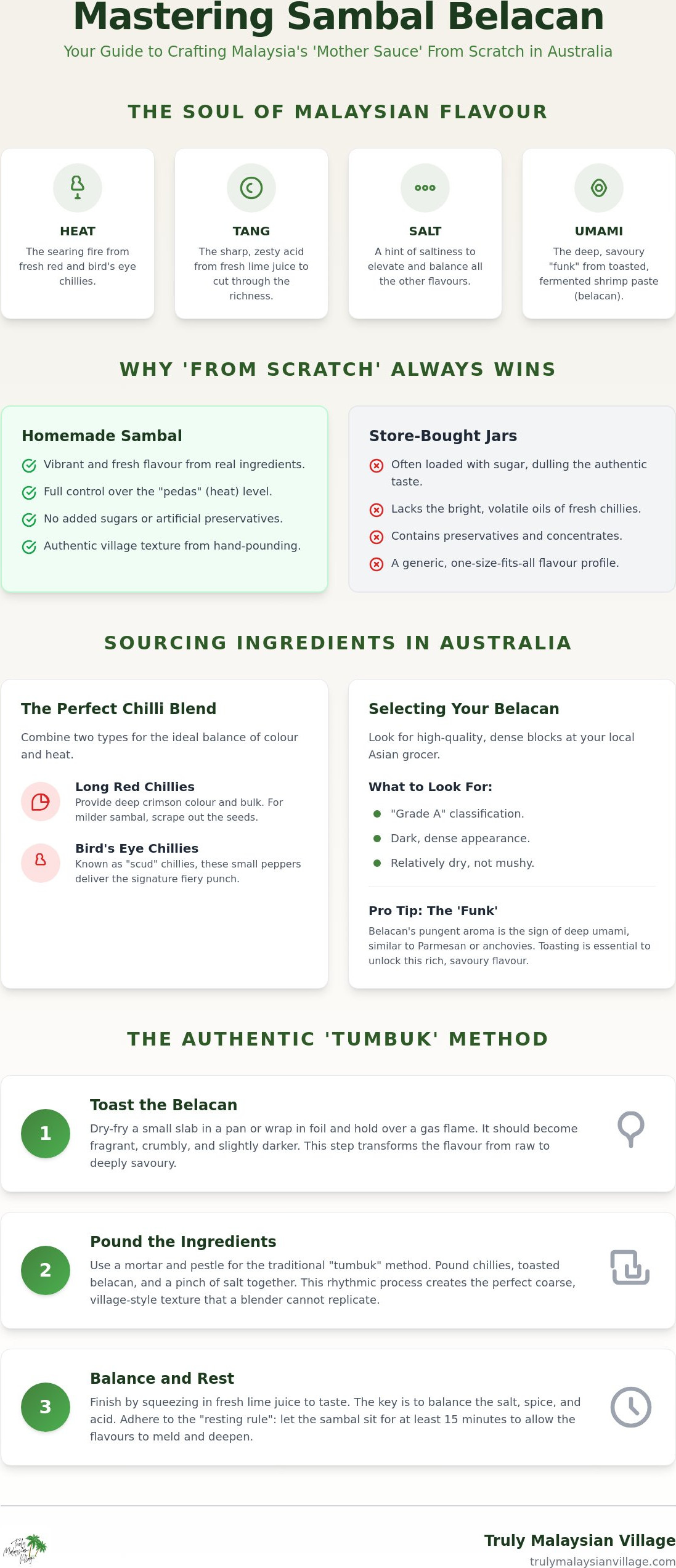
In the heart of a Malaysian village, the table is never truly set until the sambal arrives. It is the indispensable “mother sauce” that ties every dish together, providing a fiery bridge between rice, protein, and vegetables. To understand What is Sambal? is to understand the very soul of our culinary heritage. While there are hundreds of varieties across the archipelago, sambal belacan stands alone as the most iconic. It’s a complex, unapologetic balance of four pillars: the searing heat of fresh chillies, the sharp tang of lime, a hint of salt, and the deep, savoury umami of fermented shrimp paste.
Regional pride often dictates the specific profile of the blend. In Penang, you might find a version that leans heavily into the pungent, briny depth of the sea, often reflecting the island’s coastal roots. In contrast, the styles found in Kelantan might shift toward a slightly brighter finish. Regardless of the postcode, the goal remains the same: a condiment that wakes up the palate and makes every mouthful sing. It’s not just a side dish; it’s a communal experience shared between family and friends.
The Role of “Funk” in Southeast Asian Cooking
For those new to the ingredient, belacan can be a bit of a shock. This fermented shrimp paste provides what we lovingly call “the funk.” It’s a concentrated bomb of umami, much like a sharp Parmesan cheese or a salty Mediterranean anchovy. Fermentation is the secret to this depth. It transforms simple ingredients into something ancient and soulful. Yes, the aroma during the toasting process is strong, but don’t let that intimidate you. That pungent scent is the essential precursor to a flavour so addictive it has defined Malaysian cooking for generations.
Why “From Scratch” Always Beats Store-Bought
Walking through an Australian supermarket, you’ll see many jars claiming to be authentic, but they often fall short. They are frequently loaded with sugar and preservatives that dull the vibrant, volatile oils found in fresh chillies. When you learn how to make sambal belacan from scratch, you reclaim control over the experience. You can use real, zingy lime juice instead of bottled concentrates and, most importantly, you can customise the “pedas” (heat) level to suit your family’s palate. A homemade batch has a life and brightness that a factory-sealed jar simply cannot match.
The Essential Ingredients: Sourcing Authentic Flavours in Australia
Stepping into a local Asian grocer in Melbourne or Sydney can feel like a treasure hunt. The aisles are packed with jars and dried goods that hold the secrets to village cooking, but finding the right components for a perfect sambal requires a discerning eye. To truly master how to make sambal belacan from scratch, you must first understand that this sauce is a delicate marriage of Australian freshness and traditional Malaysian staples. It’s about finding the right balance between the searing heat of the tropics and the bright, zesty produce found in our own backyards.
Finding the Right Chillies Down Under
In Australia, your primary choice will be between the large, long red chillies and the small, potent Bird’s Eye variety. The long red chillies are essential for bulk and that deep crimson colour, while the Bird’s Eye chillies, often called “scud” chillies in local markets, provide the necessary fire. If you prefer a milder experience, simply split the long chillies and scrape out the seeds before pounding. The Scoville scale measures the concentration of capsaicinoids in these peppers, which determines the intensity of the “sting” you’ll feel on your tongue.
Selecting and Preparing Your Belacan
Your search for the perfect fermented shrimp paste should focus on texture and colour. Look for “Grade A” blocks that appear dark, dense, and relatively dry; avoid anything that looks overly mushy or pale. Understanding the history of belacan reveals that the best pastes are sun-dried and aged to develop a complex, savoury profile. Before it touches your chillies, you must toast it. You can dry-fry a small slab in a pan until it turns crumbly and fragrant, or wrap it in foil and hold it over an open gas flame for a smoky, traditional finish. Once opened, wrap the remaining block tightly in multiple layers of cling wrap and store it in an airtight container to keep your pantry smelling fresh.
The final flourish comes from the acid and seasoning. While the tiny, fragrant Calamansi (Limau Kasturi) is the traditional choice in Malaysia, juicy Australian limes work a treat as a substitute. Their sharp acidity cuts through the heavy umami of the shrimp paste perfectly. A pinch of salt is necessary to draw out the moisture, but a small shaving of Gula Melaka (palm sugar) is the secret weapon. It doesn’t make the sauce sweet; instead, it rounds off the sharp edges of the chilli and salt, creating a harmonious finish. If you want to experience this balance before trying it yourself, you can always book a table with us to see how the experts do it.
Step-by-Step: Making Sambal Belacan from Scratch
In the quiet of a rural village, the rhythmic “thump-thump” of a stone pestle against a mortar is the music of a home well-loved. This process, known as tumbuk, is a meditative ritual that transforms raw ingredients into a vibrant, living condiment. While it might be tempting to reach for a modern food processor to save time, true flavour is found in the slow, manual labour of the hand. Learning how to make sambal belacan from scratch is as much about the technique as it is the ingredients, ensuring you capture the authentic texture that has graced Malaysian tables for centuries.
Traditional Pounding vs. Modern Blending
There is a scientific reason why your grandmother insisted on the mortar and pestle. High-speed blender blades merely slice through the chilli skin and seeds, often aerating the mixture and turning it into a pale, frothy imitation of the real thing. In contrast, the heavy weight of a pestle crushes the plant cells, bruising them to release deep, volatile oils that a blade simply cannot reach. The result is a “chunky yet integrated” texture where the juices of the chilli marry perfectly with the savoury shrimp paste. A quick safety tip for those new to the craft: always cup your spare hand over the top of the mortar while pounding to prevent stray chilli juices from jumping into your eyes. It only takes one “chilli eye” incident to learn that lesson for life.
The Master Recipe Method
To achieve village-level perfection, follow this logical order of operations. It ensures every element is properly broken down and the flavours are allowed to sing.
- Step 1: Toasting the Belacan. Place your shrimp paste in a dry frypan over medium heat. Press it down with a spatula until it becomes fragrant, slightly darker, and crumbly. This removes the “raw” edge and unlocks its deep umami potential.
- Step 2: The Chilli Foundation. Place your fresh chillies in the mortar with a generous pinch of sea salt. The salt acts as an abrasive, helping the pestle tear through the tough chilli skins. Pound until you have a rough, wet paste.
- Step 3: Integrating the Funk. Add your toasted belacan to the mortar. Work it into the chilli paste using a circular grinding motion until no large grey chunks remain and the mixture is a uniform, deep red.
- Step 4: The Final Brightening. Squeeze in your fresh lime juice and add a tiny amount of zest at the very end. Stir it through with a spoon rather than pounding. Let the sambal sit for at least ten minutes; this rest period allows the acid to soften the heat of the chillies and the salt to draw out the final layers of flavour.
By following these steps, you aren’t just making a sauce; you are preserving a piece of heritage. The effort you put into the tumbuk method will be evident in every spicy, funky, and addictive spoonful.
Pro Tips for the Perfect Batch and Proper Storage
Mastering how to make sambal belacan from scratch is as much about the aftercare as it is the initial pounding. Once you have finished the physical work of the mortar and pestle, the final secret to a truly exceptional sauce is simple patience. In a traditional Malaysian household, the first spoonful is rarely the best. We follow the “Resting Rule,” which suggests that the sauce needs time for the volatile oils of the chilli and the deep salinity of the shrimp paste to truly marry. If you can resist the temptation, let your batch sit in the fridge overnight. You will find that the sharp, aggressive heat of the fresh chillies softens into a complex, glowing warmth that lingers beautifully on the palate.
Troubleshooting Your Flavour Balance
Even the most seasoned village cooks occasionally find a batch that is slightly out of alignment. If your creation is far too hot for comfort, don’t despair; you can add “body” by pounding in extra deseeded long red chillies to dilute the fire without losing that vibrant crimson colour. For those who find the shrimp paste a little too assertive, a gradual increase in fresh lime juice will provide the necessary acidity to cut through that richness. A tiny grating of Gula Melaka works wonders to round out the sharp edges of the heat without making the sauce overtly sweet.
Shelf Life and Safety
Because raw sambal belacan relies on fresh ingredients, it is more delicate than its cooked cousin, Sambal Tumis. In our warm Aussie climate, proper storage is vital to preserve that village-fresh taste. Always use a scrupulously clean, dry spoon every time you dip into the jar; even a tiny crumb of rice or a drop of water can introduce bacteria that will shorten its life. While some guides suggest a two-week window, we recommend enjoying your raw sambal within five to seven days for peak vibrancy. If you notice a “fizzy” or fermented smell, or if the bright colour begins to turn a dull, brownish-grey, it is time to start a new batch.
If you have made a large amount, you can freeze it in small portions using an ice cube tray. This preserves the magic for up to three months, allowing you to have a taste of the village ready at a moment’s notice. If the thought of balancing these complex flavours feels a bit daunting for your first go, why not join us for a meal to experience the perfect balance of a professionally prepared batch? It is the best way to calibrate your own palate before you begin your next kitchen adventure.
Serving Suggestions: From Village Classics to the Aussie Barbie
Now that you have learned how to make sambal belacan from scratch, the real fun begins at the dining table. This condiment is not merely a side dish; it is the soul of the meal that dictates the tempo of every bite. In a traditional village setting, the sambal is the conductor of the culinary orchestra, bringing harmony to diverse flavours and textures. Whether you are hosting a casual backyard gathering or sitting down for a quiet family dinner, this sauce brings people together in a way few other condiments can.
The most iconic and mandatory partner for this sauce is undoubtedly Nasi Lemak Ayam Rempah. The creamy, coconut-infused rice and the aromatic fried chicken provide the perfect canvas for the sambal’s fiery personality. Each mouthful of rice, tempered by a dab of spicy paste, creates a comforting rhythm of heat and richness that defines the Malaysian breakfast experience.
For a lighter, more refreshing approach, we recommend the “Ulam” experience. This involves serving your fresh sambal alongside a platter of raw local vegetables. While traditional Malaysian herbs are wonderful, Australian staples like crisp cucumber, blanched green beans, or even crunchy radishes provide a fantastic village-style crunch. It is a healthy, vibrant way to enjoy the deep umami of the belacan without a heavy meal.
Don’t be afraid to take your scratch-made sauce to the classic Aussie barbie. The pungent, salty profile of the sambal is an incredible match for grilled seafood. Try using it as a dipping sauce for charred king prawns or as a bold accompaniment to a whole grilled snapper. Beyond the dip, the true value of knowing how to make sambal belacan from scratch lies in its versatility as a cooking base. Toss a tablespoon into a hot wok with some noodles and greens to create a punchy, home-style Mee Goreng that beats any takeaway version.
A Taste of the Village at Your Table
At Truly Malaysian Village, we take great pride in honouring these traditional pairings. We serve our sambal to perfectly complement our weekend specials, ensuring every guest feels the warmth of a home-cooked meal. To soothe the palate after that characteristic spicy hit, we always suggest a frothy, pulled Teh Tarik. The sweetness of the tea is the traditional way to balance the “pedas” of the chilli. You can also explore our weekday menu for more inspiration on how we weave this “mother sauce” into our daily offerings.
Catering with a Kick
If you are planning a Malaysian-themed event, sambal belacan is your secret weapon. It adds an authentic touch that guests will remember long after the plates are cleared. Consider organising a DIY sambal station where friends can customise their heat levels with extra lime or a touch more palm sugar. There is a deep cultural importance in sharing a meal that makes you sweat a little; it is a sign of a hearty, honest feast shared among friends.
Bring the Spirit of the Village to Your Kitchen
Mastering the art of the mortar and pestle is more than just a culinary skill; it’s a way to reconnect with a heritage that spans generations. By choosing the right Australian chillies and respecting the traditional “tumbuk” method, you’ve unlocked the secret to a condiment that truly sings. You now understand that the soul of this sauce lies in the patience of the toasting and the quiet time allowed for the flavours to marry overnight. These small details are what separate a simple sauce from a true masterpiece.
While learning how to make sambal belacan from scratch is a rewarding journey, there’s nothing quite like being served by a family who lives and breathes these traditions. At Truly Malaysian Village, we’re a family-run business that pours our heart into every dish. We use authentic recipes from Penang and Kelantan that have been passed down through our family for years. Whether it’s our signature Nasi Lemak Ayam Rempah, which has been voted a local favourite, or our pungent, hand-pounded sambals, we invite you to experience the warmth of our heritage firsthand.
Discover the Heart of Malaysian Cuisine at Truly Malaysian Village and let us host you for a meal that feels like home. We can’t wait to share a table with you soon.
Frequently Asked Questions
Do I really need to toast the belacan before making the sambal?
Yes, toasting is a non-negotiable step to unlock the deep, savoury umami that defines this sauce. Raw shrimp paste has a sharp, almost metallic edge that can overwhelm the other ingredients. By dry-frying it until it becomes crumbly and fragrant, you ensure that the “funk” remains a pleasant background note rather than a harsh front-of-palate distraction.
Can I make sambal belacan without a mortar and pestle?
You can use a food processor in a pinch, but you will lose the soul of the dish. A blender slices the chilli skin and aerates the mixture, resulting in a frothy, watery texture. If you are learning how to make sambal belacan from scratch, we strongly recommend the traditional stone mortar to properly bruise the ingredients and release their natural, aromatic oils.
How long does homemade sambal belacan stay fresh in the fridge?
Your fresh batch will stay vibrant and safe to eat for five to seven days when kept in an airtight container. Because this is a raw product, it lacks the preservatives of store-bought versions. Always remember to use a scrupulously clean spoon every time you serve to prevent cross-contamination, which can cause the sauce to spoil much faster.
What is the best substitute for Calamansi lime in Australia?
Common Australian limes are the perfect substitute for the traditional Calamansi (Limau Kasturi). While Calamansi has a unique, floral aroma, the sharp acidity of a standard lime cuts through the heavy richness of the fermented shrimp paste just as effectively. If you find your limes are particularly tart, a tiny pinch of extra palm sugar can help balance the flavours.
Is sambal belacan gluten-free and suitable for all diets?
Most authentic recipes are naturally gluten-free, though you should always check the label of your specific belacan block for any additives. It is important to remember that this condiment is not suitable for vegetarians, vegans, or anyone with a shellfish allergy due to the fermented shrimp paste. For those without dietary restrictions, it is a high-protein, low-sugar way to add massive flavour to a meal.
How do I reduce the smell of belacan in my kitchen after cooking?
The best way to manage the aroma is to toast your belacan inside a small pouch of aluminium foil. This contains the strongest scents while still allowing the paste to cook. After you have finished, boiling a small pot of water with white vinegar or lemon slices will help neutralise any lingering “funk” in the air, keeping your kitchen smelling fresh and clean.
Which chillies are the best to use for a medium-heat sambal?
Use a ratio of four large long red chillies to every one Bird’s Eye chilli for a manageable heat level. Long red chillies provide the beautiful colour and body of the sauce without the intense sting. If you are particularly sensitive to spice, deseeding the chillies entirely before you begin pounding will allow you to enjoy the aromatic flavours without the overwhelming burn.
Can I use sambal belacan as a marinade for BBQ meats?
It makes an incredible marinade for grilled Australian prawns, snapper, or even chicken skewers. The salt and acid in the sambal help tenderise the meat while the shrimp paste creates a savoury, caramelised crust over the hot coals. Simply rub it onto your protein thirty minutes before grilling to transform a standard barbecue into a nostalgic Malaysian village feast.

Article by
Amzar Hariz
Director of Truly Malaysian Village
Disclaimer
The content published on this website may include articles generated or assisted by AI writing tools. While we aim to provide helpful, accurate, and up-to-date information, we do not guarantee that all content is complete, error-free, or suitable for every individual situation.

