
A plate of smoky, turmeric-stained skewers is a beautiful thing, but without the right companions, it’s merely an incomplete story. If you’ve ever felt your home-cooked dinner lacked that vibrant “crunch” or refreshing zing found in the bustling night markets of Kuala Lumpur, you’re likely struggling with what to serve with chicken satay to make it feel like a proper meal. Authentic Malaysian satay is never a solo act. It is the charred heart of a communal spread defined by specific textures and cooling flavours that honour the craft of the grill.
We understand the frustration of a “flat” meal where the richness of the peanut sauce feels overwhelming rather than indulgent. You want to wow your guests with a balanced menu that reflects true Malaysian heritage, rather than accidentally serving up a confusing mix of Thai side dishes. This guide will show you how to organise a traditional feast using easy-to-source ingredients that provide the perfect contrast to every bite. From the essential compressed rice cakes to the sharp bite of red onions, we’ll help you transform your next gathering into a soulful, nostalgic experience that brings the warmth of a village kitchen to your Australian home.
Key Takeaways
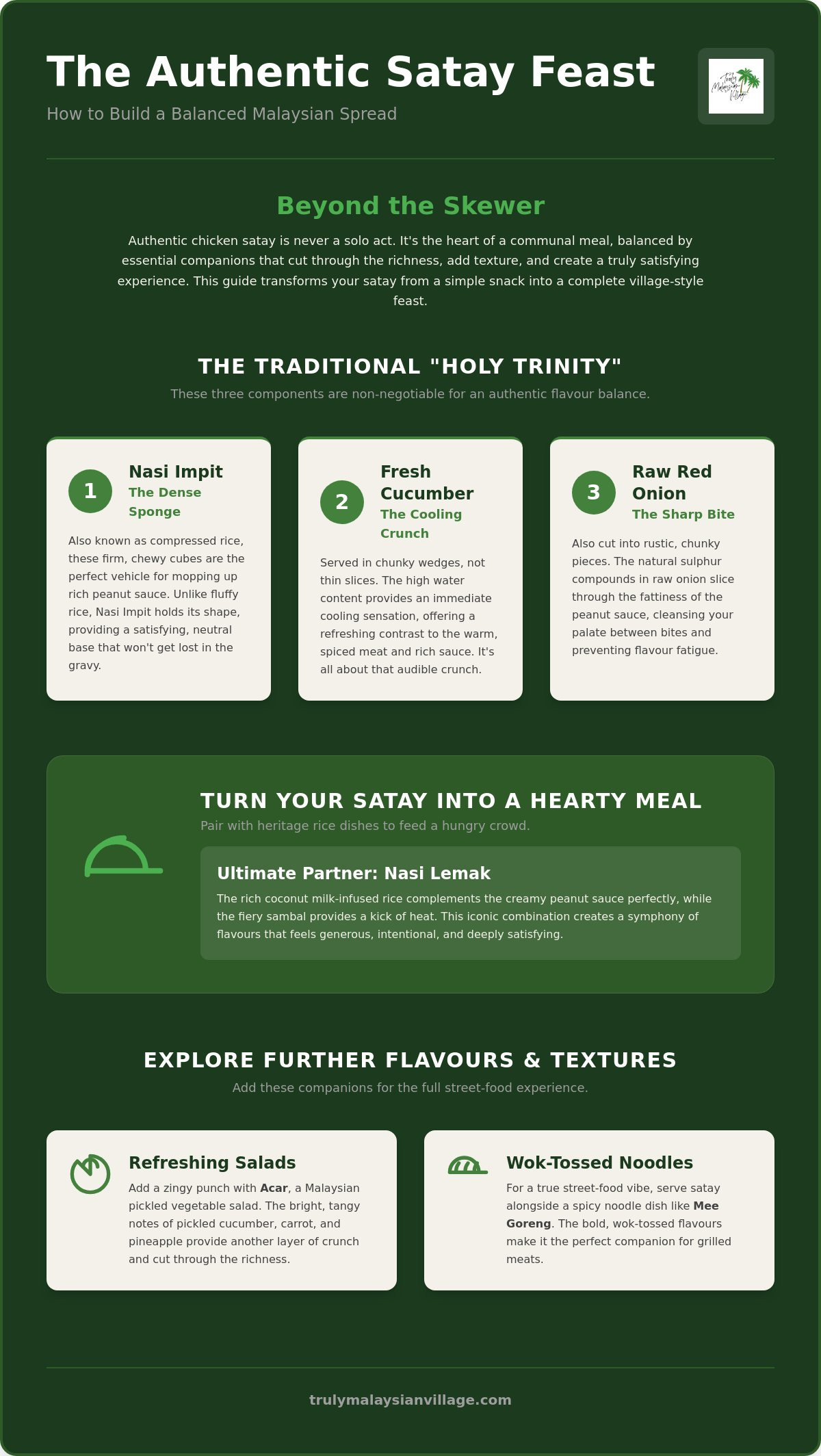
- Learn why the “Holy Trinity” of nasi impit, cucumber, and red onion is essential for balancing the deep, aromatic richness of your peanut sauce.
- Discover how to transform simple skewers into a hearty heritage meal by pairing them with iconic staples like Nasi Lemak.
- Explore the art of texture contrast with refreshing, pickled vegetable salads that provide a zingy punch to every smoky bite.
- Find out why spicy, wok-tossed noodles like Mee Goreng are the perfect street food companion for grilled meats with bold flavour profiles.
- Gain expert knowledge on what to serve with chicken satay to create a complete village experience, including the best cooling drinks to finish your feast.
The Traditional Holy Trinity: Nasi Impit, Cucumber, and Onion
In the heart of a Malaysian village, a satay feast is a sensory ritual that begins long before the first skewer hits the charcoal. While the meat is the star, it is never served in isolation. If you are wondering what to serve with chicken satay to capture that genuine heritage feel, look no further than the “Holy Trinity”: nasi impit, fresh cucumber, and raw red onion. These three elements aren’t just garnishes. They are essential components that balance the palate and transform a simple snack into a deeply satisfying meal.
The cultural significance of these pairings is rooted in centuries of tradition. Across Malaysia, Satay is traditionally accompanied by these specific sides to manage the intense, aromatic richness of the peanut gravy. Without the sharp bite of the onion or the watery crunch of the cucumber, the heavy oils and spices of the sauce can quickly become overwhelming. Together, they create a harmony of flavours that define the authentic dining experience we cherish at our village table.
What is Nasi Impit (Compressed Rice)?
Nasi impit literally translates to “pressed rice”, and it serves a vital functional purpose. Historically, this was achieved through Ketupat, where rice was boiled inside intricately woven palm leaf pouches. As the rice expanded, the restricted space forced the grains to fuse into a dense, cake-like texture. Modern kitchens often use convenient plastic “boil-in-bag” versions, but the result remains the same: a firm, chewy cube that won’t crumble under the weight of a thick sauce.
Unlike fluffy jasmine rice, which would simply drown in the gravy, nasi impit acts like a dense sponge. It holds its shape, allowing you to spear a cube with your satay stick and swipe it through the peanut sauce for the perfect mouthful. For your next home barbie, you can find nasi impit at most Asian grocers in Australia. Simply boil the bags for about 60 to 90 minutes, let them cool completely until they are firm to the touch, and then slice them into bite-sized cubes.
The Art of the Raw Relish
To achieve a true “Village style” spread, the way you prepare your vegetables matters just as much as the produce itself. Forget thin, dainty slices. In Malaysia, we cut our cucumbers and red onions into chunky wedges or thick cubes. This ensures that every bite provides a distinct, audible crunch that stands up to the tender, charred chicken. It’s a rustic approach that prioritises texture and freshness over delicate presentation.
There is a bit of kitchen science behind this tradition too. Raw red onions contain natural sulphur compounds that slice through the fatty richness of the peanut sauce, cleansing your tongue between skewers. Meanwhile, the high water content of the cucumber provides an immediate cooling sensation against the heat of the turmeric and chilli. The relish acts as the cooling counterpoint to the turmeric-heavy marinade. By serving these raw aromatics, you ensure your guests can enjoy skewer after skewer without their palate feeling “flat” or fatigued.
Substantial Staples: Pairing Satay with Heritage Rice Dishes
While many see skewers as a simple starter, in a traditional Malaysian home, they often take centre stage as the main protein. If you’re looking for what to serve with chicken satay to feed a hungry crowd, heritage rice dishes are the answer. These grains aren’t just a side; they are the soul of the meal. They provide a soft, neutral base that allows the complex spices of the turmeric and lemongrass marinade to truly sing.
The texture of the rice you choose fundamentally changes how you experience the dish. A drier, fragrant grain might soak up the oils of the peanut sauce differently than a rich, coconut-infused rice. By moving beyond plain steamed rice, you invite your guests to explore the depth of Malaysian food culture, where every grain tells a story of regional pride and family legacy. It is about creating a plate that feels intentional, generous, and deeply satisfying.
Nasi Lemak: The Ultimate Partner
The pairing of coconut rice and satay is a masterclass in culinary balance. The richness of the coconut milk in the rice mirrors the creaminess of the peanut sauce, while the spicy sambal provides a necessary heat. It’s a combination that evokes memories of roadside stalls and humid evenings spent with loved ones. Our Nasi Lemak Ayam Rempah is a prime example of how this combination works. The tender chicken skewers sit beautifully alongside the crisp crunch of fried ikan bilis (anchovies) and roasted peanuts. This play of textures keeps every mouthful exciting, ensuring the meal never feels “flat” or one-dimensional.
Nasi Kandar and Fragrant Rice Alternatives
Penang’s Nasi Kandar tradition offers another way to elevate your skewers. This style involves serving rice with a “flood” of different curry gravies, creating a mosaic of flavours. Adding satay to this mix introduces a smoky element that rounds out the heavy spice of a Beef Rendang or Chicken Curry. If you’re wondering what to serve with chicken satay for a slightly lighter but equally aromatic option, Nasi Kuning (turmeric rice) is a brilliant choice. Its golden hue and mild ginger notes complement the chicken without competing for attention. If you find yourself with extra peanut sauce the next day, it makes a brilliant dressing for a quick rice bowl, proving that these heritage flavours are as versatile as they are delicious.
If you’re ready to experience these heritage pairings for yourself, book a table at the village and let us host your next feast.
Refreshing Salads and Crunchy Malaysian Sides
While the raw cucumber wedges we discussed earlier provide a quick, cooling fix, a true village feast often demands something more intricate. When you are considering what to serve with chicken satay for a special gathering, looking toward marinated Malaysian salads will elevate your spread from a simple snack to a sophisticated banquet. These sides bring a sharp acidity and complex spice profile that raw vegetables alone cannot provide. In our culture, “crunch” is the secret fourth element of a successful meal. It offers a necessary texture contrast to the tender, charcoal-grilled chicken and the velvety richness of the peanut gravy.
Moving beyond the basic garnish allows you to introduce layers of flavour that tell a story of regional heritage. Whether it’s the vinegary punch of a pickle or the aromatic lift of fresh herbs, these sides ensure that every bite feels balanced. They prevent the meal from becoming heavy, keeping your palate refreshed and ready for the next skewer. It’s this thoughtful combination of textures that turns a meal into an experience guests will remember long after the last stick is gone.
Acar Awak (Malaysian Pickled Vegetables)
Acar Awak is the undisputed jewel of the Malaysian relish tray. This isn’t your typical garden salad; it is a robust, spicy pickle featuring a colourful mix of carrots, green beans, and cabbage. These vegetables are blanched and then tossed in a pungent, vinegary spice paste rich with turmeric and chilli. What truly sets it apart is the finishing touch of crushed peanuts and toasted sesame seeds. This nutty layer creates a beautiful bridge between the vegetables and the satay sauce.
The high acidity of the pickling liquid serves a vital role in your feast. It acts as a palate cleanser, cutting through the heavy oils of the meat and the creamy fats of the peanuts. If you are hosting a dinner at home, Acar Awak is a fantastic time-saver. It actually improves with age. Preparing it a day in advance allows the vegetables to fully absorb the aromatic spices, making the flavours even more vibrant when it’s time to serve.
Kerabu and Prawn Crackers
For those who love a fresh, herb-heavy profile, Kerabu is the perfect mate for grilled meats. These Malaysian salads are defined by their use of lime juice, sambal, and finely shredded herbs. Ingredients like ginger torch bud (bunga kantan) and lemongrass are traditional, but you can achieve a similar zing using fresh Australian produce like mint, coriander, and crisp bean sprouts. The result is a zesty, fragrant side that lifts the entire meal.
Of course, no satay spread is truly complete without a basket of Keropok, or prawn crackers. These light, airy crisps are more than just a side dish; they are the essential “scoop” for any leftover sauce. They provide a satisfying snap that contrasts with the soft nasi impit cubes, ensuring that every drop of gravy is enjoyed. Whether you’re using thin fish crackers or the classic prawn variety, they add that final layer of nostalgic comfort to your traditional Malaysian spread.
Noodle Mates: Satay as a Street Food Sidekick
In the humming night markets of Malaysia, the smoke from the satay grill often drifts toward the intense heat of a nearby wok. These two worlds collide to create the “best mates” of the street food scene. When you’re deciding what to serve with chicken satay for a meal that feels truly authentic, noodles provide a robust, savoury foundation. They stand up to the bold, spiced profile of the skewers while adding their own distinct personality to the plate.
Balancing a plate of noodles and skewers requires a bit of finesse so the meal doesn’t feel overly heavy. The secret lies in the contrast of flavours. While Penang-style fried noodles often lean into charred, salty notes, Kelantan-influenced dishes might introduce more herbal freshness. Choosing the right style ensures your satay remains the star of the show. It’s about creating a harmonious spread that reflects the diversity of our culinary heritage.
Mee Goreng Daging or Ayam
Our Mee Goreng Daging or Ayam is a masterclass in “wok hei”, or the breath of the wok. This high-heat searing technique creates a smoky depth that perfectly mirrors the char on your grilled chicken. It’s a match made in heaven. The chewiness of the yellow noodles provides a wonderful base for the tender meat, making every mouthful a journey through the layers of Malaysian spice.
Don’t forget the vital squeeze of fresh lime over your Mee Goreng. This sharp acidity is crucial when you’re enjoying it alongside a sweet and savoury peanut sauce. It cuts through the richness, brightening the whole experience and preparing your palate for the next skewer. If you’re looking for authentic noodle inspiration to round out your feast, take a look at our weekday menu for ideas that bring the street to your table.
Spring Rolls and Fried Delights
A complete Malaysian platter often features a variety of textures to keep the palate engaged. Crispy vegetable spring rolls are a brilliant addition. They offer a shattered-glass crunch that contrasts beautifully with the soft, marinated satay meat. Serving these together creates a festive, communal atmosphere that’s perfect for parties and family gatherings. It turns a simple dinner into a celebration of craftsmanship and care.
If you’re organising a catering-style spread for a larger group at home, think of your satay as the anchor for a wider selection of small bites. Pairing skewers with fried delights and a pile of wok-tossed noodles ensures there is something for everyone. It creates a sense of abundance that is central to our culture of hosting. To experience this vibrant street food culture first-hand, secure your table and let us treat you to a proper village feast.
The Complete Village Experience: Drinks and Dessert
The final act of a traditional feast is just as vital as the first sizzle on the grill. After the bold, smoky journey of the main course, your palate needs a gentle landing. Knowing what to serve with chicken satay includes the final act of the evening, where refreshing drinks and delicate sweets provide the perfect closure. In a Malaysian village, this is the time for lingering conversations and shared memories, where the heat of the spices is replaced by the cooling comfort of heritage beverages.
Bringing the “Truly Malaysian Village” atmosphere to your own dining room is about more than just the food. It is about the rhythm of the meal. It is about moving from the intense, savoury richness of the peanut sauce to the light, fragrant notes of pandan and coconut. This transition ensures your guests leave the table feeling satisfied rather than heavy. It completes the narrative of the feast, honouring the craftsmanship that went into every skewer and every side dish.
Teh Tarik and Milo Ais: The Cooling Icons
Teh Tarik, or “pulled tea”, is the undisputed icon of Malaysian beverage culture. This frothy, creamy milk tea is poured back and forth between two vessels to create a signature thick foam and a smooth, mellow flavour. It is the perfect companion for spicy Southeast Asian cuisine. The tannins in the tea and the sweetness of the condensed milk work together to neutralise the lingering heat of the satay marinade. It’s not just a drink; it’s a nostalgic performance that brings a sense of theatre to the table.
For a chilled alternative, Milo Ais is the go-to favourite for both kids and adults across Malaysia. This chocolatey, malted drink served over heaps of ice provides a refreshing, nostalgic punch. In our culture, we prioritise these non-alcoholic, milk-based or icy drinks because they are far more effective at cooling the palate than a glass of wine or beer. They provide a velvety coating that soothes the tongue, allowing you to appreciate the complex spices of the meal without the burn.
A Sweet Ending with Kuih-Muih
To finish the meal, we look to Kuih-muih, a broad category of traditional bite-sized sweets. Unlike heavy Western desserts, these treats are often steamed and rely on the subtle, natural sweetness of coconut milk and pandan leaves. Seri Muka, with its salted glutinous rice base and sweet green pandan custard, offers a beautiful balance of flavours. Onde-onde, the chewy glutinous rice balls filled with liquid palm sugar and rolled in fresh coconut, provide a delightful “burst” of sweetness that cleanses the palate perfectly.
These sweets provide a gentle, aromatic close to the savoury satay experience. They are light enough to enjoy even after a substantial feast of Nasi Lemak or Mee Goreng. If you’re looking to explore the full range of our heritage sweets, check our weekend specials for a rotating selection of rare Malaysian treats. By including these finishing touches, you ensure your gathering isn’t just a dinner, but a complete cultural experience that celebrates the very best of village hospitality.
Bring the Soul of the Village to Your Next Feast
Creating a traditional spread is about more than just filling a plate; it’s about the thoughtful balance of textures and heritage flavours. You now know that the secret to a perfect meal lies in the “Holy Trinity” of nasi impit, onion, and cucumber, alongside the robust foundation of heritage rice or wok-fried noodles. These essential elements, finished with a cooling Teh Tarik or a sweet Kuih, ensure you’ll never wonder what to serve with chicken satay again. It’s these small, intentional details that transform a simple dinner into a nostalgic journey through the night markets of Malaysia.
Our family-owned business is run by triplets who are deeply passionate about bringing the authentic recipes of Penang and Kelantan to our local community. We combine these time-honoured methods with fresh Australian ingredients to create vibrant flavours that speak of home and craftsmanship. We invite you to experience this dedication first-hand at our table, where every guest is treated like family.
Ready for a genuine feast? Book your village feast today or organise catering for your next event and let us share a piece of our history with you. We can’t wait to host you and your loved ones for a meal you won’t forget.
Frequently Asked Questions
What is the most traditional rice to serve with chicken satay?
Nasi impit is the undisputed traditional choice for an authentic Malaysian spread. These compressed rice cakes are essential because their dense, chewy texture allows them to be speared and dipped into heavy sauces without falling apart. While jasmine rice is common in many modern households, it doesn’t provide the same nostalgic village feel. If you are deciding what to serve with chicken satay for a true heritage experience, nasi impit is the staple that completes the plate.
Can I serve chicken satay with salad instead of rice?
Serving satay with a salad is a brilliant way to add freshness and crunch to the meal. In Malaysia, we typically choose Acar Awak, which is a spicy pickled vegetable salad, or a herb-heavy Kerabu. These aren’t your typical garden salads; they use lime juice and vinegar to cut through the richness of the peanut sauce. It’s a refreshing alternative for those who want a lighter meal without sacrificing traditional flavour profiles.
How much satay sauce should I serve per person?
We recommend serving approximately half a cup of peanut sauce per person for a generous feast. Malaysian diners love to dip not just the meat, but also their nasi impit cubes and raw cucumber wedges into the gravy. It’s always better to have a little extra on the table than to run out mid-meal. A generous serving ensures every guest can enjoy the rich, aromatic depth of the sauce with every single bite.
Is satay sauce always made with peanuts in Malaysia?
Yes, the authentic Malaysian sauce, known as Kuah Kacang, is traditionally made with roasted and ground peanuts. The process involves frying the peanuts until golden before grinding them into a coarse paste to create a thick, textured gravy. While regional variations exist across Southeast Asia, the Malaysian version is celebrated for its perfect balance of sweetness, spice, and nutty richness. This aromatic sauce is what brings the whole grilled feast together.
What drinks go well with the spicy flavours of chicken satay?
Creamy, non-alcoholic drinks like Teh Tarik or a chilled Milo Ais are the best companions for these smoky skewers. The milk proteins and sweetness in these beverages are far more effective at cooling your palate than water or carbonated drinks. If you are planning what to serve with chicken satay at a summer barbie, a large jug of iced milk tea will keep your guests refreshed and ready for more skewers.
How do I stop my chicken satay skewers from drying out when serving?
To keep your skewers succulent, use chicken thigh meat rather than breast and be careful not to overcook them on the grill. Once they come off the charcoal, you can lightly brush them with a mixture of oil and lemongrass juice to lock in the moisture. Keeping them in a covered dish or wrapping them loosely in foil while you finish the rest of the meal will also prevent the edges from drying out.
What are some vegetarian sides that go with chicken satay?
Acar Awak and Sayur Masak Lemak Putih are fantastic vegetarian options that bring heaps of flavour to the table. You could also serve crispy fried tofu or vegetable spring rolls for an extra layer of crunch. These sides provide a wonderful contrast to the smoky chicken without overshadowing the main event. They ensure that even the vegetable-heavy portions of your feast feel intentional, traditional, and deeply satisfying for all your guests.
Is chicken satay usually served as an entree or a main in Malaysia?
Satay is incredibly versatile and can be served as either a light entree or a substantial main meal depending on the occasion. In the street food markets of Penang, a few sticks might be a quick snack, but at a family gathering, it’s often the centrepiece. When you pair the skewers with nasi impit, cucumber, and a side of noodles, it becomes a hearty heritage feast that brings everyone together.

Article by
Amzar Hariz
Director of Truly Malaysian Village
Disclaimer
The content published on this website may include articles generated or assisted by AI writing tools. While we aim to provide helpful, accurate, and up-to-date information, we do not guarantee that all content is complete, error-free, or suitable for every individual situation.

