
What if the soul of your favourite skewered snack isn’t found in the peanut sauce alone, but in a centuries-old voyage across the Indian Ocean? Most of us recognise that irresistible, smoky aroma rising from a charcoal grill, yet we often mistake this cultural icon for just another piece of generic grilled meat. To truly appreciate the history of satay, one must look past the skewer and into the heart of the spice trade. It’s a story that begins with Arabian traders and Javanese ingenuity, eventually finding its home in the vibrant street stalls of Penang and Kelantan before arriving on Australian dinner tables.
You probably agree that food is more than just sustenance; it’s a bridge to our ancestors and a way to share our heritage with those we love. In this article, you’ll discover the fascinating journey of satay from its ancient roots to its status as a global icon. We’ll explore the craft of traditional marinating, the distinct regional styles that define Malaysian culture, and why this humble street food remains a symbol of community and belonging today. Prepare to see your next plate of Chicken Satay through a lens of deep tradition and craftsmanship.
Key Takeaways
- Uncover how the history of satay began with Arabian traders and evolved into a celebrated Southeast Asian masterpiece.
- Learn to distinguish the essential components of an authentic skewer, from the aromatic rempah marinade to the traditional bamboo lidi.
- Explore the unique flavour profiles of Penang and Kelantan, and understand how regional heritage influences every smoky bite.
- Discover why this street food icon has transitioned so seamlessly from Malaysian night markets to becoming a staple of the Australian barbie.
- Gain a deeper appreciation for the craftsmanship behind time-honoured family recipes that preserve the soul of traditional Malaysian cooking.
What is Satay? Defining the Soul of Southeast Asian Street Food
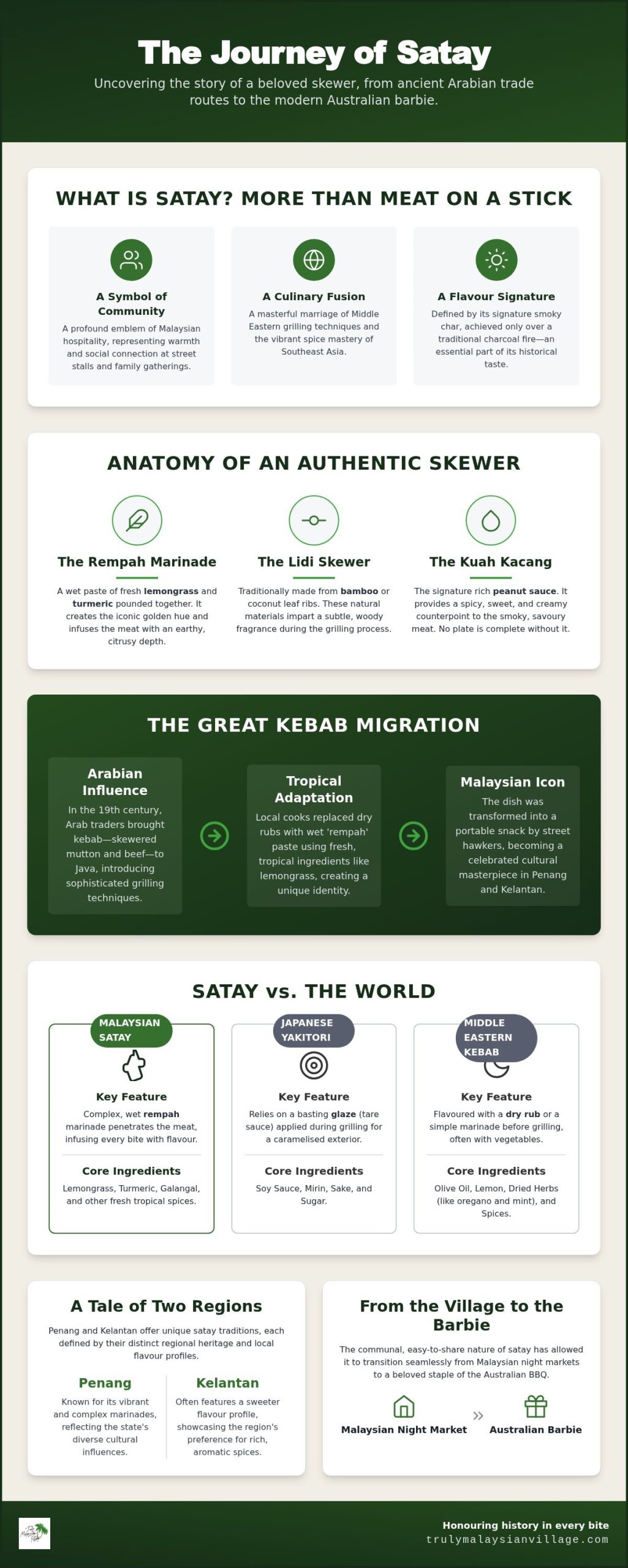
To step into a Malaysian night market is to be greeted by a thick, fragrant haze that dances through the air. This isn’t just smoke; it’s the aromatic calling card of a dish that defines the spirit of a nation. Satay is far more than meat on a stick. It serves as a profound symbol of Malaysian hospitality, representing the warmth of a community that loves to share its table with friends and strangers alike. Whether it’s a roadside stall in Penang or a family gathering in Kelantan, these skewers are the heartbeat of social connection.
At its most fundamental level, satay is a masterful fusion of Middle Eastern grilling techniques and local spice mastery. This culinary marriage created a dish that is entirely unique to the region. To understand the history of satay, one must look at its three core components: the vibrant marinade known as rempah, the hand-cut skewer or lidi, and the signature smoky char that can only be achieved over a traditional charcoal fire. That smokiness isn’t a side effect; it’s a non-negotiable part of the historical flavour profile that gives the meat its soul.
The Anatomy of an Authentic Skewer
The beauty of a traditional skewer lies in its preparation. The process begins with the rempah, where fresh lemongrass and turmeric are pounded together to create that iconic, golden-yellow hue. Turmeric doesn’t just add colour; it provides an earthy depth that balances the bright, citrusy notes of the lemongrass. Traditionally, the meat is threaded onto skewers made from bamboo or the sturdy ribs of coconut leaves. These natural materials are preferred because they don’t just hold the meat; they impart a subtle, woody fragrance during the grilling process. No plate is complete without the kuah kacang, a rich peanut sauce that provides a spicy, sweet, and creamy counterpoint to the smoky, savoury meat.
Satay vs. The World: Why It’s Unique
While many cultures enjoy grilled meats, satay stands apart from its global cousins. Unlike Japanese Yakitori, which often relies on a soy-based glaze, or Middle Eastern Shish Kebabs that favour olive oil and dried herbs, the secret of satay is in the complexity of the rempah paste. This wet marinade penetrates deep into the fibres of the meat, ensuring every bite is infused with flavour. Beyond the ingredients, it’s the social nature of the dish that makes it special. In the village, satay is a communal experience. It’s meant to be eaten standing up, gathered around the grill, sharing stories while the skewers sizzle. You can experience this same dedication to heritage on our weekday menu, where we honour these time-honoured methods in every serve.
The Great Kebab Migration: Tracing Satay’s Ancient Origins
In the early 19th century, the maritime silk road brought more than just textiles and spices to the shores of Java. Arab and Indian traders arrived with their own culinary traditions, most notably the kebab. These seasoned meat preparations provided the spark for what would eventually become a Southeast Asian masterpiece. The history of satay is essentially a story of migration and ingenious adaptation, where local communities took a foreign concept and infused it with the vibrant soul of the tropics. By the time street hawkers in the Malay Peninsula began organising the dish into a portable snack, it had already undergone a remarkable transformation.
The Arabian Influence
The traders who settled in the region brought a culture of meat-heavy diets and sophisticated grilling techniques. They introduced the concept of skewering small pieces of mutton or beef, a method that allowed meat to cook quickly over an open flame. As these traders integrated into local society, their nomadic campfire cooking evolved into established street food stalls. This early history of satay is well-documented in regional archives, including records of Satay in Singapore and Malaysia, which highlight how the dish served as a bridge between Middle Eastern heritage and Southeast Asian life. Over time, the heavy, vertical grills of the west were replaced by the horizontal charcoal troughs we recognise today.
Tropical Adaptation: The Birth of the Rempah
The true magic happened when local cooks replaced dry Middle Eastern spice rubs with a complex, wet paste known as rempah. This was a turning point that gave the dish its distinctive identity. Instead of relying on imported spices, they looked to their own backyards. They introduced a blend of fresh ingredients that changed the flavour profile entirely:
- Galangal and Ginger: These roots provided a sharp, citrusy heat that cut through the richness of the meat.
- Shallots: Used as a pungent, sweet base for the marinade.
- Coconut Milk and Palm Sugar: These additions created a marinade that didn’t just flavour the meat but tenderised it, resulting in a beautiful caramelised finish.
Perhaps the most significant local innovation was the introduction of peanut sauce as the definitive accompaniment. While kebabs were traditionally served with flatbreads or yogurt, the Malay Archipelago utilised its abundance of peanuts to create a rich, spicy, and acidic sauce that balanced the smoky char of the grill. This period also saw the rise of chicken as a primary protein, making the dish more accessible to the wider community. If you’re curious to taste how these ancient influences come together, you can book a table with us to experience this legacy in person.
A Tale of Two Regions: Penang and Kelantan Satay Traditions
To understand the true depth of the history of satay, one must travel beyond the generic skewers found in global food courts and look toward the regional heartlands of Malaysia. While the dish may have common roots, the way it evolved in the bustling streets of Penang and the serene villages of Kelantan created two entirely different sensory experiences. These regional traditions aren’t just about ingredients; they are a living record of family legacy and cultural pride. By honouring these nuances, we move away from seeing satay as simple fast food and begin to see it as a culinary map of the peninsula.
Penang: The Street Food Capital’s Influence
Penang has long been celebrated as a melting pot where Chinese, Malay, and Indian influences collide to create something extraordinary. This multicultural heritage is baked into the very fibres of Penang satay. Unlike other varieties, the skewers here often carry a more pronounced spice kick, reflecting the bold palate of the island’s famous hawker scene. In decades past, the ‘Satay Man’ was a beloved fixture of old Penang neighbourhoods. He would balance a portable charcoal grill on a wooden pole, wandering through the streets to provide a nightly ritual of smoky, aromatic perfection. This culture of accessibility and bold flavour helped cement the history of satay as a staple of the Malaysian urban experience.
Kelantan: The Heart of Traditional Heritage
On the east coast, the Kelantanese approach to satay leans into the concept of ‘lemak’, or a rich, creamy depth. Here, the marinade is often more fragrant and herb-infused, favouring a subtle sweetness that reflects the local preference for palm sugar and fresh aromatics. It’s a style of cooking that feels deeply personal, as if every skewer was prepared in a grandmother’s kitchen. In Kelantan, these skewers are frequently enjoyed with traditional rice dishes like Nasi Kerabu Kelantan, where the smoky meat provides a savoury counterpoint to the herb-heavy blue rice. This tradition emphasizes the ‘home-cooked’ soul of the dish, prioritising patience and the careful balancing of flavours.
Preserving these distinct regional flavours is a matter of honour for those who carry the torch of tradition. At Truly Malaysian Village, our founders, a set of triplets with deep family roots in both Penang and Kelantan, have dedicated themselves to keeping these recipes alive. We ensure that the bold spice of the north and the rich, home-cooked warmth of the east are represented in every bite. You can explore these authentic regional profiles for yourself by browsing the Truly Malaysian Village menu, where heritage is served daily to our Australian guests.
From the Village to the Barbie: Satay in Modern Australia
Australians have a long-standing love affair with fire and meat. It’s no wonder that satay has found such a welcoming home here. While the history of satay began in the vibrant markets of Southeast Asia, its transition to the Australian backyard was almost inevitable. Today, it’s a weekend barbie staple, though many people don’t realise the deep cultural journey those skewers took to get here. It has evolved from an exotic novelty found only in specialty restaurants to a beloved part of our local grilling culture, sitting comfortably alongside sausages and steaks.
There’s a world of difference between “satay-flavoured” supermarket options and the real deal. Generic sauces often rely on heavy sugar and salt, but true satay is built on layers of fresh spice and patience. To understand what makes this dish truly special, you can read more about authentic Malaysian street food and how these complex flavours have evolved to meet modern palates. When you taste a skewer that has been prepared with traditional methods, you aren’t just eating meat; you’re experiencing a legacy of spice mastery that spans centuries.
The Social Skewer: A Communal Experience
Australians value a relaxed, unhurried atmosphere, making satay the ultimate party food for our local social gatherings. It’s designed for socialising. You don’t need a knife or fork; you just need good mates and a cold drink. The skewers allow guests to graze while they chat, perfectly matching the laid-back Australian spirit. This communal way of eating mirrors the village life of Malaysia, where food is a bridge between people. If you’re planning a big bash and want to impress your guests with something more meaningful than a standard grill, check out our Malaysian catering options to bring that authentic village feel to your event.
Authenticity in the Modern Age
In an age of convenience, the craft of the skewer is sometimes lost. Real satay requires a 24-hour marination process to ensure the aromatics penetrate the meat deeply. At Truly Malaysian Village, we believe the charcoal-grilled finish is superior to gas alternatives because it replicates the traditional smoky profile that defines the history of satay. The smoke provides a depth of flavour that a standard gas grill simply can’t touch. We take pride in being custodians of this tradition, ensuring that the methods used by our ancestors in Penang and Kelantan are the same ones we use to serve our local community today. It’s about bringing that heartfelt, home-cooked feeling to every plate.
Ready to experience the difference that authentic tradition makes? Book your table now and taste the smoke, spice, and heritage for yourself.
The TMV Legacy: Honoring History in Every Bite
At Truly Malaysian Village, we don’t just see ourselves as a restaurant. We are custodians of a narrative that spans generations. Our story began with triplets who shared a singular mission: to bring the authentic flavours of their Penang and Kelantan heritage to the heart of Australia. For us, every skewer is a tribute to the ancestors who perfected these spice blends long before they reached our local kitchen. By honouring the history of satay through our family’s specific lens, we offer a dining experience that feels like an invitation into our home.
The secret to our Chicken Satay and Beef Satay lies in a combination of fresh ingredients and traditional patience. We don’t believe in shortcuts. Each piece of meat is hand-cut and treated with the respect it deserves, ensuring that the final product carries the same soul as the street food found in the bustling markets of Malaysia. It’s about preserving a legacy that could easily be lost in the rush of modern life, and we take that responsibility to heart with every serve.
Tradition Meets Taste
We are committed to the ‘slow’ way of cooking. This means marinating our meat for at least 24 hours until the complex flavours of our rempah penetrate deep into every fibre. When the meat finally hits the charcoal, the sensory experience is immediate. You’ll smell the bright, citrusy aroma of fresh lemongrass as it mingles with the deep, earthy scent of turmeric. The sizzle of the grill isn’t just a sound; it’s the culmination of hours of preparation and a lifetime of heritage. This dedication to craftsmanship makes our satay a must-try for anyone seeking a true, uncompromised taste of Malaysia right here in Australia.
Join Us at the Village Table
Whether you’re dropping in for a casual Thursday dinner or bringing the whole family for a weekend feast, the grill is always ready. We believe that food tastes better when it’s shared, and there’s no better way to start a meal than with a plate of smoky, tender skewers. For those looking to dive deeper into our regional heritage, you can see our full range of weekend specials for more regional classics that complement our signature satay and transport you straight to the villages of our childhood.
We invite you to sit with us, share a story, and taste the results of centuries of culinary evolution. Book your table now to experience the history of satay and become a part of our ongoing story. We can’t wait to welcome you to the village.
Experience the Legacy at Our Table
From the ancient spice routes of the 19th century to the modern Australian backyard, the journey of the humble skewer is a testament to the power of shared heritage. We’ve explored how the history of satay was shaped by Arabian traders and refined in the vibrant street stalls of Penang and Kelantan. These regional nuances aren’t just details; they are the soul of the dish. At Truly Malaysian Village, we take our role as custodians of this heritage seriously. Founded by passionate triplets with deep family roots, we use time-honoured recipes to bring that authentic, smoky charcoal-style flavour to your plate. It’s more than just a meal. It’s a piece of our family history served with genuine love and care.
We’d love for you to join us at the village table to taste the difference that craftsmanship and tradition make. Book your table at Truly Malaysian Village today and discover why this street food icon has captured hearts across the globe. We look forward to welcoming you into our family soon.
Frequently Asked Questions
What is the history of satay in Malaysia?
Satay became a staple in Malaysia during the 19th century as street hawkers began selling the dish in burgeoning urban centres. It evolved from the influence of Arab and Indian traders who settled in the region, bringing with them the concept of skewered meats. Over decades, Malaysian communities in places like Penang and Kelantan added their own local aromatics, turning it into a social food that defines the nation’s night markets and family gatherings.
Is satay originally from Malaysia or Indonesia?
Historical consensus points to Java, Indonesia, as the birthplace of the dish in the early 1800s. While Indonesia is home to over 252 distinct varieties, the history of satay is shared across the archipelago. Malaysia developed its own iconic styles, such as the aromatic skewers of Penang and the herb-infused traditions of Kelantan. Today, both nations celebrate the dish as a vital part of their cultural identity and culinary heritage.
What makes authentic Malaysian satay different from other grilled meats?
The primary difference lies in the complex rempah, a wet spice paste used to marinate the meat for at least 24 hours. Unlike many western grilled meats that use dry rubs or simple glazes, authentic Malaysian satay is deeply infused with fresh aromatics like lemongrass and turmeric. This long marination, combined with the traditional charcoal-grilling technique, creates a tender texture and a smoky, caramelised finish that is impossible to replicate with modern gas grills.
Why is satay traditionally served with peanut sauce?
Peanut sauce, or kuah kacang, is served to provide a creamy, acidic, and spicy balance to the smoky char of the meat. Historically, peanuts were an abundant local ingredient in the Malay Archipelago, making them a natural choice for a rich accompaniment. The sauce typically includes tamarind or lime for acidity, which helps cut through the richness of the protein, creating a harmonious sensory experience that has become the dish’s signature profile.
What kind of meat is used in traditional satay?
Traditional satay typically features chicken, beef, or mutton, depending on regional preferences and availability. In Malaysia, Chicken Satay and Beef Satay are the most popular choices found at street stalls and family tables. Each meat is hand-cut into small pieces to ensure it absorbs the marinade effectively and cooks quickly over charcoal. At our village, we focus on these classic proteins to honour the time-honoured recipes passed down through our family.
Is satay considered a healthy food option?
Satay is often a healthier choice than many deep-fried street foods because the meat is grilled rather than fried. It provides a good source of lean protein, especially when chicken or beef is used. However, the overall health profile depends on the balance of the meal. While the marinade uses fresh, anti-inflammatory spices like turmeric and ginger, the peanut sauce is rich in fats and sugars, so it’s best enjoyed as part of a balanced diet.
Can I order satay for large events or catering?
Yes, satay is the perfect communal food for large gatherings and is a core part of our professional catering services. Because the skewers are portable and don’t require cutlery, they’re a favourite for Australian social events and corporate functions. We offer authentic Malaysian catering that brings the traditional village feel and smoky charcoal aroma directly to your venue, ensuring your guests experience a genuine piece of our culinary history.
What are the essential spices in a traditional satay marinade?
A traditional marinade relies on a vibrant blend of fresh roots and aromatics to create its distinctive profile. The essential spices include lemongrass for its citrusy lift, turmeric for its earthy warmth and golden colour, and galangal and ginger for a sharp heat. These are often pounded with shallots and garlic before being sweetened with palm sugar. This complex spice base is fundamental to the history of satay and its enduring popularity.

Article by
Amzar Hariz
Director of Truly Malaysian Village
Disclaimer
The content published on this website may include articles generated or assisted by AI writing tools. While we aim to provide helpful, accurate, and up-to-date information, we do not guarantee that all content is complete, error-free, or suitable for every individual situation.

