
Imagine stepping into a kitchen where the air is thick with the scent of toasted coconut and sizzling ginger, instantly evoking memories of a bustling Malaysian morning. You might find yourself staring at a vibrant plate and asking, what is in nasi lemak ayam rempah that creates such a perfect harmony of heat and crunch? It is easy to feel overwhelmed by the different varieties found across Penang and Kelantan, or to wonder what ‘rempah’ actually signifies when it comes to those addictive, crispy bits on your fried chicken.
We agree that nothing beats the soulful nostalgia of a meal that feels like home, even when you are dining in the heart of Australia. This guide promises to help you discover the aromatic spices, crunchy textures, and traditional secrets that make Nasi Lemak Ayam Rempah the ultimate Malaysian comfort meal. We will explore the anatomy of a perfect plate, identify the specific herbs used in the chicken marinade, and give you the tools to spot an authentic version every single time.
Key Takeaways
- Learn how jasmine or basmati rice is transformed with coconut milk and pandan to create the fragrant foundation of this beloved national treasure.
- Understand exactly what is in nasi lemak ayam rempah by decoding the ‘rempah’, which is a traditional spice paste featuring lemongrass, galangal, and ginger.
- Discover why the combination of salty ikan bilis and roasted peanuts provides the essential umami crunch that defines the dish’s texture.
- Identify subtle regional influences, from the fiery sambals of Penang to the herb-rich traditions inspired by Kelantan heritage.
- Master the art of enjoying your meal like a local, whether you prefer mixing your sambal or savouring each component alongside a frothy Teh Tarik.
The Anatomy of a Perfect Nasi Lemak Ayam Rempah Plate
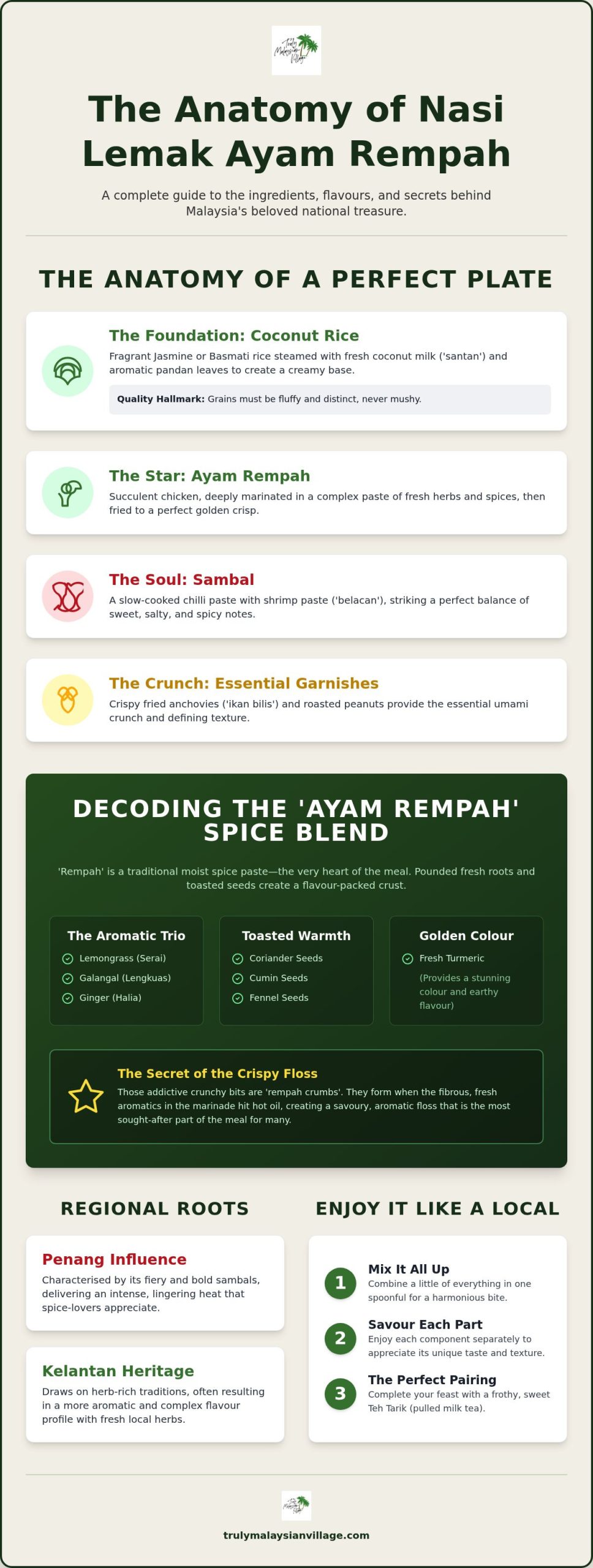
Nasi lemak is far more than just a meal; it is the culinary heartbeat of Malaysia. While it began its journey as a humble breakfast staple wrapped in banana leaves for farmers, it has evolved into a beloved all-day feast found in every corner of the country and now, across Australia. When you first set eyes on a steaming plate, you might find yourself asking what is in nasi lemak ayam rempah that makes it so legendary. It is a precise ecosystem where the ‘lemak’ (richness) of the coconut rice provides a cooling, creamy counterpoint to the fiery heat of the sambal and the aromatic crunch of the chicken.
The star of this specific variation is the ‘Ayam Rempah’. This isn’t your standard fried chicken. It is a succulent piece of poultry that has been deeply marinated in a complex paste of fresh herbs and dried spices before being fried to a golden crisp. This chicken acts as a bridge, connecting the delicate floral notes of the rice with the bold, punchy flavours of the traditional garnishes.
Why Coconut Rice is the Foundation
The secret to that unmistakable, nostalgic scent lies in the pandan leaves. These long, green blades are knotted and steamed directly with the rice, releasing a floral aroma that instantly signals a home-cooked meal. For the rice itself, we typically use Basmati or Jasmine grains, ensuring they are steamed with fresh coconut milk, known as ‘santan’. This gives the grains a rich texture that many Australians love in a hearty ‘brekkie’ or a filling lunch. A true hallmark of quality is the texture; the grains must be fluffy and separate. If the rice is mushy or sticky, the delicate balance of the dish is lost.
The Role of the Sambal
If the rice is the foundation, the sambal is undoubtedly the soul of the plate. Our Sambal Belacan is a labour of love, slow-cooked for hours to achieve a deep, dark crimson hue. It starts with a base of pounded chillies, fermented shrimp paste (belacan), and onions, often finished with tamarind for a hint of acidity. A high-quality sambal must strike a perfect balance between three key pillars:
- Sweetness derived from slow-cooked onions or palm sugar.
- Saltiness from the traditional shrimp paste and seasoning.
- Spiciness that provides a warm, lingering heat without masking the other flavours.
This sauce binds every element together, ensuring that each mouthful is a complete, soulful experience. You can find this authentic balance on our weekday menu, where we honour these traditional proportions every day.
The Star of the Show: Decoding the ‘Ayam Rempah’ Spice Blend
To understand what is in nasi lemak ayam rempah, one must first appreciate the ‘rempah’ itself. In the Malay language, rempah simply means ‘spice paste’, but in our kitchen, it represents the very heart of the meal. Unlike a simple dry rub found in Western cooking, this paste is a moist, pounded blend of fresh roots and toasted seeds that creates a protective, flavour-packed crust around the chicken. It is a labour of love that transforms a simple piece of poultry into a cultural icon.
The foundation of this blend rests on a trio of essential aromatics: lemongrass (serai), galangal (lengkuas), and ginger (halia). These roots provide an earthy depth that is impossible to replicate with dried substitutes. To achieve that signature golden glow, we use fresh turmeric, which provides a stunning colour and is traditionally valued for its antiseptic properties. This is balanced by the toasted warmth of coriander, cumin, and fennel seeds, creating a profile similar to what you might find in a perfect nasi lemak recipe. The result is a complex, botanical fragrance that fills the air long before the plate hits the table.
The Magic of the Crispy Floss
One of the most frequent questions we hear from guests is about those addictive, crunchy bits scattered over the chicken. These are the ‘rempah crumbs’, a delightful byproduct of the fresh ingredients used in the marinade. Because aromatics like lemongrass and galangal are naturally fibrous, they don’t fully dissolve into a liquid. Instead, the secret to the crunch is the high moisture content of fresh aromatics hitting hot oil, which causes them to transform into a savoury, aromatic floss. For many Malaysian diners, these crispy morsels are the most sought-after part of the entire experience, often saved for the final, perfect mouthful of rice.
Marinade Secrets for Juicy Chicken
Achieving the perfect balance between a crisp exterior and a succulent interior requires immense patience. We marinate our chicken for at least 24 hours, allowing the spices to penetrate deep into the meat and even the bone. When it’s time to fry, we add handfuls of fresh curry leaves to the pan. These leaves sizzle in the oil, imparting a nutty, botanical fragrance that elevates the whole dish to something truly special. Even with the high-heat frying necessary for that shatteringly crisp skin, the long soak in the rempah paste keeps the chicken incredibly juicy. If you are craving this authentic crunch for your next family gathering, you can book a table with us to experience these time-honoured flavours firsthand.
The Crunchy Ensemble: Essential Garnishes and Textures
A plate of Nasi Lemak is never just about the rice or the chicken. It’s a symphony of textures. When people ask what is in nasi lemak ayam rempah that gives it that distinct village feel, they are often surprised by the humble nature of the garnishes. These small additions are the heavy lifters of the flavour profile, providing the essential salty, umami, and refreshing notes that complete the meal.
- Ikan Bilis (Crispy Anchovies): These tiny, golden-fried morsels provide a sharp, salty, and umami-rich crunch that cuts through the creaminess of the coconut rice.
- Fried Peanuts: These add a rich, earthy fat and a different kind of resistance to every mouthful, ensuring no two bites are the same.
- Hard-boiled or Fried Egg: This serves as a neutral protein, acting as a soothing buffer to balance the intense heat of the sambal.
- Fresh Cucumber Slices: These are the essential ‘cool down’ component, providing a snappy freshness to refresh the palate between spicy bites.
The Importance of Texture in Malaysian Cuisine
In our culture, eating is a multi-sensory journey. The magic happens in the contrast between the soft, fragrant rice, the crunchy chicken skin, and the crisp cucumber. A Nasi Lemak is considered incomplete if any of these four pillars are missing; the balance of the plate relies on their presence. Many find that a traditional Nasi lemak recipe highlights this exact harmony. For an added touch of heritage, we often present our meals on a banana leaf, which wilts slightly under the heat of the rice to release a natural, botanical fragrance that enhances the experience.
Traditional Accompaniments
While the Ayam Rempah is undoubtedly the star, many diners choose to expand their plate into a true village feast. Common additions include our slow-cooked Beef Rendang or the punchy Sambal Sotong (squid). These extra layers of protein and spice transform a simple meal into a celebratory experience, reflecting the abundance of a traditional Malaysian gathering. You can explore our full menu of traditional Malaysian sides to see how we bring the variety of Penang and Kelantan to your table in Australia.
Regional Roots: Exploring the Penang and Kelantan Influence
While the basic components of the dish remain consistent across the country, the subtle variations in spice and preparation tell a story of geography. When you ask what is in nasi lemak ayam rempah at a traditional eatery, the answer is often influenced by whether the recipe hails from the salty sea breezes of the north or the lush, herb-filled gardens of the east coast. Our kitchen brings these two worlds together, honouring the deep heritage of our family roots. This regional blend ensures the ‘rempah’ has a unique, authentic ‘village’ flavour that you won’t find in mass-produced versions.
Penang’s Street Food Legacy
Penang is widely considered the food capital of Malaysia, and its influence on Nasi Lemak is profound. Penang-style plates often feature a more robust, spicy sambal that leans into the heat. This is a result of the island’s unique melting pot of Malay, Chinese, and Indian culinary traditions. The spice blends here are bold and unapologetic, designed to stand out in a competitive street food scene. If you want to dive deeper into these vibrant flavours, read our guide to authentic Malaysian street food in Adelaide to see how these traditions have travelled across the ocean.
The Herb-Rich Traditions of Kelantan
Moving to the east coast, the Kelantan influence brings a different kind of magic to the table. Kelantanese cooking is famous for its ‘Nasi Kerabu’ heritage, which prioritises fresh aromatics and a subtle, natural sweetness. This region’s love for herbs means the ‘rempah’ used in our chicken is particularly fragrant, using more fresh roots than dried powders. Our triplet founders grew up with these tastes, and that heritage is why our Ayam Rempah feels different from a generic food court version. It carries the soul of a village kitchen, where ingredients are pounded by hand and recipes are guarded like family treasures.
Central to our philosophy is the beautiful Malay concept of ‘Air Tangan’. Literally translated as ‘the water of the hands’, it refers to the unique touch, love, and care a cook pours into their heritage recipes. It is the reason why two people can use the same ingredients, yet one plate tastes like home while the other feels cold. We believe this personal connection is what truly defines what is in nasi lemak ayam rempah; it is the heart and soul of the person behind the stove. To experience this authentic ‘village’ flavour for yourself, book your table today and let us host you.
Bringing the Village to You: How to Enjoy an Authentic Feast
Receiving a plate of Nasi Lemak is an invitation to slow down and savour the moment. There is a long-standing, friendly debate among purists about the best way to enjoy this national treasure. Some prefer the ‘bite by bite’ approach, carefully selecting a portion of fragrant rice, a smear of sambal, and a shard of crispy chicken to appreciate each individual profile. Others believe in the ‘mix it all’ philosophy, where every component is tossed together to create a unified, complex explosion of taste. Regardless of your method, knowing what is in nasi lemak ayam rempah helps you appreciate why each element exists, from the cooling cucumber to the fiery, slow-cooked chilli paste.
To complete the experience, no feast is truly finished without a glass of Teh Tarik. This pulled milk tea is frothy, sweet, and creamy, acting as the perfect fire extinguisher for the sambal’s heat. The rhythmic ‘pulling’ of the tea between two containers isn’t just for show; it cools the drink and creates a velvety texture that mirrors the richness of the coconut rice. It is the ultimate Malaysian pairing that turns a simple lunch into a moment of genuine cultural connection.
The Ultimate Crowd-Pleaser for Events
When you are planning a corporate lunch or a large family gathering, finding a dish that satisfies diverse palates can be a challenge. Nasi Lemak is naturally versatile because its individual components are served distinctly on the plate. This allows guests to manage their own level of spice or double up on the crunchy peanuts based on their preference. Setting up a ‘Nasi Lemak bar’ creates a unique talking point for any function, allowing your guests to build their own perfect version of this soul food. If you want to impress your guests with something truly memorable, you can organise authentic Malaysian catering for your next event and let us bring the village spirit to your office or home.
Join Us at the Village
There is a special kind of warmth that only a family-run kitchen can provide. At Truly Malaysian Village, we treat every guest like an old friend returning home for a meal. While our signature dish is available daily, we invite you to explore our weekend specials for rare regional treasures from Penang and Kelantan that are difficult to find elsewhere in Australia. Whether you are a long-time fan or a curious newcomer still discovering what is in nasi lemak ayam rempah, our doors are always open. Book your table now to experience authentic Nasi Lemak Ayam Rempah and discover the heart of Malaysian hospitality in a setting that feels like family.
Taste the Legacy of the Village
Understanding what is in nasi lemak ayam rempah is the first step toward truly appreciating Malaysia’s national treasure. From the delicate floral notes of pandan-infused rice to the earthy depth of galangal and lemongrass in the chicken marinade, every element serves a purpose. It’s a balanced ecosystem of flavour where crispy anchovies and roasted peanuts provide the essential crunch that cuts through the rich coconut creaminess. This isn’t just a meal; it’s a piece of heritage preserved through generations.
At Truly Malaysian Village, our kitchen is led by triplets who carry the authentic culinary traditions of Penang and Kelantan to Australia. We take pride in combining high-quality, fresh Australian ingredients with the time-honoured spices of our childhood home. This dedication to craftsmanship has earned us local culinary heritage recognitions, ensuring that every plate we serve is a genuine gateway to the East. We invite you to join our table and experience the warmth of a family-run home where every guest belongs.
Secure your spot at Truly Malaysian Village – Book Online Now and let us share the soul of the village with you today.
Frequently Asked Questions
Is Nasi Lemak Ayam Rempah very spicy?
The spice level is manageable and largely depends on how much sambal you choose to mix in. While the chicken marinade is full of aromatic warmth, the true heat resides in the slow-cooked sambal belacan. We serve this on the side so you can control the intensity. It is a balanced heat that lingers pleasantly without masking the delicate coconut notes of the rice.
What is the difference between Nasi Lemak and Nasi Kandar?
Nasi Lemak is defined by its coconut-infused rice and specific garnishes like anchovies and peanuts. Conversely, Nasi Kandar is a Penang specialty featuring plain or biryani rice served with a variety of intense curries mixed together. While both are Malaysian icons, Nasi Lemak focuses on the creamy rice foundation, whereas Nasi Kandar is all about the complex mixture of spicy gravies.
Can I get Nasi Lemak Ayam Rempah as a gluten-free option?
Most of the core components of this dish are naturally gluten-free. The rice is steamed with coconut milk and pandan, while the chicken is marinated in fresh roots and seeds. However, it is always best to check with our team regarding the specific ingredients in the sambal or cross-contamination in the fryer. It remains a popular, hearty choice for guests with specific dietary requirements.
What are the crispy bits on top of the chicken called?
These savoury, golden morsels are known as ‘rempah crumbs’ or spice floss. When you explore what is in nasi lemak ayam rempah, you will find these are actually the fried fibres of fresh lemongrass and galangal. They provide a unique, aromatic crunch that many diners consider the most prized part of the meal, often saved for the very last mouthful of rice.
Is Nasi Lemak traditionally eaten for breakfast or dinner?
While it began as a humble breakfast for farmers, it is now loved as an all-day meal. In both Malaysia and Australia, you will find people enjoying a plate for lunch, dinner, or even a late-night supper. Its hearty, comforting nature makes it the ultimate soul food regardless of the time, providing a sense of home-cooked familiarity whenever the craving strikes.
What drink goes best with Nasi Lemak Ayam Rempah?
A frothy, pulled Teh Tarik is the traditional and most popular pairing for this dish. The creamy sweetness of the tea acts as a perfect counterpoint to the spicy sambal. For a cold alternative, a Milo Ais provides a nostalgic, chilled chocolate malt flavour that many Australians find incredibly refreshing. Both drinks enhance the cultural experience and help balance the bold spices.
What is the secret to making the rice so fragrant?
The secret to that iconic fragrance is the careful steaming of rice with fresh coconut milk and knotted pandan leaves. These ingredients release a rich, floral aroma that is the hallmark of an authentic kitchen. This traditional technique is central to what is in nasi lemak ayam rempah, ensuring each grain is fluffy and infused with the nostalgic scents of a Malaysian village.
Does Nasi Lemak contain nuts or seafood?
Traditional versions of this dish do contain both nuts and seafood. The garnishes include roasted peanuts and crispy anchovies, while the sambal is typically made with fermented shrimp paste for umami depth. If you have a nut or shellfish allergy, please inform our staff before ordering. We are always happy to discuss how we can accommodate your specific dietary needs safely.

Article by
Amzar Hariz
Director of Truly Malaysian Village
Disclaimer
The content published on this website may include articles generated or assisted by AI writing tools. While we aim to provide helpful, accurate, and up-to-date information, we do not guarantee that all content is complete, error-free, or suitable for every individual situation.

