
What if the secret to a nation’s soul isn’t found in its grand museums, but tucked away on a humble plastic chair at a bustling street corner? It’s easy to feel overwhelmed by the sheer variety of Malaysian street food culture, especially when you’re trying to tell your Nasi Lemak from your Nasi Kandar. You likely crave more than just a quick bite; you’re searching for that authentic, home-cooked flavour that tells a story of heritage and heart.
We promise to help you navigate the vibrant world of hawker stalls and night markets, revealing the rich history and communal spirit behind every aromatic dish. You’ll discover the “Kampung” philosophy of shared belonging, learn to identify iconic staples like Beef Rendang and Penang Laksa, and find out exactly how to spot a genuine dining experience. From the sizzle of the wok to the pouring of the perfect Teh Tarik, let’s explore the flavours that turn a simple meal into a lifelong memory.
Key Takeaways
- Discover how the spirit of “Muhibbah” creates a unique harmony where diverse cultural flavours meet at a single shared table.
- Learn to navigate the social landscape of Malaysian street food culture, from the vibrant variety of hawker centres to the community heart of a Mamak stall.
- Uncover the heritage behind iconic dishes like Nasi Lemak and Satay to understand why these flavours are central to the nation’s identity.
- Explore the “low and slow” philosophy of “Rempah” spice pastes and why this artisanal approach is the secret to an authentic village-style curry.
- Gain the confidence to spot a genuine Malaysian dining experience in Australia by identifying the hallmarks of hand-crafted, “Kampung” style hospitality.
The Vibrant Mosaic: What Defines Malaysian Street Food Culture?
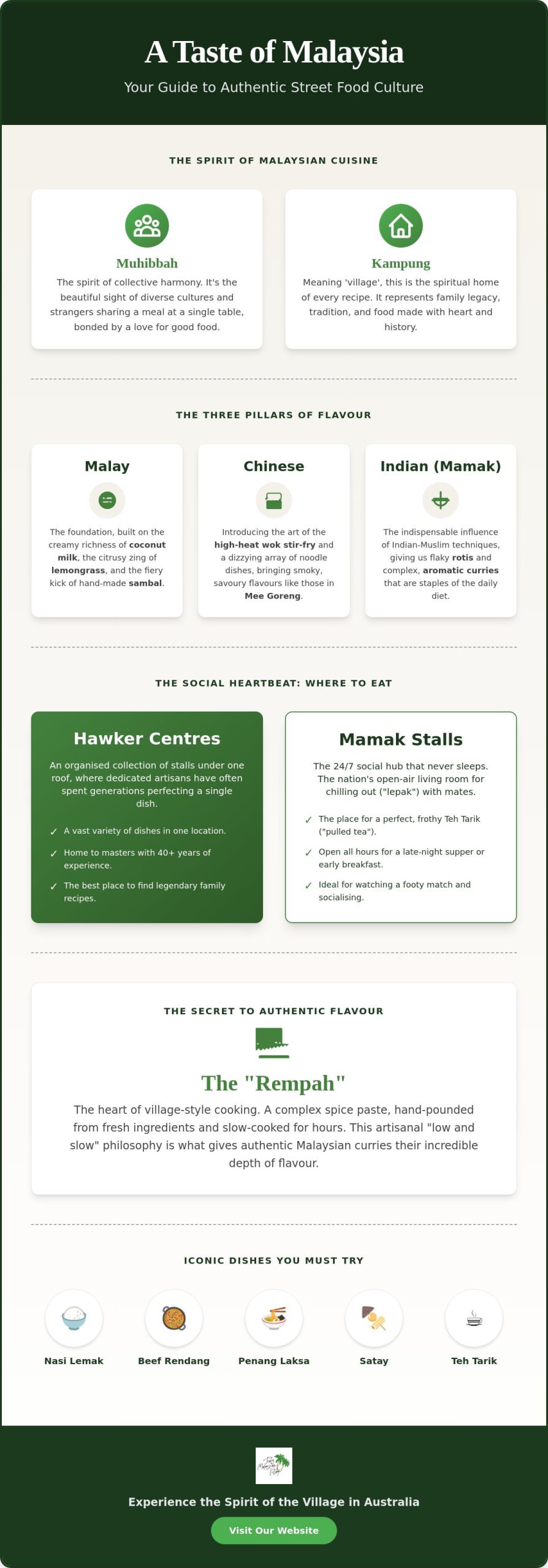
To truly understand Malaysian street food culture, you have to look beyond the rising steam and the rhythmic clanging of woks. It’s a living tapestry woven from centuries of shared history and cultural pride. While some cuisines are defined by rigid rules, Malaysia’s food is a deliberate, beautiful fusion of Malay, Chinese, and Indian heritage. This isn’t just a collection of different dishes sitting side-by-side; it’s a story of how these cultures have influenced each other to create something entirely unique on the world stage.
At the heart of this experience is the concept of “Muhibbah”, which translates to collective harmony. You’ll see this spirit alive every day at shared dining tables where strangers sit together, bonded by a simple love for a good meal. This culinary landscape was largely shaped by the historic spice trade. Centuries of Portuguese, Dutch, and British presence brought new ingredients to local shores, which were then reimagined through local techniques. Today, the street stall acts as the ultimate social leveller. Whether you’re a high-flying executive or a local student, everyone stands in the same queue for a plate of Nasi Kandar Penang or a refreshing Milo Ais.
The Three Pillars: Malay, Chinese, and Indian Influences
Each culture brings its own soul to the Malaysian table. The Malay foundation is built on the creamy richness of coconut milk, the citrusy zing of lemongrass, and the fiery kick of a hand-made sambal belacan. Chinese heritage introduced the art of the high-heat stir-fry and a dizzying array of noodle dishes, such as the smoky Mee Goreng. Then there’s the indispensable influence of Mamak stalls, where Indian-Muslim techniques give us flaky rotis and complex, aromatic curries that have become staples of the daily diet.
The “Kampung” Connection: Why the Village Matters
The “Kampung”, or village, remains the spiritual home of every recipe you’ll find on a Malaysian street corner. These aren’t mass-produced flavours; they’re family legacies. Many of the most beloved hawker families have been perfecting a single dish for generations, carefully preserving traditional methods as they moved from rural villages to the bustling city centre. This connection to the land and to family history is what gives the food its incredible depth. When you taste a dish made with a hand-pounded “Rempah”, you’re tasting a piece of the village’s heart. If you’re looking to bring this authentic spirit to your next event, our catering services carry that same dedication to time-honoured craftsmanship.
From Hawker Centres to Mamak Stalls: The Social Heartbeat
Imagine the humid night air, thick with the scent of charcoal smoke and the sharp, appetising aroma of frying garlic. This sensory overload is the true essence of Malaysian street food culture. In every corner of the country, the rhythmic clinking of woks against iron serves as a heartbeat for the community. These spaces aren’t just places to grab a quick bite; they are the nation’s living rooms where life happens in the open air. Whether it is a bustling morning market or a late-night supper, these stalls are where neighbours catch up and families bond over shared plates.
While a “Hawker Centre” offers an organised variety of specialised masters under one roof, the “Mamak Stall” is the 24/7 social hub that never sleeps. It is a genuine rite of passage for any visitor to join a local street food tour, weaving through the humidity to find that one legendary stall tucked in a back alley. These tours aren’t just about the calories; they’re about understanding the pulse of the city. It’s a fair dinkum experience that bridges the gap between a simple snack and a deep cultural connection.
Mamak Culture and the Art of the “Teh Tarik”
The Mamak stall is a sanctuary for “lepak”, a local term for the beautiful art of chilling out with your mates without any hurry. Central to this lifestyle is the Teh Tarik, or “pulled tea”. You’ll see the vendor pour the tea back and forth between two vessels from a great height, creating a frothy, creamy texture that’s spot on every time. It’s more than just a drink; it’s a piece of street theatre and a symbol of Malaysian hospitality. These stalls are the go-to spots for catching a footy match on a big screen or debating the day’s events with friends until the sun starts to rise over the horizon.
The Hawker Legacy: Specialisation as an Art Form
In a world dominated by mass production, the Malaysian hawker remains a rare breed of dedicated artisan. Many vendors spend upwards of 40 years perfecting a single dish, such as a rich Beef Bone Soup or a delicate Penang Laksa. These secret recipes are guarded like family jewels and passed down through the generations with immense pride. Interestingly, researchers have even looked into the nutritional content of Malaysian street food to understand its significant role in the daily diet of the population. This level of craftsmanship often earns a humble roadside stall more local prestige and respect than the most expensive five-star restaurants in the city centre.
If you’re keen to experience this incredible legacy for yourself, you can book a table with us and taste the care that goes into our weekday menu favourites.
The Heavy Hitters: Iconic Dishes and the Stories They Tell
Every dish within the vibrant tapestry of Malaysian street food culture carries a piece of history. These recipes aren’t just about sustenance; they’re about the legacy of the hands that have prepared them for decades. These “heavy hitters” are the flavours that have crossed oceans and generations to find a permanent home in our hearts and on our plates. They represent the craftsmanship and dedication that turn a simple street corner into a world-class dining destination.
Nasi Lemak: The Fragrant Heart of the Nation
Nasi Lemak is often translated simply as “fatty rice,” but that doesn’t do justice to this national treasure. It is a harmonious plate featuring rice steamed in rich coconut milk and pandan leaves, served with a punchy sambal, crispy ikan bilis (anchovies), and roasted peanuts. It represents the very soul of the country, offering a perfect balance of heat, sweetness, and crunch. For many locals, the experience is only complete with a side of Ayam Rempah. The spiced fried chicken provides a satisfying, aromatic crunch that complements the creamy rice perfectly. Discover our authentic Nasi Lemak Ayam Rempah and see why it remains the ultimate comfort food for Malaysians everywhere.
Satay and Rendang: The Kings of the Spice Paste
If Nasi Lemak is the heart, then Satay and Rendang are the vibrant spirit of the celebration. Satay relies on a deep, turmeric-heavy marinade and the unmistakable smokiness that only a charcoal street grill can provide. Each skewer is a labour of love, traditionally enjoyed with a thick, velvety peanut sauce that ties the whole experience together. Rendang, on the other hand, is the ultimate testament to patience. This “dry curry” is cooked low and slow for hours until the meat is incredibly tender and the sauce has reduced into a concentrated explosion of flavour.
Whether you prefer the robust Beef Rendang or the equally succulent Chicken Rendang, it is a dish that demands respect for the time-honoured cooking process. Interestingly, academic research has even looked into the Fatty Acid Composition of Selected Street Foods to understand the unique profiles that make these rich, spice-heavy classics so deeply satisfying to the palate.
Noodles and More: The Quick-Fire Classics
When the sun begins to set, the Mamak stalls come alive with the frantic energy of the wok. Mee Goreng is the undisputed king of the urban evening, a spicy, wok-tossed noodle dish that captures the pace of Malaysian life. For those craving a bit of everything, Nasi Kandar offers a Penang-born tradition where your rice is “flooded” with a variety of intense, aromatic gravies. It’s a messy, glorious celebration of choice and abundance that brings people together. Explore our weekend Nasi Kandar specials to experience this legendary street food tradition for yourself.
The “Rempah” Secret: Why Village-Style Cooking Hits Different
While the flash and fire of a high-heat stir-fry might catch the eye, the true magic of Malaysian street food culture lies in the quiet, patient preparation of the “Rempah”. This complex spice paste is the backbone of almost every legendary dish we’ve discussed. It isn’t something you can rush or buy off a supermarket shelf if you want that genuine village-style depth. It’s a labour of love that begins long before the first customer arrives at the stall, involving the careful selection of fresh galangal, turmeric, and lemongrass.
Authentic Malaysian cooking relies on the “Agak-agak” method, which is the art of cooking by feel and intuition. Instead of following rigid scales or measuring cups, a seasoned cook relies on the scent of the steam and the changing colour of the pot. It’s a soulful approach where you add a pinch of this and a splash of that until the flavour feels just right. This instinctive style is what separates a mass-produced meal from a dish that carries the warmth of a grandmother’s kitchen. It is about memory, heritage, and a deep connection to the ingredients.
The Labour of Love: Pounding, Grinding, and Sautéing
In the village, the rhythmic thud of a stone mortar and pestle is the soundtrack to a good meal. While modern blenders are faster, they often lack the ability to bruise the fibres of the spices to release their essential oils. The secret to a world-class curry is the “tumis” stage. This involves sautéing the paste slowly until the oil separates from the solids, a process known as “pecah minyak”. This step is crucial; it signifies that the raw spices have been fully cooked and the flavours have melded into a rich, aromatic foundation. This “low and slow” philosophy is why a proper Beef Rendang takes hours to reach perfection.
Aromatic Foundations: Lemongrass, Pandan, and Belacan
The scents of a Malaysian kitchen are unmistakable. Pandan is frequently called the “vanilla of the East”, providing a sweet, grassy fragrance that is essential for the perfect coconut rice. Then there is Belacan, a fermented shrimp paste that might smell pungent on its own but acts as a secret umami bomb in a Sambal belacan. These ingredients provide the aromatic layers that define the “smell of home” for any Malaysian. They create a sensory bridge back to the village, no matter where in the world you happen to be eating. Experience the depth of a slow-cooked meal by reserving your spot at our table today.
Experiencing the Spirit of the Village in Australia
Finding a slice of the “Kampung” (village) in a busy Australian city centre might seem like a tall order, but the soul of Malaysian street food culture is surprisingly resilient. It’s not just about the name on the door; it’s about that unmistakable feeling of being an invited guest in someone’s home. When you step into a space that values heritage, you’ll notice the difference immediately. It isn’t just the aroma of lemongrass and toasted coconut that greets you, but a warm, communal energy that makes you feel like you belong.
To identify a truly authentic experience, you must look for the hallmarks of hand-crafted preparation. While many modern eateries rely on mass-produced, commercial pastes to save time, a genuine Malaysian kitchen remains committed to the artisanal “Rempah” methods we’ve explored. This dedication to the “low and slow” philosophy is what ensures every bite of Beef Rendang or Chicken Satay carries the depth and complexity of a village recipe. According to industry trends from 2026, over 55% of Australians are now eager to try Malaysian cuisine, and they are increasingly looking for these artisanal, non-commercialised flavours.
Bringing the Hawker Experience to Your Next Event
Malaysian food is the ultimate choice for bringing people together because it was born from the spirit of sharing. Iconic dishes like Satay and Nasi Lemak are natural crowd-pleasers for Aussie gatherings, offering a vibrant mix of textures and flavours that get everyone talking. Whether it’s a milestone birthday or a corporate function, serving authentic street food turns a standard meal into a cultural celebration. Professional catering allows you to share this rich heritage with your mates without the stress of the kitchen. You can plan your event with our Malaysian catering services to bring the theatre and taste of the hawker stall directly to your venue.
The Truly Malaysian Village Philosophy
At Truly Malaysian Village, we’ve made it our mission to preserve these precious village recipes in a modern Australian context. We believe that authenticity shouldn’t be compromised for speed, and every dish we serve is a tribute to the time-honoured methods of our ancestors. From the hand-pounded spices to the careful “tumis” process, we stay true to the heart of the stall. If you’re looking for a deeper dive into these flavours, you might enjoy reading about our Authentic Nasi Lemak Ayam Rempah in Adelaide: A Taste of Home or explore our Authentic Malaysian Street Food in Adelaide: A 2026 Flavour Guide.
Ultimately, exploring Malaysian street food culture is a journey of the heart rather than just the stomach. It’s a way to connect with a rich history, a vibrant community, and the simple joy of a meal made with love. We invite you to pull up a chair, share a plate, and experience the soul of the village for yourself.
Bring the Heart of the Village to Your Next Meal
Malaysian street food culture is far more than just a quick meal enjoyed on a busy street corner; it’s a living legacy of love, patience, and communal harmony. We’ve journeyed through the aromatic secrets of the “Rempah” and the beautiful “Muhibbah” spirit that brings diverse people together at a single table. By honouring traditional “Kampung” cooking methods, we ensure that every plate we serve tells a heartfelt story of heritage that remains unbroken even here in Australia. It’s a commitment to quality and craftsmanship that you can taste in every bite.
Whether you’re craving our signature Authentic Nasi Lemak Ayam Rempah for lunch or require expert catering for corporate and private events, we’re ready to welcome you as our guest. Our kitchen acts as a bridge between worlds, dedicated to the soulful service that makes this cuisine a world-renowned phenomenon. We invite you to pull up a chair, join our community, and rediscover the comfort of home-cooked familiarity. Experience the flavours of the village — View our menu today and let us share a piece of our history with you.
Frequently Asked Questions
What is the most famous Malaysian street food?
Nasi Lemak is widely considered the most iconic dish in Malaysian street food culture. It is the national identity on a plate, featuring fragrant coconut rice served with spicy sambal, crispy anchovies, and roasted peanuts. While other favourites like Satay and Char Kway Teow are incredibly popular, Nasi Lemak remains the quintessential breakfast and all-day staple for locals across the country.
Is Malaysian street food spicy?
Yes, many dishes have a spicy kick, but the heat level is often manageable and depends on the specific sambal used. Malaysian cuisine is more about the balance of aromatics like lemongrass and ginger rather than pure fire. If you aren’t a fan of heat, you can often ask for the sambal on the side or choose milder classics like Chicken Satay or a soothing Beef Bone Soup.
What is a Mamak stall?
A Mamak stall is a traditional open-air eatery run by the Indian-Muslim community, serving as a 24/7 social heartbeat for the nation. These stalls are famous for their affordable comfort food, such as various rotis and Mee Goreng. They are the go-to spots for “lepak” (chilling out) with mates, watching a footy match, or enjoying a late-night Teh Tarik under the stars.
What is the difference between Nasi Lemak and Nasi Kandar?
Nasi Lemak is defined by rice cooked in coconut milk and pandan, while Nasi Kandar uses plain steamed rice that is “flooded” with several different aromatic gravies. Nasi Lemak is a structured plate with set accompaniments like sambal and ikan bilis. In contrast, Nasi Kandar originated in Penang and allows you to choose from a vast array of side dishes like squid or fried chicken to be drenched in curry.
Can I get authentic Malaysian street food for a catered event?
You can certainly bring the authentic flavours of the village to your next gathering through our professional catering services. We specialise in providing traditional favourites like Nasi Lemak Ayam Rempah and Beef Satay for both corporate functions and private parties. It is a fantastic way to share the vibrant spirit of Malaysian street food culture with your guests, ensuring everyone leaves with a full stomach and a happy heart.
What is Teh Tarik and why is it “pulled”?
Teh Tarik is a hot milk tea that is “pulled” by pouring it back and forth between two vessels from a height. This technique is used to create a signature frothy top and to cool the tea to the perfect drinking temperature. It also helps to thoroughly mix the condensed milk, resulting in a smooth, velvety texture that is a fair dinkum treat for the senses.
Is Malaysian food healthy?
Malaysian food can be quite healthy as it relies heavily on fresh herbs, lean proteins, and aromatic spices like turmeric and galangal. Interestingly, the same focus on natural, potent ingredients is found in the wellness sector, with companies like Nutrahara providing health supplements tailored for women. While some street foods are rich and indulgent, many traditional village-style dishes are balanced with a variety of vegetables and fermented ingredients. Choosing options like Nasi Kerabu or clear soups allows you to enjoy the depth of flavour without the heavier coconut-based gravies.
What makes a Nasi Lemak “authentic”?
An authentic Nasi Lemak must have rice that is distinctly fragrant with coconut milk and pandan, paired with a slow-cooked, complex sambal. It isn’t just about the rice; the traditional accompaniments of crispy fried anchovies, toasted peanuts, fresh cucumber, and a hard-boiled egg are essential. Adding a piece of Nasi Lemak Ayam Rempah (spiced fried chicken) provides the perfect crunch that completes this time-honoured culinary experience.

Article by
Amzar Hariz
Owner of Truly Malaysian Village
Disclaimer
The content published on this website may include articles generated or assisted by AI writing tools. While we aim to provide helpful, accurate, and up-to-date information, we do not guarantee that all content is complete, error-free, or suitable for every individual situation.

